

Role of Grocery Stores in Atlanta’s Diverse Wellness
TOJEXPRESS.COM-Antonio HenryFinding truly diverse and culturally relevant grocery stores can feel like a real challenge for Caribbean and American families living in suburban Atlanta. Many neighborhoods still face unequal food access, especially when it comes to fresh produce and ethnic ingredients that support a healthy lifestyle and honor personal traditions. By uncovering how grocery stores shape both nutrition and community connection, you can make informed decisions, discover unique shopping venues, and find options that fit your family’s roots and wellness goals.
Table of Contents
- Defining The Role Of Grocery Stores In Atlanta
- Types And Variations Of Atlanta Grocery Stores
- Health, Cultural Relevance, And Food Diversity
- Legal Requirements For Grocery Store Operations
- Costs, Risks, And Alternatives For Consumers
Key Takeaways
| Point | Details |
|---|---|
| Grocery Stores as Infrastructure | Grocery stores in Atlanta are vital for community health, particularly in neighborhoods facing food access challenges. Their location and offerings significantly influence residents’ dietary choices and overall wellness. |
| Diverse Grocery Landscape | Atlanta’s grocery market includes various store types, each catering to different cultural and socioeconomic needs, ensuring access to diverse food options. |
| Cultural Significance | Ethnic grocery stores play a key role in maintaining cultural heritage and supporting dietary needs, acting as community hubs that connect residents through shared culinary experiences. |
| Navigating Economic Challenges | Consumers face rising grocery prices and supply chain issues, making it critical to explore alternative shopping methods to maintain nutritional diversity while managing costs. |
Defining the Role of Grocery Stores in Atlanta
Grocery stores in Atlanta serve far more than a simple retail function - they are critical infrastructure determining community health and wellness, especially in neighborhoods facing systemic food access challenges. Systematic food desert research reveals complex socioeconomic dynamics shaping nutritional opportunities across different Atlanta communities.
The urban landscape of Atlanta demonstrates significant disparities in grocery store distribution and accessibility. Recent research highlights critical patterns of food access inequality:
- Majority-Black neighborhoods consistently experience less fresh produce availability
- Low-income areas have fewer full-service supermarket options
- Small convenience stores predominate in underserved regions, but often lack comprehensive fresh food selections
- Geographic location strongly correlates with nutritional access
Fresh produce access studies from Emory University’s School of Public Health reveal stark nutritional inequities. These disparities aren’t accidental but reflect deeper structural challenges rooted in historical economic and racial segregation patterns within Atlanta’s urban development.
Grocery stores in Atlanta thus represent more than commercial spaces - they are pivotal social infrastructure determining community health outcomes. Their strategic placement, product selection, and accessibility directly impact residents’ dietary choices, nutrition quality, and long-term wellness trajectories. Understanding these dynamics requires recognizing grocery stores as complex ecosystems bridging economic opportunity, nutritional education, and community well-being.
Pro tip: When selecting a neighborhood in Atlanta, research local grocery store options and fresh produce availability to understand potential nutritional access challenges.
Types and Variations of Atlanta Grocery Stores
Atlanta’s grocery store landscape is incredibly diverse, reflecting the city’s multicultural population and varied nutritional needs. Market research reveals a complex ecosystem of grocery retail options spanning multiple formats and consumer preferences.
The city’s grocery market encompasses several distinct categories:
- Conventional Supermarkets: Large chains like Kroger and Publix offering comprehensive product ranges
- Discount Stores: Budget-friendly options providing essential groceries at lower price points
- International Markets: Specialty stores catering to specific cultural and culinary preferences
- Organic and Health-focused Stores: Retailers emphasizing natural, specialty, and wellness-oriented products
Specialty grocery retailers play a significant role in Atlanta’s food ecosystem. The Buford Highway Farmers Market, for instance, represents a prime example of an international market offering diverse global food products, reflecting the city’s rich multicultural demographic.
These varied grocery store types serve different community segments, with market share distributed across multiple operational models. Large chains dominate the landscape, holding approximately 57% of the market, while smaller specialty stores provide targeted shopping experiences for niche consumer groups. The diversity ensures that residents from different socioeconomic backgrounds and cultural backgrounds can find suitable grocery options.
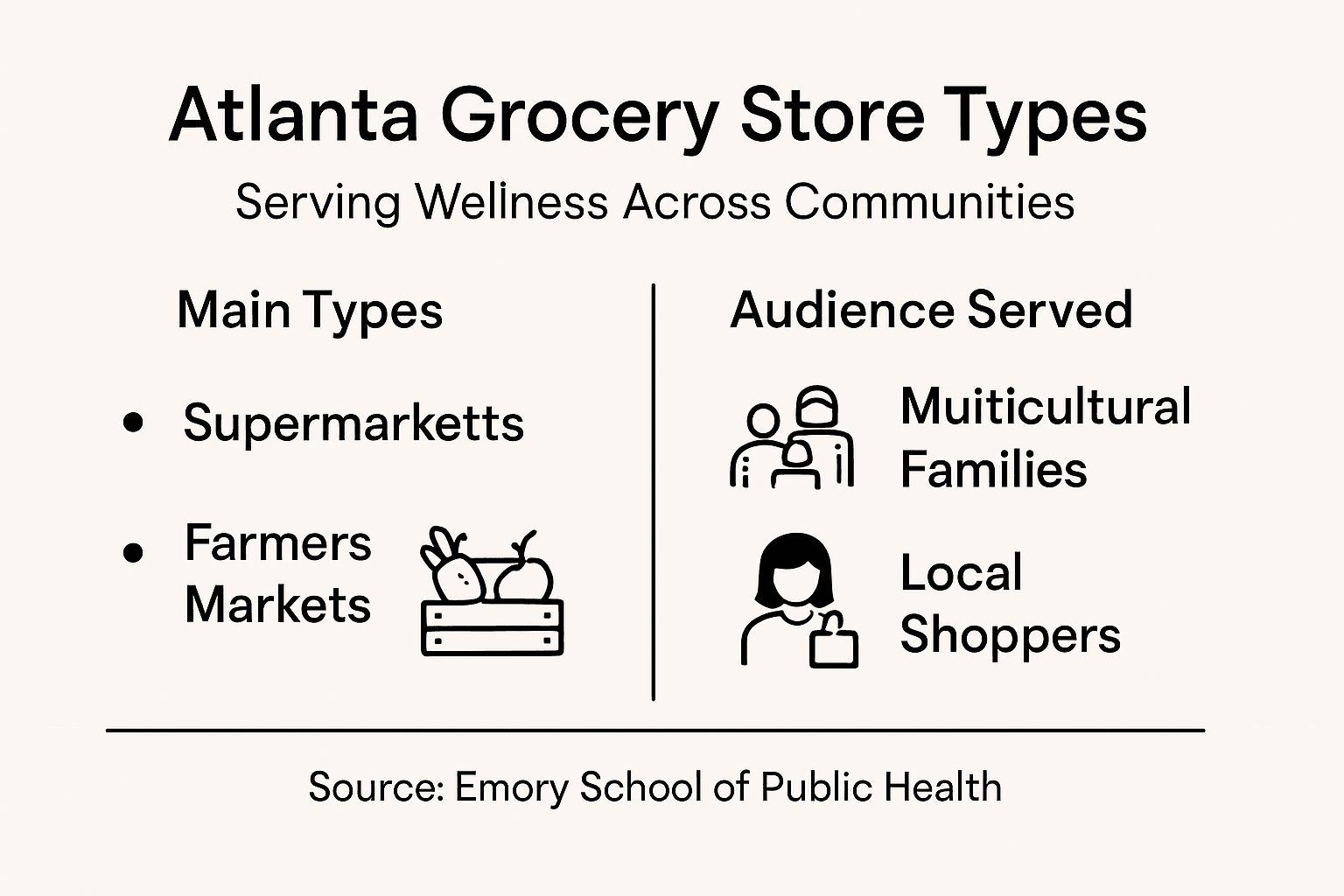
Here’s a comparison of grocery store types in Atlanta and their unique advantages for residents:
| Store Type | Example Retailers | Key Advantages | Best For |
|---|---|---|---|
| Conventional Supermarket | Kroger, Publix | Wide product selection | Most households |
| Discount Store | Aldi, Save-A-Lot | Lower prices, budget options | Cost-conscious shoppers |
| International Market | Buford Hwy Farmers Market | Diverse global ingredients | Multicultural communities |
| Health-Focused Store | Whole Foods, Sprouts | Organic/natural products | Wellness enthusiasts |
Pro tip: Explore different grocery store types in your neighborhood to discover unique product selections and potentially more affordable shopping alternatives.
Health, Cultural Relevance, and Food Diversity
Atlanta’s grocery landscape represents far more than a simple retail environment - it is a vibrant ecosystem of cultural expression and nutritional well-being. Multicultural consumer research reveals the profound significance of grocery stores as platforms for maintaining cultural heritage and supporting diverse dietary needs.
The importance of cultural food representation manifests through several critical dimensions:
- Ingredient Authenticity: Stores providing genuine traditional ingredients
- Dietary Specialization: Offering halal, kosher, and culturally specific food options
- Culinary Preservation: Enabling communities to maintain traditional cooking practices
- Nutritional Diversity: Supporting varied dietary requirements across different cultural groups
Ethnic grocery stores function as more than commercial spaces - they are living cultural institutions. These stores serve as critical community hubs, connecting immigrants and multicultural residents through shared culinary experiences and providing access to foods that represent their cultural identities.

Beyond mere retail transactions, these grocery stores play a transformative role in community health and social integration. They bridge nutritional gaps, support cultural continuity, and provide economic opportunities for immigrant communities, ultimately contributing to Atlanta’s rich multicultural tapestry. The diversity of food offerings reflects the city’s inclusive spirit and commitment to honoring multiple cultural traditions.
Pro tip: Explore ethnic grocery stores in your neighborhood to discover unique ingredients and support local multicultural businesses.
Legal Requirements for Grocery Store Operations
Operating a grocery store in Atlanta involves navigating a complex landscape of regulatory requirements designed to ensure public safety and business compliance. Retail food establishment regulations mandate comprehensive standards that grocery stores must meet to legally operate within Georgia’s framework.
Key legal requirements for grocery stores include:
- Business Licensing: Obtaining necessary permits from city and state authorities
- Food Safety Certification: Maintaining certified food protection managers
- Sanitation Standards: Meeting strict hygiene and food handling regulations
- Temperature Control: Implementing proper storage and preservation protocols
- Inspection Compliance: Passing regular health and safety assessments
Atlanta business licensing involves multiple layers of regulatory oversight. Grocery stores must secure appropriate city and state permits, which may vary depending on specific product offerings such as alcohol sales, fresh produce handling, or prepared food sections. The Georgia Department of Agriculture conducts routine inspections to ensure these standards are consistently maintained.
The legal landscape for grocery stores extends beyond simple documentation. Businesses must demonstrate ongoing commitment to public health through continuous staff training, maintaining updated food safety protocols, and ensuring that all operational practices meet or exceed state and local regulatory requirements. These regulations protect consumers while establishing a framework for responsible business practices in the food retail sector.
Pro tip: Consult with local regulatory agencies early in your grocery store planning process to understand all specific licensing and compliance requirements.
Costs, Risks, and Alternatives for Consumers
The grocery marketplace in Atlanta represents a complex ecosystem where consumer choices intersect with economic challenges and nutritional accessibility. Grocery supply chain disruptions have exposed significant vulnerabilities in food distribution systems, impacting consumer purchasing power and dietary options.
Consumers face multiple critical challenges in the current grocery landscape:
- Price Volatility: Unpredictable food cost fluctuations
- Limited Affordability: Increasing prices for healthy food options
- Supply Chain Instability: Potential product shortages
- Nutritional Trade-offs: Compromising diet quality for cost savings
- Economic Barriers: Disproportionate impacts on lower-income households
Rising grocery prices are pushing consumers toward less nutritious alternatives, creating a complex web of economic and health challenges. Lower-income Atlanta residents particularly struggle with accessing diverse, high-quality food options, which can lead to long-term health disparities and reduced nutritional intake.
Navigating these challenges requires strategic consumer approaches. Exploring alternative shopping methods like community-supported agriculture, farmers markets, bulk purchasing cooperatives, and comparing prices across multiple stores can help mitigate economic risks. Understanding these dynamics empowers consumers to make informed decisions that balance nutritional needs with budgetary constraints.
To help consumers navigate grocery shopping challenges, here’s a summary of alternative strategies and their main strengths:
| Alternative Option | Primary Benefit | Who Benefits Most |
|---|---|---|
| Farmers Market | Fresh local produce | Residents seeking quality |
| Bulk Buying Cooperative | Lower average cost | Large families, groups |
| Community Agriculture | Seasonal variety | Health-focused consumers |
| Price Comparison Shopping | Maximize savings | Budget-conscious shoppers |
Pro tip: Develop a flexible grocery shopping strategy that includes multiple purchasing channels to manage costs and maintain nutritional diversity.
Discover Convenient Access to American and Caribbean Favorites at TOJ Express
The article highlights how grocery stores in Atlanta play a vital role in bridging nutritional gaps and supporting diverse communities. We understand the challenge many face with limited fresh produce and authentic cultural ingredients especially in underserved neighborhoods. At TOJ Express, we provide a convenient solution by offering a curated selection of American and Caribbean products that help preserve cultural food traditions and meet your wellness goals.

Explore our wide variety of authentic products designed to honor multicultural diets and support your nutritional diversity. Whether you are seeking traditional ingredients or affordable grocery options, TOJ Express makes it easier to maintain your health and cultural heritage at https://tojexpress.com. Don’t wait to experience the convenience and rich flavors waiting for you – visit us today and enrich your grocery routine with freshness and cultural relevance!
Frequently Asked Questions
What is the role of grocery stores in community health and wellness?
Grocery stores serve as critical infrastructure that impacts community health by providing access to fresh produce and healthy food options, particularly in neighborhoods facing food access challenges. Their location and product selection directly influence residents’ dietary habits and overall wellness.
How do socioeconomic factors affect grocery store accessibility?
Research shows that neighborhoods with higher proportions of low-income or majority-Black populations often have less access to fresh produce and full-service supermarkets. This socioeconomic disparity contributes to nutritional inequalities in these communities.
What types of grocery stores exist in Atlanta?
Atlanta features a diverse range of grocery stores, including conventional supermarkets, discount stores, international markets, and health-focused retailers. Each type caters to different consumer preferences and dietary needs, reflecting the city’s multicultural demographic.
How do cultural and dietary needs influence grocery store offerings?
Grocery stores play a vital role in supporting cultural diversity by providing authentic ingredients and specialized dietary options, such as halal or kosher foods. They help maintain culinary traditions and meet varied nutritional requirements across different cultural groups.