
American Fruit Snacks: What They Are and What's Inside
TOJEXPRESS.COM-Antonio HenryAmerican fruit snacks are processed gummy confections made primarily from fruit juice concentrate, sugar, gelatin, and modified starches. They are not a substitute for whole fruit. Registered dietitians and nutrition researchers consistently classify them closer to candy than to a genuine fruit serving, largely because the manufacturing process strips out fiber and most micronutrients. General Mills helped define the category in 1983, and today these snacks fill grocery store aisles, lunchboxes, and convenience store shelves across the country.
Here is what you are actually getting in that little pouch:
- Fruit juice concentrate rather than whole fruit pulp
- Added sugars including corn syrup, which drive up calorie density
- Gelatin or pectin to create the chewy, gummy texture
- Modified starches for structure and shelf stability
- Artificial or natural flavors and colors to mimic real fruit taste and appearance
- Preservatives to extend shelf life well beyond fresh fruit
What brands and varieties of American fruit snacks look like:
The American fruit snack market breaks into a few distinct product types, each with its own texture and format.
Welch’s Fruit Snacks are among the most recognized, sold in small pouches with grape, strawberry, and mixed fruit varieties. The brand leans heavily on its grape juice heritage in marketing, which gives parents the impression of a more wholesome product. General Mills built the category’s mainstream identity with Fruit Roll-Ups, thin sheets of flavored fruit leather that kids peel and roll. The same company later introduced Gushers, which add a liquid center, and Fruit by the Foot, a long strip format.
Beyond those two anchors, the market includes:
- Gummy shapes: Animals, characters, and rings in mixed fruit flavors, aimed squarely at children
- Fruit bars: Denser, bar-format snacks that sometimes include oats or seeds, positioned as slightly more adult
- Fruit leather: Flat, chewy sheets made from pureed fruit, which can range from minimally processed to heavily sweetened
- Pouched gummies: Single-serve foil packs, the dominant format for school lunches and on-the-go snacking
The packaging on nearly all of these products features fruit imagery, bright colors, and language like “made with real fruit” to signal health. That framing is where the marketing gets complicated, as you will see in the next section.
What ingredients and nutrition facts actually tell you
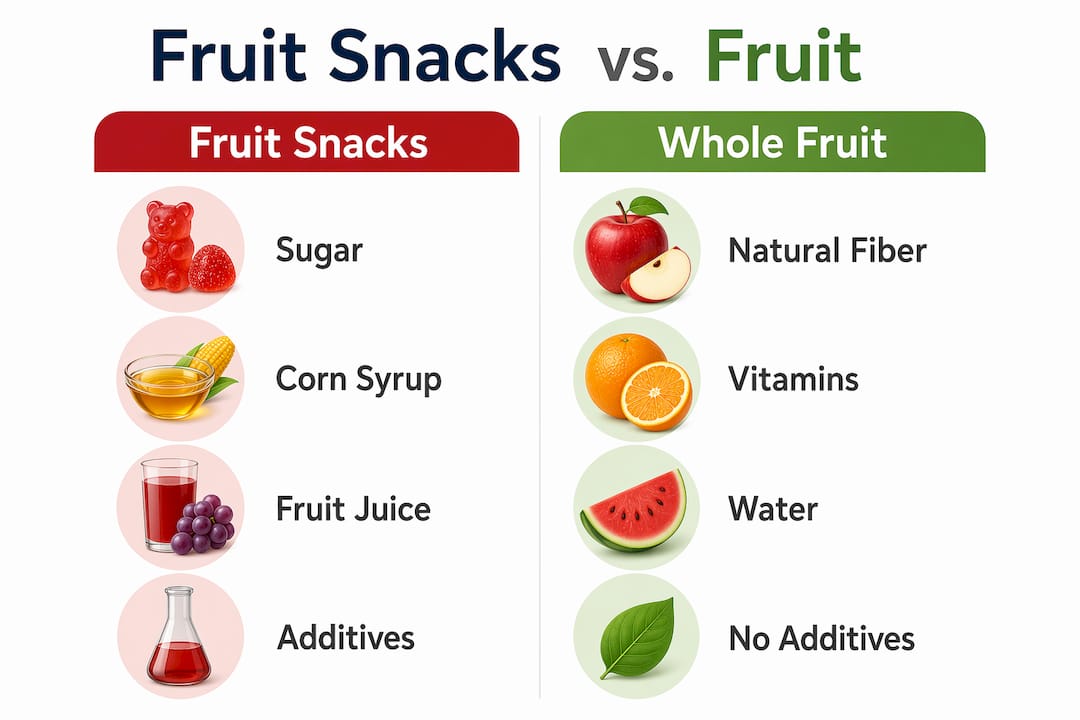
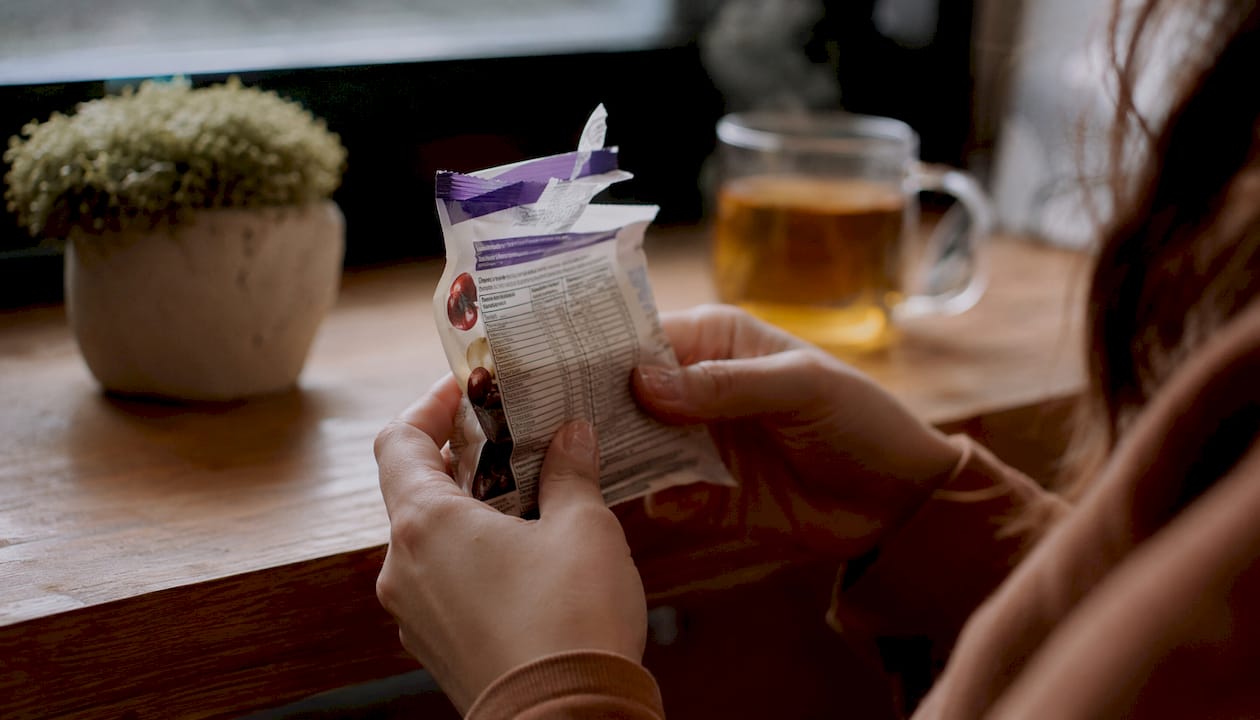
The ingredient list on most commercial fruit snacks reads more like a candy label than a produce aisle. Corn syrup and sugar typically appear in the first three ingredients. Fruit juice concentrate, while technically fruit-derived, has had its water and fiber removed, leaving behind concentrated sugars with little nutritional benefit.
A 2017–2022 study published in Nutrients found that fruit-flavored snacks have the lowest nutrient density, fiber content, and added sugar performance among all fruit snack product categories. Only dried fruit, fruit puree, and canned fruit with juice meet current USDA Dietary Guidelines for nutrient density. That leaves the gummy snacks most people picture when they hear “fruit snack” well outside what the USDA considers a nutritious choice.
Common additives you will find across most brands:
- Artificial colors such as Red 40 and Yellow 5 to achieve vivid hues
- Citric acid for tartness and as a mild preservative
- Carnauba wax to give gummies a glossy, non-sticky surface
- Ascorbic acid (Vitamin C) added back in after processing, often used in marketing
Pro Tip: Check the ingredient list for “fruit juice concentrate” versus “fruit puree.” Puree retains more of the original fruit’s fiber and nutrients, making it a meaningfully better option than concentrate-based gummies.
“Fruit snacks are essentially ultra-processed desserts with high added sugar and low nutritional value. They are not equivalent to a fruit serving and should not be treated as one.” — Sports dietitian perspective via USATF nutrition guidance
How American fruit snacks got their start
The origin of the modern fruit snack is more practical than you might expect. Louis Shalhoub, a confectioner, invented Joray Fruit Rolls in the 1970s as a lightweight, high-energy food for backpackers. The goal was portability and calorie density, not nutrition in the whole-food sense. Hikers needed something that would not spoil, weigh them down, or require refrigeration.
The path from trail food to children’s snack happened in four steps:
- 1970s: Shalhoub develops Joray Fruit Rolls as a compact energy source for outdoor use
- Early 1980s: Food manufacturers recognize the format’s commercial potential beyond the outdoor recreation niche
- 1983: General Mills launches Fruit Roll-Ups and popularizes the term “fruit snack” as a mainstream product category
- 1980s onward: The category expands rapidly as snacking culture grows, school lunch marketing takes hold, and brands multiply across supermarket shelves
The Smithsonian’s food history research notes that between 1950 and 2000, the United States became a nation of snackers, with packaged products catering to cravings for sugar, salt, and fat becoming widely accessible and affordable. Fruit snacks rode that wave perfectly.
What nutrition experts and consumer trends say about fruit snacks
Registered dietitian Lisa Young has warned that the high added sugar and low fiber content in fruit snacks can mislead parents into thinking they provide the same benefits as whole fruit. That gap between perception and reality is the core of the expert critique.
Marketing of fruit snacks creates a “health halo” by highlighting fruit ingredients, despite high added sugar and low fiber content — potentially misleading consumers who assume fruit-labeled products are nutritionally close to whole fruit. — Food Network nutrition analysis
The consumer behavior side of this is equally telling. Research published in PMC shows that 44% of Americans consume “little treats” like fruit snacks multiple times weekly, framing them as routine small indulgences rather than health foods. That framing is honest. The problem arises when the packaging suggests otherwise.
Key expert takeaways on fruit snacks:
- Dietitians treat them as dessert, not a fruit serving
- The “made with real fruit” claim is technically true but nutritionally misleading
- Parents are the primary marketing target, with children as the end consumer
- Whole fruit provides fiber, water content, and micronutrients that no gummy format replicates
For readers looking at healthier snack alternatives, the gap between a fruit snack and an apple is not small. It is the difference between a processed sweet and a food that actually contributes to your daily nutritional needs. If you want to make smarter choices while traveling or on the go, this guide to eating healthy on holiday covers practical strategies worth reading.
How American fruit snacks are actually made
The manufacturing process explains a lot about why fruit snacks end up so far from whole fruit nutritionally. It starts with fruit juice concentrate or puree, which is blended with sweeteners, gelatin or pectin, and starch in large industrial mixers. The mixture is heated to dissolve all components into a uniform liquid.
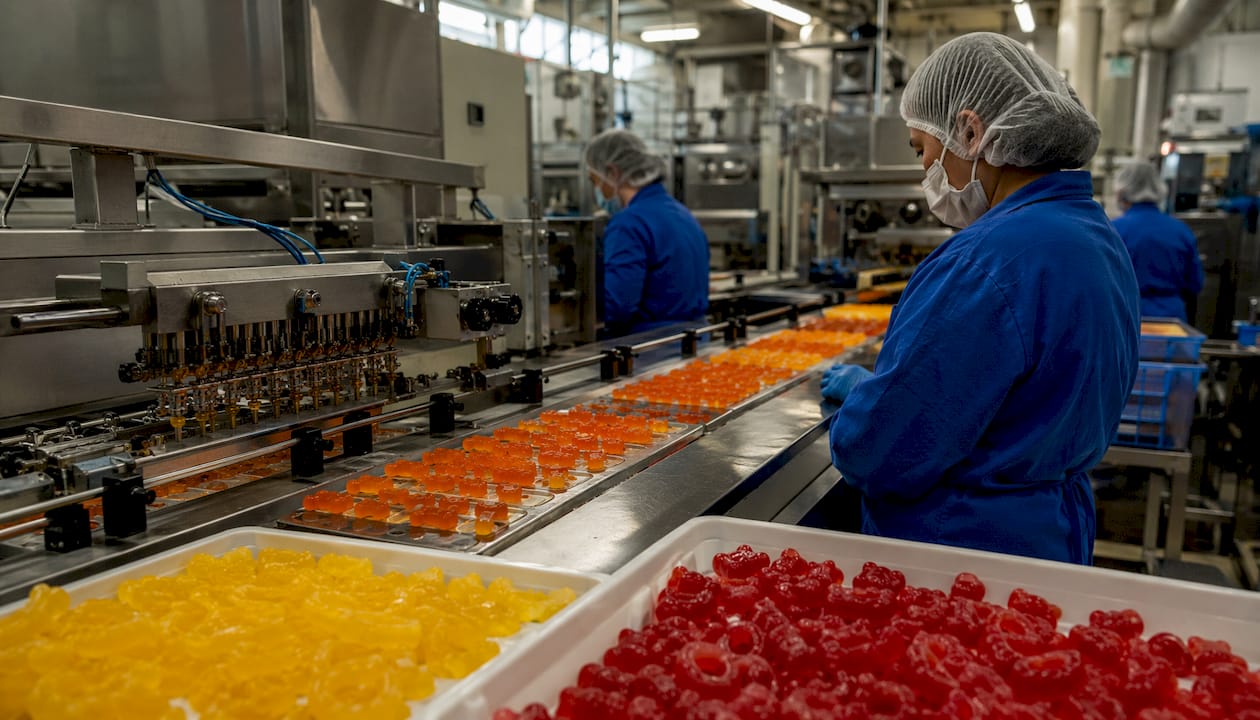
That liquid gets poured or deposited into molds, which determine the final shape, whether that is a bear, a ring, or a flat sheet. The molds move through a cooling tunnel where the mixture sets into its chewy texture. After demolding, pieces are coated with carnauba wax or oil to prevent sticking and improve appearance. Vitamins like ascorbic acid are often added at this stage, which is why you see “Vitamin C” on the label of a product that started with heavily processed fruit ingredients.
The entire process prioritizes shelf stability, consistent texture, and flavor intensity over nutritional preservation. Heat and concentration destroy heat-sensitive vitamins. Fiber never makes it in because the source material, juice concentrate, has already had it removed. The result is a product that tastes like fruit and looks like fruit but functions in your body more like a piece of candy.
Tojexpress carries a wide selection of American fruit snacks and Caribbean treats, so you can explore the full range of what these products look like across brands and formats.
Key Takeaways
American fruit snacks are processed gummy confections made from fruit juice concentrate and sugar, classified by nutrition experts as desserts rather than genuine fruit servings.
| Point | Details |
|---|---|
| Core composition | Fruit juice concentrate, sugar, gelatin, and starches make up the base of nearly all commercial fruit snacks. |
| Nutritional gap | Only dried fruit, fruit puree, and canned fruit with juice meet USDA nutrient density guidelines among fruit snack categories. |
| Historical origin | Louis Shalhoub invented Joray Fruit Rolls in the 1970s as backpacker food; General Mills popularized the category in 1983. |
| Health halo risk | Marketing emphasizes fruit ingredients while downplaying high added sugar and near-zero fiber content. |
| Consumer behavior | A substantial proportion of Americans consume “little treats” like fruit snacks multiple times weekly, treating them as indulgences rather than nutrition. |