

Tin Mackerel: What It Is, Why It's Worth Eating
TOJEXPRESS.COM-Antonio HenryTin mackerel is mackerel that’s been cleaned, cooked, and sealed inside a can with oil, water, or sauce, making it fully ready to eat the moment you open it. No cooking required. The fish goes through a high-heat pressurized process called retort canning, which sterilizes the contents, softens the small bones until they’re edible, and locks in the nutrients. Here’s what you need to know upfront:
- Shelf-stable and ready-to-eat: Canned mackerel is fully cooked during processing and safe to eat straight from the tin.
- Nutrient-dense: It’s one of the better sources of omega-3 fatty acids, protein, vitamin D, and calcium you’ll find in a pantry staple.
- Small bones, no problem: The retort process softens them completely, so they’re edible and actually add calcium to your diet.
- Species matters for mercury: Atlantic and chub mackerel are the safer, lower-mercury choices. King mackerel is one to limit.
Key Takeaways
Tinned mackerel is one of the most nutritionally complete pantry staples available — choose Atlantic or chub varieties, watch the sodium, and you have a ready-to-eat protein source that works in dozens of meals.
| Point | Details |
|---|---|
| Species determines safety | Choose Atlantic or chub mackerel for lower mercury; avoid king mackerel if pregnant or feeding young children. |
| Already fully cooked | Canned mackerel needs no cooking — add it to hot dishes at the very end to avoid drying it out. |
| Strong nutrient profile | A 100 g serving provides roughly about 20 g protein and about 2 g of omega-3 fatty acids. |
| Check the label | Look for species name, minimal ingredients, MSC certification, and sodium content before buying. |
| Tojexpress carries Caribbean brands | Grace Mackerel and Sea Star Salted Mackerel are available online and in-store in the Atlanta area. |
This article is general information, not a substitute for advice from a qualified doctor. Consult a qualified healthcare professional about your own circumstances before acting on anything here.
Table of Contents
- What is tin mackerel, exactly?
- Nutritional benefits of tinned mackerel
- Is tinned mackerel safe? Mercury, sodium, and what to watch for
- How to eat and cook with tinned mackerel
- How to pick a quality tin of mackerel
- How long does tinned mackerel last?
- Honest downsides of eating tinned mackerel
- Where to buy tin mackerel: Caribbean brands at Tojexpress
- Why tinned mackerel belongs in every pantry
- Tojexpress stocks the Caribbean mackerel brands you’re looking for
- Sources
What is tin mackerel, exactly?
Tinned mackerel is a preserved fish product made from several different mackerel species. The three you’ll see most often in U.S. stores are Atlantic mackerel (Scomber scombrid), chub mackerel (Scomber japonicas), and horse mackerel (Trachurus species). Spanish and king mackerel occasionally appear in specialty products, but they carry higher mercury levels and show up less frequently in everyday canned formats.
The fish comes packed in a few different ways:
- Fillets in olive oil — richest flavor, great for eating straight or on toast
- Fillets in vegetable oil — milder, more neutral
- In tomato sauce — ready-to-use, often with added seasoning
- In mustard or hot sauce — punchy, no prep needed
- Smoked or plain in water — lower calorie, cleaner flavor
The canning process itself is straightforward: the fish is cleaned and trimmed, packed into cans with the chosen liquid, sealed, then heated under pressure in a retort cooker. That heat both cooks the fish and eliminates any bacteria, which is why an unopened tin can sit on your shelf for years. The texture ends up softer and flakier than fresh mackerel, and the flavor is more concentrated. Think of it as the difference between a fresh tomato and a good canned one: different, but useful in its own right.
Nutritional benefits of tinned mackerel
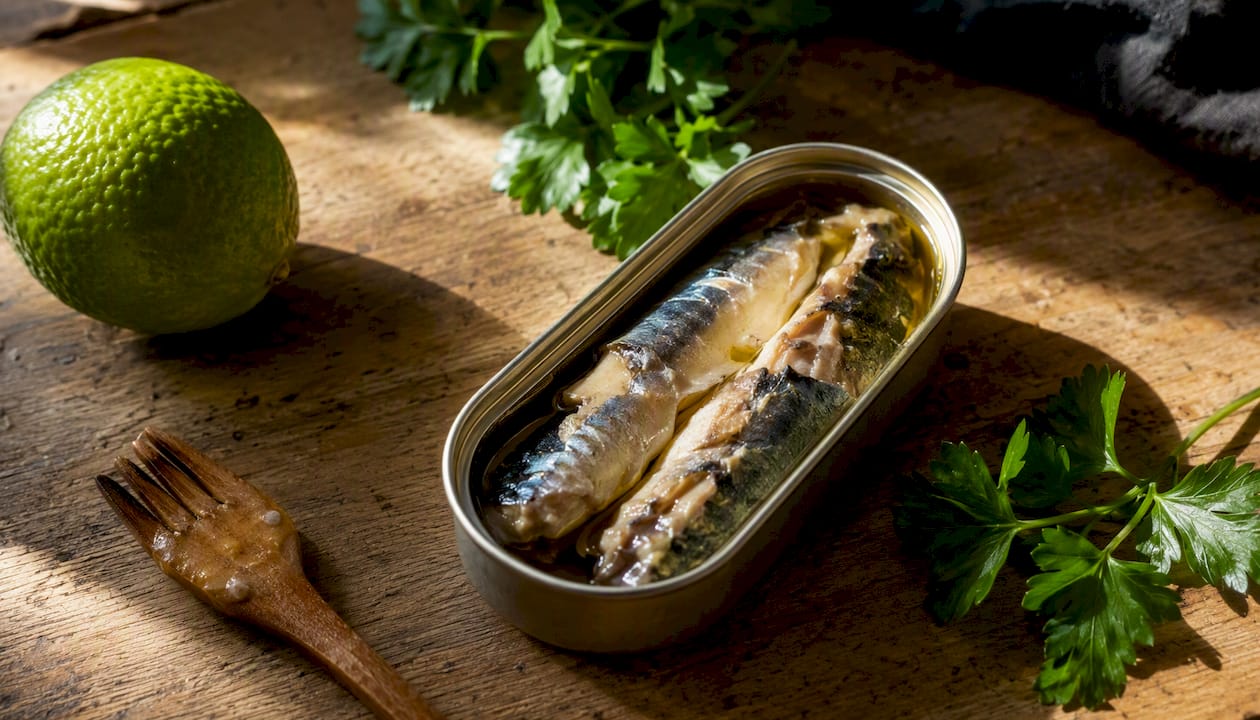
Mackerel is an oily fish that delivers omega-3 fatty acids, protein, vitamin D, and B vitamins in a single small can. The softened bones also contribute meaningful calcium, which you don’t get from boneless fish options.
Here’s a general snapshot of what a 3.5 oz (100 g) serving of canned mackerel typically provides:
| Nutrient | Approximate Amount per 100 g |
|---|---|
| Calories | 200 kcal |
| Protein | about 20 g |
| Total fat | about 11 g |
| Omega-3 fatty acids (EPA + DHA) | about 2 g |
| Vitamin D | about 250 IU |
| Calcium (from softened bones) | about 250 mg |
| Sodium (varies by packing) | about 250 mg |
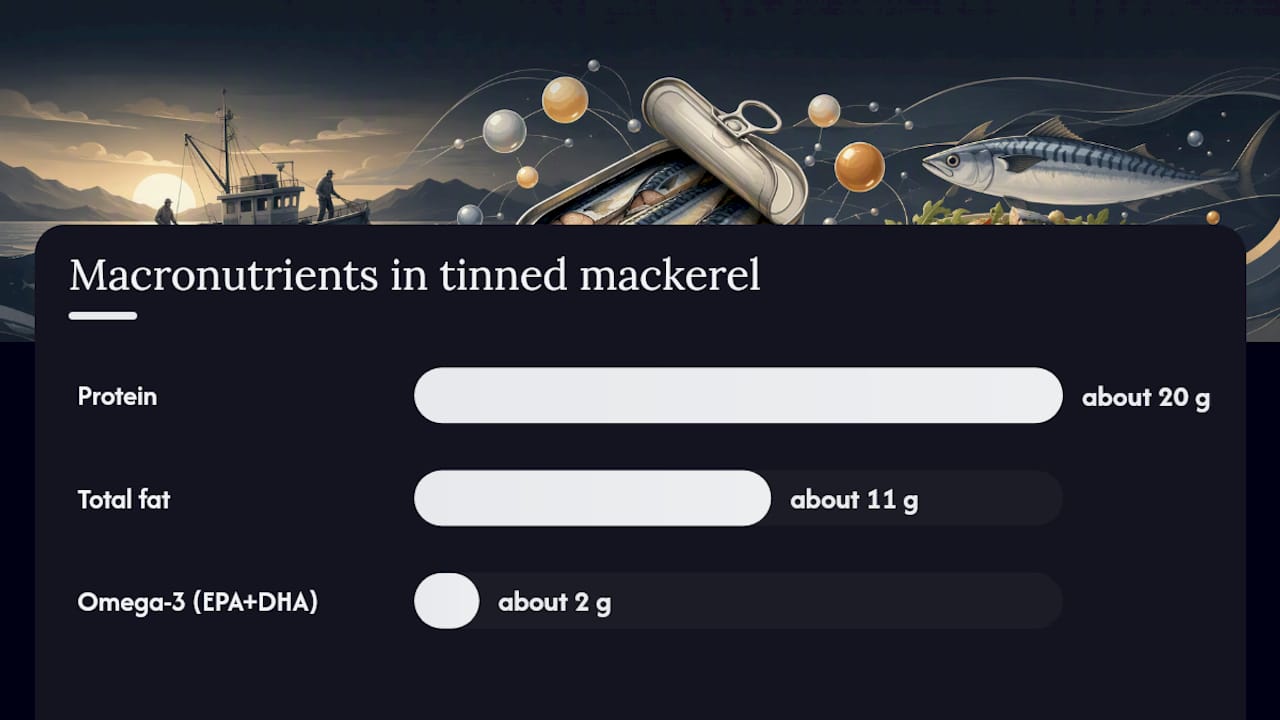
Values are general estimates for Atlantic/chub mackerel packed in oil or water. Actual figures vary by brand and packing medium.
The omega-3 content is the headline number. The Mayo Clinic notes that omega-3 fatty acids from oily fish are linked to reduced risk of heart disease, and mackerel delivers among the highest concentrations of any commonly canned fish. A single serving can cover an important part of the daily omega-3 intake many adults need, without any cooking, prep, or refrigeration before you open it.
Pro Tip: If you’re watching sodium, look for tins labeled “no salt added” or “low sodium.” The fish itself is naturally flavorful enough that you won’t miss it.
Is tinned mackerel safe? Mercury, sodium, and what to watch for
The safety picture for canned mackerel is mostly good, with one important nuance: species selection.
The FDA’s data on mercury in commercial fish shows a clear split between mackerel types. Atlantic and chub mackerel sit in the low-mercury category, making them suitable for regular consumption. King mackerel is a different story — it’s classified as a high-mercury fish, and the FDA recommends that pregnant people, nursing mothers, and young children avoid it entirely. Spanish mackerel falls in the middle and should be eaten in moderation by those groups.
Who should be especially careful:
- Pregnant people and those who may become pregnant
- Nursing mothers
- Children under 11 years old
- Anyone eating large portions multiple times per week
Beyond mercury, there are a few other things worth knowing:
Sodium is the most common practical concern. Flavored and sauce-packed tins can carry moderate amounts of sodium per serving, which adds up if you’re eating multiple cans a week. Water-packed or no-salt-added options cut that significantly.
Can linings: Many manufacturers have moved away from BPA-based linings, but not all. If this matters to you, look for brands that explicitly state BPA-free packaging on the label.
Damaged tins: Discard any can that’s bulging, deeply dented along a seam, or has a foul odor when opened. These are signs of compromised seals or spoilage.
How to eat and cook with tinned mackerel
The most important thing to understand about cooking with canned mackerel is that it’s already cooked. You’re not cooking it — you’re heating it, or more often, just using it cold. Overheating dries it out fast.
Quick serving ideas that work with no recipe at all:
- Flake it over toast with lemon juice and capers
- Toss it into a green salad with olive oil and Dijon
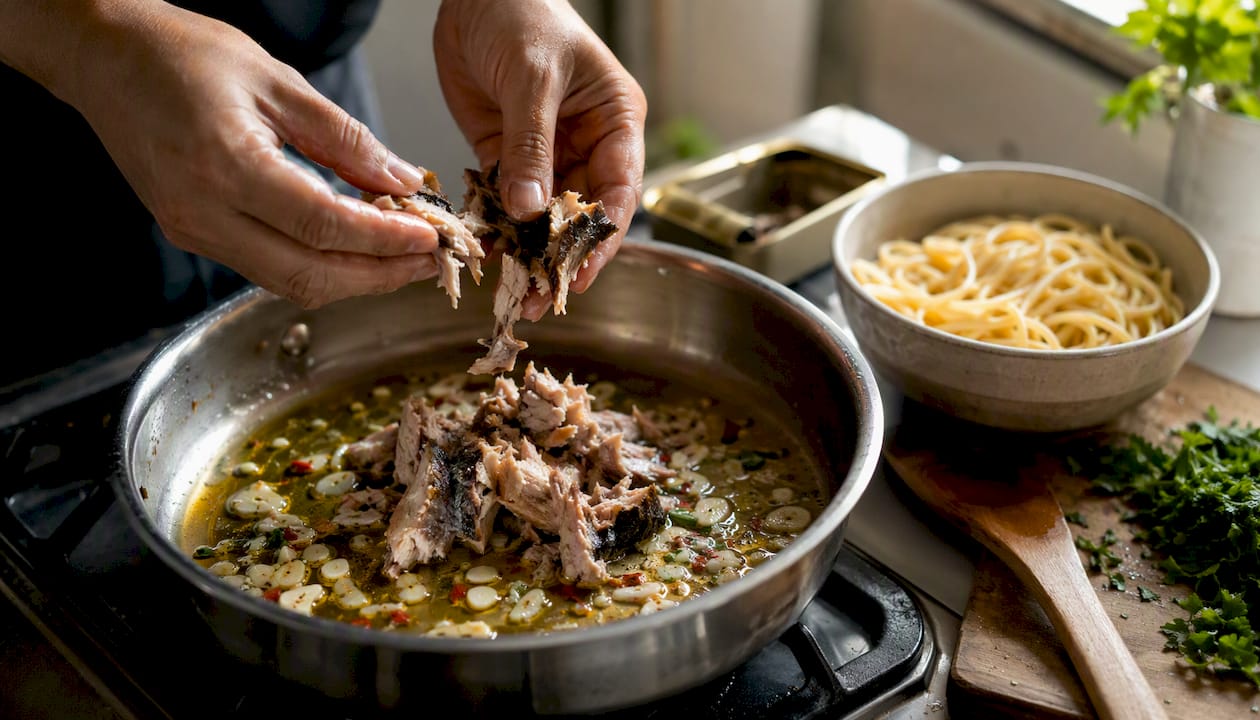
- Stir it into cooked pasta with garlic, cherry tomatoes, and parsley
- Mix with mashed potato and form into fishcakes, pan-fried until golden
- Blend with cream cheese and hot sauce for a fast dip
- Serve over rice with sliced scallions and soy sauce
- Eat straight from the tin with crackers for a high-protein snack
Three quick recipe outlines:
Mackerel pasta (15 minutes): Cook pasta. In a pan, warm olive oil with garlic and red pepper flakes for 60 seconds. Add drained mackerel, break it up gently, and toss with pasta and a splash of pasta water. Finish with lemon zest and fresh parsley.
Simple fishcakes (20 minutes): Drain one tin of mackerel and mix with one cup of mashed potato, a beaten egg, salt, pepper, and chopped scallions. Shape into patties and pan-fry in oil over medium heat, about 3 minutes per side.
Mackerel salad (5 minutes): Drain mackerel and flake into a bowl. Add diced cucumber, red onion, a spoonful of Greek yogurt or mayo, lemon juice, and fresh dill. Serve on bread or lettuce cups.
Pro Tip: When adding canned mackerel to a hot dish, stir it in at the very end and remove from heat within 60 seconds. It only needs to warm through — any longer and it turns dry and crumbly.
How to pick a quality tin of mackerel
Not all canned mackerel is equal. The label tells you most of what you need to know before you buy.
What to look for:
- Species name listed clearly — “Atlantic mackerel” or “chub mackerel” is what you want; avoid anything that just says “mackerel” with no species
- Short ingredient list — fish, water or oil, and salt is ideal; a long list of additives is a downgrade
- Packing medium — olive oil adds richness; tomato or mustard sauce means it’s ready to eat as-is; water keeps calories lower
- Catch method and origin — quality-focused reviewers consistently recommend brands that list catch method and country of origin, as these details correlate with better texture and flavor
- Sustainability labels — look for the Marine Stewardship Council (MSC) certification or check Seafood Watch recommendations for mackerel before you buy
- No added sugar — some flavored sauces sneak sugar in; check the label
A quick priority order when choosing:
- Confirm the species (Atlantic or chub for lower mercury)
- Check the packing medium for your intended use
- Look for MSC or Seafood Watch-approved sourcing
- Scan the sodium content
- Check the best-by date and inspect the can for damage
NOAA fisheries data provides context on U.S. fish stock health, and Atlantic mackerel caught with lower-impact gear tends to carry a lighter environmental footprint than larger predatory species. FoodPrint also notes that small, lower-trophic fish like mackerel generally represent a more sustainable seafood choice than high-trophic options.
How long does tinned mackerel last?
Unopened cans are built for long-term storage. Most commercially canned mackerel carries a best-by date of two to five years from the production date, and the product typically remains safe beyond that date if the can is undamaged. Store tins in a cool, dry spot away from direct sunlight — a pantry shelf or kitchen cabinet works fine.
Once you open a tin, the rules change:
- Transfer any unused fish to a non-metal container with a lid (metal can impart an off-flavor to leftovers)
- Refrigerate immediately
- Eat within 2–3 days for oil-packed mackerel, or within 1–2 days for water-packed or sauce-packed varieties
- If it smells off or looks discolored, discard it
One firm rule: if an unopened can is bulging, leaking, or has visible rust along the seam, throw it out without opening it.
Honest downsides of eating tinned mackerel
Tinned mackerel has real advantages, but a few limitations are worth knowing:
- Stronger flavor: Mackerel has a pronounced, oily taste that some people find too fishy. It’s noticeably bolder than canned tuna.
- Higher sodium in flavored tins: Tomato sauce and seasoned varieties can push sodium well above what plain water-packed fish contains.
- Mercury risk with the wrong species: King mackerel in particular is a fish to avoid for vulnerable groups.
- Added oils and sugars: Some flavored tins add more oil than the fish needs, or include sugar in the sauce.
- Texture gap vs. fresh: The canning process softens the flesh considerably. If you want a firm, flaky fillet, fresh mackerel is a different experience.
How does it compare to other canned fish? Canned tuna is milder and more familiar to most U.S. shoppers, but Atlantic and chub mackerel can deliver equal or greater omega-3s than tuna while often sitting in a lower mercury category. Sardines are a close competitor: similar omega-3 content, similar sustainability profile, slightly smaller and softer. Choose mackerel when you want a meatier texture and a richer flavor. Choose sardines when you want something milder and smaller. Choose tuna when the recipe calls for a neutral base.
Where to buy tin mackerel: Caribbean brands at Tojexpress
For U.S. shoppers looking for Caribbean-style canned mackerel, a few specific products stand out at Tojexpress:
- Grace Mackerel in Tomato Sauce (1.55 oz) — a classic Caribbean pantry staple, ready to eat straight from the tin or stirred into rice
- Grace Mackerel Tomato Sauce Hot & Spicy — the same format with added heat, popular for quick rice dishes and breakfast preparations
- Sea Star Seafoods Salted Mackerel — a preserved, salted format common in Caribbean cooking, used for seasoning dishes rather than eating straight
- Maggie Fish Seasoning — a natural pairing for any mackerel recipe that needs a flavor boost
Grace is one of the most recognized Caribbean food brands available in U.S. retailers, and the small-tin format is standard in Caribbean grocery and convenience stores. These products are available online at Tojexpress and in-store for shoppers in Atlanta and surrounding areas including Stone Mountain, Decatur, Lithonia, Conyers, Tucker, Snellville, and Rockdale, Georgia. For more Caribbean canned food ideas, the Tojexpress blog covers a range of pantry staples worth exploring.
Why tinned mackerel belongs in every pantry
The case for keeping a few tins of mackerel on hand is straightforward: it’s one of the most nutritionally complete convenience foods you can buy, and it costs a fraction of what you’d pay for fresh fish. I keep it around because it solves the “I need protein in five minutes” problem better than almost anything else on a shelf. Open a tin, flake it over whatever’s in the fridge, and you have a meal.
What gets overlooked is how well it fits Caribbean cooking specifically. Grace mackerel in tomato sauce isn’t just a canned fish product — it’s a pantry shortcut that connects to a whole cooking tradition. Paired with rice, seasoned with Maggie Fish Seasoning, or folded into a quick breakfast, it’s a different experience than the plain olive oil tins that dominate U.S. specialty food stores. Both have their place. The point is that tinned mackerel is more versatile than most people give it credit for, and the Caribbean formats available at stores like Tojexpress make it even easier to cook with.
Tojexpress stocks the Caribbean mackerel brands you’re looking for
If you’ve been looking for Grace Mackerel or Sea Star Seafoods salted mackerel in the Atlanta area, Tojexpress carries both. The store focuses on American and Caribbean grocery staples, which means the canned fish selection goes beyond what most mainstream supermarkets stock.

Grace Mackerel in Tomato Sauce, the Hot & Spicy variety, and Sea Star Salted Mackerel are all available through Tojexpress online or in-store for customers in Atlanta, Stone Mountain, Decatur, Lithonia, Conyers, Tucker, Snellville, and Rockdale, Georgia. Order online and pick up in-store, or browse the full Caribbean grocery selection at tojexpress.com.
Sources
- Mercury levels in commercial fish and shellfish (FDA)
- Fisheries of the United States 2017 report (NOAA)
- Omega-3s and heart health (Mayo Clinic)
- Seafood recommendations (Seafood Watch)
- Eating tinned mackerel: a 2026 guide to safety & nutrition (EatHealthy365)