
Types of Canned Caribbean Foods for Home Cooks
TOJEXPRESS.COM-Antonio HenryTL;DR:
- Canned Caribbean foods offer a convenient way to prepare authentic island dishes without fresh ingredients, emphasizing careful handling and proper selection. They include staples like ackee, legumes, seafood, vegetables, and tropical fruits, each requiring specific preparation techniques for optimal flavor and texture. Stocking these canned items allows home cooks to recreate Caribbean flavors efficiently, with authenticity guaranteed by choosing reputable brands and sources.
Caribbean cooking is deeply personal, layered with flavor, and not always easy to replicate when fresh island ingredients are out of reach. That’s exactly where the types of canned Caribbean foods come in. From iconic canned ackee to pigeon peas and seasoned mackerel, these shelf-stable staples let you cook authentic dishes any night of the week without hunting down specialty markets. The challenge is knowing what to look for, which varieties matter, and how to use them well. This guide covers exactly that.
Table of Contents
- Key takeaways
- Types of canned Caribbean foods worth knowing
- 1. Canned ackee
- 2. Canned kidney beans and pigeon peas
- 3. Canned Caribbean seafood and fish
- 4. Canned callaloo and vegetables
- 5. Canned tropical fruits
- Comparing popular canned Caribbean pantry staples
- My honest take on cooking with canned Caribbean staples
- Stock your kitchen with authentic Caribbean canned foods
- FAQ
Key takeaways
| Point | Details |
|---|---|
| Ackee requires careful handling | Drain, rinse, and heat gently to preserve texture without overcooking. |
| Rinsing canned beans reduces sodium | A quick rinse cuts sodium by about 40% while keeping convenience intact. |
| Canned fish format affects dish texture | Choose chunk tuna for hearty stews and flaked for smooth spreads or patties. |
| Label origin signals authenticity | Look for Jamaican or Caribbean-sourced labeling to confirm genuine product origins. |
| Bean liquid adds depth to rice and peas | The cooking liquid from canned beans builds traditional color and flavor without extra effort. |
Types of canned Caribbean foods worth knowing
Not every can on the shelf is created equal, and Caribbean canned food varieties span a surprisingly wide range: fruits, legumes, seafood, and vegetables, each with their own preparation needs and culinary roles. Before you start filling your pantry, it pays to understand what separates an authentic product from a generic one.
Here are the core factors to evaluate before buying any canned Caribbean ingredient:
- Country of origin: Look for labels indicating the product was sourced or processed in Jamaica, Trinidad, Barbados, or other Caribbean islands. “Imported from” matters more than where the can was packaged locally.
- Packing medium: Oil, water, or brine affects flavor and texture dramatically. Oil-packed fish is richer. Water-packed beans are easier to control for salt.
- Form of the product: Whole, chunk, paste, or chopped. Whole ackee holds up better in finishing dishes. Chunked fish works for stews. Paste forms suit sauces.
- Sodium content: Many canned Caribbean foods are brine-packed with high sodium. Always check the label and plan your seasoning accordingly.
- Shelf life and can integrity: Check for undented, rust-free cans. Most canned Caribbean foods last two to five years when stored in a cool, dry space.
Pro Tip: When shopping for popular Caribbean canned foods, bring your phone. A quick scan of the label’s ingredient list tells you more about authenticity than the front-facing design ever will.
1. Canned ackee
Ackee is the national fruit of Jamaica and the centerpiece of ackee and saltfish, arguably the most recognized Caribbean breakfast dish. You will not find fresh ackee easily outside the Caribbean, and for good reason. Ackee is poisonous when unripe, so canned versions exported to the US are processed at peak ripeness and verified safe before sale.
The flavor is buttery and mild, with a texture that resembles scrambled eggs once cooked. That soft, custardy quality is exactly why handling matters so much.
Here is what you need to know about using canned ackee:
- Canned ackee is pre-cooked and shelf-stable, meaning you only need to drain, rinse, and heat it briefly before serving.
- Standard cans are typically 19 oz, enough for a full ackee and saltfish dish for two to four people.
- Treat it as a finishing ingredient, not a long-cook item. Add it at the end of your recipe to keep the texture intact.
- Top brands known for quality include Linstead Market, Spur Tree, and Carib, all recognized for authentic flavor and minimal processing.
Canned ackee has made authentic Jamaican cooking accessible to expats and food lovers across the US. Without it, one of the Caribbean’s most iconic dishes would simply not exist outside the island for most people.
Pro Tip: Never stir canned ackee aggressively in the pan. Fold it in gently at the very end to preserve those whole, tender pieces that make the dish visually and texturally appealing.
2. Canned kidney beans and pigeon peas
Legumes are the backbone of Caribbean cooking. Rice and peas is not just a side dish; it is a cultural institution across Jamaica, Trinidad, Barbados, and beyond. The “peas” in that dish are usually kidney beans or pigeon peas, and canned versions make weeknight cooking genuinely realistic.
Canned kidney beans save significant time compared to soaking and boiling dried beans overnight. You get consistent texture, and rinsing the beans reduces excess sodium without losing any of the bean’s depth.
Here is a breakdown of the most useful canned legumes for Caribbean cooking:
- Red kidney beans: The classic choice for Jamaican rice and peas. Use them rinsed for cleaner flavor, or retain a small amount of the liquid for color.
- Pigeon peas (gungo peas): Popular in Trinidadian and Jamaican cooking, with an earthier, nuttier flavor than kidney beans. Available canned in most Caribbean grocery sections.
- Black-eyed peas: Used in dishes across the Eastern Caribbean. Mild, creamy, and quick to work with from a can.
One practical trick many home cooks overlook: the bean liquid adds flavor and color when making rice and peas. Instead of discarding the entire can’s liquid, consider using a portion to replicate the traditional preparation.
Rinsing canned beans reduces sodium by around 40%, which matters when your dish already includes salted fish or seasoned coconut milk.
3. Canned Caribbean seafood and fish
Seafood is a daily reality in Caribbean cooking, and canned varieties carry a lot of that tradition into pantry-friendly format. The most common types of canned fish used in Caribbean food recipes are tuna, sardines, and mackerel, each with a distinct role depending on the dish.
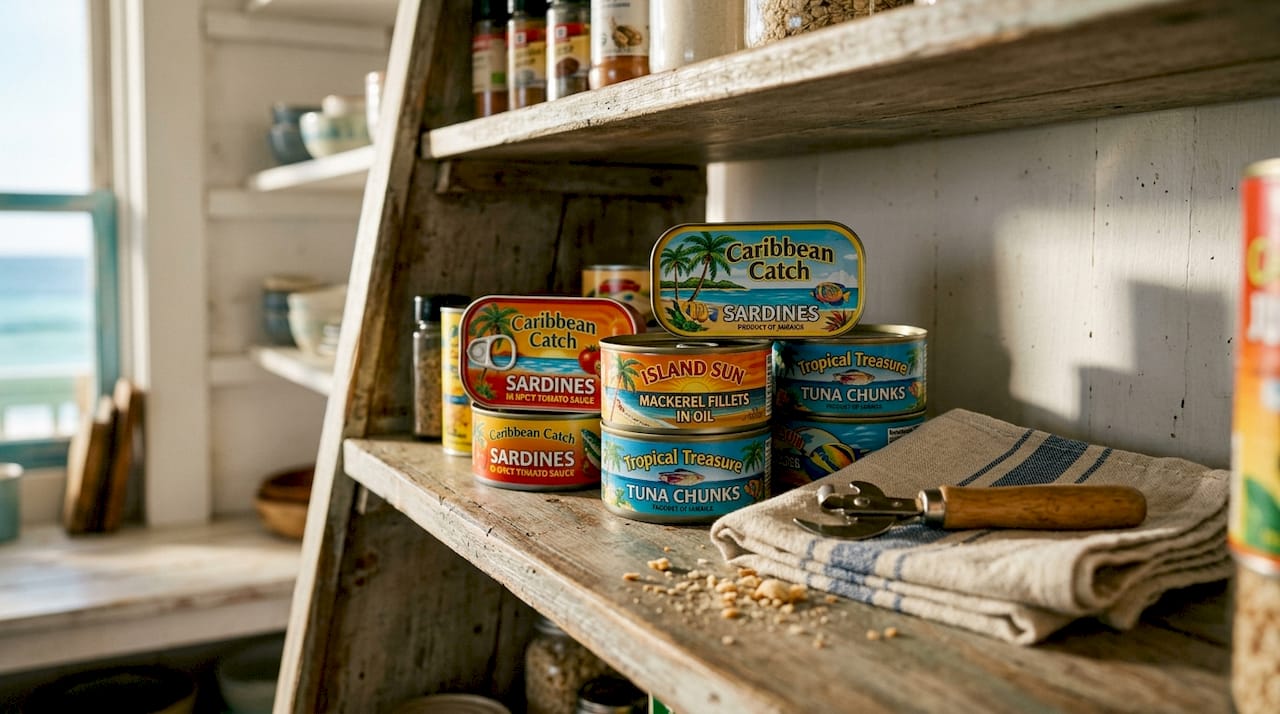
Packing medium changes everything here. Oil-packed fish is richer and more savory, ideal for a quick stew or filling for dumplings. Water-packed fish is milder and more versatile for dishes where you want to control flavor yourself.
| Canned fish type | Best packing medium | Common Caribbean use |
|---|---|---|
| Chunk tuna | Water or oil | Stews, rice dishes, fritters |
| Flaked tuna | Water | Sandwiches, patties, mashed fillings |
| Sardines | Oil or tomato sauce | Quick skillet dishes, bread spreads |
| Mackerel | Brine or tomato sauce | Rundown, stewed fish, rice bowls |
Chunk tuna gives heartier pieces while flaked is better for mashing into smooth preparations. Canned tuna is typically sold in 5 oz cans and available in chunk or flaked forms in both oil and water. When shopping for canned Caribbean ingredients in this category, match the format to the dish before you buy.
Canned fish paste, though less common, also appears in Caribbean kitchens. It works well as a base for seasoning rice or sauces where you want fish flavor without distinct pieces.
4. Canned callaloo and vegetables
Callaloo is one of the most distinctly Caribbean vegetables out there. A leafy green similar to spinach or taro leaves, it is the foundation of callaloo soup and stewed callaloo, two dishes that appear across Trinidad, Barbados, Jamaica, and St. Lucia. Fresh callaloo is nearly impossible to find in most American grocery stores, which makes the canned version especially useful.
Some vegetables are genuinely better canned than fresh for prep time and consistency. Callaloo is one of them. It is already softened, pre-seasoned in many brands, and ready to work into a dish without any lengthy prep.
Other canned vegetables worth keeping in a Caribbean-focused pantry:
- Canned tomatoes: Used in stewed chicken, curry bases, and brown stew fish across the Caribbean.
- Canned coconut milk: Technically a liquid, but shelf-stable and a non-negotiable base for rice and peas, curries, and porridge.
- Canned jackfruit: Gaining popularity as a plant-based meat substitute in Caribbean-inspired dishes. Young jackfruit in brine takes on seasoning well.
- Canned lychees: Common in Caribbean desserts and fruit punches, especially in regions with Asian culinary influence like Trinidad and Guyana.
Pro Tip: When using canned callaloo, drain it well before cooking. The excess liquid dilutes seasoning and makes the finished dish watery instead of rich and concentrated.
You can find a full breakdown of how these items fit together in a Caribbean food pantry checklist designed for authentic island cooking.
5. Canned tropical fruits
Beyond ackee, the Caribbean produces a range of fruits that show up in canned form and work beautifully in both savory and sweet cooking. These are the types that round out your pantry when fresh produce is not available or practical.
- Canned mango: Great for salsas, glazes, and Caribbean-style curry sauces. Look for varieties packed in light syrup or juice rather than heavy syrup.
- Canned guava: Used in desserts, guava pastries, and beverages. Guava paste (technically canned or jarred) is a pantry workhorse for both sweet and savory applications.
- Canned coconut cream: Thicker and richer than coconut milk, used for Jamaican rum cake, sweet potato pudding, and smoothies.
- Canned soursop: A creamy, tropical fruit used primarily for drinks and ice cream. Canned pulp is a practical substitute for fresh.
The best canned Caribbean dishes often combine two or three of these canned elements together. A quick jerk chicken with canned mango salsa or a coconut curry using canned pigeon peas and coconut milk takes under 30 minutes with a stocked pantry.
Comparing popular canned Caribbean pantry staples
When you are deciding which canned foods from the Caribbean to keep stocked, it helps to see the categories side by side.
| Category | Convenience level | Flavor intensity | Best for |
|---|---|---|---|
| Canned ackee | High (no prep required) | Mild, buttery | Ackee and saltfish, rice dishes |
| Canned legumes | High (rinse and go) | Earthy, hearty | Rice and peas, soups, stews |
| Canned seafood | High (ready to use) | Bold, savory | Stews, patties, quick skillet dishes |
| Canned vegetables | Medium (drain and season) | Varies by type | Soups, side dishes, curry bases |
| Canned tropical fruits | Medium (light prep) | Sweet to tangy | Desserts, sauces, beverages |
Price-wise, canned legumes and canned fish offer the best value per serving. Canned ackee runs higher because of import costs and quality control requirements, but even a single 19 oz can yields multiple servings at a fraction of what a restaurant dish would cost.
My honest take on cooking with canned Caribbean staples
I have spent years cooking Caribbean food in American kitchens, and the thing most people get wrong is treating canned ingredients as inferior to fresh ones. That thinking misses the point entirely. Canned ackee is not a compromise. For expats and home cooks outside the Caribbean, canned ackee is the only reliable option that is both safe and available. Fresh ackee picked at the wrong stage of ripeness is genuinely dangerous. The canned version removes that risk entirely while delivering authentic flavor.
What I have learned is this: success with canned Caribbean ingredients is almost entirely about technique. You can ruin canned ackee by overcooking it into mush, just as easily as you can ruin canned beans by not rinsing them and ending up with an over-salted dish. The can does not do the cooking for you. It just removes the hardest parts of prep.
Canned ingredients are perfect for quick weekday cooking, but they still reward attention. Season thoughtfully. Rinse when needed. Add soft items last. And do not be afraid to use the bean liquid. Some of the most traditional Caribbean flavors in rice and peas come from exactly that liquid.
— ANTONIO
Stock your kitchen with authentic Caribbean canned foods
If this article has made you want to start building out your Caribbean pantry, the good news is you do not have to piece it together from five different stores.
Tojexpress carries a wide selection of authentic canned Caribbean ingredients, from canned ackee and pigeon peas to seasoned mackerel, callaloo, and tropical fruit products. Everything you read about here is the kind of product you can shop at Tojexpress, a convenience store built specifically around American and Caribbean products. No guessing on authenticity, no hunting specialty stores. Browse the full selection and start cooking the dishes you actually want to make.
FAQ
What are the most popular types of canned Caribbean foods?
The most popular types include canned ackee, kidney beans, pigeon peas, mackerel, sardines, tuna, and callaloo. These staples appear across Jamaican, Trinidadian, and broader Caribbean cooking traditions.
Is canned ackee safe to eat?
Yes. Canned ackee sold in the US is processed from fully ripe fruit and meets safety standards. Unripe fresh ackee contains hypoglycin A, which is toxic, but the canning process uses only safe, ripe fruit.
How do you reduce sodium in canned Caribbean beans?
Rinsing canned beans under cold water for 30 seconds reduces sodium content by approximately 40% while preserving the bean’s texture and nutritional value.
Can you use canned beans for rice and peas?
Absolutely. Canned kidney beans or pigeon peas work well for rice and peas. Using a portion of the bean liquid in the dish replicates the traditional flavor and color of the slow-cooked version.
Where can I buy authentic canned Caribbean foods in the US?
Specialty Caribbean grocery stores, select ethnic food aisles, and online retailers like Tojexpress stock a broad range of authentic canned Caribbean ingredients including ackee, callaloo, and seasoned fish.