

Why Prefer Caribbean Groceries: Authenticity and Health
TOJEXPRESS.COM-Antonio HenryFinding truly authentic Caribbean groceries in Atlanta can feel like searching for a taste of home in a city full of options. For Caribbean expatriates and curious food lovers, these ingredients are more than just pantry staples—they are living cultural artifacts that bridge generations and homelands. Understanding the real depth behind Caribbean groceries dispels myths and unlocks a world of tradition, community, and vibrant flavors waiting on Atlanta’s shelves.
Table of Contents
- Caribbean Groceries Defined And Common Myths
- Varieties Of Caribbean Ingredients And Staples
- Nutritional Benefits And Health Advantages
- Authenticity For Traditional Recipes And Culture
- Cost, Convenience, And Sourcing Tips
- Comparisons With Mainstream American Groceries
Key Takeaways
| Point | Details |
|---|---|
| Cultural Significance | Caribbean groceries are not just food items; they are cultural artifacts that convey historical narratives and community connections. |
| Nutritional Value | Many Caribbean ingredients are nutrient-rich and support overall health, offering high protein content and essential minerals. |
| Common Myths | Misconceptions about Caribbean groceries often misrepresent their diversity, such as assuming all Caribbean food is spicy or only for Caribbean people. |
| Shopping Strategies | To find authentic Caribbean groceries affordably, consider local ethnic markets, bulk purchasing, and seasonal shopping for the best deals. |
Caribbean groceries defined and common myths
Caribbean groceries represent far more than simple food items - they are living cultural artifacts that carry complex historical narratives and nutritional traditions. These products embody generations of culinary wisdom, connecting Caribbean communities across geographical boundaries through authentic ingredients and preparation techniques.
Traditionally, Caribbean groceries encompass a diverse range of products that reflect the region’s rich multicultural heritage, including:
- Spices and seasonings from multiple cultural influences
- Root vegetables unique to tropical climates
- Preserved foods developed through historical necessity
- Specialty grains and legumes indigenous to Caribbean landscapes
Contrary to widespread misconceptions, Caribbean groceries are not monolithic but represent an incredibly nuanced culinary landscape of diverse traditions. Many people mistakenly believe Caribbean food is uniform, when in reality it represents a complex blend of Indigenous, African, European, and Asian culinary influences that have evolved over centuries.
Several persistent myths frequently misrepresent Caribbean grocery products and food culture. Some of the most common include:
- All Caribbean food is extremely spicy
- Caribbean groceries are only for Caribbean people
- Caribbean ingredients are difficult to prepare
- These products lack nutritional value
These myths often stem from a lack of understanding about the region’s intricate food traditions and the sophisticated culinary techniques developed by Caribbean communities. Authentic Caribbean groceries represent a sophisticated nutritional ecosystem that balances flavor, cultural heritage, and health.
Here’s how common Caribbean grocery myths compare with reality:
| Myth | Why It’s Inaccurate | The Reality |
|---|---|---|
| All foods are very spicy | Ignores regional variations | Many dishes are mild or savory |
| Only for Caribbean people | Overlooks culinary global reach | Enjoyed by diverse communities |
| Hard to prepare | Underestimates versatility | Many recipes are simple |
| Not nutritious | Based on lack of knowledge | Staples are nutrient-rich |
The academic research reveals that Caribbean groceries are deeply intertwined with social and religious practices, far beyond simple sustenance. Food preparation processes in Caribbean cultures involve complex social interactions, particularly highlighting the traditional roles of women and gay men in maintaining these culinary traditions.
Pro tip: When exploring Caribbean groceries, approach them with curiosity and respect for their rich cultural background, understanding that each ingredient tells a unique story of migration, survival, and community.
Varieties of Caribbean ingredients and staples
Caribbean cuisine boasts an incredible diversity of ingredients that reflect the region’s rich agricultural heritage and multicultural influences. Ancient food starches reveal complex culinary practices spanning generations of innovative food preparation techniques.
The core staples of Caribbean cooking include several distinctive ingredient categories:
- Root vegetables: Cassava, yams, sweet potatoes
- Grains: Rice, corn, plantains
- Legumes: Beans, pigeon peas
- Tropical fruits: Breadfruit, coconut, mango
Historically, Caribbean ingredients represent more than simple nutrition - they embody cultural resilience and adaptation. These foods tell stories of Indigenous, African, European, and Asian culinary exchanges that have shaped the region’s distinctive gastronomic landscape.
Ground provisions play a particularly significant role in Caribbean cuisine. Root crop cuisine represents deep cultural traditions that connect communities to their agricultural heritage. These nutrient-dense ingredients like cassava and yams have sustained populations through centuries of social transformation.
The nutritional profile of Caribbean staples is remarkably sophisticated. Many ingredients offer complex carbohydrates, essential minerals, and unique phytonutrients that contribute to overall health and wellness. For instance, cassava provides resistant starch, while pigeon peas offer high-quality plant protein.

Regional variations add further complexity to Caribbean ingredient traditions. Different islands and communities have developed specialized preparation techniques and flavor combinations that make their culinary approach unique. From Jamaican jerk seasonings to Trinidadian curry blends, each tradition represents a nuanced expression of cultural identity.
Pro tip: Explore Caribbean ingredients with an open mind, understanding that each product represents a rich tapestry of historical and cultural significance beyond simple sustenance.
Nutritional benefits and health advantages
Caribbean groceries represent a powerhouse of nutritional excellence, offering an impressive array of health-promoting ingredients that go far beyond basic sustenance. Nutritional qualities of Caribbean agricultural products demonstrate remarkable potential for supporting overall wellness and preventing chronic diseases.
The key nutritional advantages of Caribbean ingredients include:
- High protein content: Pulses like kidney beans and pigeon peas
- Complex carbohydrates: Cassava, plantains, sweet potatoes
- Rich antioxidant profile: Tropical fruits and leafy greens
- Essential minerals: Diverse range of nutrient-dense foods
Traditional Caribbean diets are renowned for their holistic approach to nutrition. Traditional diet benefits reveal profound health impacts through carefully balanced ingredients that support multiple bodily systems.
Immune system support stands out as a critical benefit of Caribbean groceries. The combination of fresh vegetables, seafood, herbs, and spices creates a nutritional framework that enhances the body’s natural defense mechanisms. Ingredients like turmeric, ginger, and tropical fruits provide powerful anti-inflammatory compounds that help protect against cellular damage.
Nutritional diversity is another hallmark of Caribbean cuisine. Each ingredient brings unique health advantages - from the protein-rich legumes that support muscle health to the omega-3 fatty acids found in fresh seafood. The culinary traditions leverage a wide range of ingredients that work synergistically to promote optimal health.
Caribbean groceries aren’t just food - they’re a natural medicine cabinet supporting comprehensive wellness.
Pro tip: Incorporate a variety of Caribbean ingredients into your diet to maximize nutritional benefits and explore the rich flavors of this vibrant culinary tradition.
Authenticity for traditional recipes and culture
Caribbean culinary traditions represent far more than simple recipes - they are living narratives of cultural resilience, migration, and identity. Culinary practices reveal complex cultural negotiations that transcend mere cooking techniques and embody profound historical experiences.
Authentic Caribbean recipes are characterized by several distinctive elements:
- Multilayered heritage: Indigenous, African, European influences
- Adaptable cooking methods: Techniques passed through generations
- Local ingredient preferences: Seasonal and regional variations
- Storytelling through food: Recipes as cultural memory
Cultural preservation emerges as a critical aspect of Caribbean culinary authenticity. Caribbean cookbooks serve as cultural expressions that document and contest national and diasporic identities, transforming recipes into powerful historical archives.
Traditional recipes are not static artifacts but dynamic cultural expressions that evolve with migration and globalization. Each dish tells a story of survival, adaptation, and cultural pride - from the spice blends that reflect colonial trade routes to cooking techniques that preserve ancestral knowledge.
Authentic Caribbean cuisine is a living dialogue between past and present, where every ingredient carries a narrative of resilience and transformation.
Pro tip: When exploring Caribbean recipes, approach them as cultural narratives, not just cooking instructions - listen to the stories embedded in each ingredient and preparation method.
Cost, convenience, and sourcing tips
Navigating Caribbean grocery shopping requires strategic approaches that balance authenticity, affordability, and convenience. Caribbean food security challenges highlight the complex economic landscape that impacts ingredient accessibility and pricing.
Key strategies for cost-effective Caribbean grocery shopping include:
- Local ethnic markets: Often cheaper than mainstream supermarkets
- Bulk purchasing: Reduce per-unit costs for non-perishable items
- Seasonal shopping: Take advantage of produce price fluctuations
- Community buying groups: Share wholesale purchasing costs
Convenience doesn’t have to compromise quality or cultural authenticity. Food procurement strategies reveal multiple approaches for smart, budget-conscious shoppers seeking genuine Caribbean ingredients.
Understanding market dynamics is crucial for budget-conscious Caribbean food enthusiasts. Many specialty ingredients might seem expensive initially, but strategic purchasing can significantly reduce overall costs. Frozen and preserved items often provide more economical alternatives to fresh produce, allowing home cooks to maintain traditional flavor profiles without breaking the bank.
Smart sourcing means balancing cultural authenticity with practical economic constraints.
Pro tip: Build relationships with local Caribbean grocery store owners who can provide insider advice on the best deals and seasonal ingredient availability.
Comparisons with mainstream American groceries
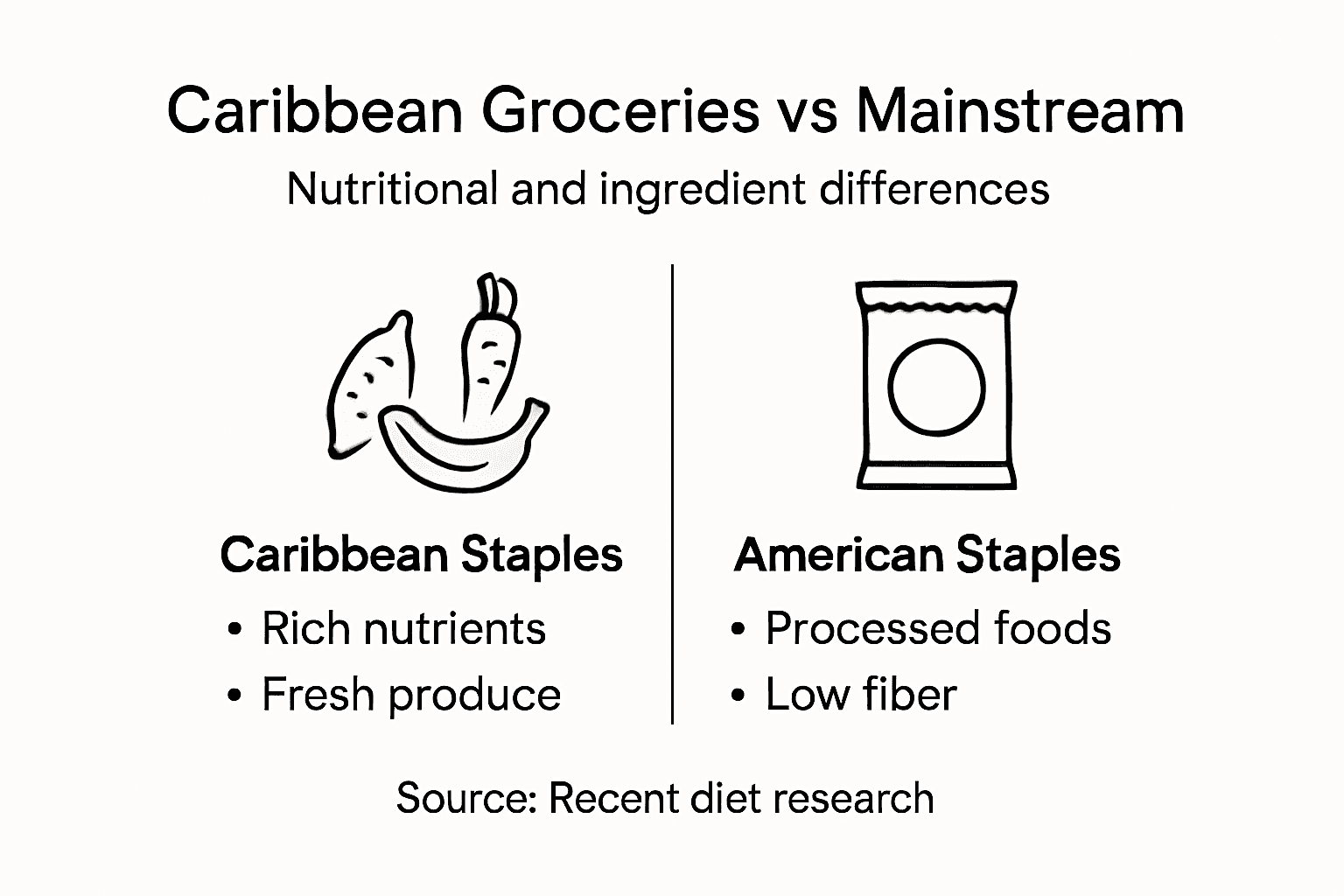
Caribbean groceries represent a fundamentally different approach to food retail compared to mainstream American supermarkets. Caribbean retail grocery sector analysis reveals critical distinctions in supply chain, product diversity, and cultural significance.
Key differences between Caribbean and mainstream American groceries include:
- Cultural authenticity: Direct connection to heritage
- Ingredient diversity: More specialized product ranges
- Import dynamics: Higher dependence on international sourcing
- Preparation methods: Emphasis on traditional cooking techniques
Supply chain structures fundamentally differ between these two grocery ecosystems. Local food supply chain comparisons highlight significant variations in sourcing, distribution, and consumer engagement strategies.
Mainstream American groceries typically prioritize mass production, standardization, and cost-efficiency. In contrast, Caribbean grocery stores maintain a more personal, community-oriented approach. These stores often serve as cultural touchstones, offering not just ingredients but connections to ancestral culinary traditions.
The chart below summarizes distinctions between Caribbean and mainstream American groceries:
| Aspect | Caribbean Grocery Stores | Mainstream American Stores |
|---|---|---|
| Cultural focus | Deep heritage connection | Standardized experience |
| Product diversity | Unique regional ingredients | Mass-market selections |
| Sourcing | High international imports | Domestic supply priority |
| Shopping experience | Community-oriented, personal | Impersonal, efficiency-driven |
Caribbean groceries are more than shopping destinations - they’re living cultural repositories.
Pro tip: Explore Caribbean grocery stores with an open mind, understanding that each product represents a story beyond its price tag.
Discover the Authentic Health Benefits of Caribbean Groceries Today
The article highlights key challenges many face such as accessing authentic Caribbean ingredients that deliver both cultural richness and nutritional value. If you want to enjoy the vibrant flavors and proven health benefits without the hassle of complex sourcing or confusing preparations, we have you covered. Caribbean groceries are not just food items – they are gateways to tradition and wellness.
Experience the full sensory and health advantages by exploring our carefully selected Seasonings that bring authentic Caribbean tastes to your kitchen. Complement your cooking with natural Sweetener options that align with holistic nutrition.

Make the smart choice now at TOJ EXPRESS where quality meets convenience. Embrace Caribbean culinary heritage and boost your wellbeing by shopping authentic products that support your goals. Start your flavorful journey today and transform every meal into a cultural celebration.
Frequently Asked Questions
What are the key nutritional benefits of Caribbean groceries?
Caribbean groceries offer high protein content, complex carbohydrates, rich antioxidants, and essential minerals. Ingredients like kidney beans, cassava, and tropical fruits contribute to overall health and wellness, making them a wholesome choice for a balanced diet.
Are Caribbean groceries suitable for those who are not familiar with Caribbean cooking?
Absolutely! Many Caribbean ingredients are versatile and can be easily incorporated into various dishes. Recipes often range from simple to complex, allowing anyone to explore the flavors of Caribbean cuisine regardless of their cooking experience.
Is it true that all Caribbean food is very spicy?
No, that is a common misconception. While some dishes may be spicy, Caribbean cuisine encompasses a wide variety of flavors, with many dishes being mild or savory instead. The diversity of ingredients and cooking styles allows for unique flavor profiles that are not solely reliant on spiciness.
How do Caribbean groceries compare to mainstream groceries in terms of health benefits?
Caribbean groceries often prioritize traditional ingredients that are nutrient-dense and promote holistic health. Unlike mainstream groceries, which may focus on convenience and mass-produced items, Caribbean products offer a variety of rich flavors and cultural authenticity that contribute significantly to health and wellness.