

Caribbean Breakfast Ideas: 12 Dishes Worth Waking Up For
TOJEXPRESS.COM-Antonio HenryThe best Caribbean breakfast ideas, all in one place
Caribbean breakfasts are not light meals. They are built to carry you through a full day of work, and they taste extraordinary doing it. Here are the most iconic dishes across the islands, plus what to drink alongside them.
Must-try Caribbean breakfast dishes:
- Ackee and Saltfish (Jamaica) — the national dish, often served with fried dumplings or boiled green bananas
- Callaloo (Trinidad, Jamaica) — leafy greens cooked with coconut milk, onions, and Scotch bonnet
- Johnnycakes — fried bread rolls eaten plain or stuffed with saltfish or cheese
- Bammy — cassava flatbread, typically paired with salted mackerel
- Doubles (Trinidad and Tobago) — fried bara bread filled with curried chickpeas and tamarind chutney
- Mangú (Dominican Republic) — mashed boiled plantains topped with sautéed onions
- Saltfish Buljol (Trinidad) — rehydrated salted cod mixed with tomato, onion, and sweet pepper
- Cornmeal Porridge — creamy, spiced, and sweetened with condensed milk
- Fried Plantains — sweet, caramelized, and endlessly versatile
- Coconut Bake — soft, golden bread made with grated coconut, eaten with butter or saltfish
- Mackerel Rundown (Jamaica) — salted mackerel simmered in coconut milk with spices
Beverage pairings:
- Jamaican Blue Mountain Coffee — smooth, low-acid, and considered among the finest in the world
- Sorrel juice (hibiscus) — tart and vibrant, often served cold
- Herbal mint tea — a classic alongside heavier plates
- Fresh tropical juices: mango, pineapple, soursop
Table of Contents
- How to prepare the key dishes and get the flavors right
- What a full traditional Caribbean breakfast plate actually looks like
- Why Caribbean breakfasts taste different on every island
- Tojexpress stocks what you need to cook these dishes at home
- Key Takeaways
How to prepare the key dishes and get the flavors right
The gap between a decent Caribbean breakfast and an authentic one usually comes down to technique, not ingredients. Soaking saltfish overnight, layering spices in the right order, steaming callaloo low and slow — these details matter more than any single ingredient.
Ackee and Saltfish
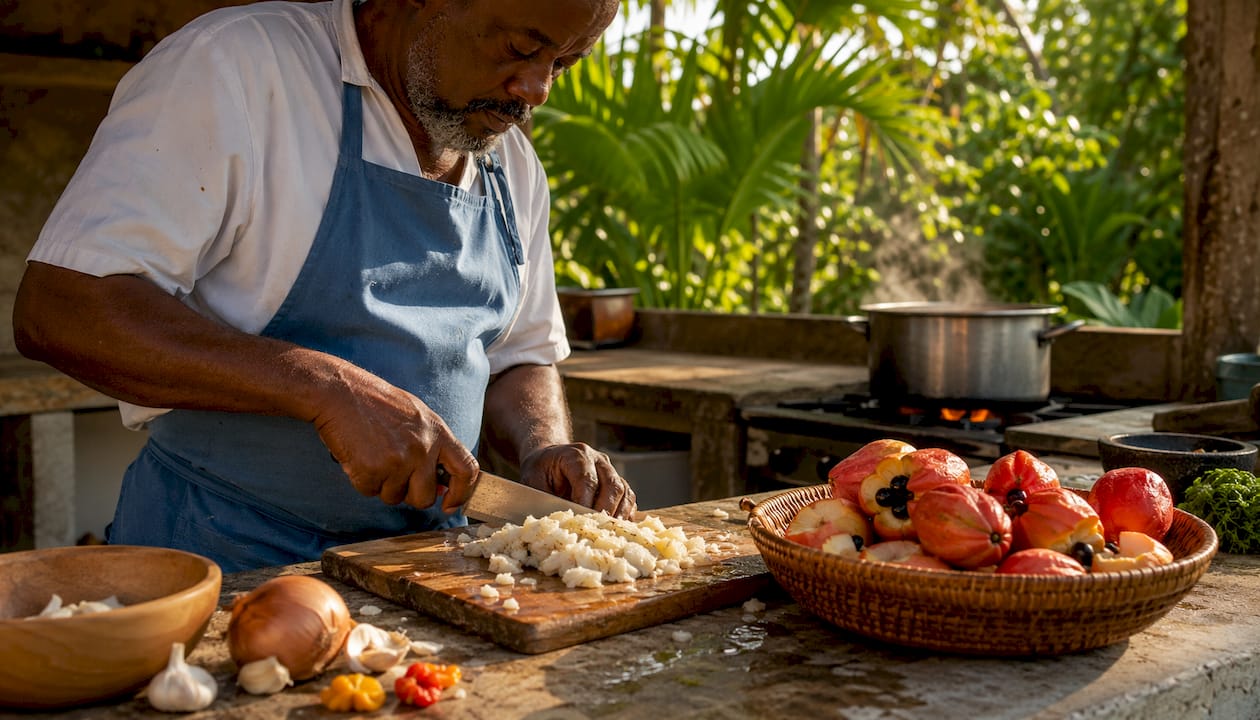
Start by soaking your salted cod in cold water for at least 8 hours, changing the water once or twice to draw out excess salt. Boil it briefly, then flake it into pieces, removing any bones. In a wide skillet, heat oil over medium heat and sauté diced onion, garlic, tomato, and sweet pepper until soft. Add thyme and a small piece of Scotch bonnet (seeds removed if you want less heat). Fold in the flaked saltfish, then gently add the drained, canned ackee last. Ackee breaks apart easily, so stir carefully. Season with black pepper and serve immediately.
What to serve alongside it: fried dumplings, boiled green bananas, or sliced ripe plantains. The contrast between the savory fish and the mild starch is the whole point.
Callaloo
Callaloo varies by island. In Jamaica, it refers to the leaves of the amaranth plant, cooked down with onion, garlic, and Scotch bonnet. In Trinidad, dasheen leaves are used, often simmered with coconut milk and okra into something closer to a thick, creamy soup. Both versions are deeply flavorful. Sauté your aromatics first, add the greens, cover, and let them steam in their own moisture for 10–15 minutes. The leaves should wilt completely and absorb the seasoning.
Johnnycakes
These are simpler than they look. Combine 2 cups of all-purpose flour with 1 tablespoon of baking powder, a pinch of salt, and enough water to form a soft, pliable dough. Rest it for 10 minutes, then shape into small rounds and fry in about an inch of oil over medium heat until golden on both sides. The inside should be fluffy, the outside lightly crisp. Johnnycakes are also called “journey cakes” — a name that hints at their portability and staying power.
Doubles
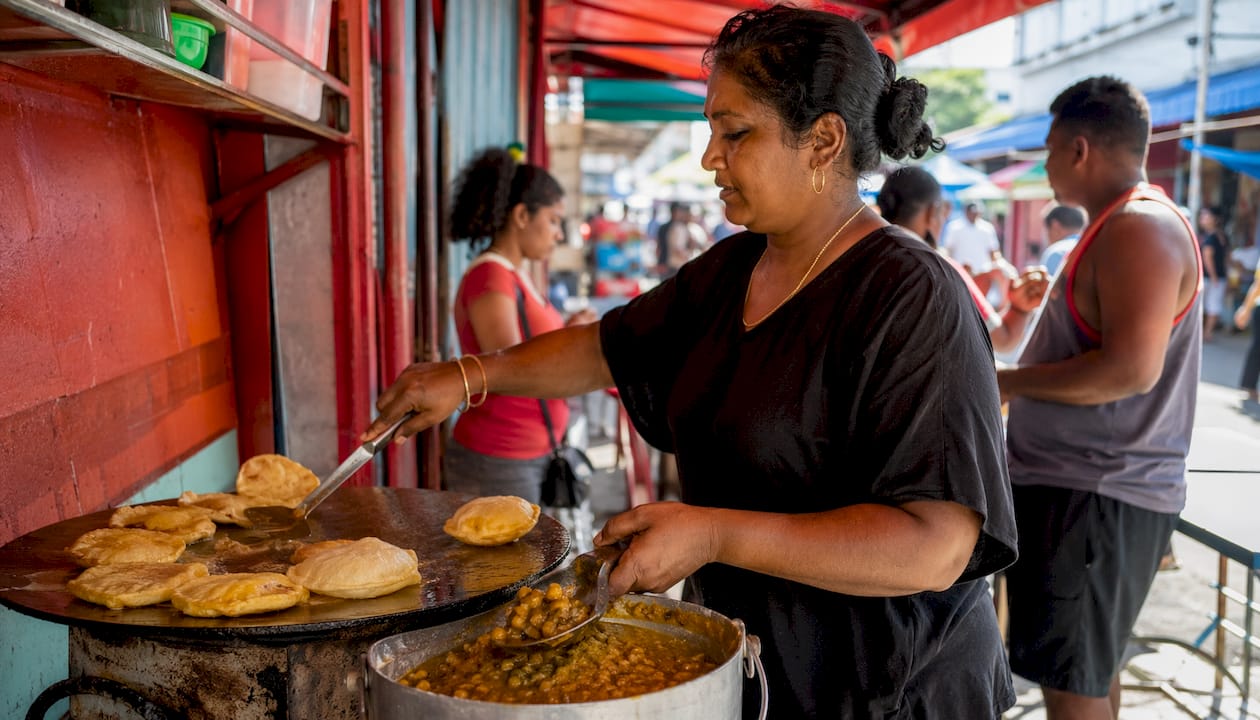
Doubles are Trinidad’s great street food, and they work just as well at home. The bara dough is made from flour, turmeric, and yeast, fried into soft, pliable rounds. The filling is curried chickpeas (channa) cooked with cumin, curry powder, and shadow beni (culantro). Assemble two bara with a generous scoop of channa, then top with cucumber chutney, tamarind sauce, and pepper sauce to taste. For a deeper look at what makes this dish so distinctive, the Doubles flavor profile is worth reading before you cook.
Mangú
Boil green plantains until completely tender, which takes a moderate amount of time. Drain, then mash with butter, a splash of the cooking water, and salt until smooth. The texture should be thick but not stiff. Top with thinly sliced onions that have been sautéed in oil with a little vinegar until soft and slightly caramelized. Mangú is often served alongside fried salami and fried eggs in the Dominican Republic, a combination known as “Los Tres Golpes” (the three hits).
Saltfish Buljol
This is one of the quickest preparations in the Caribbean breakfast repertoire. Soak and boil your salted cod, then flake it finely. Toss with diced tomato, onion, sweet pepper, and a drizzle of olive oil. Some cooks add sliced avocado or hard-boiled egg. Serve at room temperature with bakes or johnnycakes. The whole dish comes together in under 20 minutes once the fish is prepped.
Key ingredients to keep stocked:
- Salted cod (saltfish)
- Ackee (canned is widely available in the US)
- Callaloo leaves or amaranth greens
- Green and ripe plantains
- Scotch bonnet peppers
- Cassava flour and all-purpose flour
- Coconut milk
- Ground provisions: yam, sweet potato, green banana
Pro Tip: Authentic Caribbean breakfast flavor relies on traditional spice layering — thyme goes in early with the aromatics, pimento (allspice) adds depth mid-cook, and Scotch bonnet comes in last so you control the heat. Reversing that order flattens the flavor significantly.
What a full traditional Caribbean breakfast plate actually looks like
Most people raised on continental breakfasts underestimate what a traditional Caribbean morning meal involves. A full Caribbean breakfast combines protein, starch, and vegetables on a single plate, with a hot or cold beverage on the side. It is closer in calorie density to what most Americans would call lunch.
Protein options:
- Saltfish (salted cod), prepared as ackee and saltfish, buljol, or fritters
- Salted mackerel, often in a rundown (simmered in coconut milk)
- Fried or scrambled eggs
- Corned beef, particularly in the Bahamas
Starch options:
- Ground provisions — boiled green bananas, yams, sweet potatoes, and breadfruit — form the hearty, fibrous base of many plates
- Fried dumplings or johnnycakes
- Bammy (cassava flatbread)
- Cornmeal porridge as a standalone starch-forward meal
Vegetable options:
- Steamed callaloo
- Sautéed cabbage with onion and thyme
- Fried plantains (ripe, for sweetness)
- Fresh tomato and avocado
Beverages:
- Blue Mountain coffee, prized for its smooth, low-bitterness profile
- Herbal teas, particularly mint or soursop leaf
- Fresh-pressed tropical juices
The nutritional logic behind this structure is straightforward: a plate built from protein, complex starch, and fiber-rich vegetables provides sustained energy through a long morning of physical work. That is the historical context. Today, many of these dishes are eaten at any hour, not just mornings, because they are simply that satisfying. If you want ideas for how these components translate into side dishes beyond breakfast, the classic Caribbean sides guide covers the overlap well.
A high-fiber, high-protein breakfast built around ground provisions and saltfish fits that nutritional profile naturally, without any modification to the traditional recipe.
Why Caribbean breakfasts taste different on every island
There is no single “Caribbean breakfast.” The diversity across the islands means that what is typical in Kingston looks nothing like what you would find in Port of Spain, Santo Domingo, or Nassau. That variety is the direct result of layered colonial and cultural history.
Every island was shaped by a different combination of indigenous Arawak and Carib foodways, European colonizers (Spanish, British, French, Dutch, Portuguese), enslaved Africans who brought ackee, breadfruit, and specific yam varieties, and later waves of South Asian migrants who introduced curry, roti, and the spice traditions that define Trinidadian cooking. Doubles, for instance, is a direct descendant of Indian street food adapted to local ingredients. Mangú reflects the Spanish colonial staple of plantains elevated into something distinctly Dominican.
The cultural roots of Caribbean breakfasts run deeper than flavor. These were meals built by people who needed to work hard on limited resources, and the ingenuity shows. Cassava, a root crop grown by indigenous peoples for centuries, became bammy. Salted cod, imported cheaply as preserved protein during the colonial era, became the foundation of national dishes across a dozen islands. The ingredients were often imposed by circumstance; what the cooks made of them was entirely their own.
Jamaica’s breakfast tradition is arguably the most varied of any single island. Cornmeal porridge, banana porridge, ackee and saltfish, mackerel rundown, steamed cabbage with saltfish, bammy with fried fish — all of these are legitimate Jamaican morning meals, and a household might rotate through all of them across a single week. Trinidad leans heavily on Indian-influenced dishes: roti with curried vegetables, doubles, and tomato choka (fire-roasted tomatoes mashed with garlic and pepper). The Bahamas centers on grits and boiled fish. Barbados is known for its bakes with fishcakes. Each island’s breakfast is a compressed history lesson.
That range is also why Caribbean food culture travels so well. The island food traditions that developed across centuries of adaptation are now part of the American food landscape, particularly in cities with large Caribbean communities like New York, Miami, and Atlanta.
Tojexpress stocks what you need to cook these dishes at home

Finding canned ackee, salted cod, Scotch bonnet peppers, or cassava flour at a standard American grocery store is hit or miss. Tojexpress is a convenience store stocked specifically with American and Caribbean products, which means the ingredients that make these breakfasts authentic are actually on the shelf.
Whether you are cooking ackee and saltfish for the first time or restocking your pantry with ground provisions and Caribbean spices, Tojexpress carries the products that make the difference between a dish that tastes close and one that tastes right. No substitutions, no hunting across three stores.
Visit Tojexpress to browse available Caribbean pantry staples and place your order.
Key Takeaways
A traditional Caribbean breakfast is a complete, calorie-dense meal built from protein, starch, and vegetables, with distinct versions on every island shaped by centuries of cultural layering.
| Point | Details |
|---|---|
| Not a light meal | Caribbean breakfasts combine protein, starch, and vegetables into a filling plate closer to lunch in calorie density. |
| Spice order matters | Thyme goes in early, pimento mid-cook, and Scotch bonnet last to control heat and build authentic depth. |
| Every island differs | Mangú defines Dominican mornings; Doubles defines Trinidad; ackee and saltfish defines Jamaica. |
| Dishes work any time of day | Many Caribbean breakfast foods are eaten at lunch and dinner too, due to their hearty, balanced nutrition. |
| Tojexpress | Stocks authentic Caribbean pantry staples including canned ackee, saltfish, and spices for home cooks in the US. |