

Best Caribbean food combinations for flavorful meals
TOJEXPRESS.COM-Antonio HenryTL;DR:
- Getting Caribbean food combinations right involves balancing heat, texture, sweetness, and aromatic depth for an authentic and satisfying plate.
- Classic pairings like jerk chicken with rice and peas exemplify how contrasting flavors and textures create harmony, emphasizing deliberate layering and moderation.
- Focusing on flavor balance, including aromatics, acidity, and texture, elevates home cooking beyond just adding heat or spice.
Getting Caribbean food combinations right is harder than it looks. The cuisine has incredible range, from fiery jerk meats and creamy coconut rice to tangy slaws and earthy starchy sides, but throwing flavors together without intention can leave your plate tasting one-dimensional or overwhelmingly hot. Atlanta home cooks have access to more authentic Caribbean ingredients than ever before, which makes it the perfect time to understand not just what to pair, but exactly why those pairings work. This guide walks you through the flavor logic, the classic combos, and some unexpected combinations that will genuinely surprise you.
Table of Contents
- How to build successful Caribbean combinations
- Iconic main + side pairings: What actually works
- Unexpected but authentic pairings you need to try
- Side-by-side: Comparing top Caribbean food combinations
- A real-world approach to Caribbean combinations: More than just spice
- Enhance your next Caribbean meal with authentic ingredients
- Frequently asked questions
Key Takeaways
| Point | Details |
|---|---|
| Layering is key | The best Caribbean combinations layer aromatics, seasoning, and acid instead of just adding heat. |
| Jerk plus sweet | Pair jerk chicken with rice and peas or mango salsa to balance spice with sweetness and texture. |
| Surprising sides | Try yuca con mojo or mango jalapeño slaw for authentic, bright, and tangy contrasts to meat mains. |
| Balance, not burn | Use whole Scotch bonnet peppers to add aroma and flavor depth without overwhelming heat. |
| Shop authentic | Sourcing real Caribbean ingredients is easier than ever—making authentic combos possible at home. |
How to build successful Caribbean combinations
Now that you know what the article covers, let’s start by looking at what makes a food combination genuinely Caribbean and satisfying.
Caribbean cooking is built on a set of interlocking flavor principles that go far beyond just adding heat. The Caribbean cuisine flavor influences stretch across African, Indian, European, and indigenous cooking traditions, and what unifies them is a commitment to layering. Every great Caribbean plate has balance across at least four dimensions: heat, texture, sweetness or sourness, and aromatic depth.
The Caribbean cooking foundations approach emphasizes building in a deliberate sequence: aromatics first, then seasoning, then browning, then finishing with acid to bring everything into focus. This is not casual cooking. It is a structured approach to flavor that rewards patience and tasting as you go.
Here is a practical step-by-step approach for building your own combinations:
- Start with your aromatic base. Garlic, onion, scallion, thyme, and Scotch bonnet are the foundation of most Caribbean dishes. Build this layer first.
- Season deliberately. Use balancing Caribbean seasonings like allspice, cumin, and green seasoning paste to deepen flavor without just adding heat.
- Brown your protein. This creates the Maillard reaction, locking in savory depth that no amount of seasoning can replicate after the fact.
- Choose your sides for contrast. A spicy main needs a starchy, sweet, or creamy side to create the contrast that makes each bite interesting.
- Finish with acid. A squeeze of lime or a splash of vinegar at the end brightens the whole dish and ties the flavors together.
One thing that trips up a lot of home cooks is the Scotch bonnet pepper. It is one of the hottest peppers in the world, but it is also one of the most aromatic. When you learn how to prepare Caribbean spices correctly, you will find that adding a whole Scotch bonnet to a pot of rice and peas gives you fragrance and mild warmth without turning the dish into a fire hazard. Pierce it once and remove it before serving for controlled heat.
“The secret to authentic Caribbean cooking is deliberate balance at every stage. Heat is just one instrument in a much larger orchestra.”
Pro Tip: Always taste your dish after the final acid adjustment. Salt and lime juice can completely change how spicy a dish feels on the palate. Adding acid often makes a dish taste less hot even though nothing in the heat profile has changed.
Authentic Caribbean pairings come from this philosophy of balance. The goal is never to maximize any one flavor element. It is to create a plate where every component plays a specific role.
Iconic main + side pairings: What actually works
With those criteria in mind, here’s how the most beloved Caribbean main and side dish pairings actually come together on the plate.
The undisputed king of Caribbean food combinations is jerk chicken served alongside rice and peas. This pairing works for a simple but brilliant reason. Jerk chicken carries intense, smoky, spicy, and slightly sweet flavor from the allspice and Scotch bonnet marinade. Rice and peas, made with kidney beans cooked low and slow in coconut milk with thyme and garlic, is creamy, mildly herby, and subtly sweet. The two flavors are built to offset each other. According to what to serve with jerk chicken, the most successful Caribbean combinations are built around jerk chicken plus cooling, sweet, and starchy sides that absorb the cooking juices.
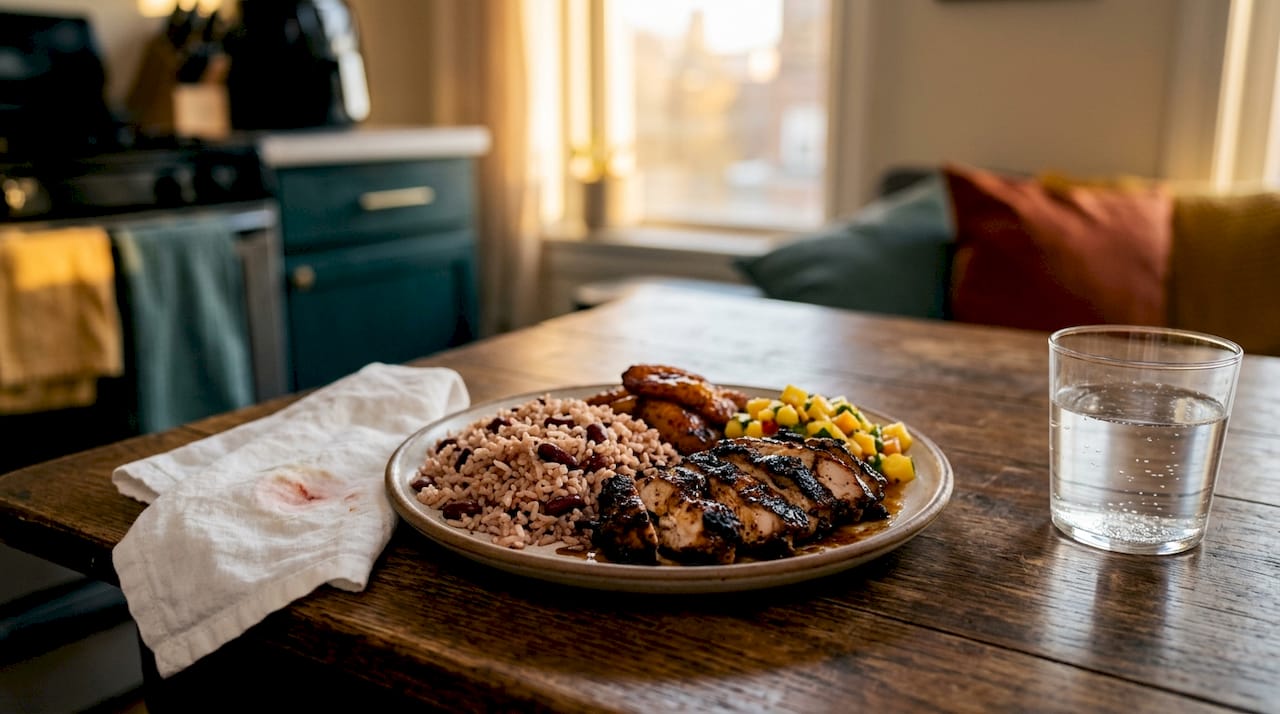
Rice and peas is a staple in over 80% of festive Caribbean meals because it functions as the perfect neutral canvas. The coconut milk adds richness without competing with the protein, and the kidney beans provide both texture and protein of their own. It is one of the most complete side dishes in any cuisine.
Beyond rice and peas, here are the most effective and best Caribbean side dishes to keep in rotation:
- Fried sweet plantains (maduros): These bring natural sugar and soft texture that cool down spice beautifully. The caramelization adds depth without complexity.
- Coconut rice: A slightly richer alternative to rice and peas when you want something that absorbs sauce without the earthiness of beans.
- Mango salsa: Diced mango with red onion, cilantro, and lime adds bright, fruity acidity. It works especially well when your protein is already rich or fatty.
- Steamed callaloo: A leafy green side that adds iron-rich bitterness and softness. It cuts through fat in a way that plantains cannot.
- Festival (fried dumplings): Slightly sweet cornmeal dumplings that are crispy outside and soft inside. They are made for dipping into jerk sauces.
Pro Tip: When cooking for a group or bringing a dish to a potluck, prepare rice and peas plus one sweet side and one acidic side. That trio covers every guest’s heat tolerance and creates a full, satisfying spread without requiring multiple protein dishes. Caribbean holiday food pairings often use this three-side approach to maximum effect at family gatherings.
The rice and peas principle also applies to other proteins. Curry goat, oxtail, and fried fish all benefit from the same starchy, creamy base. The trick is matching the intensity of the main to the weight of the side. A heavy, slow-cooked oxtail stew pairs better with plain white rice than with richly seasoned coconut rice, because you want the rice to absorb and not compete.
Unexpected but authentic pairings you need to try
While the classics always deliver, there’s a whole world of unexpected pairings that bring authentic Caribbean flavor into home kitchens.
Some of the best flavor moments in Caribbean cooking come from combinations that look unusual but are deeply rooted in the cuisine’s history. Mango plus jerk is one of the most underused pairings in home cooking. A mango avocado salsa on jerk chicken brings together sweet, creamy, acidic, and spicy in one bite. The fat from the avocado actually coats the tongue and reduces how long the Scotch bonnet heat lingers.
Here is what each pairing adds to your plate:
- Mango avocado salsa: Sweet heat balance, creaminess from avocado, brightness from lime
- Mayo-free Caribbean slaw: Crunch, acidity, and freshness that cuts through fried or fatty proteins
- Yuca con mojo: Earthy starch with garlic and citrus punch, a completely different texture from rice
- Pickled red onion: Sharp and vinegary, works like a reset button between bites of rich meat
- Roti (flatbread): Soft, flaky, and slightly buttery, perfect for scooping up curry or stewed dishes
Caribbean coleslaw is a particularly underrated side. Made with shredded cabbage, mango, jalapeño, and Caribbean hot sauce and dressed with vinegar rather than mayonnaise, it adds a crunch and an acid brightness that no other side replicates. The absence of mayo makes it lighter and more vibrant, and the mango threads through every bite with sweetness.
Yuca con mojo is worth trying even if you have never cooked with cassava before. Garlic-citrus mojo is an authentic Caribbean sauce that uses sour orange or lime with garlic and olive oil to dress boiled cassava. The result is a side that is simultaneously starchy and punchy. It pairs especially well with roasted pork, but it also works alongside grilled fish or fried chicken.
“Crunch and acid are the two most underused tools in Caribbean home cooking. Once you add them deliberately, the whole plate changes.”
Authentic Caribbean snacks can also serve as unexpected textural accents. Plantain chips, cassava crackers, and fried pumpkin seeds add crunch that transforms a simple bowl of stew into a complete sensory experience.
Side-by-side: Comparing top Caribbean food combinations
To make selection even easier, the following table lets you compare all the most popular and creative Caribbean meal combinations at a glance.
| Main dish | Best side pairings | Flavor profile | Key ingredients | Best occasion |
|---|---|---|---|---|
| Jerk chicken | Rice and peas, fried plantains | Spicy, smoky, sweet, creamy | Allspice, Scotch bonnet, coconut milk | Weeknight, party |
| Jerk chicken | Mango avocado salsa, Caribbean slaw | Spicy, sweet, bright, crunchy | Mango, jalapeño, lime, cabbage | Summer cookout |
| Curry goat | Rice and peas, roti | Earthy, warm spice, creamy | Curry powder, thyme, kidney beans | Weekend dinner |
| Oxtail stew | White rice, steamed callaloo | Rich, savory, herby, tender | Butter beans, scotch bonnet, allspice | Holiday, special occasion |
| Fried fish | Festival, coconut rice | Crispy, mild, slightly sweet | Cornmeal, coconut milk, lime | Weeknight, beach-style meal |
| Roasted pork | Yuca con mojo, pickled onions | Fatty, tangy, garlicky, acidic | Cassava, sour orange, garlic | Holiday feast |
| Stewed chicken | Rice and peas, fried plantains | Savory, aromatic, comforting | Soy sauce, brown sugar, green seasoning | Weeknight family meal |
The table makes one thing very clear. What to serve with jerk chicken comes down to deciding what contrast you want. A cooler, creamier contrast leads you toward rice and peas or coconut rice. A brighter, crunchier contrast leads you toward slaw and salsa. And Caribbean coleslaw works as a universal side that bridges both directions.
A real-world approach to Caribbean combinations: More than just spice
Now that you have seen the classic and creative possibilities, let’s step back and share a veteran cook’s take on what truly defines a great Caribbean food combination.
Here is the myth that does the most damage in Caribbean home cooking: that more spice means more authentic. Walk into any kitchen in Jamaica, Trinidad, or Barbados and you will find cooks who use Scotch bonnet sparingly and deliberately. The pepper is often added whole to a pot just for aroma and removed before anyone sits down. Authentic Caribbean food is not about burning your guests. It is about creating a complete sensory experience where heat is one element among many.
We have seen home cooks in Atlanta make the mistake of reaching for more hot sauce when a dish falls flat. Nine times out of ten, what the dish actually needs is acid, salt, or a textural contrast. A squeeze of lime on bland jerk chicken does more work than an extra tablespoon of hot sauce ever will.
The best Caribbean meals we have ever tasted share a common thread. They all have aromatic depth built from the base up, something sweet or creamy to anchor the plate, something acidic to keep the palate clean, and something textural to make each bite interesting. The Caribbean spices for balance that matter most are not the hot ones. They are allspice, thyme, cinnamon, and green seasoning, the quiet notes that give the food its personality.
Atlanta has an incredibly vibrant Caribbean food community, and home cooks here have every reason to cook at this level. The ingredients are available. The knowledge is accessible. The only shift needed is moving from “how do I make it hotter” to “how do I make it more balanced.”
Enhance your next Caribbean meal with authentic ingredients
Ready to try these combinations yourself? Here’s where to get everything you need for an authentic Caribbean meal experience.
Building the Caribbean plates described in this guide starts with having the right ingredients on hand. That means real allspice, authentic green seasoning, quality coconut milk, plantains, and the sauces and snacks that fill out a complete Caribbean spread.

At TOJ Express, we stock a full range of Caribbean grocery essentials that make it easy to cook these combinations at home without hunting across multiple stores. From pantry staples to finishing sauces, everything you need is in one place. We also carry Caribbean snacks for those textural accents, plus a wide selection of Caribbean drinks to complete the meal. Authentic flavor should not require a complicated shopping trip.
Frequently asked questions
What’s the best side dish to serve with jerk chicken?
Rice and peas is the traditional and most popular side, offering a creamy, mildly spiced counterpoint that absorbs the bold jerk flavors without competing with them.
How can I reduce the spiciness of traditional Caribbean combinations?
You can use whole Scotch bonnet peppers in the cooking process for aroma without the overpowering heat. Many recipes use Scotch bonnet whole for fragrance and remove it before serving, then balance the dish with sweet or creamy sides.
Can I pair curry goat or fried fish with the same sides as jerk chicken?
Yes, rice and peas is typically served alongside jerk chicken, curry goat, and fried fish, making it one of the most versatile and crowd-pleasing sides in Caribbean cooking.
What makes mango a good ingredient in Caribbean food combinations?
Mango adds natural sweetness and brightness that balances spicy and savory Caribbean dishes. The mango and jerk pairing is widely used precisely because the fruit’s sugar and acidity soften the pepper’s intensity.
What’s a good crunchy side for spicy Caribbean meats?
A mayo-free Caribbean slaw with mango, jalapeño, and hot sauce delivers exactly the crisp, sweet, and acidic contrast that spicy proteins need to feel complete and balanced on the plate.