

Caribbean Fruits in Atlanta: Top Markets and Must-Try Picks
TOJEXPRESS.COM-Antonio HenryTL;DR:
- Caribbean fruits like guava, ackee, and soursop are widely available at Atlanta markets and specialty stores. These fruits are key ingredients in traditional dishes, drinks, and street foods throughout the Caribbean community in Atlanta. Shopping early at weekend markets guarantees access to the freshest produce and most authentic flavors.
Caribbean fruits in Atlanta are the most direct path to authentic tropical flavor without leaving Georgia. Guava, ackee, soursop, breadfruit, and tamarind are all available locally, sold at specialty stores like Little Guyana Caribbean Grocery and major hubs like the Atlanta State Farmers Market in Forest Park. Atlanta’s Caribbean food scene has grown steadily, and knowing where to shop makes all the difference between a mediocre find and the real thing.
1. What are the top Caribbean fruits in Atlanta markets?
The ten Caribbean fruits below show up most consistently at Atlanta’s Caribbean produce stores and weekend markets. Each one carries a distinct flavor profile and a specific role in Caribbean cooking.
- Guava. Guava holds a strong presence in Caribbean tradition and Atlanta markets alike. It tastes floral and slightly tart, and it works in jams, jellies, juices, and fresh snacking. Look for yellow skin with pink flesh for peak ripeness.
- Ackee. Ackee is Jamaica’s national fruit and one of the most culturally significant Caribbean fruits available in Atlanta. It has a buttery, savory flavor and is almost always cooked, most famously with saltfish. Never eat unripe ackee. The fruit must be fully open before it is safe to consume.
- Sugar cane. Raw sugar cane pieces are a popular snack at Caribbean markets across Atlanta. You chew the fibrous stalk to extract the sweet juice, then discard the pulp. It is refreshing, natural, and deeply tied to Caribbean street food culture.
- Mango. Mango is the most widely recognized tropical fruit in Atlanta grocery stores. Caribbean varieties like Julie, Haitian, and East Indian mangoes are sweeter and less fibrous than the common Tommy Atkins variety sold in mainstream supermarkets.
- Breadfruit. Breadfruit has a starchy, potato-like texture when cooked. It is roasted, fried, or boiled across the Caribbean and serves as a filling side dish. Atlanta Caribbean markets carry it seasonally, most reliably in summer months.
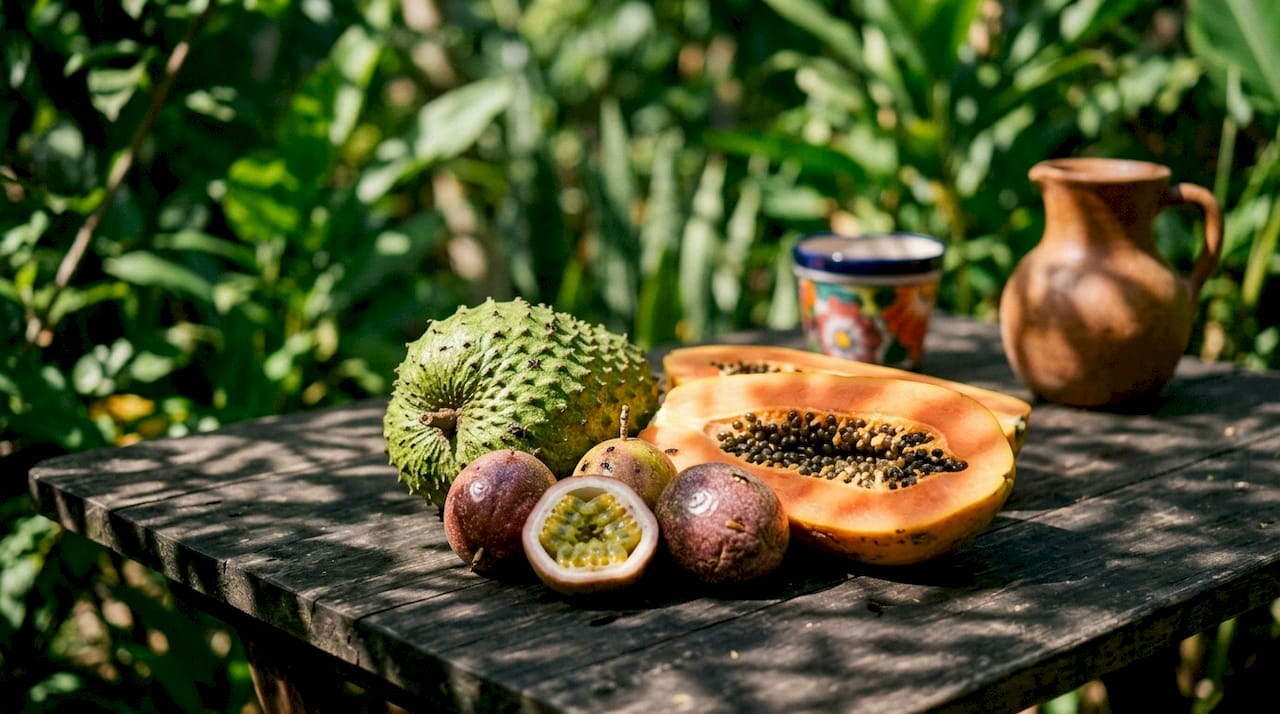
- Soursop. Soursop tastes like a cross between pineapple and strawberry with a creamy texture. It is used in juices, smoothies, and ice cream across the Caribbean. Atlanta shoppers find it fresh or frozen at specialty Caribbean grocery stores.
- Passion fruit. Passion fruit delivers an intensely tart, aromatic flavor in a small package. The pulp and seeds are eaten directly or blended into drinks and sauces. It is one of the more fragrant exotic fruits in Atlanta’s Caribbean markets.
- Starfruit (carambola). Starfruit slices into a distinctive five-pointed shape and tastes mildly sweet with a citrus edge. It is used as a garnish, in salads, and in fresh juices. Caribbean vendors in Atlanta often sell it alongside other tropical produce.
- Golden apple (June plum). Golden apple, also called June plum, is crisp and tart when unripe and sweeter as it matures. It is eaten raw with salt and pepper in the Caribbean or made into juice. It is one of the more underrated finds at Atlanta Caribbean fruit vendors.
- Tamarind. Tamarind is a sour, sticky pod used in sauces, candies, and drinks. Caribbean cooks use it to add depth to stews and marinades. Atlanta markets sell it as whole pods, paste, or concentrate.
Pro Tip: Buy starfruit and golden apple slightly underripe if you plan to use them in savory dishes. They firm up better in cooking and hold their shape when sliced.
2. Where to buy authentic Caribbean fruits in Atlanta
Atlanta has several reliable spots for finding fresh Caribbean produce, and each one serves a slightly different shopper.
The Atlanta State Farmers Market in Forest Park is the largest and most accessible hub for Caribbean fruits in Georgia. It hosts diverse vendors and specialty produce stands, including fresh cut fruit and prepared juices, particularly on Saturdays. The market’s size means you can compare prices and freshness across multiple stalls in a single visit.
Little Guyana Caribbean Grocery brings the West Indies to South Atlanta with a focused selection of Caribbean seasonings, snacks, drinks, fish, and produce. It is a go-to for shoppers who want a curated Caribbean grocery experience rather than a large open market. The staff knows the products well, which helps if you are buying something unfamiliar like golden apple or breadfruit for the first time.
The West End Atlanta neighborhood hosts local community markets on Saturdays with fresh Caribbean produce and juices. These markets are smaller and more community-driven, which often means better prices and fresher stock with faster turnover. They are worth visiting early in the morning before the best produce sells out.
Pro Tip: Arrive at weekend markets before 10 a.m. Vendors restock overnight, and the freshest tropical fruits move fast. Late arrivals often find picked-over selections.
For more guidance on navigating these stores, the Caribbean grocery shopping guide from Tojexpress covers practical tips for first-time and returning shoppers.
3. Comparison of Caribbean produce stores in Atlanta
Caribbean produce stores in Atlanta vary significantly in variety, price, freshness, and overall experience. The table below compares the key options.
| Store / Market | Variety | Price | Freshness | Customer Experience |
|---|---|---|---|---|
| Atlanta State Farmers Market | Very wide, including rare tropical fruits | Competitive, bulk-friendly | High on Saturdays | Large, busy, great for comparing vendors |
| Little Guyana Caribbean Grocery | Focused Caribbean selection | Moderate | Consistently fresh | Personal, knowledgeable staff |
| West End Saturday Market | Seasonal, community-sourced | Low to moderate | Very fresh, fast turnover | Casual, neighborhood feel |
| Caribbean Farmer’s Market | Wide tropical and Caribbean produce | Moderate | Good | Specialty-focused, varied vendors |
Georgetown Food Market also appears in Atlanta’s Caribbean grocery circuit and carries a broad product selection at varying price points. Each location has a different strength. The Atlanta State Farmers Market wins on variety. Little Guyana wins on authenticity and staff knowledge. The West End market wins on price and community atmosphere.
4. How to use Caribbean fruits at home or when dining out in Atlanta
Caribbean fruits are not just for snacking. They anchor entire dishes, drinks, and dessert traditions across the islands, and Atlanta’s food scene reflects that.
Caribbean fusion cuisine has a growing influence on Atlanta’s culinary scene. Guava shows up in glazes for grilled meats, in pastry fillings, and in bottled juices sold at Caribbean markets. Ackee is almost always cooked with saltfish, onions, and scotch bonnet peppers. It is a breakfast staple in Jamaican households and increasingly available at Caribbean restaurants in Atlanta.
Soursop makes one of the best natural juices you can drink. Blend the pulp with water, a little sugar, and a squeeze of lime for a drink that tastes nothing like anything sold in a mainstream grocery store. Tamarind paste dissolves into marinades and sauces for jerk chicken or oxtail, adding a sour depth that vinegar cannot replicate.
Caribbean fruits also appear in prepared and packaged forms. Caribbean markets offer juices, jams, and prepared foods that highlight these traditions without requiring any cooking at home. Steamed food sections and prepared Caribbean platters at local supermarkets let you taste these fruits in context before committing to cooking with them yourself.
For Atlanta residents who want to experience Caribbean fruits as street food, the Caribbean street food scene in Atlanta includes vendors serving tamarind balls, fresh cut mango with seasoning, and sugar cane juice at local events and markets.
Key takeaways
Atlanta’s best Caribbean fruits come from dedicated specialty stores and weekend farmers markets, not mainstream grocery chains.
| Point | Details |
|---|---|
| Top fruits to seek out | Guava, ackee, soursop, breadfruit, and tamarind are the most culturally significant Caribbean fruits in Atlanta. |
| Best market for variety | Atlanta State Farmers Market in Forest Park offers the widest selection, especially on Saturdays. |
| Best store for authenticity | Little Guyana Caribbean Grocery in South Atlanta specializes in Caribbean produce and seasonings. |
| Culinary uses at home | Use soursop for juice, tamarind in marinades, and ackee cooked with saltfish for traditional Caribbean dishes. |
| Shop early for freshness | Weekend markets turn over fast. Arriving before 10 a.m. gives you access to the best produce. |
What I’ve learned shopping for Caribbean fruits in Atlanta
Atlanta surprised me. I expected to drive far and settle for frozen or canned versions of most Caribbean fruits. What I found instead was a network of vendors, small grocery shops, and weekend markets that genuinely stock the real thing.
Little Guyana Caribbean Grocery was the biggest revelation. The selection is focused, but the staff can tell you exactly how to use what you are buying. That kind of knowledge is rare. I bought golden apple there on a whim and left with a recipe for a tamarind and golden apple sauce that I now make regularly.
The Atlanta State Farmers Market in Forest Park is worth the drive from anywhere in the metro area. The Saturday produce stands carry breadfruit, soursop, and fresh sugar cane that you simply will not find at a standard grocery store. Go early, bring cash, and plan to spend more time than you expect.
My honest advice: do not overlook the West End Saturday market. It is smaller, but the produce moves fast because it is genuinely fresh. I have found ripe passion fruit there that beat anything I bought at a specialty store. Atlanta’s Caribbean food community is real, and these markets are where it shows up most clearly.
— ANTONIO
Tojexpress and Caribbean fruits in Atlanta
Tojexpress stocks American and Caribbean products for Atlanta residents who want authentic Caribbean groceries without hunting across the city.

Whether you are looking for Caribbean fruit products, seasonings, snacks, or drinks, Tojexpress connects you to the flavors of the islands in one convenient location. The store carries products that complement the fresh fruits you find at local markets, including juices, jams, and prepared Caribbean foods. For Atlanta shoppers building a Caribbean pantry, Tojexpress is a practical starting point. Visit Tojexpress to see the current product selection and find what you need for your next Caribbean meal.
FAQ
What Caribbean fruits are easiest to find in Atlanta?
Guava, mango, and tamarind are the most consistently available Caribbean fruits in Atlanta. They appear at the Atlanta State Farmers Market, Little Guyana Caribbean Grocery, and many weekend produce markets.
Where is the best Caribbean grocery store in Atlanta?
Little Guyana Caribbean Grocery in South Atlanta is widely recognized for its authentic Caribbean produce and specialty products. The Atlanta State Farmers Market in Forest Park is the best option for variety and bulk buying.
Can I find fresh ackee in Atlanta?
Fresh ackee is available at select Caribbean specialty stores in Atlanta, though canned ackee is more reliably stocked year-round. Always confirm the fruit is fully open before purchasing or consuming fresh ackee.
What is the best time to shop for Caribbean fruits in Atlanta?
Saturday mornings are the best time to shop at Atlanta’s Caribbean markets. Vendors restock overnight and the freshest produce sells out by mid-morning, so arriving early gives you the widest selection.
Are Caribbean fruits in Atlanta used in local restaurants?
Yes. Caribbean fusion cuisine is a growing part of Atlanta’s food scene, with guava, ackee, and soursop appearing in dishes at Caribbean restaurants and street food vendors across the city.