

How to Choose Breakfast Foods for Sustained Energy
TOJEXPRESS.COM-Antonio HenryBuild every breakfast around at least one protein, one fiber-rich carbohydrate, and one healthy fat or produce serving. That combination slows digestion, steadies blood sugar, and keeps hunger quiet until lunch, according to Johns Hopkins Medicine. Three quick models you can copy right now:
- Make-ahead: Overnight oats with chia seeds and almond butter (fiber + fat + protein, ready in the fridge)
- On-the-go: Hard-boiled eggs with a piece of fruit and a small handful of cashews
- Savory: A scrambled egg and black bean wrap on whole-grain tortilla with sliced avocado
None of these require more than five minutes of morning effort. That’s the whole framework in miniature.
Key Takeaways
A nutritious breakfast consistently built around protein, fiber, and a healthy fat or produce item is the single most reliable way to sustain energy and control appetite through the morning.
| Point | Details |
|---|---|
| The Rule of 3 | Every breakfast needs one protein, one fiber-rich carb, and one healthy fat or produce item. |
| Prep beats willpower | Batch-cooking grains and proteins on the weekend removes morning decision-making entirely. |
| Variety over perfection | Rotating ingredients supports gut microbiome diversity better than repeating one “ideal” meal. |
| Read the label | Look for “100% whole grain” first and aim for 5 g of sugar or less per serving on packaged items. |
| Tojexpress | Stocks Caribbean and American pantry staples, from canned legumes to oats and seeds, to make the Rule of 3 easy every morning. |
Table of Contents
- What makes a healthy breakfast worth eating?
- Which breakfast foods should you actually stock?
- How do you pick a breakfast in under 60 seconds?
- Make-ahead strategies that actually hold up through the week
- How to adapt breakfast for special diets and health conditions
- The part of breakfast advice nobody talks about enough
- Stock your breakfast pantry at Tojexpress
- Sources
What makes a healthy breakfast worth eating?
Protein, fiber, and healthy fats each pull their weight at breakfast, and the research behind each is straightforward.
Protein slows gastric emptying, which means you feel full longer and avoid the mid-morning energy crash that follows a carb-only meal. Peer-reviewed nutrition literature consistently shows that prioritizing macronutrient variety over strict calorie counting improves satiety and metabolic outcomes. Eggs, Greek yogurt, cottage cheese, and legumes all qualify.
Fiber does two things at once: it feeds beneficial gut bacteria and slows glucose absorption, which keeps blood sugar from spiking and crashing. Oats, berries, and whole-grain bread are the most practical sources for a morning meal.
Healthy fats from nuts, seeds, avocado, and olive oil moderate the glycemic impact of carbohydrates and add fat-soluble nutrients. Dietitians specifically call out nuts, seeds, and nut butters as effective modulators of blood-sugar response when paired with carbohydrate-rich foods.
Statistic to remember: Johns Hopkins Medicine recommends including at least one high-fiber carbohydrate, one protein source, and a fruit or vegetable serving at breakfast to meet daily nutritional goals efficiently.
Variety matters as much as composition. BBC Food reports that nutrition experts stress dietary variety to support gut bacterial diversity. Rotating your ingredients, rather than eating the same “perfect” breakfast every day, is better for your microbiome and keeps nutrition broader across the week.
Pro Tip: If your goal is weight management, lean toward 20–30 g of protein at breakfast. For active mornings or high-output days, add a second carbohydrate source (banana, sweet potato, or extra oats) to fuel performance without sacrificing the protein anchor.
Which breakfast foods should you actually stock?
Organize your choices by category, then mix one from each column to hit the protein-fiber-fat rule every time.
High-protein options
- Eggs: Versatile, affordable, and nutrient-dense. Harvard Health notes eggs are appropriate for most people; those managing diabetes should discuss yolk frequency with their doctor. Scramble with spinach or hard-boil a batch on Sunday.
- Greek yogurt: Plain, full-fat or 2% delivers roughly twice the protein of regular yogurt. Layer with berries and a sprinkle of hemp seeds.
- Cottage cheese: Underrated and high in casein protein. Pair with sliced tomato and cracked pepper for a savory option, or with pineapple for something sweeter.
- Tofu: Crumble and sauté with turmeric and vegetables for a scramble that works for vegan mornings. Pairs well with Caribbean-inspired seasonings.
- Legumes: Black beans, chickpeas, and kidney beans are all fair game. Johns Hopkins Medicine points out that savory leftovers, including beans and roasted vegetables, count as nutrient-dense morning options. Warm them up and wrap them.
Fiber-rich carbohydrates
- Oats: Rolled or steel-cut oats are the most practical high-fiber grain for breakfast. Batch-cook a pot and refrigerate for up to five days.
- Whole-grain bread or tortillas: Look for “100% whole grain” as the first ingredient. Front-of-package claims like “multigrain” are not reliable indicators of actual whole-grain content.
- Berries: Blueberries, strawberries, and raspberries deliver fiber and antioxidants in a small volume. Frozen berries work just as well as fresh.
- Sweet potato: Roast a tray on the weekend. Slice and reheat with eggs for a filling, anti-inflammatory base.
Healthy fats and add-ins
- Nuts and nut butters: Almonds, walnuts, and cashews add crunch and fat. Planters Whole Cashews are a convenient shelf-stable option to keep on hand.
- Seeds: Chia, flax, and hemp seeds blend into oats, yogurt, or smoothies without changing the flavor. They add omega-3s and protein simultaneously. For creative seed-based combinations, seed-based meal ideas offer useful inspiration.
- Avocado: Half an avocado on whole-grain toast covers healthy fat and potassium in one move.
- Olive oil: A drizzle in a vegetable scramble adds monounsaturated fat without overpowering the dish.
Vegetables
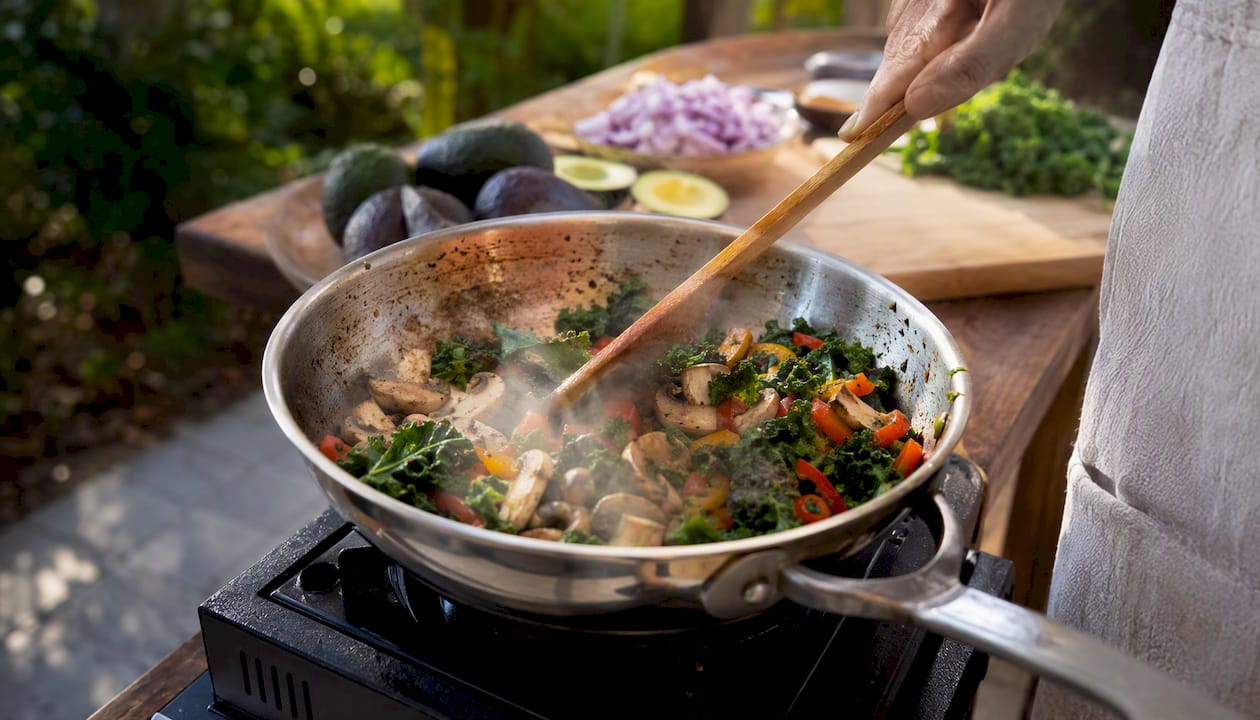
Spinach, kale, bell peppers, mushrooms, and tomatoes all cook in under three minutes. Add them to eggs, fold them into a burrito, or blend them into a smoothie. Getting a vegetable serving before 9 AM is one of the most efficient nutrition habits you can build.
On packaged items: When buying cereals or granola, check the ingredient list rather than the front of the package. Aim for 5 g of sugar or less per serving, per Johns Hopkins Medicine guidance on label reading.
For Caribbean breakfast ideas that incorporate many of these ingredients, Tojexpress has a dedicated recipe guide worth bookmarking.
How do you pick a breakfast in under 60 seconds?
Two frameworks make the decision almost automatic.
The Rule of 3
Every breakfast needs three components: one protein, one fiber-rich carbohydrate, and one healthy fat or produce item. That’s it. You don’t need to count calories or track macros. Just ask: “Do I have all three?” If yes, eat it. If not, add the missing piece.
- No protein? Add a hard-boiled egg, a spoonful of nut butter, or a scoop of Greek yogurt.
- No fiber? Swap white bread for whole-grain, or add a handful of berries.
- No fat or produce? Slice half an avocado or throw a handful of spinach into whatever you’re making.
The 30/30/30 approach
This approach targets roughly 30 g of protein within 30 minutes of waking, sometimes paired with 30 minutes of light movement. It’s particularly useful for people managing blood sugar, building muscle, or trying to reduce mid-morning hunger. It’s not a rigid rule for everyone, but it gives a useful protein anchor if you tend to skip breakfast or eat too light. Harvard Health supports focusing on macronutrient balance rather than calorie restriction to sustain energy through the morning.
Quick 60-second checklist
Run through these four questions before you choose:
- Time available: Less than 5 minutes? Go for overnight oats, a yogurt parfait, or a banana with nut butter. More time? Eggs or a grain bowl.
- Hunger level: Mildly hungry? A lighter option (fruit + nuts) works. Very hungry? Prioritize protein and a complex carb.
- Transportability: Eating at home or on the move? Wraps, parfait jars, and smoothies travel well.
- Dietary restrictions: Any allergies or medical conditions? See the special-diet swaps below.
Pro Tip: If you’re managing blood sugar, pair every carbohydrate with protein or fat before eating it alone. A banana by itself spikes glucose faster than a banana with almond butter. The fat and protein slow absorption significantly.
Watch out for: Flavored yogurts and instant oatmeal packets. Many contain 12–20 g of added sugar per serving, which erases the blood-sugar benefit of the whole grain or dairy underneath. Buy plain and sweeten it yourself with fruit or a small drizzle of honey.
Make-ahead strategies that actually hold up through the week
The biggest barrier to a nutritious breakfast isn’t knowledge. It’s the 7 AM decision when you’re half-awake and running late. Batch prep solves that.
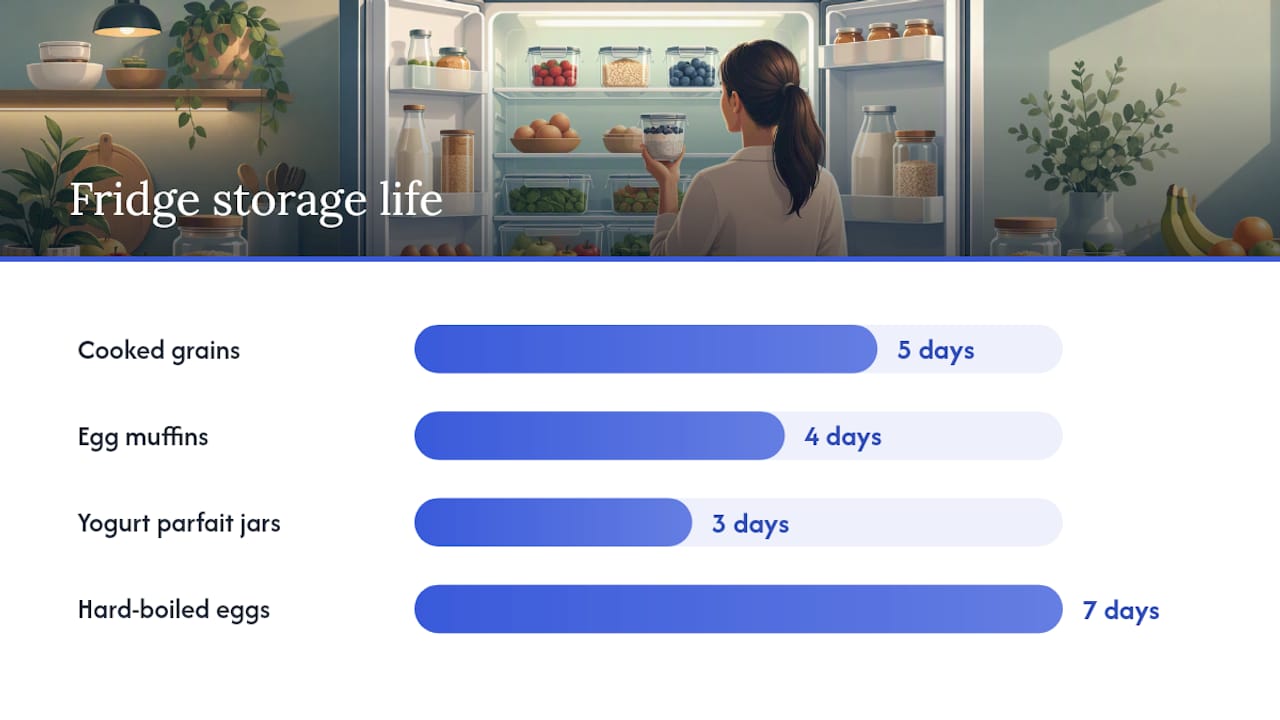
Harvard Health recommends cooking base grains in batches since oats, brown rice, and quinoa keep safely in the refrigerator for up to five days and allow quick customization each morning. Registered dietitians at EatingWell confirm that freezer-friendly formats like egg muffins and wrapped burritos maintain nutritional quality and eliminate morning cooking entirely.
Make-ahead options worth building into your rotation:
- Overnight oats: Combine rolled oats, chia seeds, milk or plant milk, and fruit in a jar. Refrigerate overnight. Ready in zero morning minutes.
- Egg muffins: Whisk eggs with vegetables and cheese, pour into a muffin tin, bake at 350°F for 20 minutes. Store in the fridge up to four days or freeze individually.
- Freezer breakfast burritos: Fill whole-grain tortillas with scrambled eggs, black beans, peppers, and salsa. Wrap tightly in foil, freeze. Reheat in a microwave for 2–3 minutes.
- Smoothie packs: Portion fruit, spinach, and seeds into zip-lock bags and freeze. Dump one bag into a blender with protein powder or Greek yogurt and liquid. Done in 90 seconds.
- Yogurt parfait jars: Layer plain Greek yogurt, granola (low sugar), and berries in mason jars. Refrigerate up to three days.
- Hard-boiled eggs: Cook a dozen on Sunday. They keep in the shell in the fridge for up to one week.
- Grain bowls: Cook a large pot of quinoa or farro. Portion into containers with toppings on the side. Customize each morning.
For more ideas on Caribbean meal prep that fits this same batch-prep model, Tojexpress has a practical guide with ingredient suggestions.
Weekly meal-prep checklist:
- Shop once: Buy proteins, grains, produce, and add-ins for the full week.
- Batch-cook grains: One pot of oats or quinoa covers five mornings.
- Prep proteins: Hard-boil eggs, bake egg muffins, or assemble and freeze burritos.
- Portion and store: Divide into single-serving containers or jars; label with the date.
- Stock the freezer: Wrap burritos or muffins individually so you can grab exactly one.
How to adapt breakfast for special diets and health conditions
The protein-fiber-fat rule holds across almost every dietary pattern. What changes is the source.
| Dietary need | Animal protein swap | Carb/grain swap | Fat/add-in swap |
|---|---|---|---|
| Vegetarian | Eggs, Greek yogurt, cottage cheese | Whole-grain bread, oats, quinoa | Nuts, seeds, avocado |
| Vegan | Tofu scramble, legumes, hemp seeds | Oats, whole-grain tortilla, sweet potato | Nut butter, flaxseed, avocado |
| Gluten-free | Eggs, Greek yogurt, any legume | Certified GF oats, rice cakes, sweet potato | Nuts, seeds, olive oil |
| Diabetes management | Eggs (discuss yolk frequency with your doctor), cottage cheese, tofu | Steel-cut oats, berries, non-starchy vegetables | Nuts, avocado, olive oil |
| High-activity mornings | Eggs, Greek yogurt, cottage cheese | Oats + banana, whole-grain toast | Nut butter, seeds |
Vegetarian and vegan: Tofu scrambles with turmeric and black salt mimic scrambled eggs in texture and flavor. Hemp seeds (3 tablespoons deliver roughly 10 g of protein) blend into oats or smoothies without changing the taste. Legumes, especially black beans and lentils, are among the most fiber-dense and protein-complete plant options available.
Gluten-free: Certified gluten-free oats are widely available and nutritionally equivalent to regular oats. Sweet potato as a base grain substitute works particularly well in savory bowls. Rice cakes with nut butter and banana cover all three macro categories in a portable format.
Diabetes: Harvard Health notes that people with diabetes should monitor egg yolk intake and discuss frequency with their physician. More broadly, pairing every carbohydrate with protein or fat is the single most effective morning strategy for blood-sugar control. Steel-cut oats have a lower glycemic index than instant varieties.
Caffeine: If coffee or tea is part of your morning, the FDA advises being mindful of total daily caffeine intake. Sensitive individuals may experience jitteriness or disrupted sleep from high morning doses. Tojexpress stocks a range of teas that offer a lower-caffeine alternative for those who want a warm morning drink without the intensity of coffee. For higher-quality coffee options, East View Coffee Company’s breakfast blends are worth exploring.
Food allergies: Always check labels on packaged items for cross-contamination warnings. Nut allergies can be accommodated with seeds (sunflower, pumpkin) as the fat source. Dairy allergies swap easily to coconut yogurt or oat-based alternatives, though protein content will be lower, so compensate with legumes or tofu.
This is general nutritional information, not a substitute for medical advice. If you have a diagnosed condition, confirm your breakfast plan with a registered dietitian or your physician.
The part of breakfast advice nobody talks about enough
Most breakfast guides treat the morning meal as a nutrition problem to solve. Get the macros right, hit the fiber target, avoid the sugar. That framing isn’t wrong, but it misses something.
The breakfasts people actually eat consistently are the ones that take almost no thought. Not the most nutritionally perfect bowl, but the one that’s already in the fridge, already portioned, already familiar. Batch prep isn’t a productivity hack. It’s the difference between eating well on a Tuesday at 6:45 AM and grabbing whatever’s nearest.
Caribbean and American pantry staples, the kind Tojexpress stocks, fit this model well. Canned black beans, whole-grain tortillas, hot sauce, ackee, callaloo, and seasoning blends all have long shelf lives and work across multiple breakfast formats. A well-stocked pantry removes the decision entirely. You’re not choosing breakfast in the morning. You already chose it on Sunday.
Variety matters more than perfection. BBC Food makes the point clearly: rotating ingredients supports gut microbiome diversity better than repeating one “ideal” breakfast. So if you’re eating the same oats every day because they’re “healthy,” you’re leaving nutritional range on the table. Swap in a savory egg bowl, a tofu scramble with Caribbean spices, or a grain bowl with roasted sweet potato. The rule of three stays the same. The ingredients rotate.
Stock your breakfast pantry at Tojexpress
Knowing how to pick breakfast foods is one thing. Having the right ingredients on hand is what makes it happen every morning.

Tojexpress carries the pantry staples that make the Rule of 3 easy to execute: whole-grain tortillas, canned legumes, oats, nuts, seeds, Caribbean seasonings, and specialty items like ackee and callaloo that bring genuine flavor to savory breakfast bowls. Whether you’re building freezer burritos, stocking up for a week of overnight oats, or looking for American and Caribbean convenience foods that fit a health-conscious routine, Tojexpress has what you need in-store and online. Serving Atlanta and surrounding communities including Stone Mountain, Decatur, Lithonia, and Conyers. Browse the full selection at Tojexpress and stock your kitchen for the week ahead.
Sources
The following sources informed the guidance in this article and are worth reading directly for deeper evidence or recipe ideas:
- Healthy breakfasts - Johns Hopkins Medicine
- Are we getting breakfast all wrong? - BBC Food
- PMC article on nutrition and meal timing - NCBI PMC
- A doctor’s recipe for a healthy breakfast - Harvard Health
- Spilling the beans: How much caffeine is too much? - FDA
- I’m a Dietitian & These Are the Breakfasts I Make Ahead - EatingWell