

Caribbean Meal Prep: Authentic Flavor Made Convenient
TOJEXPRESS.COM-Antonio HenryTL;DR:
- Caribbean meal prep simplifies authentic flavors by batch-cooking key ingredients and rotating proteins and grains throughout the week. Proper techniques like blooming spices, marinating proteins overnight, and storing components separately enhance flavor and texture. Atlanta families can access local Caribbean stores and expert tips to create flavorful, convenient, and versatile meal plans.
Caribbean cooking is one of the most rewarding cuisines you can bring into your home, but between marinating overnight, blooming spices, and slow-simmering beans, a single meal can take hours from start to finish. For Atlanta families who love the bold, layered taste of jerk chicken, curry, and rice and peas, that time commitment is the biggest barrier to eating well on weeknights. Meal prep changes that equation completely. When you dedicate a few focused hours on Sunday, you set yourself up for an entire week of authentic Caribbean flavors without the daily kitchen marathon.
Table of Contents
- What you need: Ingredients, tools, and essentials
- Step-by-step classic Caribbean meal prep process
- Vegan and flexible Caribbean meal prep variations
- Storage, reheating, and serving tips for fresh Caribbean meals
- What most meal prep guides miss about Caribbean cuisine
- Bring Caribbean meal prep to your kitchen with Atlanta’s best resources
- Frequently asked questions
Key Takeaways
| Point | Details |
|---|---|
| Marination is essential | Overnight marinating with green seasoning and spices delivers true Caribbean flavor in meal prep. |
| Batch cooking saves time | Cooking rice, beans, and proteins in bulk lets you enjoy homemade Caribbean meals all week long. |
| Store sauces separately | Keeping sauces and sides apart prevents sogginess and preserves texture when reheating. |
| Vegan swaps work well | Vegan ingredients like tofu and black beans adapt perfectly for Caribbean-style batched meals. |
What you need: Ingredients, tools, and essentials
With your commitment to authentic flavors, the first step is gathering both the classic ingredients and kitchen equipment for true Caribbean meal prep. Skipping this stage is the number-one reason home cooks end up with flat, underwhelming results mid-week.
Core ingredients to stock
Caribbean cooking draws on a specific set of proteins, aromatics, grains, and pantry staples. Here is what you should have on hand before your prep session begins:
Proteins:
- Bone-in chicken legs or thighs (excellent for curry and jerk)
- Salted cod or fresh fish for quick weekday meals
- Chickpeas, black beans, and kidney beans for plant-based options
- Oxtail or goat for special weekend batches
Seasonings and aromatics:
- Green seasoning (can be homemade or store-bought)
- Curry powder, Madras-style or West Indian blend
- Cumin, allspice, and garam masala
- Scotch bonnet peppers (fresh or frozen)
- Fresh thyme, garlic, ginger, and scallions
Grains and pantry essentials:
- Long-grain white rice and dried kidney beans or pigeon peas
- Full-fat coconut milk
- Soy sauce or browning sauce for stews
As the team behind Caribbean curry chicken explains, authentic Caribbean meal prep centers on marinating proteins overnight with green seasoning, curry powder, and scotch bonnet peppers, blooming spices in hot oil, and slow-simmering to develop flavors. That process cannot be rushed, but it absolutely can be planned.
Essential kitchen tools
| Tool | Purpose |
|---|---|
| Dutch oven or heavy pot | Slow simmering curries and stews |
| Rice cooker | Hands-free rice and peas every time |
| Glass airtight containers | Safe storage without odor transfer |
| Sharp chef’s knife | Fast, clean cuts for bulk prep |
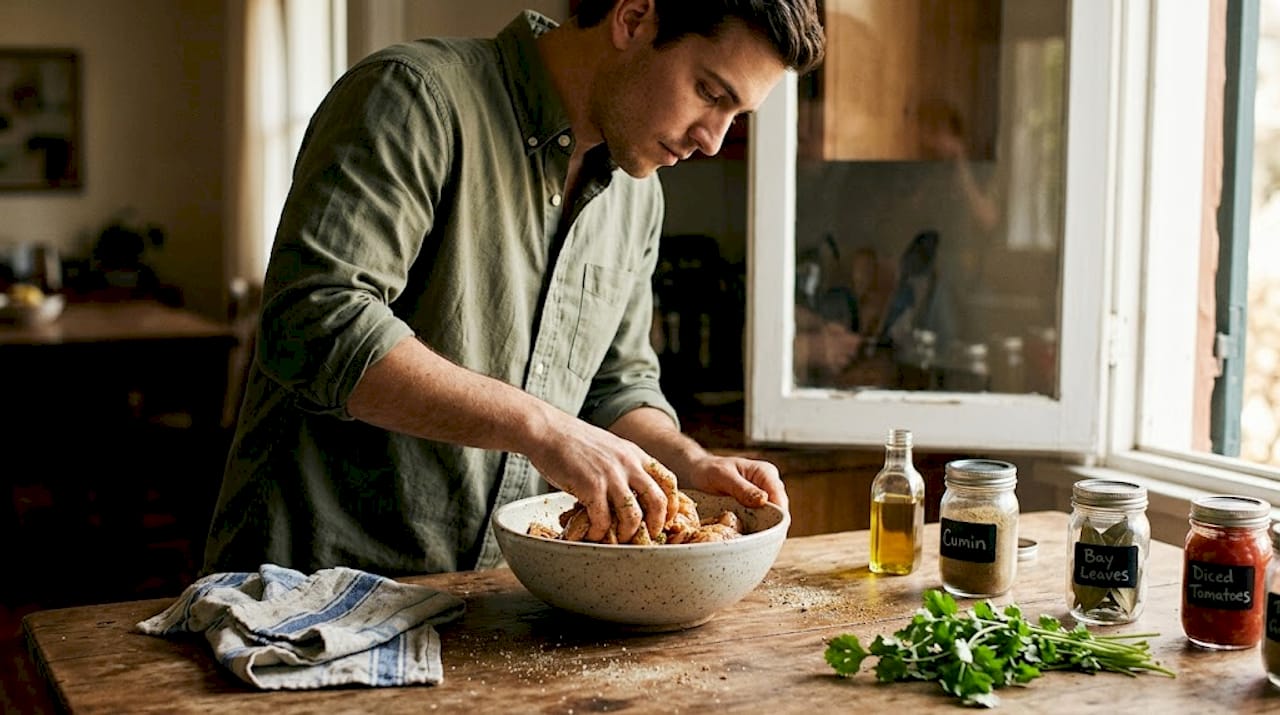
| Large mixing bowls | Marinating multiple proteins at once |
| Freezer bags or vacuum sealer | Long-term storage of cooked proteins |
Knowing which essential Caribbean spices to buy versus which to skip saves both money and cabinet space. Green seasoning is the single most important flavor base. You can blend it yourself with culantro, thyme, garlic, scallion, and scotch bonnet, or purchase a reliable pre-made version. Use a meal planning platform to organize your weekly menu before you shop so nothing goes to waste.
Pro Tip: If you are shopping Caribbean groceries in Atlanta, look for Caribbean specialty stores along Buford Highway and in Stone Mountain. They stock fresher, more authentic spice blends than standard grocery chains, and the price difference is minimal.
Step-by-step classic Caribbean meal prep process
Now that you’ve stocked your kitchen, you’re ready to follow each step to build deep, authentic Caribbean flavors the way Atlanta’s best home cooks and chefs do.
Your Sunday prep order
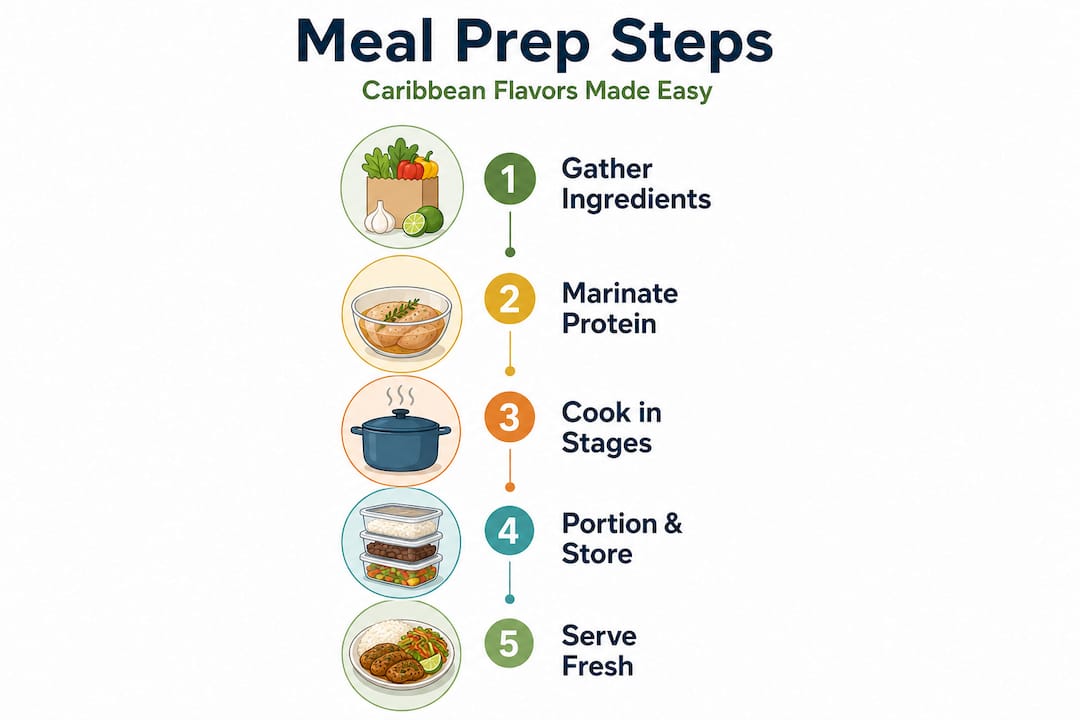
Planning the sequence of your prep session matters. Start with tasks that require the most passive time, like soaking beans, and fill those gaps with active work like blending seasoning and marinating proteins.
- Soak your beans overnight (Friday night or Saturday): Dried kidney beans or pigeon peas need 8 to 12 hours of soaking for best texture.
- Blend a large batch of green seasoning (Sunday morning): Make at least 2 cups so you can use it for multiple proteins across the week.
- Season your proteins: For the classic Caribbean curry chicken, use 3 lbs of chicken leg quarters. Rub with salt, green seasoning, and curry powder. Cover and marinate 2 or more hours minimum, preferably overnight.
- Start your rice and peas base: Per the best Jamaican peas and rice recipe, sauté diced onion, minced garlic, and fresh thyme in oil for 3 to 4 minutes. Add your pre-soaked beans and simmer 60 to 120 minutes until just tender. Then add soaked long-grain rice and full-fat coconut milk, and steam 10 to 15 minutes until fluffy.
- Cook your curry chicken: Heat oil in a Dutch oven until very hot. Add curry powder, cumin, and garam masala and bloom for 60 seconds, stirring constantly. Add chicken pieces and sear on all sides. For the bunjay style (dry curry), continue cooking uncovered on medium heat 15 to 20 minutes until the sauce reduces completely and the chicken is tender and coated in spice. For saucy curry, add 1 cup of water or broth and cover to simmer.
- Portion into containers: Once everything cools, divide into individual meal-sized portions. Label each container with the date.
- Cool fully before storing: Never seal hot food. Let everything come to room temperature first to prevent condensation and bacterial growth.
Bunjay style vs. saucy curry: Which works better for meal prep?
| Style | Texture | Meal prep suitability | Best reheating method |
|---|---|---|---|
| Bunjay (dry) | Dry, spice-coated | Excellent, freezes cleanly | Stovetop with splash of water |
| Saucy curry | Rich, saucy | Good, store sauce separate | Stovetop or microwave covered |
One insight worth noting: flavors in both curry styles genuinely deepen by the next day after cooking. The spices continue to penetrate the protein even after the heat is off. This means Sunday-cooked curry chicken will taste even better on Monday and Tuesday.
Refer to our Caribbean cooking recipes guide for expanded master recipes covering oxtail, jerk chicken, and escovitch fish if you want to rotate proteins across your week.
Vegan and flexible Caribbean meal prep variations
Not everyone wants the same protein style or follows the same diet, so let’s see how you can adapt these authentic prep methods, especially for vegan or flexitarian families in Atlanta.
The beauty of Caribbean cooking is that many of its most beloved dishes are naturally plant-forward. Coconut milk, beans, plantains, and bold seasonings carry enormous flavor without any meat required. The key to vegan Caribbean meal prep is cooking components separately so you can mix and match throughout the week without everything tasting the same by Wednesday.
Here are some batch-cook elements to prepare for a full week of variety:
- Coconut rice: Cook a large batch using coconut milk instead of water for built-in richness.
- Curried chickpeas or black beans: Season with curry powder, green seasoning, and scotch bonnet for authentic bite.
- Grilled or baked tofu: Marinate tofu in soy sauce, allspice, and thyme for a jerk-inspired variation.
- Roasted plantains: Sweet ripe plantains roast beautifully in batches and reheat without losing texture.
- Sautéed callaloo or spinach: Cook a large batch with garlic and scotch bonnet for a leafy green side.
This approach mirrors vegan bento box prep, which recommends prepping coconut rice, curried pepitas, grilled tofu, and black beans separately so they can be mixed and matched for bowls throughout the week and frozen reliably. That mix-and-match structure works perfectly for Caribbean vegan prep because each component brings its own distinct flavor.
For Atlanta families managing different dietary needs at one table, this approach is a practical solution. One person grabs curried chickpeas over rice, another adds a piece of curry chicken. Everyone eats from the same prep session.
You can find more detailed guidance in our healthy Caribbean food tips resource, which covers nutrition-smart swaps without sacrificing taste. For more inspiration on structuring plant-based Caribbean weeks, explore vegan meal planning ideas as a starting point.
Pro Tip: Vegan dishes typically freeze more reliably than meat-based ones because they have no connective tissue that changes texture under freezing. Plan your freezer stash around your plant-based components and refrigerate your proteins for the 3 to 4 day window.
Storage, reheating, and serving tips for fresh Caribbean meals
Once your meals are prepped, proper storage and reheating are vital to preserving that authentic island freshness and flavor every day.
One of the most common mistakes Atlanta home cooks make is storing everything together. Sauce mixed into rice overnight turns the whole container mushy. Keeping components separate extends shelf life and keeps textures intact all week.
Safe storage timelines
- Proteins (curry chicken, stewed chicken, curried tofu): Refrigerate up to 3 to 4 days in airtight glass containers. Freeze up to 2 to 3 months.
- Rice and peas: Refrigerate up to 4 days. Freeze in individual portions for up to 2 months.
- Beans and legumes (separate from rice): Refrigerate up to 5 days. These are the most freezer-stable component, lasting 3 months easily.
- Sauces and gravies: Store in small jars or sealed containers, refrigerate up to 5 days. Add sauce only at the time of serving or reheating.
- Plantains: Best consumed within 3 days from the fridge. Freeze before they become overripe for later use.
Following meal prep storage best practices, the standard approach is to batch cook beans, rice, and proteins on Sunday, portion into airtight containers, and refrigerate for 3 to 4 days or freeze for 2 to 3 months, reheating stovetop with a splash of water or broth to restore moisture.
“Blooming spices before cooking prevents raw flavors from carrying into your finished dish, which is the most common reason home-prepped Caribbean food tastes flat by day three.” — Chef Syed, via How to create a delicious Caribbean menu
Best reheating methods
- Stovetop (best for curry and stew): Add 2 to 3 tablespoons of water or broth, cover, and heat on low for 5 to 7 minutes. Stir once halfway through.
- Microwave (best for rice): Place a damp paper towel over the container and microwave in 60-second bursts, stirring between each round.
- Oven (best for plantains and baked proteins): Reheat at 325°F for 10 to 12 minutes covered in foil.
Pro Tip: Always keep sauce separate to avoid soggy meals. Add your curry gravy or stew liquid only when you are about to eat, not before storing. This single habit extends the quality of your meals by two full days.
See our Caribbean meal storage tips for a deeper breakdown of which dishes hold up longest, and check out our Caribbean frozen food ideas if you want to keep a freezer rotation of ready-to-go meals for the busiest weeks.
What most meal prep guides miss about Caribbean cuisine
Here is the uncomfortable reality about most generic meal prep content online: it was not written with Caribbean cooking in mind. The standard advice to “cook everything Sunday and portion into containers” completely skips the flavor-building steps that make Caribbean cuisine what it is.
Blooming spices in hot oil is not optional. Layering green seasoning into the marinade and then again into the cooking process is not a redundancy. Slow simmering beans until they are just tender before adding coconut milk is a textural decision that matters enormously. These steps exist for reasons rooted in the chemistry of the ingredients and the culture behind the food. When you skip them for convenience, you get a meal that is technically Caribbean in ingredients but not in spirit.
What truly separates seasoned Caribbean home cooks from frustrated beginners is the understanding that variety comes from rotating bases and proteins, not from cooking one giant dish seven different ways. As Caribbean meal prep guidance points out, the smartest approach is to bulk prep foundational elements like epis, green seasoning, and beans, then rotate proteins, grains, and vegetables weekly. That strategy delivers both nutritional balance and genuine variety without starting from scratch every night.
The balance of heat, sweetness, and spice at the serving phase is also consistently overlooked. A well-prepped curry chicken benefits from a tiny drizzle of honey or a squeeze of lime right before serving. A bowl of rice and peas comes alive with fresh scallion and a half-slice of scotch bonnet on the side. These finishing touches are not afterthoughts. They are part of what makes Caribbean food taste like itself rather than a reheated version of something that used to be good.
Our guide to preparing Caribbean spices covers the specific technique for blooming, toasting dry spices, and building compound seasoning blends that make every meal prep batch taste intentional rather than routine.
Bring Caribbean meal prep to your kitchen with Atlanta’s best resources
With these recipes, tips, and expert insights, it’s time to bring your Caribbean meal prep plans to life, and Atlanta has exactly what you need to get started right.

TOJ EXPRESS is your local convenience store for both American and Caribbean products, stocked with the authentic spices, coconut milk, green seasoning blends, and specialty ingredients that make the difference between a good meal and a great one. Whether you are shopping for your first prep session or restocking mid-week, the shelves carry what Atlanta’s Caribbean home cooks actually reach for. Visit our Atlanta meal planning guide to map out your full week of Caribbean meals using ingredients you can find locally, with clear serving suggestions and shopping lists built in.
Frequently asked questions
How long can I store prepped Caribbean meals safely?
Prepped meals keep 3 to 4 days in the fridge or 2 to 3 months in the freezer when stored in airtight containers. Always cool food fully before sealing.
How do I keep prepped rice and peas from getting soggy?
Cool rice and peas completely before sealing, and always store sauces separately to prevent moisture from breaking down the texture. Reheat gently with a splash of water.
Can I use the Instant Pot for Caribbean curry meal prep?
Yes, the Instant Pot speeds up the cooking process significantly, but bloom your spices first using the sauté function before pressure cooking to develop full flavor.
How long should I marinate proteins for authentic flavor?
Marinate at least 2 hours, but overnight is the gold standard for true flavor penetration, especially for bone-in cuts like chicken legs.
What are some easy vegan Caribbean meal prep swaps?
Curried pepitas, grilled tofu, and black beans are all excellent swaps that batch well, freeze cleanly, and absorb Caribbean seasonings beautifully when marinated properly.