

Plantain vs Banana: How to Choose and Cook Each One
TOJEXPRESS.COM-Antonio HenryThe biggest difference between a plantain and a banana comes down to starch versus sugar: a plantain is a firm, starchy “cooking banana” you almost always prepare with heat, while a banana is a soft, sweet fruit built for eating raw. Get that one distinction right and most kitchen mistakes disappear. Grab a green plantain expecting banana-bread sweetness and you’ll get something closer to a raw potato. Fry a black plantain the way you’d fry a green one and you’ll end up with mush.
Here’s the fast version for anyone standing in a produce aisle right now:
- Size and peel: plantains run longer and thicker skinned; bananas are smaller with skin you can peel by hand.
- Ripeness color: green plantain = starchy and firm; yellow-black plantain = sweet and soft. Yellow banana = ready to eat; brown-spotted banana = baking sweet.
- Use case: plantains almost always get cooked (boiled, fried, baked); bananas are usually eaten raw, blended, or baked only once overripe.
Pro Tip: If you’re not sure which stage to buy, think of green plantains as potatoes and black plantains as candy. The same fruit, two completely different jobs.
| Fruit | Best Eaten | Texture When Ripe | Typical Prep |
|---|---|---|---|
| Plantain | Cooked (any stage) | Starchy to soft, never mushy raw | Fried, boiled, baked |
| Banana | Raw or overripe-baked | Soft, creamy, sweet | Snacking, smoothies, banana bread |
Key Takeaways
The core distinction between these two fruits is starch versus sugar: plantains are cooked as a starchy staple, while bananas are eaten raw as a sweet fruit.
| Point | Details |
|---|---|
| Match ripeness to dish | Use green plantain for tostones, black plantain for maduros, and spotted banana for baking. |
| Frying changes the math | Frying plantains raises calories and fat well beyond boiling or baking the same fruit. |
| Skip raw substitutions | Never swap raw banana for green plantain in savory recipes; the starch and texture won’t behave the same. |
| Black plantain isn’t spoiled | A fully black plantain is typically at peak sweetness for maduros, not past its prime. |
| Use resistant starch for satiety | Choose underripe, boiled plantain over banana when you want longer-lasting fullness. |
Table of Contents
- What Is the Difference Between a Plantain and a Banana?
- How Does Ripeness Change the Taste and Texture?
- What Are the Best Ways to Cook Plantains vs Bananas?
- How Do Plantains and Bananas Compare Nutritionally?
- Can You Substitute Plantains and Bananas in Recipes?
- How Should You Pick, Ripen, and Store Each Fruit?
- Why Are Plantains So Central to Caribbean and Latin American Cooking?
- Ready to Stock Your Kitchen With the Real Thing?
- A Kitchen-First Take on Plantain vs Banana
- Sources
What Is the Difference Between a Plantain and a Banana?
Both fruits belong to the Musa genus, so the confusion is understandable. But cuisines around the world treat them as entirely separate ingredients, not interchangeable siblings. A plantain is what’s often called a “cooking banana”: a starchy fruit typically fried, boiled, or baked, while a standard banana is the sweet, soft fruit most people already know as a raw snack, according to Healthline’s comparison of the two.
The physical tells are easy to spot once you know what to look for. Plantains are noticeably larger, with thicker, tougher skin that you generally need a knife to remove. Bananas peel apart with your fingers in seconds. Food Network notes that plantains are also firmer at every stage of ripeness, which is exactly why they hold their shape when fried or boiled instead of turning to paste.
A few visual cues to check before you buy:
- Length and curve: plantains are typically 6 to 12 inches long with a more pronounced curve than most dessert bananas.
- Peel thickness: plantain skin looks waxy and ridged; banana skin is thin and smooth.
- Ripening color range: plantains go from green to yellow to black over roughly one to two weeks, and each stage is usable, not just the middle one.
The naming confusion trips up a lot of shoppers because some smaller “cooking bananas” sold in Asian and African markets look almost identical to dessert bananas but behave like plantains in the kitchen. Pro Tip: When in doubt, squeeze it. If it’s rock hard even when yellow, it’s a plantain. Bananas soften noticeably by the time they turn fully yellow.
How Does Ripeness Change the Taste and Texture?
Ripeness controls almost everything about how these two fruits taste and cook, and the two follow different clocks. A green plantain is dense, starchy, and mildly vegetal, closer in flavor to a raw potato than to anything sweet. As it ripens toward black, its starch converts into sugar, and the flesh softens until it tastes almost caramelized when cooked.
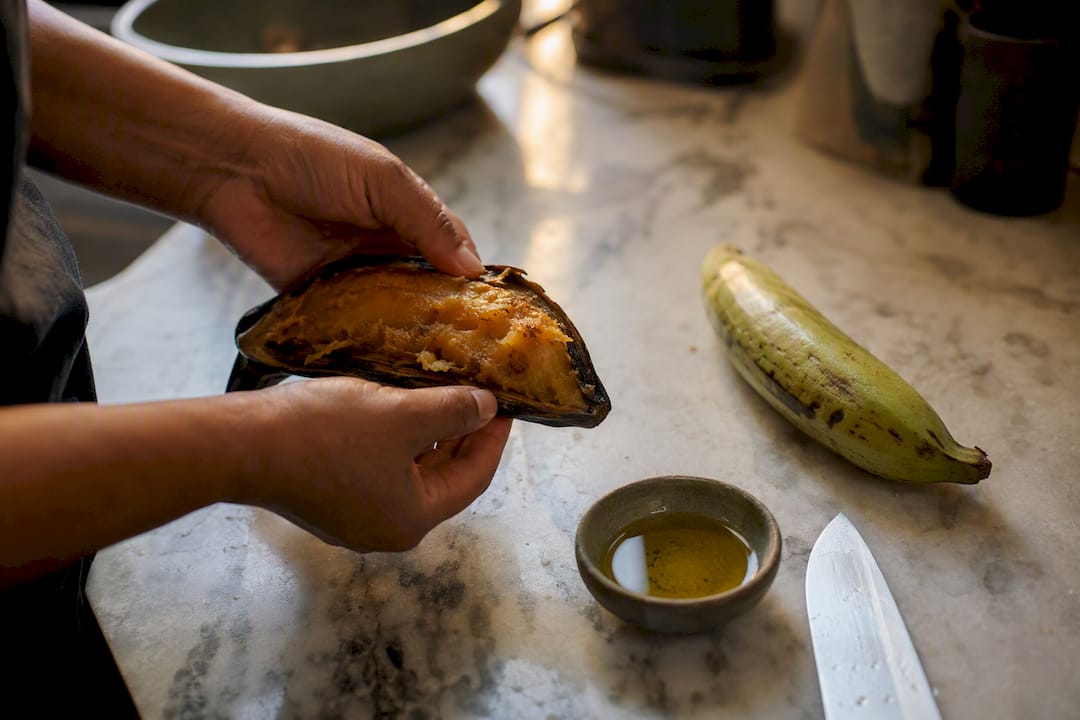
Bananas move faster through a narrower range. Green bananas are starchy and chalky (most people never eat them at this stage), yellow bananas are the familiar soft-sweet snack, and heavily spotted or brown bananas turn syrupy and intensely sweet, which is exactly why they’re prized for banana bread.
Matching the stage to the dish matters more than most home cooks realize:
- Green plantain: best for tostones, chips, or anywhere you want a savory, starchy bite.
- Yellow to black plantain: best for maduros, baking, or mashing into mofongo.
- Green banana: rarely used raw, occasionally boiled in savory Caribbean dishes.
- Yellow banana: the standard raw snack, smoothie, or cereal topping.
- Spotted or brown banana: ideal for banana bread, muffins, or pancake batter.
The dietary shift behind this is resistant starch. Underripe plantains carry high resistant starch and very little sugar, and that ratio flips as the fruit ripens, according to dietitians interviewed by Prevention. That’s not just a nutrition detail. It’s the actual mechanism behind why a green plantain fries up crisp and a black one caramelizes into something dessert-like.
Pro Tip: Need ripe plantains fast? Store them at room temperature in a paper bag with a banana. The ethylene gas speeds ripening by a day or two, and you’ll go from green to cooking-ready maduros faster than leaving them on the counter alone.
What Are the Best Ways to Cook Plantains vs Bananas?
Plantains are a cooking ingredient first and a snack a distant second. Bananas work the opposite way. Knowing which preparation matches which ripeness stage saves you from a lot of failed attempts.
Common plantain preparations, by stage:
- Tostones (green plantain): sliced, fried once, smashed flat, then fried again until crisp.
- Maduros (yellow to black plantain): sliced and pan-fried until caramelized and soft.
- Boiled plantain (green to yellow): peeled, boiled, and served alongside stews, similar to a starchy side dish.
- Baked plantain chips (green): thinly sliced and baked with a light coat of oil for a lower-fat snack.
- Mofongo (green, fried then mashed): fried plantain mashed with garlic, broth, and often pork cracklings.
Common banana uses need far less explanation because most people already default to eating them raw. Ripe bananas go into smoothies, cereal bowls, and lunchboxes as-is. Once they turn spotty or brown, they shift into baked goods, since that extra sugar and softness make banana bread, muffins, and pancakes taste noticeably better than using a firm yellow banana.
How to make tostones in four steps:
- Peel a green plantain and slice it into 1-inch rounds.
- Fry the rounds in oil for about 2 minutes per side until lightly golden.
- Remove and smash each piece flat with the bottom of a glass or a tostonera.
- Fry the flattened pieces a second time until crisp, then salt immediately.
How to make maduros in three steps:
- Peel a very ripe (mostly black) plantain and slice it diagonally into half-inch pieces.
- Pan-fry in a small amount of oil over medium heat for 2 to 3 minutes per side.
- Drain briefly on a paper towel and serve warm.
A cast-iron or heavy nonstick skillet handles both dishes better than a thin pan, since plantains stick easily and need even heat to caramelize instead of scorch. Neutral oils like avocado or vegetable oil work fine; coconut oil adds flavor if that fits the dish. Verywell Health points out that frying substantially raises the calorie and fat content of either fruit compared to boiling or baking.
Pro Tip: Swap the second fry in tostones for a hot oven instead. Fifteen minutes at 425°F on a well-oiled sheet gets you most of the crunch with a fraction of the oil.
How Do Plantains and Bananas Compare Nutritionally?
Plantains carry more calories, more carbohydrates, and less sugar per 100 grams than bananas, largely because of that starch-to-sugar ratio discussed earlier. Here’s how the two stack up using USDA FoodData Central values for raw plantain and USDA FoodData Central values for raw banana:
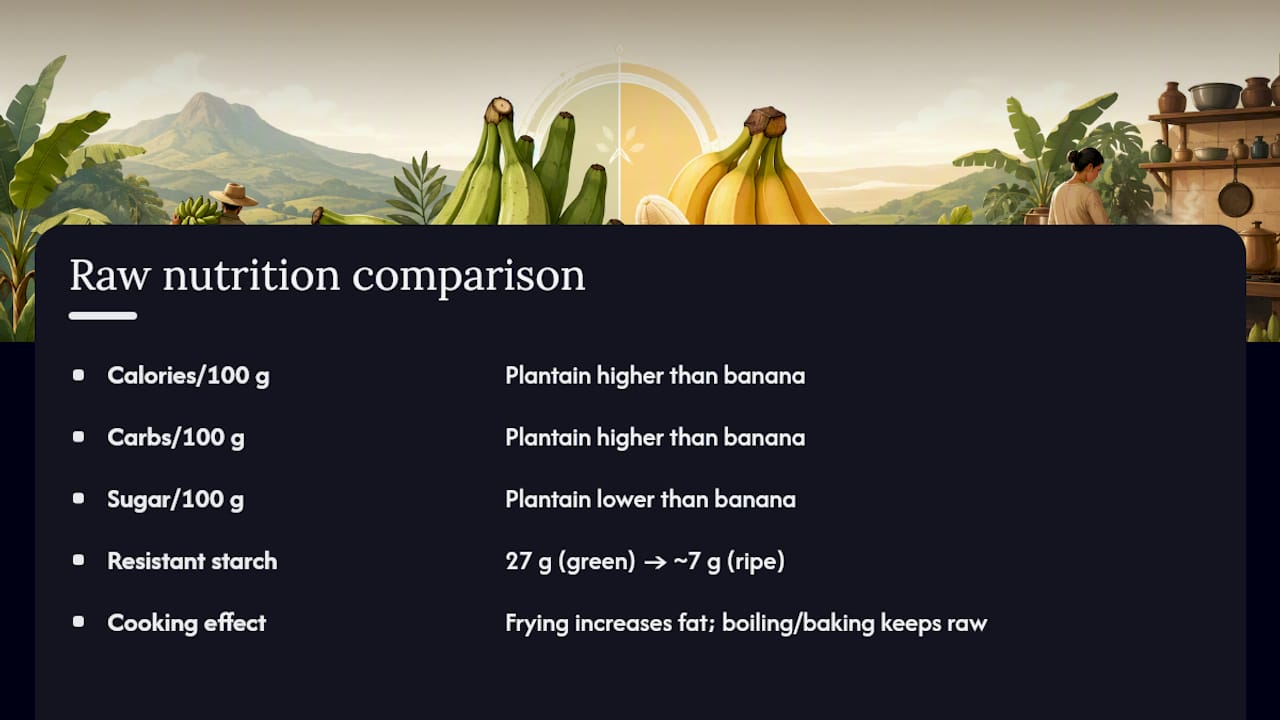
Those figures are for raw fruit. Once you fry a plantain, calorie and fat counts climb well beyond that baseline, since the fruit absorbs oil during cooking. Baking or boiling keeps the nutrition profile much closer to the raw numbers above, which is exactly the tradeoff Verywell Health’s dietitians flag when comparing heart and blood sugar effects.
The resistant starch story matters here too. An underripe plantain can carry around 27 grams of resistant starch per 100 grams alongside only about 2 grams of sugar. As it ripens, that resistant starch can fall to roughly 7 grams while sugar climbs, according to Prevention’s breakdown of plantain nutrition. Resistant starch resists digestion in the small intestine, which tends to support fuller, steadier energy compared to fast-digesting sugar.
If you want lasting satiety, a green or yellow boiled plantain beats a banana on staying power. If you need quick fuel before a workout or a fast snack for a kid, a banana’s simpler sugar profile gets absorbed faster.
Pro Tip: Pair fried or baked plantain with a protein or fat source, like black beans or a fried egg, to blunt the blood sugar spike that comes from its higher carbohydrate load.
Can You Substitute Plantains and Bananas in Recipes?
Rarely, and almost never in savory dishes. A raw banana in place of a green plantain will turn to mush the moment it hits hot oil, since it lacks the starch structure that lets plantain hold its shape. Culinary guides are blunt about this: the two aren’t interchangeable in most recipes because of how differently their starch and texture behave under heat.
Sweet recipes have more wiggle room. A very ripe, baked plantain can sometimes stand in for banana in a quick bread or muffin recipe, since both bring moisture and natural sweetness at that stage. You’ll usually need to cut back added sugar slightly and expect a denser crumb.
Quick substitution checklist:
- Safe: black plantain baked and mashed into a banana bread recipe, with a small sugar reduction.
- Unsafe: green plantain sliced raw into a fruit salad. It will taste starchy and unpleasant.
- Safe: ripe plantain in place of banana in a smoothie, if you’re prepared for a thicker, less sweet result.
- Unsafe: raw banana fried like tostones. It will collapse instead of crisping.
When you do swap, adjust for moisture and cook time rather than assuming a one-to-one trade will work.
How Should You Pick, Ripen, and Store Each Fruit?
Buying the right stage upfront saves the most hassle. For tostones, grab plantains that are still fully green and firm. For maduros, look for plantains that are mostly black; that’s peak sweetness, not spoilage, as Healthline points out. For bananas, yellow with minimal spotting works for snacking, while heavy spotting or light browning signals baking territory.
To speed ripening, leave either fruit at room temperature in a paper bag, ideally with an apple or another banana nearby to concentrate the ethylene gas. To slow it down, refrigeration works for bananas, though the peel will darken even as the flesh stays fine. Plantains generally do better left at room temperature until you’re ready to cook them, since cold slows ripening but can affect texture once cooked.
- Store unripe plantains and bananas at room temperature, away from direct sun.
- Refrigerate only once ripe, and expect the peel to blacken faster than the flesh spoils.
- Freeze overripe bananas whole (peeled) for smoothies later.
- Mash and freeze overripe plantain for quick maduros or fritters down the line.
Pro Tip: Don’t toss overripe fruit. Freeze mashed overripe banana in ice cube trays for smoothies, or mash overripe plantain into fritter batter you can fry straight from frozen.
Why Are Plantains So Central to Caribbean and Latin American Cooking?
Plantains function as a daily starch in dozens of cuisines the same way rice or potatoes do elsewhere, which is why so many households treat them as a pantry staple rather than a fruit-aisle extra. Food Network’s rundown of plantain dishes covers the range well: tostones, maduros, mofongo, and chips each rely on a different ripeness stage and cooking method.
A quick tour of signature dishes worth knowing:
- Mofongo (Puerto Rico): fried green plantain mashed with garlic and often pork cracklings.
- Tostones (widespread Caribbean and Latin America): twice-fried green plantain, crisp and savory.
- Maduros (widespread): pan-fried ripe plantain, caramelized and sweet.
- Plantain chips (widespread): thin-sliced green plantain, fried or baked until crunchy.
- Bolón (Ecuador): mashed green plantain formed into a ball, often stuffed with cheese or meat.
Across the broader “cooking banana” classification, plantains show up as a dietary staple across West Africa, the Caribbean, and much of tropical Latin America, prepared far more often by boiling, frying, or roasting than by eating raw.
If you’re looking for plantains at the right stage for a specific dish, ethnic grocers and Caribbean specialty stores typically stock every ripeness level side by side, which makes it easier to grab exactly what a recipe calls for instead of guessing at a mainstream supermarket. Tojexpress carries plantains alongside other Caribbean staples for exactly that reason, so home cooks in the Atlanta area can plan a mofongo or tostones night without hunting across three stores. Pairing plantains with the right Caribbean side dishes rounds out a meal the way rice and beans typically do.
Ready to Stock Your Kitchen With the Real Thing?
Knowing the difference between a plantain and a banana only helps if you can actually find good ones. Tojexpress stocks plantains at multiple ripeness stages alongside the seasonings, oils, and Caribbean pantry staples that turn a plantain into an actual dish, not just an ingredient sitting on the counter. Shoppers in Atlanta, Stone Mountain, Decatur, Lithonia, Conyers, Tucker, Snellville, and across Rockdale County can order online or stop into the store for the same specialty groceries that make tostones, maduros, and mofongo taste the way they’re supposed to. Browse the full grocery selection at Tojexpress and stock up before your next cooking session.
A Kitchen-First Take on Plantain vs Banana
Most articles on this topic treat plantains like an exotic curiosity instead of the pantry staple they actually are in huge parts of the world. That framing gets the priority backward. The real skill isn’t memorizing a nutrition chart; it’s learning to read ripeness on sight, because that single judgment call decides whether your dish works.
Conventional advice tends to overemphasize the nutrition comparison and underemphasize the cooking mechanics that make plantains worth buying in the first place. Calories and fiber matter, but they change dramatically based on whether you fry, boil, or bake, which the numbers alone won’t tell you.
If you take one thing from this comparison, let it be this: buy plantains at whatever stage matches your recipe, not whatever stage looks familiar from a banana bunch. Green for savory, black for sweet. Everything else follows from that.
Sources
- Plantains vs. Bananas: What’s the Difference? | Healthline
- Plantains vs. Bananas: Which One’s Better for Your Heart and Blood Sugar? | Verywell Health
- Plantains Vs. Bananas: Dietitians Explain Which Is Better for You | Prevention
- Plantain vs Banana: What’s the Difference? | Food Network