

Jamaican Curry vs Indian Curry: Key Differences Explained
TOJEXPRESS.COM-Antonio HenryJamaican curry and Indian curry share a spice ancestry, but they diverge sharply in heat source, signature aromatics, and cooking technique. Jamaican curry leans on allspice (pimento), a turmeric-heavy premixed powder, and the fruity punch of Scotch bonnet peppers, while Indian curry is less a single dish than a vast regional tradition built around freshly toasted whole spices, staged masala additions, and heat that ranges from black pepper warmth to dried chili fire. Both traditions are living, variable cuisines, so every comparison here describes tendencies, not absolutes.
Key Takeaways
Jamaican curry and Indian curry share spice roots but diverge in heat source, technique, and flavor profile, making each style worth learning on its own terms.
| Point | Details |
|---|---|
| Spice blend structure | Jamaican uses a turmeric-forward premixed powder with allspice; Indian builds from freshly toasted whole spices by region. |
| Heat source difference | Jamaican heat comes from fresh Scotch bonnet peppers; Indian heat uses dried chilies, chili powder, or black pepper. |
| Defining technique | “Burning” curry powder in hot oil is the Caribbean signature step; Indian cooking relies on tempering (tadka) and staged spice additions. |
| Indian curry is not one dish | Indian curry spans thousands of regional styles; always specify the region when following a recipe or making substitutions. |
| Tojexpress for sourcing | Tojexpress carries Jamaican curry powder, allspice, Scotch bonnet products, and Caribbean pantry staples online and in-store in the Atlanta area. |
Table of Contents
- How Jamaican curry vs Indian curry compares at a glance
- Where each curry tradition actually came from
- Key spices and pantry contents: Jamaican curry powder vs Indian masalas
- How these two curries actually taste, and how the heat behaves
- Representative dishes and serving traditions for each cuisine
- Signature cooking techniques that create each style’s flavor
- How to approximate one style using the other’s pantry
- Pantry essentials and where to source authentic ingredients
- When to cook Jamaican-style vs Indian-style curry
- The part most comparisons get wrong
- Stock your kitchen with authentic Caribbean ingredients
- Sources
How Jamaican curry vs Indian curry compares at a glance
A quick side-by-side across the dimensions that matter most for cooking:
- Primary spices: Jamaican uses a turmeric-forward premixed powder with allspice, fenugreek, mustard, cumin, and coriander; Indian uses freshly ground or toasted masalas (coriander, cumin, chili, black pepper, garam masala) that shift by region
- Heat source: Jamaican relies on fresh Scotch bonnet peppers for fruity, bright heat; Indian curries use dried red chilies, chili powder, or fresh green chilies depending on the region
- Fats and liquids: Jamaican commonly uses neutral oil and optional coconut milk; Indian uses ghee, mustard oil, or coconut oil, with yogurt, tomato, or coconut milk as the liquid base
- Color and texture: Jamaican produces a bright yellow, lightly thickened gravy; Indian ranges from deep red and thick (North Indian tomato-based) to pale yellow and soupy (South Indian coconut-based)
- Typical proteins and vegetables: Jamaican favors goat, chicken, and root vegetables (potato, carrot); Indian spans lamb, chicken, lentils, paneer, and a wider vegetable range
- Cooking technique: Jamaican centers on marination and “burning” curry powder in oil before simmering; Indian builds flavor through tempering (tadka), staged spice additions, and sometimes long slow cooking
- Cultural origin: Jamaican curry grew from Indian indentured labor migration to the Caribbean, adapted to local ingredients; Indian curry encompasses thousands of regional micro-cuisines shaped by soil, trade routes, and climate
Where each curry tradition actually came from
Indian curry is not one dish. Masalas change every few hundred kilometers, shaped by local crops, coastal trade, and climate. A Tamil Nadu fish curry made with tamarind and curry leaves shares almost nothing with a Kashmiri lamb rogan josh built on dried Kashmiri chilies and yogurt. The word “curry” itself is largely a British colonial convenience term applied to a wildly diverse set of preparations.
Caribbean curry arrived through a specific historical channel. After the abolition of slavery in 1838, British colonial authorities brought hundreds of thousands of indentured laborers from India to the Caribbean, including Jamaica, Trinidad, and Guyana. Those workers carried their spice knowledge with them, but the ingredients available on the islands were different.
Key cultural threads that shaped the divergence:
- Ingredient substitution: Scotch bonnet replaced Indian dried chilies; pimento (allspice) became a defining aromatic because it grew locally
- Premixed powders: Without access to the full range of Indian whole spices, cooks adapted to premixed curry powders, a habit that persists in Caribbean kitchens today
- British colonial trade: The British standardized “curry powder” as an export product, which influenced both Caribbean and British-Indian cooking more than it did cooking in India itself
- Local produce: Breadfruit, plantain, callaloo, and root vegetables like dasheen entered the pot alongside the spice blends, creating a distinctly Caribbean flavor profile
This history explains why Jamaican curry feels simultaneously familiar and different from anything you’d find in Mumbai or Chennai.
Key spices and pantry contents: Jamaican curry powder vs Indian masalas
The single biggest practical difference between these two styles is how the spice blend is assembled. Jamaican curry powder is turmeric-forward and typically includes allspice (pimento) as a signature note, plus fenugreek, mustard seed, cumin, and coriander. That allspice note is what gives Jamaican curry its warm, slightly sweet, almost clove-like undertone. Indian-style curry powders sold outside India often contain more red chili and are largely a British invention rather than a staple of Indian home kitchens, where cooks build their own masalas from whole spices.
Jamaican curry pantry checklist:
- Jamaican curry powder (turmeric-forward blend with allspice)
- Whole allspice berries (pimento)
- Fresh Scotch bonnet peppers
- Fresh thyme
- Garlic and ginger
- Lime or lemon (for marination)
- Coconut milk (optional, for creamier gravy)
- Root vegetables: potato, carrot, cho cho (chayote)
Indian curry pantry checklist:
- Whole spices: cumin seeds, mustard seeds, coriander seeds, dried red chilies, cardamom, cloves, cinnamon
- Ground spices: turmeric, cumin, coriander, chili powder, garam masala
- Fresh aromatics: ginger, garlic, green chilies, curry leaves (South Indian)
- Tomatoes or yogurt (base liquid, region-dependent)
- Ghee or mustard oil
Visual cue: Jamaican curry runs bright yellow because of the high turmeric ratio. Indian curries range from golden yellow (turmeric-heavy North Indian) to deep red-orange (chili-forward Madras style) to pale cream (coconut-based South Indian). If you open a jar and it’s intensely yellow, you’re almost certainly looking at a Caribbean-style blend. A darker, redder powder signals more dried chili content.
You can read more about essential Caribbean spices and how each one functions in the pot before you shop.
How these two curries actually taste, and how the heat behaves
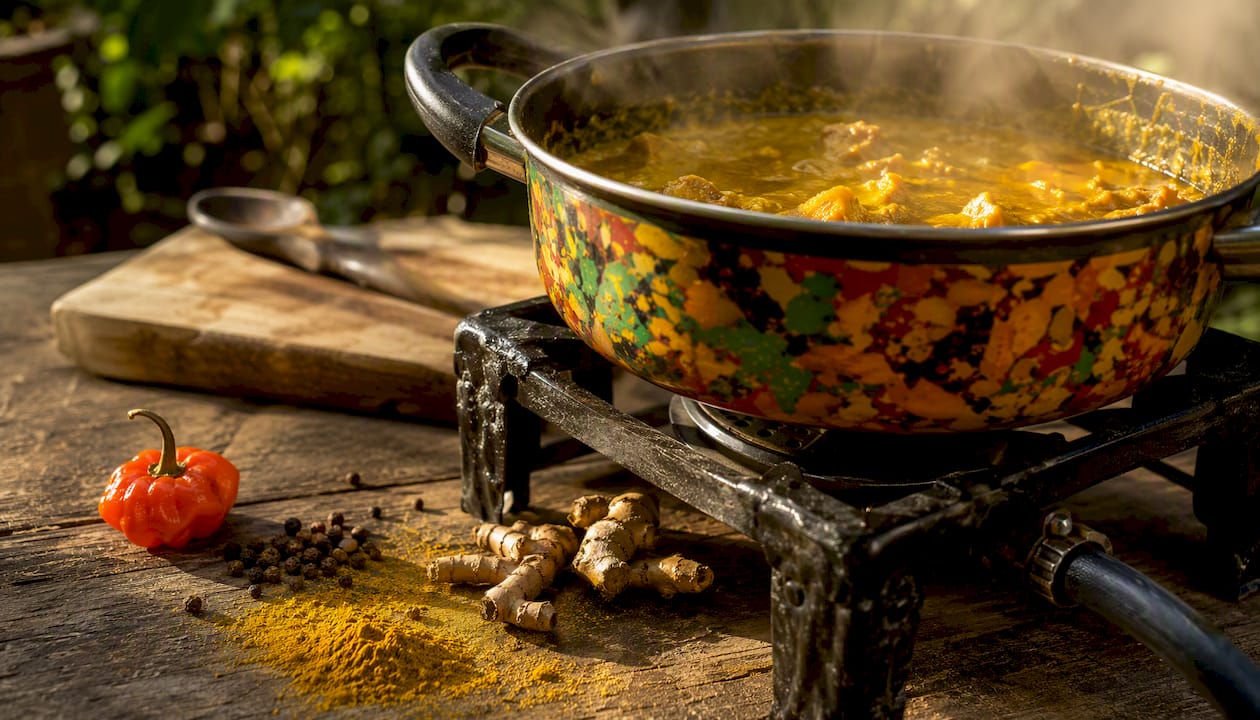
The taste of Jamaican curry is bright, warm, and fruity. Turmeric gives it an earthy base; allspice adds a subtle sweetness, and the Scotch bonnet delivers heat that arrives fast and carries a distinct fruity note unlike any dried chili. The overall effect is sunny and punchy rather than deep or complex.
Indian curry is harder to summarize because the regional variation is enormous. A butter chicken from Delhi is rich, mildly spiced, and creamy. A Chettinad chicken curry from Tamil Nadu is dark, peppery, and intensely aromatic. A Goan fish curry is sour and coconut-forward. The common thread is layered spice complexity built through technique rather than a single flavor note.
Heat behavior: fresh pepper vs dried chili
- Fresh Scotch bonnet heat hits quickly and fades relatively fast; it also carries floral, fruity top notes that dried chilies cannot replicate
- Dried chili heat in Indian curries tends to build more slowly and linger longer on the palate
- Black pepper, common in South Indian and some North Indian preparations, produces a sharp, clean heat that sits differently from either
Practical heat control tips:
- To reduce Scotch bonnet heat without losing its fruity flavor, leave a whole punctured pepper in the pot and remove it before serving
- Coconut milk softens heat in both styles; add it toward the end to preserve its sweetness
- Removing seeds and membranes from a Scotch bonnet cuts heat significantly while keeping the fruity aroma
Pro Tip: If you want Scotch bonnet flavor without serious heat, drop a whole, lightly scored pepper into the pot and pull it out after 20 minutes. You get the fruit, not the fire.
Representative dishes and serving traditions for each cuisine
Jamaican dishes and accompaniments:
- Curry goat: The flagship dish, slow-cooked until the meat falls from the bone; a staple at celebrations and Sunday dinners
- Curried chicken: Faster to cook, equally popular; often made with bone-in pieces for richer flavor, as detailed in this Jamaican curry chicken recipe
- Curried shrimp and fish: Lighter, quicker preparations common in coastal areas
- Curried chickpeas (channa): A vegetarian option with clear Indo-Caribbean roots
- Served with: Rice and peas (kidney beans cooked in coconut milk), roti (buss-up-shut or plain), fried plantain, or hard dough bread
Indian dishes across regions:
- Butter chicken (murgh makhani): North Indian, tomato-cream base, mild and rich; probably the most recognized Indian curry outside India
- Lamb rogan josh: Kashmiri, deep red, aromatic with dried Kashmiri chilies and yogurt
- South Indian fish curry: Coconut milk and tamarind base, bright and sour
- Dal makhani: Slow-cooked black lentils with butter and cream; technically a dal but functions as a curry in a full meal
- Served with: Basmati rice, naan, roti, paratha, or idli/dosa in South India
The serving starch tells you a lot about the tradition. Jamaican curry almost always lands next to rice and peas or roti, both of which arrived with the Indian indentured workers and stayed. Indian curries pair with whatever grain or bread the region grows.
Signature cooking techniques that create each style’s flavor
The technique gap between these two traditions is as significant as the spice gap. Here is how each style builds its flavor:
-
Marinate with citrus (Jamaican): Rub the meat with lime or lemon juice, then coat with curry powder, garlic, ginger, thyme, and Scotch bonnet. Marinate for a significant time to allow the flavors to develop. The acid removes any raw or gamey notes and drives the seasoning deep into the meat.
-
“Burn” the curry powder (Jamaican): Heat oil in the pot, add curry powder, and stir constantly for 60–90 seconds before adding any other ingredient. This step toasts the spice blend, removes the raw powder taste, and creates the aromatic base that defines Caribbean curry. Caribbean cooks rely on this technique precisely because premixed powders need that activation.
-
Sear the meat (Jamaican): Add the marinated meat directly to the spiced oil and brown it in batches. This builds a fond on the pot bottom that enriches the gravy.
-
Simmer low and slow (Jamaican): Add liquid (water, stock, or coconut milk), root vegetables, and a whole Scotch bonnet, then cover and simmer until the meat is tender and the gravy thickens naturally.
-
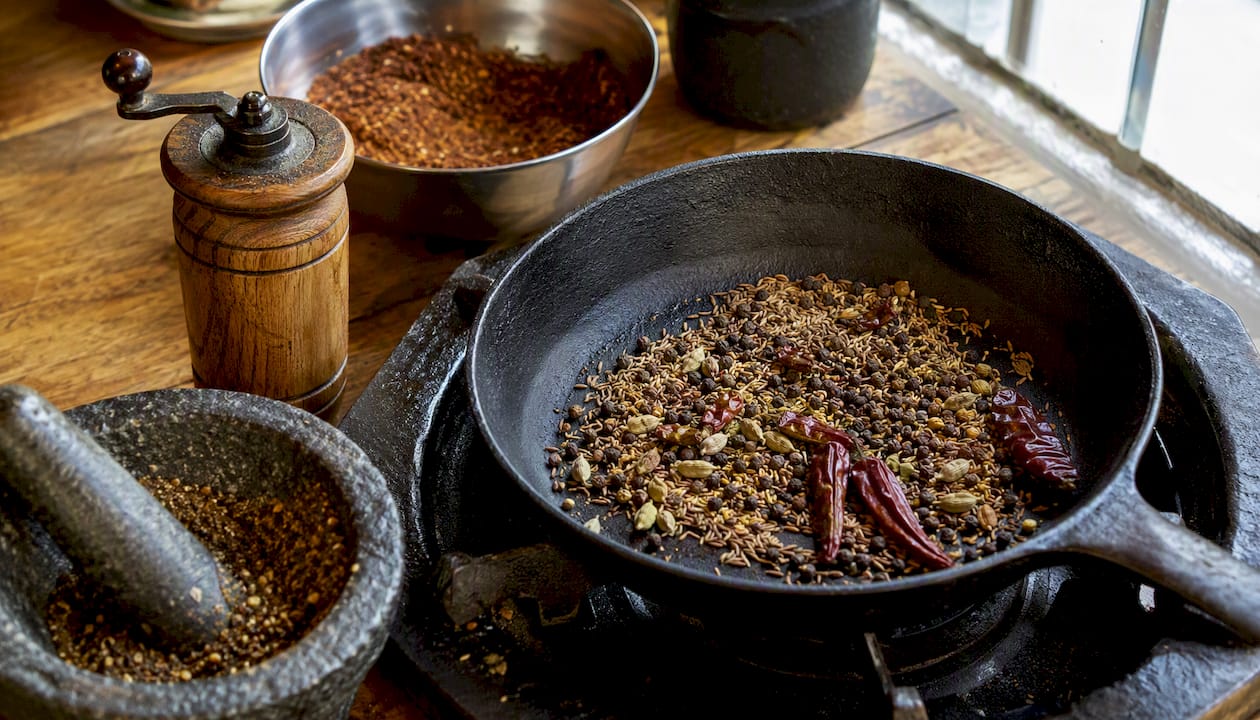
Toast whole spices (Indian): Dry-toast cumin seeds, coriander seeds, cardamom, and cloves in a hot pan before grinding or adding to the pot. This step unlocks volatile oils that ground spice cannot replicate.
-
Tempering / tadka (Indian): Heat ghee or oil until shimmering, then add whole spices (mustard seeds, curry leaves, dried chilies) and let them pop and sizzle for 30–45 seconds. This infused oil becomes the flavor foundation of the dish. Add it at the start for a base, or drizzle it over a finished dish for a finishing layer.
-
Stage the spice additions (Indian): Ground spices like turmeric and chili powder go in early with the onion-tomato base; garam masala and fresh herbs go in at the end. This staging creates the layered complexity that distinguishes Indian curry from a single-note spice dump.
Pro Tip: Never add curry powder to a dry, cold pan. The spices need hot fat to bloom. If the oil isn’t shimmering before the powder hits it, you’ll get a gritty, raw-tasting result instead of the deep, toasted base the dish needs.
For a practical walkthrough of these methods, the Caribbean cooking guide at Tojexpress covers spice preparation step by step.
How to approximate one style using the other’s pantry
You don’t need a specialty store run to get close to either style. A few targeted swaps get you most of the way there.
To approximate Jamaican curry using an Indian pantry:
- Start with a standard Indian curry powder or garam masala base
- Add 1/2 teaspoon of ground allspice per tablespoon of curry powder; this is the single most important swap
- Increase turmeric by an extra 1/4 teaspoon per serving to hit that bright yellow color
- Swap dried red chili for a fresh Scotch bonnet or habanero (the closest widely available substitute)
- Add fresh thyme to the pot; it’s not an Indian spice but it’s central to Jamaican flavor
- Use coconut milk instead of yogurt as your liquid
To approximate Indian curry using a Jamaican pantry:
- Use your Jamaican curry powder as the base, but reduce the quantity slightly
- Add 1/2 teaspoon of garam masala to introduce the warm, complex top notes Indian curries carry
- Swap Scotch bonnet for dried red chili or chili powder for slower-building, longer-lasting heat
- Use tomato paste or crushed tomatoes as the liquid base instead of coconut milk
- Toast a few whole cumin seeds in the oil before adding anything else
Quick 3-step recipe conversion (Indian to Jamaican):
- Replace the garam masala with Jamaican curry powder at the same volume
- Add 1/2 teaspoon ground allspice and a whole Scotch bonnet to the pot
- Finish with coconut milk instead of cream or yogurt
For a deeper substitution list, the Jamaican spice substitutes guide at Tojexpress covers specific ratios and brand recommendations.
Pro Tip: When converting a recipe, balance heat changes with fat. If you add more chili than the original called for, a splash of coconut milk or a dollop of yogurt at the end will bring the dish back into balance without dulling the spice.
Pantry essentials and where to source authentic ingredients
Getting the right ingredients makes a bigger difference here than in most cuisines. A generic supermarket curry powder will not give you the allspice-forward, turmeric-heavy profile of a true Jamaican blend, and pre-ground Indian spices that have been sitting on a shelf for two years won’t deliver the volatile aromatics that make tempering worth doing.
Jamaican curry shopping list:
- Jamaican curry powder: Look for brands that list allspice (pimento) in the ingredients; Chief, Grace, and Betapac are widely recognized Caribbean brands
- Whole allspice berries: Buy whole and grind fresh for the best flavor; pre-ground loses potency quickly
- Scotch bonnet peppers: Fresh is best; dried or jarred versions work in a pinch but lose the fruity top note
- Fresh thyme: Dried works but fresh is noticeably better in Jamaican preparations
- Coconut milk: Full-fat canned; avoid “lite” versions for gravy-based dishes
Indian curry shopping list:
- Whole spices: Cumin seeds, coriander seeds, mustard seeds, cardamom pods, dried red chilies; buy whole and toast before use
- Garam masala: A finishing spice, not a base; use it in the last 5 minutes of cooking
- Curry leaves: Fresh or frozen, not dried; used in South Indian and some North Indian preparations
- Ghee: Worth buying over butter for tempering; the higher smoke point and nutty flavor are both relevant
Ground spice powders stay potent for roughly 6 months in an airtight container away from heat and light. Whole spices last 1–2 years under the same conditions. If your turmeric has faded from bright orange-yellow to pale beige, it’s time to replace it.
Tojexpress carries packaged Caribbean pantry items including Jamaican curry powder, allspice, and Scotch bonnet products, available online and in-store for Atlanta-area shoppers.
When to cook Jamaican-style vs Indian-style curry
Neither style is objectively better. They solve different cooking situations.
Choose Jamaican curry when:
- You want a one-pot weeknight meal with minimal prep; the premixed powder shortens the spice work considerably
- You’re cooking for a crowd that enjoys fruity, bright heat over slow-building chili burn
- You have goat, chicken thighs, or shrimp on hand; these proteins shine in the Jamaican style
- You want something that pairs naturally with rice and peas or roti for a complete Caribbean meal
- Pairing suggestion: cold Red Stripe beer or a ginger beer cuts through the richness perfectly
Choose Indian curry when:
- You want to explore regional depth; a South Indian fish curry and a North Indian lamb curry are almost entirely different experiences
- You’re cooking for guests who enjoy building their own heat level; Indian curries let you control chili separately from the base spice
- You have yogurt, tomatoes, or lentils to use; these are natural Indian curry bases
- You want a vegetarian centerpiece; Indian cuisine has a far wider range of vegetable and legume curries
- Pairing suggestion: basmati rice with a raita (yogurt-cucumber sauce) balances heat and richness
For side dish and pairing ideas, the Caribbean food combinations guide at Tojexpress covers what works alongside a Jamaican curry spread.
The part most comparisons get wrong
Most Jamaican curry vs Indian curry articles treat the comparison as a flavor contest. That framing misses what’s actually interesting. Jamaican curry is not a simplified or lesser version of Indian curry. It’s a fully developed cuisine that emerged from a specific historical trauma, adapted brilliantly to available ingredients, and produced dishes that are genuinely distinct from anything on the Indian subcontinent.
The “burning” technique is a good example. Caribbean cooks developed it partly because premixed powders need more activation than freshly ground spices. What started as a practical workaround became a defining flavor step that produces a toasted, slightly caramelized spice base you won’t find in most Indian preparations. That’s not a shortcut. That’s an evolved technique.
The other thing worth saying: Indian curry is not one thing. Treating it as a single reference point against which Jamaican curry is measured is a category error. A Jamaican curry goat has more in common with a Trinidadian curry goat than it does with a Kerala fish curry, and a Kerala fish curry has more in common with a Sri Lankan fish curry than with a Punjabi chicken masala. The honest comparison is between Jamaican curry and the specific Indian regional tradition it descended from, which is closer to the Indo-Caribbean cooking of Trinidad and Guyana than to any mainland Indian style.
Cook both. They’re not competing.
Stock your kitchen with authentic Caribbean ingredients
If you’re ready to cook either style, having the right pantry makes all the difference. Tojexpress stocks Jamaican curry powder, whole allspice, Scotch bonnet products, coconut milk, and a full range of Caribbean pantry staples, available for online order with delivery to Atlanta, Stone Mountain, Decatur, Lithonia, Conyers, Tucker, Snellville, and Rockdale, Georgia, or for in-store pickup.

You won’t find Jamaican curry powder with allspice listed on the label at most chain supermarkets. The generic yellow powder they stock is a British-influenced blend that won’t give you the island flavor profile this article describes. Specialty Caribbean grocers carry the brands that Caribbean home cooks actually use, including Grace, Chief, and Betapac. Browse the Tojexpress online store to order the specific ingredients you need for either style, shipped directly to your door.
Sources
- Jamaican Curry Chicken Recipe
- Jamaican curry powder vs Indian curry powder
- India’s curries are not one dish — they are 1,000 micro-cuisines
- Spices of the islands: What sets Caribbean curries apart from Indian ones?
- Jamaican Curry Chicken and Potatoes