

Step-by-step Caribbean cooking: Master recipes at home
TOJEXPRESS.COM-Antonio HenryTL;DR:
- Caribbean cooking relies on a logical sequence of steps that build flavor and confidence for home cooks. Most iconic dishes, from curries to saltfish akara, benefit from precise preparation, seasoning, and timing techniques. Using proper tools, fresh ingredients, and step-by-step methods allows Atlanta residents to recreate authentic Caribbean flavors effortlessly.
Imagine pulling a plate of crispy saltfish akara or a deeply fragrant Jamaican curry chicken off your own stove in Atlanta. No guesswork, no mystery ingredients you can’t find, no failed batches that taste nothing like the real thing. That outcome is closer than you think. Caribbean cooking has a reputation for being complex, but the truth is that most of its iconic dishes follow a logical sequence of steps. Once you understand that sequence, flavor and confidence build together. This guide breaks down the most rewarding Caribbean recipes and methods so you can cook them confidently at home.
Table of Contents
- What you need: Tools, ingredients, and Atlanta market tips
- Step-by-step Caribbean curry: Prawn and chicken variations
- Saltfish and akara: Managing salt, crispiness, and bean flavors
- Brown stew chicken and escovitch fish: Layering flavor and texture
- Why step-by-step Caribbean cooking works: Unlocking flavor and confidence
- Ready to cook? Explore Caribbean meal solutions in Atlanta
- Frequently asked questions
Key Takeaways
| Point | Details |
|---|---|
| Marination is essential | Long marination removes raw flavors and builds rich complexity in Caribbean meats and stews. |
| Flavor layering matters | Activating spices, building a base, and simmering in stages optimizes taste in curries and stews. |
| Timing preserves texture | Finishing steps—like adding prawns late or simmering briefly—keep vegetables and proteins tender. |
| Salt management is key | Soaking and tasting saltfish ensures dishes aren’t too salty and delivers balanced flavor. |
| Local products work | Atlanta’s produce and grocery options can stand in for classic Caribbean ingredients with careful adaptation. |
What you need: Tools, ingredients, and Atlanta market tips
Now that you understand the goal, let’s start with what you’ll need to succeed. Getting your kitchen ready before you cook saves time and prevents the most common beginner mistakes.
Essential tools you’ll want on hand include a heavy-bottomed pan or cast iron skillet, a food processor for blending spice pastes and bean batters, a reliable kitchen thermometer for frying, and a good cutting board with a sharp knife. These tools aren’t exotic. Most Atlanta kitchens already have them, and if you’re missing one, any local kitchen supply store can fill the gap.
Core Caribbean ingredients to stock up on:
- Curry powder (Jamaican or Trinidadian style)
- Scotch bonnet peppers (or habanero as a substitute)
- Saltfish (dried and salted cod)
- Fresh or frozen prawns
- Ripe and green plantains
- Black-eyed peas or black beans
- Fresh thyme, allspice, and green onions
For Atlanta cooks, shopping Caribbean groceries in Atlanta has become much easier with specialty stores and international markets. If you can’t find Scotch bonnet peppers, fresh habaneros from local farmers’ markets work well. For saltfish, many Asian grocery stores in the metro area carry dried salted cod under different names.
Here’s a quick comparison of common substitutions:
| Caribbean ingredient | Best Atlanta substitute | Flavor impact |
|---|---|---|
| Scotch bonnet pepper | Habanero | Very close, slightly less fruity |
| Jamaican curry powder | Indian madras blend + allspice | Good approximation |
| Saltfish (salt cod) | Asian dried salted fish | Saltier, adjust soaking time |
| Green plantain | Unripe banana | Starchier, less buttery |
| Fresh thyme | Dried thyme (half the amount) | Slightly less bright |
Pro Tip: Check out Caribbean seasonal products when planning your shopping. Using what’s freshest at Atlanta’s local markets gives your dishes a brightness that no amount of extra seasoning can replicate.
Step-by-step Caribbean curry: Prawn and chicken variations
With your prep ready, let’s dive into one of the most iconic Caribbean cooking techniques. Curry is not a single dish here. It’s a method, and it applies to both chicken and prawns with different timing requirements.
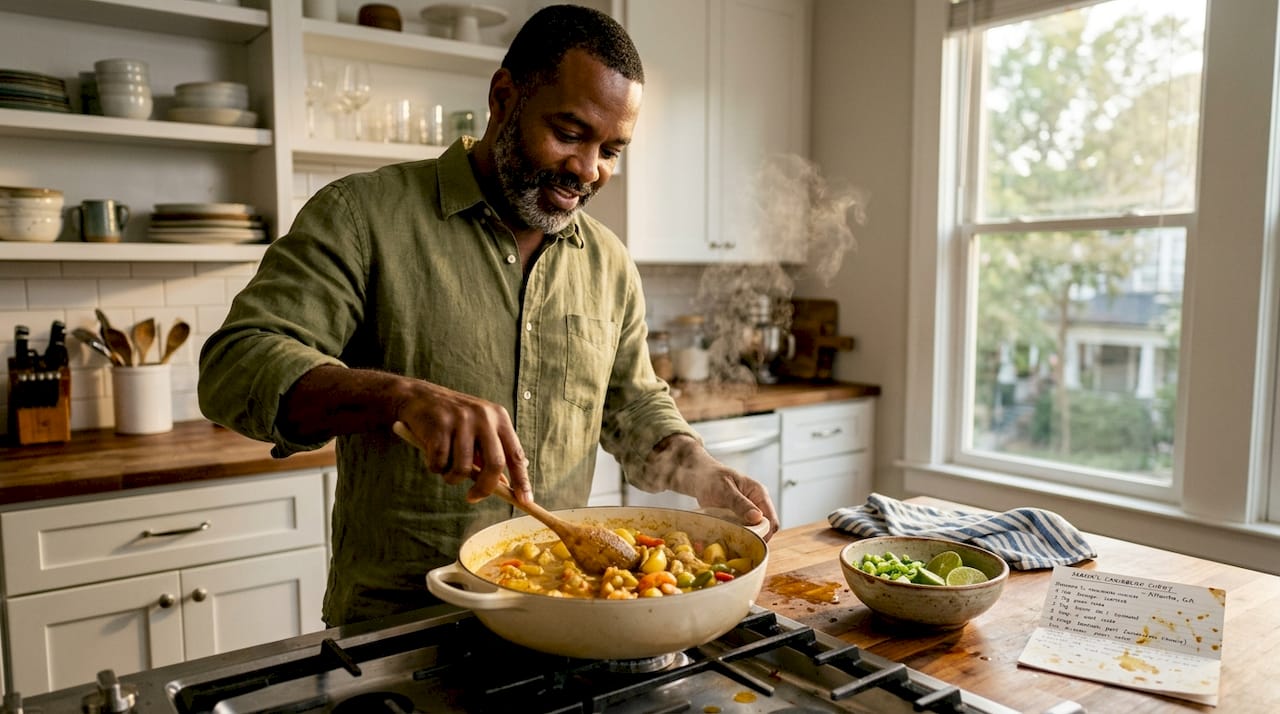
Jamaican curry chicken follows a specific sequence that relies on marination and a two-phase technique: brown the marinated chicken first, then toast your curry spices in oil before simmering and reducing to a rich, gravy-like consistency. Each step exists for a reason. Browning creates fond (the flavorful crust on the pan bottom), and toasting activates fat-soluble flavor compounds in the spices that hot water alone can’t release.
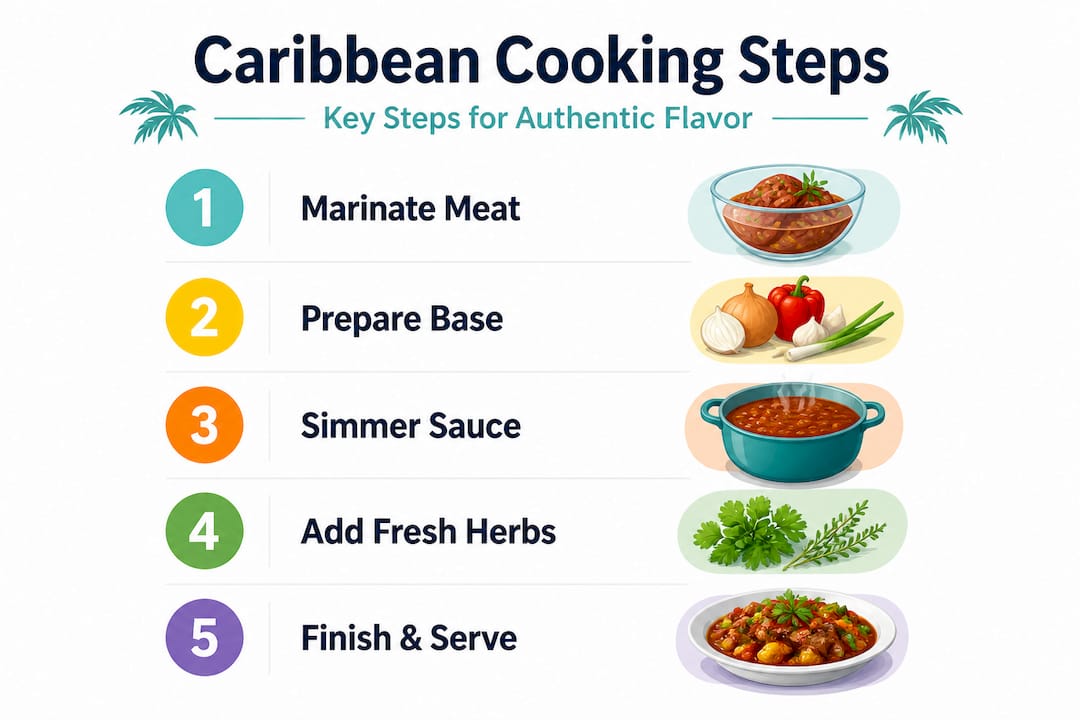
Here’s the basic step sequence:
- Marinate chicken pieces with curry powder, garlic, thyme, scallions, and Scotch bonnet for at least 2 hours, or overnight
- Brown the chicken in oil over medium-high heat until golden on all sides, then set aside
- Toast curry spices directly in the pan with a little oil for 60 to 90 seconds until fragrant
- Add onion, garlic, and aromatics to the spiced oil and cook until soft
- Return chicken to the pan, add stock or water, and simmer on low for 35 to 45 minutes
- Reduce the sauce uncovered for the final 10 minutes until it thickens to a coating consistency
Caribbean prawn curry uses the same aromatic base but requires a different finish. The curry base can be made ahead and frozen, then finished by adding prawns (and optional spinach or greens) right before serving. This matters because prawns cook in 3 to 4 minutes. Overcooking them even slightly turns them rubbery.
| Recipe | Marination time | Simmer time | Finishing step |
|---|---|---|---|
| Jamaican curry chicken | 2 hours to overnight | 35 to 45 minutes | Reduce sauce uncovered |
| Caribbean prawn curry | 30 minutes | Base: 25 minutes | Add prawns last 4 minutes |
Pro Tip: Make a double batch of the curry base and freeze half in zip-lock bags. On a busy Atlanta weeknight, thaw the base, heat it up, and drop in fresh prawns for a 10-minute dinner. Learn more about preparing Caribbean spices to make your base even more aromatic.
Saltfish and akara: Managing salt, crispiness, and bean flavors
Curry isn’t the only stepwise Caribbean recipe. Let’s explore another classic featuring saltfish and beans. Saltfish akara is a West African-Caribbean fusion fritter that shows up at breakfast tables and street stalls alike. Getting the salt level right and achieving real crispiness requires discipline in each stage.
“Salt management and dryness are the two variables that make or break akara. Rush either one, and you get a soggy, over-seasoned fritter instead of a crisp, balanced bite.”
Here’s the step-by-step workflow, inspired by the Good Food saltfish akara method, which provides a clear process for soaking, blending, and frying:
- Soak the saltfish in cold water for a minimum of 1 hour, changing the water once halfway through. For less salt, soak up to 3 hours. Taste before moving on.
- Drain, rinse, and pat completely dry with paper towels. This step is non-negotiable for crispiness.
- Blend your black-eyed peas (soaked overnight and peeled) with Scotch bonnet pepper, onion, and a small amount of water until you get a smooth, thick batter.
- Flake the saltfish into small pieces and fold it gently into the bean batter. Season with black pepper and fresh thyme.
- Heat oil to 170°C (340°F) in a deep pan. Use a thermometer here. Too cool and the fritters absorb oil. Too hot and they brown outside before cooking through.
- Fry in batches for 4 to 6 minutes per batch, turning once. Drain on a rack, not paper towels, to maintain crispiness on all sides.
Pro Tip: After soaking the saltfish, always pat it thoroughly dry before mixing into the batter. Excess moisture creates steam during frying, which causes dangerous oil splatter and soft, pale fritters instead of golden, crunchy ones.
The bean batter consistency matters too. If it’s too thin, add a spoonful of blended beans back in. If it’s too thick, add just a teaspoon of water at a time. You want it to hold its shape when dropped from a spoon but not be stiff.
Brown stew chicken and escovitch fish: Layering flavor and texture
You’ve learned bean-based and curry dishes. Now, see how flavor and texture are layered in meat and fish classics. These two recipes teach the most important Caribbean cooking skill: building depth through sequenced steps rather than dumping everything in at once.
Brown stew chicken is a cornerstone of Jamaican home cooking. The Allrecipes version details the exact mechanics: score the skin for better marinade penetration, marinate for several hours, brown in hot oil, caramelize onions with a small amount of brown sugar, then simmer until the chicken is tender and the sauce reduces into a thick, glossy gravy.
Step sequence for brown stew chicken:
- Score chicken skin with 2 to 3 shallow cuts per piece and marinate for at least 4 hours with browning sauce, thyme, garlic, and allspice
- Brown chicken skin-side down in hot oil for 4 to 5 minutes per side
- Remove chicken and use the same pan to sauté onions, garlic, and tomatoes
- Add a teaspoon of brown sugar and caramelize until fragrant and slightly darkened
- Return chicken to the pan with stock and simmer covered for 30 to 35 minutes
- Uncover, adjust seasoning, and reduce until sauce coats the back of a spoon
Jamaican escovitch fish works on a completely different texture principle. The goal is crisp fish with a bright, vinegar-based sauce poured over it. According to the Serious Eats escovitch method, you lime-rub and pat-dry the fish, score the skin, dredge in flour, then fry skin-side down for 3 to 4 minutes before flipping for another 3 to 4 minutes. The escovitch sauce simmers separately for just 3 minutes to develop pickle flavor without losing the vegetables’ crunch.
Common mistakes to avoid:
- Over-marinating chicken in acidic marinades, which breaks down texture before cooking
- Under-salting the fish before frying, leaving the interior bland
- Overcooking escovitch vegetables, which removes the signature crisp-tender bite that defines the dish
- Crowding the pan when browning chicken, which steams instead of sears the meat
- Skipping the rest time after frying fish, which lets steam build up and softens the crust
The short simmer time for escovitch sauce is intentional. The vinegar, scotch bonnet, onion, and carrot need heat to meld flavors, but extended cooking collapses their structure. Three minutes on medium heat is the benchmark. Set a timer and don’t walk away.
For more layered slow-cooked Caribbean dishes, the Caribbean stews guide covers braising techniques, herb layering, and timing for a broader range of recipes.
Why step-by-step Caribbean cooking works: Unlocking flavor and confidence
Having mastered core techniques, it’s worth reflecting on why stepwise cooking really matters for your kitchen success. Most cooking guides treat the step-by-step format as a beginner’s crutch. We’d push back on that strongly.
Step-by-step Caribbean cooking isn’t a shortcut for people who don’t know what they’re doing. It’s how Caribbean cuisine was taught for generations. These sequences encode real knowledge: when spices hit oil before liquid, they release fat-soluble aromatics that change the dish’s flavor entirely. When you caramelize onions before adding stock, you create Maillard reaction compounds that add sweetness and complexity no amount of seasoning can fake.
The sensory payoffs are real and distinct. Crispiness in akara comes from dry batter and correct oil temperature, two steps. Depth in brown stew comes from browning and caramelizing, two more steps. The curry base methodology shows this clearly: an aromatic base built with spice activation, followed by controlled simmer and reduction, then a texture-preserving finish. These aren’t suggestions. They’re the mechanism that makes Caribbean food taste like itself.
For Atlanta cooks specifically, there’s a real advantage here. Access to fresh seasonal produce, a growing number of Caribbean specialty stores, and diverse farmers’ markets means you’re not stuck approximating. You can get close to the real thing. And with the right sequential method, “close” becomes “authentic.”
Pro Tip: Always finish a dish at the right stage, not before or after. Adding prawns too early or pouring escovitch sauce over fish that’s still too hot both collapse the textures you’ve spent the whole recipe building. Timing is the last ingredient. Check Caribbean meal planning tips to build a weekly cooking rhythm that uses these methods efficiently without burning out on prep.
Ready to cook? Explore Caribbean meal solutions in Atlanta
Inspired to cook? Here’s how to get ingredients and recipe support right in Atlanta.
At TOJ EXPRESS, we stock both American and hard-to-find Caribbean products so Atlanta home cooks can skip the frustrating ingredient hunts and get straight to cooking. Whether you need Jamaican curry powder, dried saltfish, ripe plantains, or specialty seasonings, we’ve got the shelves to back up every recipe in this guide.

If you’re building your pantry and wondering where to start, our guides on Caribbean frozen foods for home cooks and smart buying Caribbean frozen foods give you a practical, budget-aware starting point. Stop in, explore our selection, and bring the flavors of the Caribbean into your Atlanta kitchen one step at a time.
Frequently asked questions
What are the most important steps to get authentic Caribbean flavor at home?
Start with marinating proteins, build an aromatic spice base, and control finishing times for texture preservation. The two-phase curry technique of browning then toasting spices is a great foundation to practice first.
How can Atlanta cooks substitute ingredients if they can’t find Caribbean products?
Use similar local chilies, fresh fish, and seasonal produce, adjusting for flavor and texture. Atlanta’s international markets and farmers’ markets offer many practical alternatives that work well in Caribbean recipes.
What’s the best way to manage salt levels in Caribbean recipes like saltfish akara?
Soak saltfish for at least 1 hour to reduce saltiness, then taste the fish before folding it into the batter to ensure the final fritter stays balanced.
How do you know when vegetables in escovitch sauce are cooked just right?
Simmer vegetables briefly until they retain some crunch. The short simmer benchmark of around 3 minutes preserves the crisp-tender texture that defines a proper escovitch sauce.
Can Caribbean curry sauces be made ahead for busy Atlanta schedules?
Yes, most curry bases can be made ahead and frozen, then finished with fresh proteins like prawns or chicken when you’re ready to eat.
Recommended
- How to prepare Caribbean spices: home cook’s guide – TOJ EXPRESS
- Discover Caribbean Stew: Flavors, Traditions, Tips – TOJ EXPRESS
- 7 Must-Try Caribbean Frozen Foods Examples for Home Cooks – TOJ EXPRESS
- Master Caribbean meal planning: Atlanta guide for success – TOJ EXPRESS
- Make authentic Mexican tacos at home: step-by-step guide – Burrito Splendido