
What Is Caribbean Grocery and Why It Matters
TOJEXPRESS.COM-Antonio HenryFinding the right ingredients for authentic Caribbean dishes in Atlanta often feels like a quest for connection. Caribbean groceries are more than just stores—they serve as bridges to heritage, preserving flavors and traditions shaped by centuries of island history. These specialty markets provide access to foundational ingredients such as ackee, plantains, and unique spices, ensuring every meal feels like home. Discover how these stores safeguard culinary identity and make true Caribbean cooking possible, right here in Georgia.
Table of Contents
- Defining Caribbean Grocery And Its Unique Role
- Essential Caribbean Ingredients And Staples
- Sourcing Authentic Caribbean Products Locally
- Comparing Caribbean And American Grocery Options
- Common Misconceptions And Shopping Mistakes
Key Takeaways
| Point | Details |
|---|---|
| Cultural Significance | Caribbean grocery stores serve as cultural anchors that preserve food traditions and allow families to maintain their culinary heritage. |
| Essential Ingredients | These stores provide unique regional ingredients and spices essential for authentic Caribbean cooking, which are often unavailable in typical supermarkets. |
| Community Support | Shopping at Caribbean groceries supports local trade and strengthens community ties, ensuring access to traditional foods and fosters cultural identity. |
| Strategic Shopping | A hybrid approach to grocery shopping is recommended: source culturally essential items from Caribbean stores while completing basic needs at American supermarkets for efficiency. |
Defining Caribbean Grocery and Its Unique Role
Caribbean grocery stores are far more than convenience shops. They’re cultural anchors that connect you to your heritage, preserve food traditions, and make authentic home cooking possible from Atlanta.
At their core, Caribbean groceries supply the foundational ingredients that define Caribbean cooking. Think ackee, callaloo, plantains, and specialty spices—items you won’t find in typical American supermarkets. These stores exist because Caribbean communities need access to the foods that shaped their identities and family recipes.
What Makes Caribbean Grocery Different
Unlike general supermarkets, Caribbean grocery stores stock items specific to island cuisines and cooking traditions. This specialized focus matters deeply for people seeking authentic flavors.
- Region-specific ingredients: Yams, dasheen, breadfruit, and specialized peppers from Caribbean farming traditions
- Authentic spice blends: Jerk seasonings, curry powders, and flavor combinations that reflect island culinary heritage
- Traditional prepared foods: Fresh or frozen items like saltfish, plantain chips, and cassava bread
- Imported beverages and sauces: Sorrel drinks, mauby, hot sauces, and condiments unavailable elsewhere
You’ll also find American staples alongside Caribbean products, making these stores true hybrid markets. This dual-inventory approach serves mixed households and helps you manage both your American grocery needs and cultural food preferences under one roof.
Caribbean groceries preserve food customs that have evolved through centuries of island history, making them guardians of culinary identity for diaspora communities.
Why This Matters for Atlanta’s Caribbean Community
Caribbean food customs have deep roots in cultural and national identity. When you shop at Caribbean groceries, you’re not just buying food—you’re maintaining connection to home, supporting cultural preservation, and ensuring your children grow up with familiar flavors.
For families who migrated from Jamaica, Trinidad, Barbados, Haiti, or other Caribbean islands, these stores eliminate the challenge of recreating home cooking. Instead of substituting or skipping ingredients, you find what you actually need.
These groceries also support your food security by ensuring consistent access to nutritional foods important to Caribbean diets. Items like okra, ackee, and particular fish varieties carry nutritional significance rooted in island food traditions and family health practices.
Pro tip: Visit Caribbean groceries early in the week when fresh imports arrive; this ensures you access the highest quality ackee, saltfish, and produce before supplies deplete.
Essential Caribbean Ingredients and Staples
When you walk into a Caribbean grocery store in Atlanta, you’re entering a world of flavors built on centuries of culinary tradition. The ingredients you’ll find aren’t random—they’re the foundation of Caribbean cooking.
The Core Starchy Vegetables
Caribbean cuisine relies heavily on starchy vegetables that provide nutrition and substance to meals. These items appear in nearly every traditional dish.
- Plantains: Used ripe for sweet preparations or green for savory dishes and fries
- Cassava: Processed into cassava bread or boiled as a side dish
- Yams and sweet potatoes: Roasted, boiled, or mashed as meal foundations
- Taro root: Called dasheen locally, prepared similarly to potatoes
- Breadfruit: A versatile starch that replaces carbohydrates in many preparations
These vegetables form the backbone of Caribbean meals. You’ll find them fresh, frozen, or processed at your local Caribbean grocery, making authentic preparation possible even thousands of miles from the islands.
Proteins and Flavor Builders
Caribbean starchy vegetables and grains pair with local meats and spices to create signature dishes. Beyond fresh proteins, Caribbean groceries stock essential items like saltfish, canned mackerel, and dried shrimp that carry deep cultural meaning.
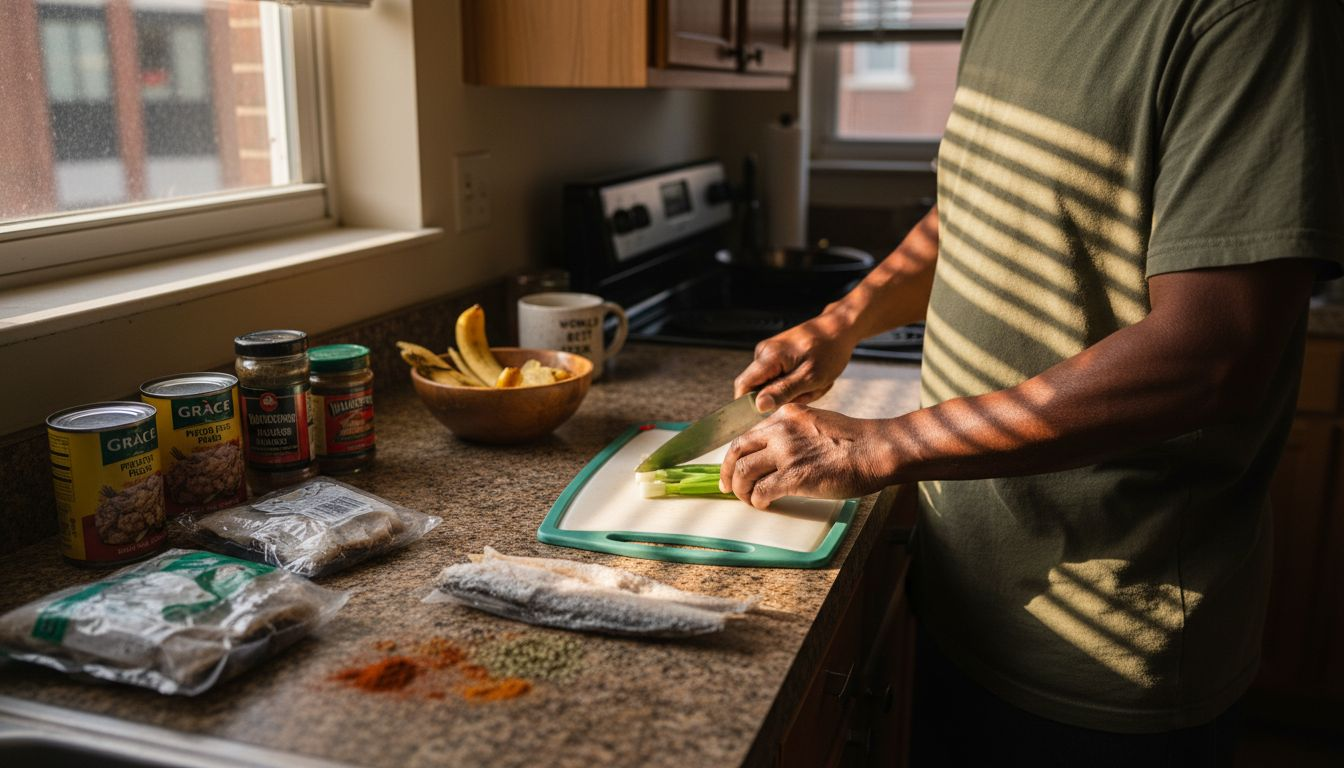
Beans represent another critical protein source. Red kidney beans, pigeon peas, and black beans appear in rice dishes, soups, and stews that define Caribbean comfort food.
Seasonings and Aromatics
The difference between American cooking and Caribbean cooking often comes down to spices. Caribbean groceries stock specialty items that transform basic ingredients.
- Jerk seasoning blends: Pre-mixed or individual components for authentic jerked meats
- Curry powders: Different from Indian versions, reflecting Caribbean preparation traditions
- Fresh culinary herbs: Cilantro, culinary peppers, and local green seasoning bundles
- Hot sauces: Made from scotch bonnet and habanero peppers with regional flavor profiles
The right spices don’t just add flavor—they connect you to family recipes and island memories in ways substitutes never can.
Coconut Products and Pantry Essentials
Coconut appears throughout Caribbean cooking in milk, cream, and oil forms. These products create the rich, distinctive flavors you crave in curries, rice dishes, and desserts.
You’ll also find essentials like canned tomatoes, specialty rice varieties, and imported condensed milk brands used in traditional recipes. Stock these items and you’re prepared for authentic cooking.
This table summarizes staple Caribbean grocery categories and their culinary uses:
| Category | Example Items | Typical Use |
|---|---|---|
| Starchy Vegetables | Plantains, cassava, breadfruit | Meal base, sides, roasted or fried |
| Proteins | Saltfish, pigeon peas, mackerel | Stews, soups, rice dishes |
| Spices & Aromatics | Jerk seasoning, curry powder | Marinating, seasoning meats |
| Pantry Staples | Coconut milk, specialty rice | Curries, desserts, staple meals |
Pro tip: Buy dried beans and frozen seafood in bulk during your Caribbean grocery visits; these shelf-stable items form the backbone of weeknight cooking and keep your freezer stocked for spontaneous family meals.
Sourcing Authentic Caribbean Products Locally
Finding genuine Caribbean products in Atlanta doesn’t require flying back to the islands. Trade relationships and local supply chains make authenticity achievable right here in Georgia.
How Trade Agreements Support Local Access
The Caribbean Basin Initiative creates stable pathways for authentic products to reach American markets. Duty-free access to U.S. markets facilitates Caribbean trade, meaning Caribbean businesses can export their goods affordably while maintaining product quality and authenticity.
This economic framework benefits you directly. Products arrive fresher, prices stay reasonable, and local Caribbean producers earn sustainable income. When you shop at Atlanta’s Caribbean groceries, you’re supporting these supply chains.
Building Relationships with Local Store Owners
Authentic sourcing starts with knowing your grocer. Caribbean store owners often have direct connections to Caribbean suppliers and understand product quality in ways chain supermarkets never will.
- Ask about product origins: Most owners know exactly which island each item comes from
- Request seasonal imports: Fresh ackee, breadfruit, and yams arrive when Caribbean harvests occur
- Build regular customer relationships: Owners often reserve premium items for loyal customers
- Discuss preparation methods: Owners offer cooking advice impossible to find elsewhere
These personal connections transform grocery shopping into cultural exchange and ensure you access genuinely authentic items.
Understanding Product Freshness and Sourcing
Authentic Caribbean groceries prioritize turnover over shelf life. Fast-moving inventory means items spend less time in storage and more time from island to your kitchen.
Active Caribbean export trade supports robust food systems throughout the region, creating reliable supply routes. This translates to consistent availability of fresh plaintains, scotch bonnet peppers, fresh herbs, and specialty items year-round.
Authentic Caribbean products arrive because established trade systems create supply reliability, not because stores stock whatever’s cheap or available.
What Authenticity Actually Means
Authentic doesn’t mean every item must come directly from Caribbean islands. It means products match how Caribbean people actually cook at home.
Many authentic items are produced locally by Caribbean diaspora businesses. Caribbean-owned manufacturers in Georgia create jerk seasonings, spice blends, and prepared sauces using traditional recipes and methods. These products carry authenticity through recipe fidelity, not geographic origin alone.
You’ll find both imported and diaspora-made products at quality Caribbean groceries. Both categories deliver authentic flavors for your kitchen.
Pro tip: Call ahead and ask store owners which days fresh shipments arrive; shopping immediately after restocking ensures peak freshness and widest selection of seasonal Caribbean produce.
Comparing Caribbean and American Grocery Options
Walking into a Caribbean grocery feels different from stepping into a chain supermarket. The difference runs deeper than layout or music playing overhead—it reflects entirely different shopping philosophies.
What American Supermarkets Prioritize
Chain supermarkets organize around mass-market demand. They stock what appeals to the broadest possible customer base, which means endless processed foods, mainstream brands, and items designed for quick meal preparation.
You’ll find hundreds of cereal options, frozen pizzas, and pre-packaged dinners. American groceries emphasize convenience and consistency. Every store looks identical, carries the same brands, and prices remain predictable.
But this standardization comes with a cost for Caribbean families. Items like fresh callaloo, ackee, dasheen, and specialized spices either don’t exist or sit forgotten in small international sections tucked in back corners.
The Caribbean Grocery Difference
Caribbean groceries operate from a completely different premise. Product availability and consumer preferences shape distinctly different grocery landscapes between Caribbean and American markets.
Your Caribbean grocer stocks what Caribbean families actually cook with. Quality matters more than selection breadth. Freshness trumps shelf life. Items rotate based on seasonal harvests from islands, not year-round warehouse availability.
Here’s a quick comparison of Caribbean groceries versus American supermarkets:
| Key Aspect | Caribbean Grocery | American Supermarket |
|---|---|---|
| Ingredient Focus | Regional and traditional foods | Mainstream, mass-market brands |
| Freshness Priority | Fast turnover, peak freshness | Long shelf life, bulk inventory |
| Staff Expertise | Cultural and recipe knowledge | Standard retail training |
| Shopping Experience | Community-oriented, personal | Standardized, efficiency-driven |
| Pricing Structure | Supports small suppliers | Bulk discount pricing |
Key Differences at a Glance
- Product focus: Caribbean grocers emphasize regional staples; American supermarkets stock mass-market commodities
- Freshness standards: Caribbean grocers prioritize turnover; supermarkets optimize long shelf storage
- Pricing structure: Caribbean grocers use fair margins supporting direct suppliers; supermarkets leverage bulk purchasing power
- Staff knowledge: Caribbean store owners speak from personal cooking experience; supermarket employees follow corporate training
- Cultural relevance: Caribbean groceries preserve foodways; supermarkets serve generic consumer preferences
American supermarkets serve efficiency. Caribbean groceries serve culture. Your choice determines whether dinner tastes like home or convenience.
Why You Need Both Sometimes
Realistic Atlanta living means using both options. Caribbean groceries supply authentic foundation ingredients while American supermarkets handle basics like milk, bread, and paper products efficiently.
Think of it strategically. Buy Caribbean staples, proteins, and specialty spices at Caribbean groceries where quality and authenticity justify premium prices. Stock pantry basics at supermarkets where volume purchasing saves money on items like flour, sugar, and canned goods.
The hybrid approach gives you authentic Caribbean cooking with American convenience without compromising either.
Pro tip: Divide your shopping between stores intentionally: use Caribbean groceries for cultural ingredients and fresh produce, then complete your list at American supermarkets for bulk staples and household items.
Common Misconceptions and Shopping Mistakes
Shopping at Caribbean groceries comes with its own learning curve. Many people make predictable mistakes that cost them money, time, or authentic cooking results.
Mistake: Assuming Higher Prices Mean Lower Quality
You’ll notice Caribbean grocery prices sometimes exceed supermarket prices for similar items. This doesn’t reflect inferior quality—it reflects reality. Caribbean groceries carry real costs supermarkets avoid through massive scale.
Supply chain disruptions disproportionately affect smaller grocery providers, including Caribbean stores. They can’t negotiate bulk discounts like chains do. Import costs, smaller order volumes, and specialized sourcing justify premium pricing.
Pay the extra dollar for ackee and you get Caribbean-grown ackee. Supermarket alternatives? Often cheaper but utterly different.
Misconception: Shortages Are Always Temporary
When fresh callaloo disappears from shelves, many assume it’ll return next week. This ignores systemic realities. Seasonal harvests mean actual availability windows. Port delays and logistical challenges create real gaps.
Understanding supply constraints helps you shop smarter. Buy extra when items appear. Plan meals around what’s available, not what you wish existed.
Common Shopping Mistakes
- Not asking about item origins: You lose crucial freshness information by not questioning store owners
- Ignoring expiration dates: Caribbean groceries move product quickly, but always check
- Expecting year-round availability: Island harvests follow natural seasons, not retail calendars
- Skipping loyalty relationships: Regular customers access reserved items and inside knowledge
- Comparing Caribbean groceries to supermarkets: Different purposes demand different expectations
Understanding that Caribbean groceries operate under different constraints—not inferior standards—transforms shopping from frustration to strategy.
Why Inflation Isn’t the Whole Story
Many people blame recent price increases entirely on inflation. Rising grocery prices stem from multiple factors beyond inflation, including demand shifts and supply disruptions. Caribbean groceries absorbed pandemic-era shopping habit changes alongside everyone else.
Your job isn’t understanding macroeconomics. Your job is recognizing that prices reflect legitimate cost structures, not greed or incompetence.
Smart Shopping Adjustments
Instead of fighting these realities, work with them. Buy Caribbean staples strategically. Plan menus using what’s currently available. Build relationships with store owners. Ask questions about freshness and origins.
These adjustments transform you from frustrated shopper to informed customer who gets authentic ingredients at fair prices.
Pro tip: Visit your Caribbean grocery multiple times monthly instead of one large trip; this aligns your shopping with natural product rotation and ensures you catch seasonal items before they disappear.
Discover Authentic Caribbean Flavors at TOJ EXPRESS Today
Finding genuine Caribbean ingredients that connect you to your heritage and preserve your family’s food traditions can be challenging. At TOJ EXPRESS, we solve this problem by offering a wide selection of authentic Caribbean staples alongside everyday American products to support your cultural cooking and convenient grocery needs. Whether you need fresh spices, pantry essentials like coconut milk, or your favorite Caribbean teas, we bring the islands closer to your kitchen.

Explore our extensive Caribbean grocery collection starting with our Teas and dive into rich, authentic flavors you won’t find elsewhere. Don’t wait for seasonal shortages or run out of key ingredients. Visit TOJ EXPRESS now and experience a convenient shopping destination that truly understands the importance of authenticity in Caribbean cooking.
Frequently Asked Questions
What are some essential ingredients found in Caribbean grocery stores?
Caribbean grocery stores typically stock starchy vegetables like plantains, cassava, yams, and traditional spices such as jerk seasoning and curry powders, essential for authentic Caribbean cooking.
How do Caribbean grocery stores differ from regular supermarkets?
Caribbean grocery stores focus on region-specific ingredients and traditional foods that reflect Caribbean culinary heritage, unlike supermarkets that prioritize mainstream products and convenience.
Why is it important to buy fresh produce at Caribbean grocery stores?
Fresh produce like callaloo and ackee is often seasonal, and buying it at peak freshness ensures better flavor and nutritional quality, enhancing authentic Caribbean dishes.
How can I store Caribbean staples for long-term use?
Many Caribbean staples, like dried beans and canned goods, can be stored for long periods. Freezing items such as seafood and starchy vegetables helps maintain their quality for later use.