

Best Cassava Flour Recipes for Reliable Gluten-Free Baking
TOJEXPRESS.COM-Antonio HenryStart with pancakes, tortillas, quick loaves, and cookies. These four categories match cassava flour’s real strengths: a neutral flavor that won’t fight other ingredients, and starch content strong enough to bind a batter without eggs doing all the work. Every other cassava flour recipe you’ll eventually try builds on the techniques these four teach you.
Here’s your fastest path in:
- Pancakes or waffles — cassava flour’s mild taste disappears under syrup and butter, and the batter forgives small measuring mistakes.
- Tortillas or flatbreads — a little fat and the right resting time make these pliable instead of cracker-dry.
- Quick breads (banana bread, sandwich loaf) — eggs and baking powder do the lifting, no yeast needed.
- Cookies and brownies — most one-bowl recipes convert to cassava flour with barely any adjustment.
- Simple sandwich loaf — the trickiest of the five, but worth learning once you’ve nailed the others.
Pro Tip: Cassava flour drinks up more liquid than wheat flour does, so start with slightly less than any converted recipe calls for, then let the batter rest five minutes before judging if it needs more.
Key Takeaways
Reliable cassava flour recipes come down to three habits: reducing liquid slightly, resting the batter or dough, and cooling loaves fully before slicing.
| Point | Details |
|---|---|
| Start with the easy wins | Pancakes, tortillas, quick loaves, and cookies convert most reliably to cassava flour. |
| Cut liquid, then adjust | Reduce liquid roughly 10% below a converted recipe, then add back by feel. |
| Never skip the cool down | Let loaves cool at least an hour before slicing to avoid a gummy center. |
| Add tapioca for flatbreads | A small amount of tapioca starch keeps tortillas and pizza crust pliable instead of cracking. |
| Stick with one brand at first | Testing with Otto’s or Bob’s Red Mill removes a variable while you learn how cassava flour behaves. |
Table of Contents
- Cassava Flour Recipes for Breakfast: Pancakes, Waffles, and Quick Bakes
- Cassava Flour Bread and Flatbread Recipes That Actually Slice Clean
- Sweet Cassava Flour Recipes: Cookies, Brownies, and Muffins
- Savory Cassava Flour Recipes: Pizza Crust, Coatings, and Dumplings
- How to Bake Reliably With Cassava Flour Every Time
- Caribbean-Inspired Cassava Flour Cooking and Pantry Basics
- Storing Cassava Flour So It Stays Fresh Longer
- Adapting Any Gluten-Free Recipe for Cassava Flour
- What’s in Cassava Flour, and Why It’s Worth Baking With
- Cassava Flour vs. Other Gluten-Free Flours: What to Use When
- Stock Your Pantry for Your Next Cassava Flour Bake
- What Actually Matters in Cassava Flour Baking
- Sources
Cassava Flour Recipes for Breakfast: Pancakes, Waffles, and Quick Bakes
Morning bakes are the easiest on ramp into cassava flour recipes because a slightly imperfect batter still cooks up fine. The flour hydrates fast, so let pancake or waffle batter sit for five to ten minutes before it hits the pan or iron. That short rest lets the starch fully absorb liquid, which keeps the inside from turning gummy once cooked.
- Lemon poppy seed pancakes — the citrus cuts cassava’s faint earthiness, and the tiny seeds add crunch without changing the crumb.
- Banana pancakes — mashed banana adds moisture and sweetness, which means you can use a bit less liquid overall.
- Fluffy waffles — a 100% cassava flour batter works, but blending in a spoonful of tapioca starch gives a crisper exterior.
- Basic buttermilk pancakes — the most forgiving starting recipe if you’re new to cooking with cassava flour and want a baseline for texture.
Reheat leftovers in a toaster or dry skillet rather than the microwave. Microwaving brings back moisture unevenly and can leave the center soft while the edges dry out. Top with fruit, a nut butter, or maple syrup, and store extras in the fridge for up to three days.
Cassava Flour Bread and Flatbread Recipes That Actually Slice Clean
Bread is where most people’s first attempt at cassava flour baking goes sideways, usually because they cut the loaf too soon. There are really two approaches, and they behave nothing alike.
Quick loaves rely on eggs and baking powder for lift. No proofing, no yeast, done in under an hour. They’re dense compared to wheat bread but slice fine once fully cooled.
Yeast loaves use psyllium husk powder to build structure the way gluten normally would. Psyllium absorbs liquid and forms a gel that traps gas from the yeast, giving you a lighter, more open crumb than eggs alone can produce, according to one detailed yeast-bread method. These take longer, but the payoff is a loaf that actually resembles sandwich bread.
For tortillas and naan, the trick is different again. Minimalist Baker’s grain-free tortilla recipe adds a small amount of tapioca starch to straight cassava flour, which keeps the dough pliable enough to roll thin without tearing or cracking at the edges. Roll between two sheets of parchment, cook in a dry, hot skillet for 30 to 45 seconds per side, and stack them under a towel to stay soft.
- Quick loaves: eggs plus baking powder, no rest needed before baking.
- Yeast loaves: psyllium husk plus a short proof, worth the extra time for sandwich bread.
- Tortillas: a touch of tapioca starch prevents cracking when rolled thin.
Pro Tip: Whatever loaf you bake, let it cool completely on a wire rack, at least an hour, before slicing. Cutting in early is the single biggest reason people end up with a gummy center and blame the flour instead of the timing.
Sweet Cassava Flour Recipes: Cookies, Brownies, and Muffins
Cookies and brownies are the most forgiving category in cassava flour baking, and a good place to convert an old family recipe instead of hunting for a new one. Simple, fat-heavy recipes like shortbread, chocolate chip cookies, and fudgy brownies often swap 1:1 with little more than a small liquid tweak. Recipes that depend on a light, structured crumb, like angel food cake or delicate layer cakes, need more than a straight substitution and usually call for added binders or a flour blend.
A basic one-bowl brownie framework works like this:
- Melt butter and chocolate together, then whisk in sugar and eggs off the heat.
- Fold in cassava flour along with a pinch of salt and cocoa powder, mixing just until no dry streaks remain.
- Pour into a lined pan and bake until the edges pull slightly from the sides but the center still looks a touch underdone.
- Cool fully in the pan before cutting, since brownies firm up considerably as they sit.
Cookies follow the same one-bowl logic: cream fat and sugar, add egg, then fold in cassava flour last so you don’t overwork it. Check doneness by touch rather than color. Cassava-based cookies often look pale even when fully baked, so a toothpick test or a gentle press in the center tells you more than visual cues alone.
Savory Cassava Flour Recipes: Pizza Crust, Coatings, and Dumplings
Cassava flour isn’t just for breakfast and dessert. Its neutral taste and strong binding power make it a solid base for savory cooking too, and this is where a lot of home cooks stop too soon.
- Pizza crust: a straight cassava dough can turn tough, so many recipes blend in a spoonful of tapioca starch for stretch and roll it thinner than you’d expect. Par-bake the crust five minutes before adding toppings.
- Coatings and breading: cassava flour crisps up nicely on fried or baked chicken and fish. Dredge in flour, dip in egg, then a final coat of flour or breadcrumbs gives the crunchiest result.
- Dumplings: hydrate the dough slightly more than you think you need, then let it rest 10 minutes before shaping so the starch fully absorbs the liquid.
- Pasta: cassava flour pasta dough needs a longer rest, closer to 30 minutes, to become workable without tearing when rolled.
How to Bake Reliably With Cassava Flour Every Time
Most cassava flour failures trace back to one of two things: too much liquid or not enough patience. Fix those and your results get dramatically more consistent.
Cassava flour absorbs more liquid than all-purpose flour, and batters that look too dry at first often loosen up after a five-minute rest as the starch finishes hydrating.
Cooling and resting matter more than the recipe. Loaves and dense bakes need a full cool down before slicing, and pancake or waffle batters benefit from a short rest before cooking. Skipping either step is the top reason people end up with a gummy center.
Brand consistency reduces guesswork. Cassava flour varies by grind and moisture content between brands, which changes how much liquid a recipe actually needs. Test kitchens recommend starting with a brand named directly in the recipe, commonly Otto’s or Bob’s Red Mill, so you’re not troubleshooting two variables at once. Once you know how a brand behaves, switching gets much easier.
- Cut liquid slightly below the recipe amount, then adjust by feel.
- Rest batters five to ten minutes before cooking.
- Cool loaves fully, at least an hour, before slicing.
- Weigh flour when a recipe gives weight measurements, since scooping by cup varies more than most people expect.
Caribbean-Inspired Cassava Flour Cooking and Pantry Basics
Cassava has deep roots in Caribbean and Latin cooking, long before it showed up as a gluten-free flour on American shelves. Pan de yuca, cassava fritters, and simple flatbreads all translate well using packaged cassava flour instead of fresh yuca root, and they’re a great way to stretch your cassava flour recipes beyond the usual pancake-and-cookie rotation.
- Pan de yuca-style rolls, made with cassava flour and a bit of cheese, baked until golden and chewy.
- Cassava fritters, seasoned with scallion and thyme, fried until crisp on the outside.
- Simple flatbreads, cooked the same way as tortillas but seasoned with Caribbean spice blends.
Tojexpress stocks the seasoning blends, staples, and snacks that round out these recipes, drawing on the same Caribbean pantry knowledge Antonio brings to Tojexpress’s Caribbean cooking guides.
Storing Cassava Flour So It Stays Fresh Longer
Cassava flour keeps well, but it’s not indefinite, and where you store it matters more than most people assume. An unopened bag stored in a cool, dry pantry typically stays good for close to a year past its printed date. Once opened, transfer it to an airtight container to block out humidity, which is the main thing that shortens shelf life and invites clumping.
Refrigeration isn’t necessary for short-term use, but if you live somewhere hot and humid, or you bake with cassava flour infrequently, the fridge or freezer extends freshness noticeably. Freezing in an airtight bag keeps it usable for well over a year without any real change in performance. Always let refrigerated or frozen flour come to room temperature before baking, since cold flour absorbs liquid differently and can throw off your hydration.
Watch for a sour or musty smell, or any visible clumping that doesn’t break apart with a whisk. Both are signs the flour has picked up moisture and should be replaced rather than used in a recipe you’re hoping turns out well.
Adapting Any Gluten-Free Recipe for Cassava Flour
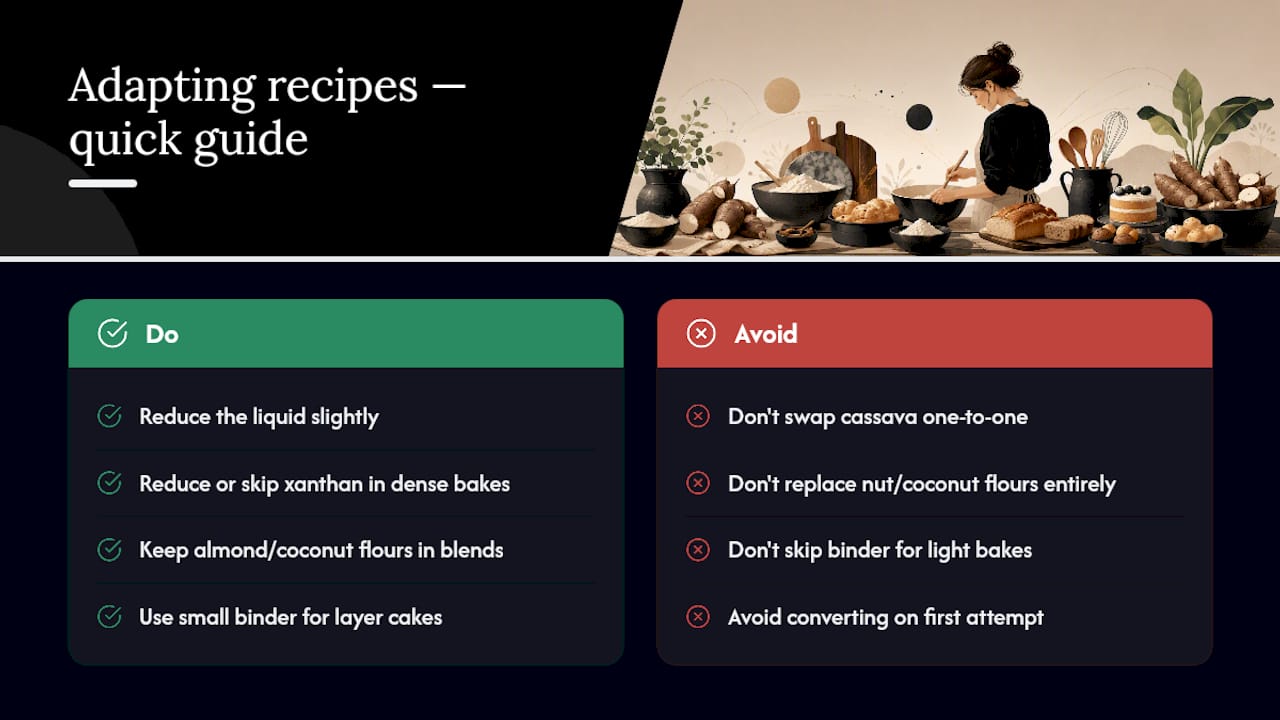
Most existing gluten-free recipes were written for a blend of rice flour, potato starch, and xanthan gum, not for cassava flour alone, so a straight swap doesn’t always land. Cassava flour behaves more like a single starchy flour than a blend, which means recipes built around multiple flours often need rebalancing rather than a one-to-one trade.
Start by reducing the liquid slightly, since cassava absorbs more than a typical gluten-free blend. If the original recipe calls for xanthan gum, you can often reduce or skip it in denser bakes like brownies or quick breads, since cassava flour’s natural starch provides some of that same binding on its own. Lighter bakes, like layer cakes, still benefit from a small amount of added binder.
For recipes with almond flour or coconut flour in the mix, keep those in place rather than replacing everything with cassava. Blends tend to outperform straight swaps in structured bakes, since each flour contributes something different, cassava for lightness and binding, nut or coconut flour for richness and moisture control.
The safest adaptation strategy is to find a recipe already written specifically for cassava flour rather than converting on the fly, at least for your first few attempts. Once you understand how the flour behaves in a tested recipe, converting your own favorites gets far more predictable.
What’s in Cassava Flour, and Why It’s Worth Baking With
Cassava flour comes from the whole root, ground and dried, which is different from tapioca starch, a common source of confusion since both come from the same plant. That whole-root processing means cassava flour retains more fiber and nutrients than the pure starch does.
Cassava flour is grain-free, gluten-free, and nut-free, which makes it one of the more versatile options for people managing several dietary restrictions at once. It’s a solid source of carbohydrates and provides some resistant starch, a type your body digests more slowly, which can support digestive health.
The tradeoff is that cassava flour is high in starch and relatively low in protein and fiber compared to flours like almond or coconut. If you’re watching total carbohydrate intake closely, cassava flour recipes deserve a moderate approach rather than unlimited use. It’s a strong pick for grain-free and gluten-free diets generally, but it’s not a low-carb flour, and treating it as an everyday indulgence flour, similar to how you’d treat regular wheat flour in moderation, makes the most nutritional sense.
Cassava Flour vs. Other Gluten-Free Flours: What to Use When
Cassava flour, almond flour, and coconut flour solve different baking problems, and knowing which one fits your recipe saves a lot of wasted batches.
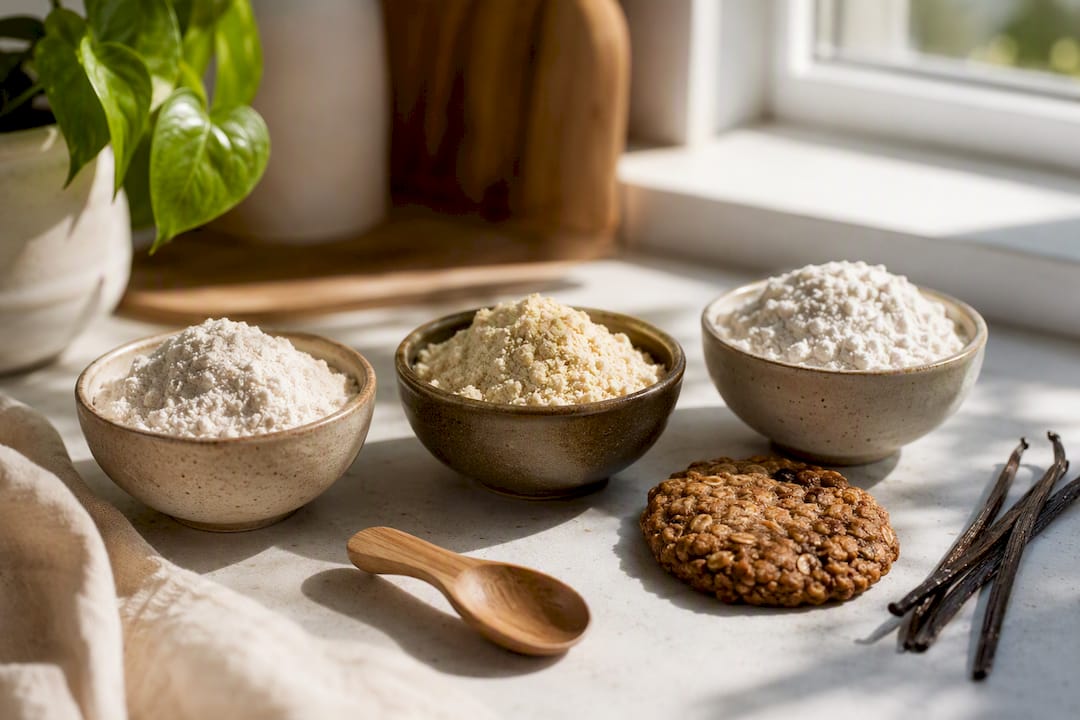
Cassava flour is starchy and neutral tasting, which makes it the closest one-for-one substitute for wheat flour among the gluten-free options. Almond flour brings fat and moisture but a distinct nutty flavor, and it can’t replace cassava flour in recipes that need structure from starch, like tortillas or bread. Coconut flour is extremely absorbent, often requiring three to four times more liquid than a standard recipe, and it adds a mild coconut flavor that doesn’t suit every dish.
For pancakes, tortillas, and quick breads, cassava flour usually wins on texture and neutrality. For rich, moist cakes or cookies, a blend of cassava and almond flour often beats either flour used alone. Rice flour and potato starch, common in packaged gluten-free blends, tend to produce a grittier texture than cassava flour delivers on its own.
If you’re stocking a gluten-free pantry, cassava flour deserves a spot alongside almond flour rather than as a replacement for it. Each does a job the other can’t, and having both on hand means fewer failed conversions when you’re adapting a recipe you already love.
Stock Your Pantry for Your Next Cassava Flour Bake
A good cassava flour recipe is only as good as what’s sitting next to it in your pantry. Pair your cookies or quick bread with a proper cup of tea, browse Tojexpress’s tea selection for something that pairs well with a warm slice of quick bread. If you’re rounding out a snack table alongside fritters or flatbreads, Tojexpress’s Caribbean and American snacks fill in the savory side without another trip to a specialty store. And for something sweet on the side that fits a gluten-free spread, options like SweetsBySvea’s gluten-free licorice work well on a dessert board next to cassava flour cookies. Tojexpress carries the seasonings, staples, and pantry basics that make Caribbean-inspired cassava flour cooking easier to pull off at home.
What Actually Matters in Cassava Flour Baking
Most advice on cassava flour treats it like a drop-in wheat replacement, and that’s the root of most people’s frustration with it. Cassava flour isn’t a blend engineered to mimic gluten. It’s a single starchy flour with its own behavior, and recipes that ignore that end up either too wet or too dry with no clear reason why.
The overlooked lesson here is patience beats precision. A recipe that tells you to rest the batter for five minutes or cool the loaf for an hour isn’t being fussy. Those steps are doing real chemical work, letting starch finish absorbing liquid, letting structure set before you cut into it. Skip them and you’ll blame the flour for a problem the clock actually caused.
If you’re new to cassava flour, I’d prioritize learning its texture over memorizing ratios. Make the same pancake recipe three times before moving to bread. You’ll learn more about how this flour behaves from that repetition than from any conversion chart.
Sources
- Healthline — Cassava flour
- 40 Aprons — How to use cassava flour
- Better Homes & Gardens — What is cassava flour? How to use it
- Minimalist Baker — Cassava flour tortillas (grain-free)