
10 Types of Afro-Caribbean Treats You Need to Try
TOJEXPRESS.COM-Antonio HenryTL;DR:
- Afro-Caribbean treats include savory street foods and sweet confections rooted in African, Indigenous, and South Asian traditions. These foods are cultural artifacts that embody migration, survival, and communal identity across the Caribbean islands.
Afro-Caribbean treats are defined as the savory street foods and sweet ancestral confections that emerged from the blending of African, Indigenous Caribbean, and South Asian culinary traditions across the Caribbean islands. The two main categories are savory street snacks, such as Jamaican patties and Trinidadian doubles, and traditional sweet confections, such as guava cheese and coconut drops. Each treat carries a story rooted in migration, survival, and celebration. Understanding the types of Afro-Caribbean treats means understanding the cultures that created them, from the street corners of Port of Spain to the Christmas kitchens of Trinidad.
1. What are the most popular types of Afro-Caribbean treats?
The most popular Afro-Caribbean treats split cleanly into two families: savory street foods built for quick, communal eating, and dense sweet confections built for preservation and celebration. Both families share a core pantry of coconut, unrefined brown sugar, ginger, and tropical fruits. The savory side leans on spiced meats, legumes, and fried dough. The sweet side relies on ancestral techniques like cooking fruit with panela syrup to create long-lasting, intensely flavored confections. Knowing this split helps you navigate any Caribbean market or food festival with confidence.
2. Jamaican patties
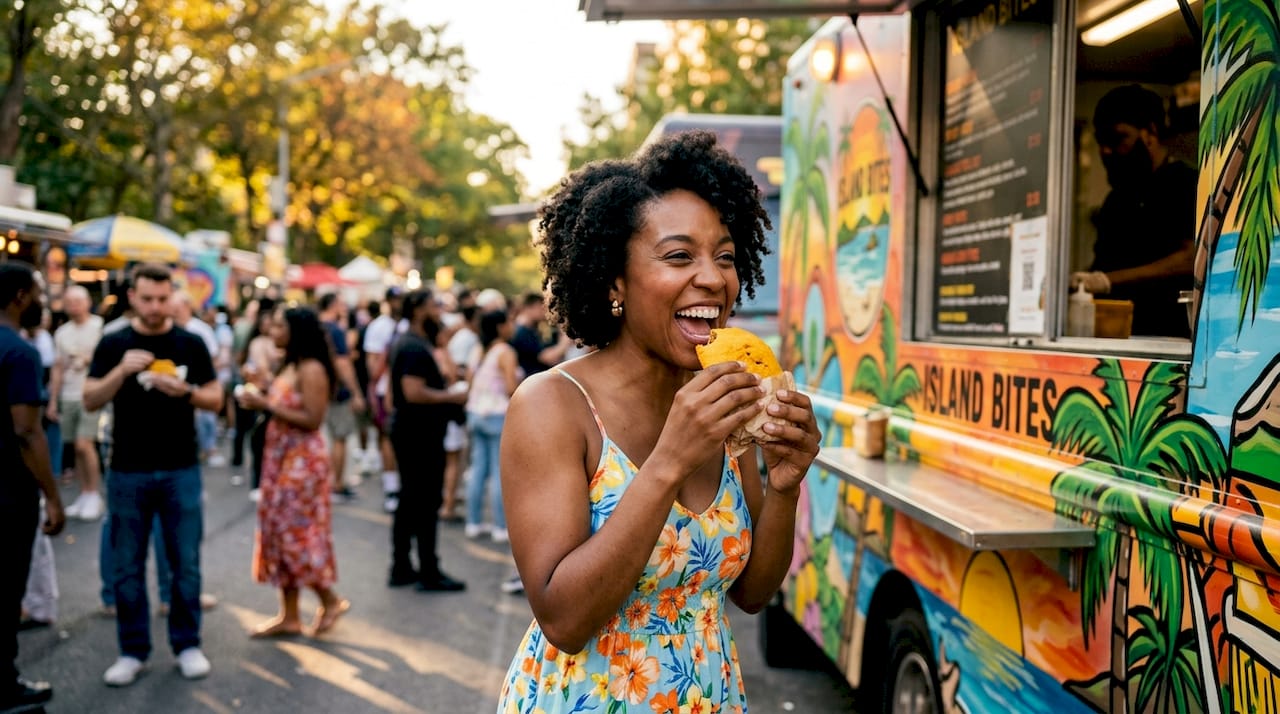
The Jamaican patty is a handheld sealed pastry with a flaky, turmeric-yellow crust and a spiced filling, most commonly ground beef seasoned with Scotch bonnet pepper, allspice, and thyme. The crust gets its color from turmeric or curry powder worked into the dough. Patties are eaten at any hour, from school lunch to late-night snack, making them one of the most socially universal foods in the Caribbean diaspora. They travel well, freeze well, and adapt to vegetarian fillings like callaloo or ackee without losing their identity.
3. Trinidadian doubles
Doubles are bara breads filled with curried chickpeas, called channa, and layered with chutneys ranging from tamarind to pepper sauce. The bara is a soft, fried flatbread made from flour and turmeric. Doubles are sold from roadside carts across Trinidad, typically before 9:00 AM, and the vendor’s chutney combination is a point of fierce personal loyalty. The dish reflects the Indian indenture history of Trinidad, where South Asian workers brought chickpea cooking traditions that merged with African frying techniques. One order costs less than a dollar in Trinidad, making it the most democratic food on the island.
4. Bahamian conch fritters
Conch fritters are deep-fried balls of diced conch meat mixed with bell pepper, onion, and Bahamian spices. Conch is the large sea snail native to Caribbean waters, and its firm, slightly chewy texture holds up perfectly inside a crispy fried shell. These fritters appear at every beach bar and fish fry across the Bahamas. They represent the intersection of African frying traditions and the island’s seafood abundance. Served with a dipping sauce of hot pepper and lime, they are one of the most recognized Afro-Caribbean snacks in the region.
Pro Tip: When making conch fritters at home, pound the conch meat with a mallet before dicing. This breaks down the tough muscle fibers and prevents a rubbery texture in the finished fritter.
5. Pholourie and aloo pie
Pholourie are small, round fried dough balls made from split pea flour and seasoned with cumin and turmeric. Aloo pie is a fried flatbread stuffed with spiced mashed potato. Both are popular Caribbean treats sold at roadside stalls across Trinidad and Guyana, and both reflect the Indo-Caribbean culinary tradition that defines the savory snack culture of the southern Caribbean. They are served with tamarind or mango chutney and eaten standing up, which tells you everything about their social role. These are foods of movement, conversation, and community.
6. Guava cheese
Guava cheese is not a dairy product. It is a dense, sliceable confection made by cooking guava pulp with sugar until it reduces to a firm, jewel-red block. Trinidad guava cheese is one of the most beloved traditional Caribbean sweets, prepared especially during the Christmas season, when families make large batches over multiple days. The preparation is a communal ritual. Older family members pass down the precise timing and texture cues to younger ones, making the process as culturally significant as the product. Guava cheese keeps for weeks without refrigeration, a direct inheritance from pre-refrigeration preservation techniques.
Pro Tip: Cook guava cheese in a heavy-bottomed pot and stir constantly once the mixture thickens. Scorching at the bottom will add a bitter note that no amount of sugar can fix.
7. Colombian Alegrías
Alegrías are popped millet and coconut sweets bound with panela syrup, a dark, unrefined cane sugar syrup central to Afro-Colombian confectionery. The name translates to “joys” in English, and the treat has deep roots in the Afro-Colombian communities of the Caribbean coast. Alegrías are traditionally sold by Palenqueras, the Afro-Colombian women vendors of San Basilio de Palenque, one of the first free African settlements in the Americas. Buying an Alegría from a Palenquera is not just a snack transaction. It connects you directly to a living history of African resistance and cultural survival.
8. Coconut drops
Coconut drops are chunky, chewy candies made from rough-cut pieces of fresh coconut cooked with brown sugar and ginger until the syrup crystallizes around each piece. They are a staple of Jamaican traditional sweets, sold wrapped in wax paper at markets and roadside stalls. The foundation of Caribbean sweets like coconut drops is unrefined brown sugar, which delivers a molasses depth that refined white sugar cannot replicate. Using white sugar produces a pale, flat-tasting candy that misses the point entirely. The ginger adds a sharp, warming note that balances the sweetness.
9. Paw paw balls
Paw paw balls are chewy, translucent candies made from green, unripe papaya boiled with sugar and lime juice. The key technical point: unripe green fruit is non-negotiable. Ripe papaya breaks down during cooking and produces a mushy, unshaped result. Green papaya holds its cell structure, absorbs the sugar syrup, and firms into a candy with a satisfying chew. Paw paw balls are common across the Eastern Caribbean and represent the broader tradition of transforming unripe or preserved fruit into confections through sugar and heat. They are a masterclass in making something extraordinary from an ingredient most cooks would discard.
10. Guava Duff
Guava Duff is a Bahamian steamed pudding made by rolling sliced guava into a dough log, wrapping it tightly, and steaming it for 90 minutes. Guava Duff requires 120 minutes total preparation and cooking time, making it one of the most labor-intensive traditional Caribbean dessert recipes in the region. After steaming, the roll must rest for 10 minutes before slicing. That rest period is not optional. It allows the interior to firm up so the slices hold their spiral shape. Served with a warm butter rum sauce, Guava Duff is the centerpiece of Bahamian celebration tables.
11. Fusion treats: coconut mithai cheesecake and spiced Indo-Caribbean sweets
Afro-Caribbean fusion sweets blend ancestral techniques with modern formats, producing treats like coconut mithai cheesecake, where Indian mithai-making methods meet a Western dessert structure. Spiced Indo-Caribbean sweets layer cardamom, saffron, and Scotch bonnet into traditional confection bases. These creations do not abandon their roots. They preserve the core flavor profile of coconut, unrefined sugar, and ginger while adapting presentation for global audiences. The food fusion tradition of the Caribbean has always worked this way: absorb a new influence, filter it through local ingredients, and produce something that belongs entirely to the region.
Modern fusion treats now appear at food festivals across New York, London, and Toronto, carried by Caribbean diaspora communities. This reach is not accidental. It reflects a deliberate effort to share cultural identity through flavor. The treats evolve in form but stay anchored in the same pantry that has defined Afro-Caribbean cooking for centuries.
Key takeaways
Afro-Caribbean treats divide into two distinct families: savory street foods rooted in communal eating and sweet confections built on ancestral preservation techniques using coconut, unrefined sugar, and ginger.
| Point | Details |
|---|---|
| Two core categories | Savory street foods and sweet confections each carry distinct cultural and culinary roles. |
| Ingredient foundation | Coconut, unrefined brown sugar, and ginger define the flavor profile of most Caribbean sweets. |
| Preparation as ritual | Multi-day sweet making, especially guava cheese at Christmas, transfers knowledge between generations. |
| Unripe fruit matters | Treats like paw paw balls require green, unripe fruit to achieve the correct chewy texture. |
| Fusion preserves identity | Modern fusion treats adapt presentation while keeping the ancestral flavor core intact. |
Why Afro-Caribbean treats are living cultural artifacts
I have spent years eating my way through Caribbean food markets, and the thing that strikes me every time is how little these treats ask of you and how much they give back. A Jamaican patty costs almost nothing. An Alegría fits in your palm. But both carry centuries of history in their ingredients and their making.
The tactile knowledge required to produce these treats is the part that gets lost first. Knowing when guava cheese has reduced enough, not by a timer but by the way it pulls from the pot wall, is a skill that lives in hands and memory. You cannot learn it from a recipe card alone. That is why the communal preparation tradition matters so much. The cultural ritual of making these sweets together is the actual knowledge transfer mechanism.
What I find most compelling is the balance these treats strike between preservation and adaptation. Fusion treats like coconut mithai cheesecake are not a dilution of tradition. They are proof that the tradition is alive enough to absorb new influences without losing its core. A culture that stops adapting stops surviving. The Caribbean has always known this. The treats prove it every time someone takes a first bite and asks, “What is in this?”
My honest advice: do not treat these foods as exotic novelties. Treat them as what they are. They are the food of Caribbean diaspora identity, built from scarcity, creativity, and deep communal love. Respect the recipe. Learn the story. Then eat.
— ANTONIO
Authentic Caribbean treats at Tojexpress
Tojexpress stocks a curated selection of Caribbean and American products, including the ingredients and packaged snacks that make exploring these treats accessible from your own kitchen or living room.
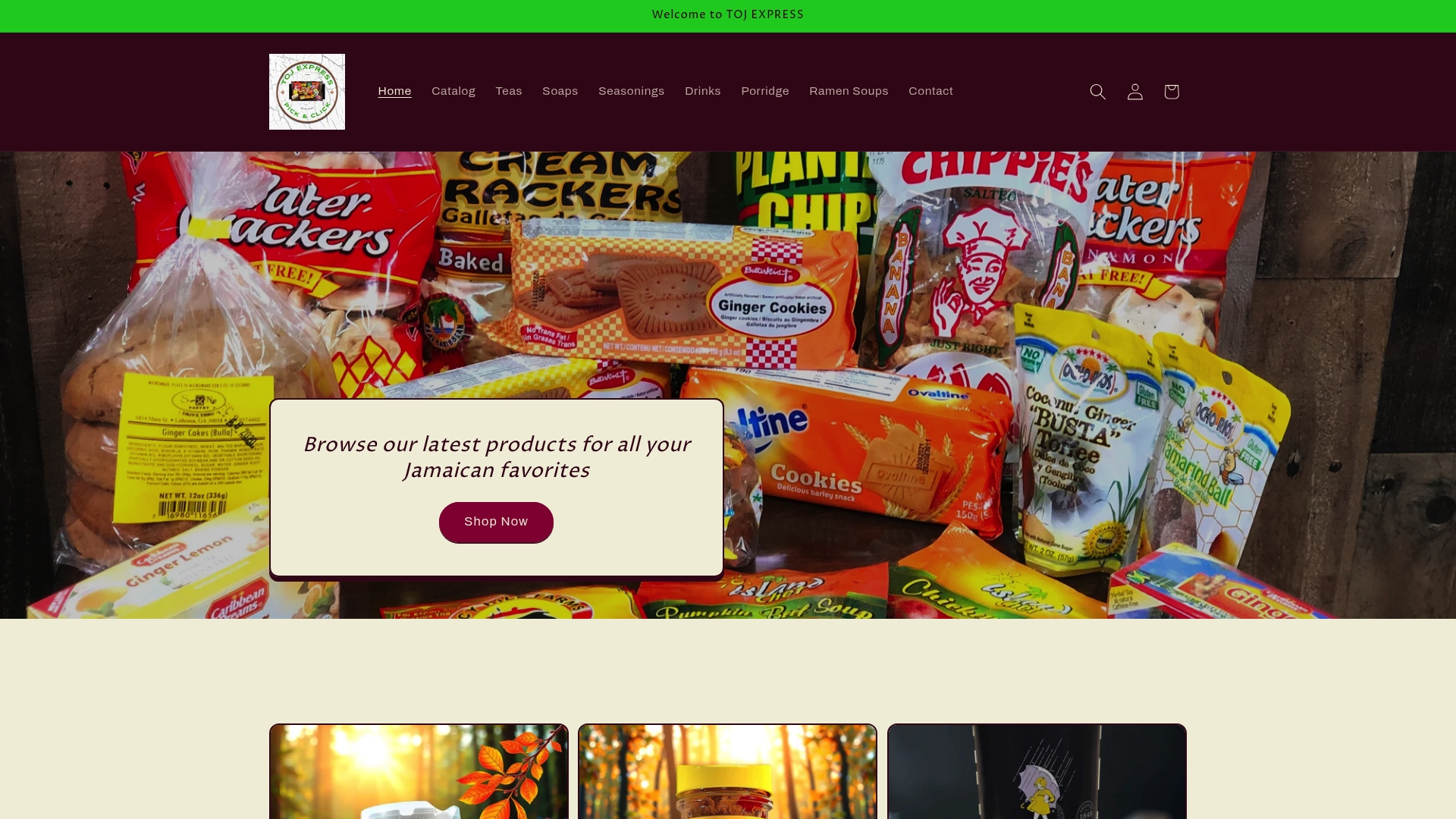
Whether you want to try a ready-made Caribbean snack or source the right ingredients for a traditional recipe, the Tojexpress snacks collection brings the flavor of the islands directly to you. For pantry staples like unrefined brown sugar, coconut, and specialty flours, the general grocery section covers the essentials. Tojexpress makes it straightforward to move from reading about these treats to actually tasting them, without a plane ticket required.
FAQ
What are the two main categories of Afro-Caribbean treats?
Afro-Caribbean treats divide into savory street foods, such as Jamaican patties and Trinidadian doubles, and traditional sweet confections, such as guava cheese and coconut drops. Both categories reflect the blending of African, South Asian, and Indigenous Caribbean culinary traditions.
What ingredients are most common in traditional Caribbean sweets?
The foundation of most traditional Caribbean sweets is coconut, unrefined brown sugar, and ginger. Using refined white sugar reduces the molasses depth and caramelization that define the authentic flavor.
How long does it take to make Guava Duff?
Guava Duff requires 120 minutes total, including 90 minutes of steaming and a 10-minute rest after cooking. It is one of the most labor-intensive traditional Caribbean dessert recipes in the region.
Why must paw paw balls be made with unripe fruit?
Green, unripe papaya holds its cell structure during cooking and absorbs sugar syrup to create a firm, chewy candy. Ripe papaya breaks down during boiling and cannot be shaped properly.
What makes Alegrías culturally significant?
Alegrías are popped millet and coconut sweets tied to the Afro-Colombian Palenquera vendors of San Basilio de Palenque, one of the first free African settlements in the Americas. Buying and eating them connects you directly to a history of African resistance and cultural preservation.