

How to Blend Caribbean Drinks Like a Pro
TOJEXPRESS.COM-Antonio HenryTL;DR:
- Blending Caribbean drinks involves precise ratios, techniques, and quality ingredients to create authentic tropical cocktails.
- Using the 1:2:3:4 ratio maximizes balance, and blending for 15–20 seconds ensures a thick, smooth texture.
Blending Caribbean drinks is the practice of combining precise ingredient ratios with specific technique to produce balanced, authentic tropical cocktails at home. The classic formula most Caribbean bartenders follow is the 1:2:3:4 ratio: one part sour, two parts sweet, three parts strong, four parts weak. That single formula unlocks dozens of popular Caribbean beverages, from rum punch to frozen daiquiris. Blending differs from shaking in texture and temperature, and choosing the wrong method ruins an otherwise solid recipe. This guide gives you the ratios, techniques, and recipes to get it right every time.
How to blend Caribbean drinks: the essential ingredients and equipment
The right ingredients and tools determine whether your blended drink tastes like a beach bar or a watered-down imitation. Start with quality rum. Aged or dark Caribbean rum delivers depth and character that light rum simply cannot replicate in creamy or fruit-forward blends. White rum works well in lighter citrus drinks, but for anything with coconut cream or pineapple, reach for a dark or aged bottle.
Fresh citrus is non-negotiable. Fresh lime acidity balances the sweetness in tropical cocktails and prevents the drink from tasting flat or cloying. Bottled lime juice lacks the brightness and volatile oils that fresh lime delivers. Alongside lime, stock pineapple juice, orange juice, and coconut cream (not coconut milk, which is thinner and less sweet).
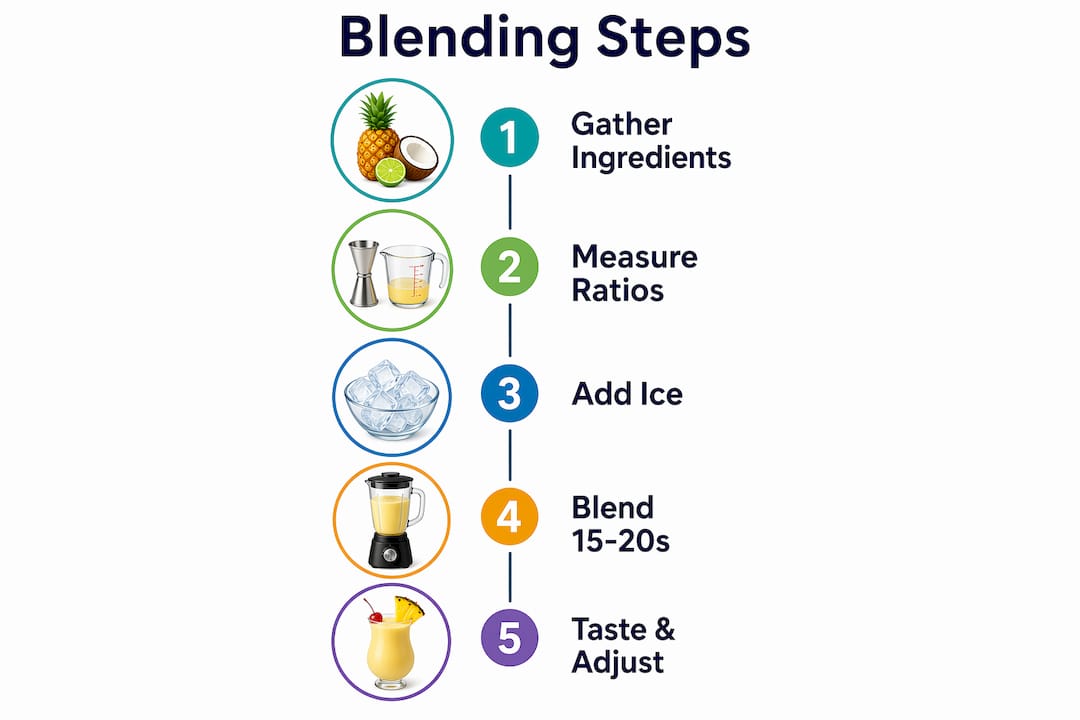
Your blender matters more than most home bartenders realize. A high-powered blender with at least 1,000 watts crushes ice cleanly without leaving chunks. Lower-powered models strain against ice cubes and produce uneven texture. Use crushed ice for faster blending and smoother results. Ice cubes work, but they require longer blending time, which increases dilution.
Essential ingredients at a glance:
- Dark or aged rum (primary spirit)
- Fresh lime juice (acidity and brightness)
- Cream of coconut (sweetness and body for creamy drinks)
- Pineapple juice and orange juice (tropical fruit base)
- Simple syrup or grenadine (additional sweetness control)
- Crushed ice (preferred for blended drinks)
Equipment checklist:
- High-powered blender (1,000+ watts recommended)
- Jigger or measuring cup (for accurate ratios)
- Bar spoon (for layering and stirring)
- Chilled glasses (keeps drinks cold longer)
Pro Tip: Freeze your glassware for 10 minutes before pouring. A cold glass slows ice melt and keeps your blended drink thick and flavorful through the last sip.
What is the correct ratio and technique for blending Caribbean cocktails?
The 1:2:3:4 Caribbean rum punch ratio is the most reliable formula in tropical mixology. One part sour (typically fresh lime juice), two parts sweet (simple syrup or grenadine), three parts strong (rum), and four parts weak (juice or water) creates a drink that is balanced without being boozy or bland. For a single serving, that translates to roughly 0.5 oz lime juice, 1 oz syrup, 1.5 oz rum, and 2 oz pineapple or orange juice.
Blending step by step
- Add liquid ingredients to the blender first. Rum, juice, and syrups go in before ice. This prevents ice from locking around dry ingredients.
- Add crushed ice on top. Use enough to fill the blender about halfway for a single serving.
- Start blending on low speed for 3–5 seconds to break up the ice.
- Increase to high speed and blend for 15–20 seconds total. That window produces a smooth, thick texture without over-diluting the drink.
- Stop and check consistency. The drink should coat the back of a spoon. If it pours like water, you blended too long or used too much ice.
- Pour immediately into a chilled glass and garnish.
Blending vs. shaking: when to choose which
Blending produces a frozen, thick texture suited to creamy drinks like Piña Colada. Shaking emulsifies juice and dairy ingredients without freezing them. Shaking works best for cocktails containing juice or dairy that you want served over ice rather than frozen. The recommended shaking time is 10–15 seconds with a horizontal motion until the shaker feels frosty on the outside.
| Method | Best for | Texture | Risk |
|---|---|---|---|
| Blending | Frozen creamy drinks | Thick, smooth | Over-dilution if too long |
| Shaking | Juice or dairy cocktails | Light, aerated | Under-emulsification if too short |
Pro Tip: Never blend a drink you intend to serve over fresh ice. The blender already incorporates ice, so pouring over more ice doubles dilution and kills the flavor within minutes.
How do you make iconic Caribbean blended drinks at home?
Three drinks define the blended Caribbean cocktail category: the Piña Colada, the Rum Punch, and the Painkiller. Each has a distinct character, and each teaches a different blending skill.
Piña Colada
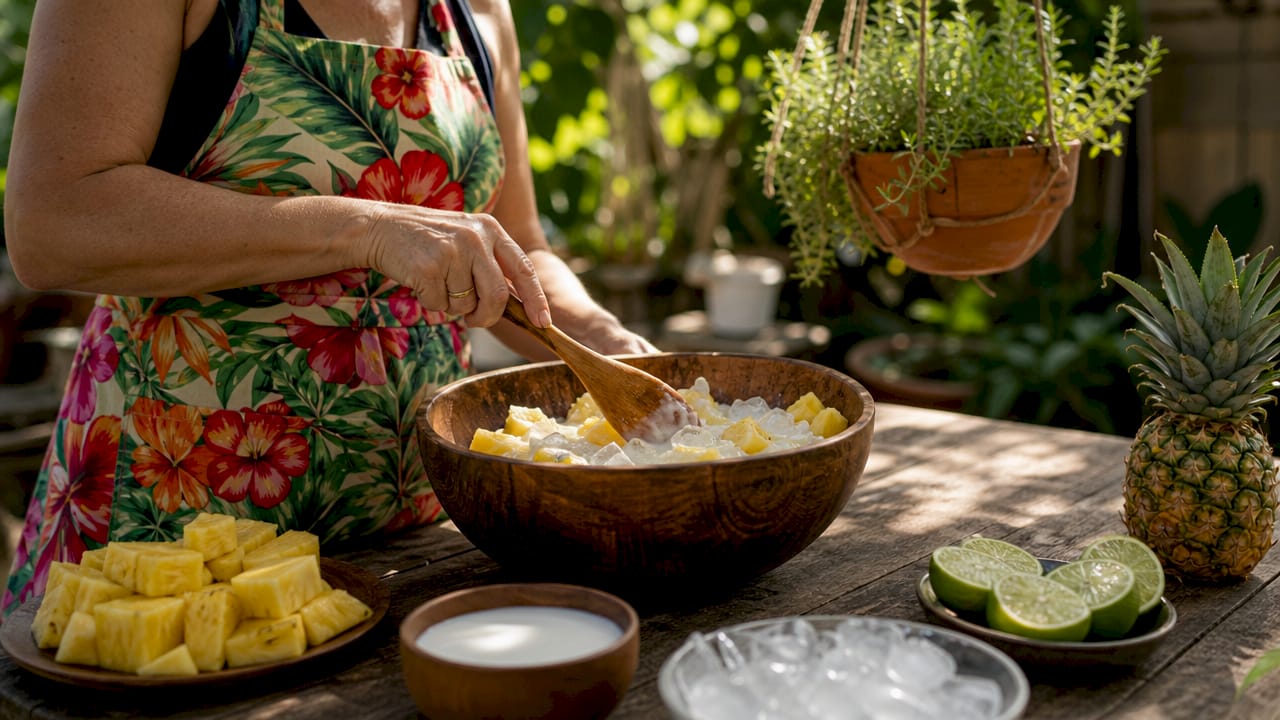
The Piña Colada is the benchmark blended tropical drink. Its success depends on the ratio of coconut cream to pineapple juice and the blending time.
- Add 2 oz white rum, 2 oz cream of coconut, and 4 oz pineapple juice to the blender.
- Add 1 cup of crushed ice.
- Blend on high for 15–20 seconds.
- Pour into a chilled hurricane glass.
- Garnish with a pineapple wedge and a maraschino cherry.
The cream of coconut provides sweetness and body. Do not substitute coconut milk. The difference in fat content and sugar makes the drink thin and flat.
Rum punch
Rum punch follows the 1:2:3:4 formula directly. For a batch serving four people:
- Combine 2 oz fresh lime juice, 4 oz simple syrup or grenadine, 6 oz dark rum, and 8 oz orange or pineapple juice in the blender.
- Add 2 cups of crushed ice.
- Blend for 15 seconds on high.
- Pour into glasses over fresh crushed ice.
- Dust with freshly grated nutmeg.
Rum punch is one of the most flexible Caribbean cocktail recipes. Swap orange juice for mango juice, or use a split of dark and coconut rum for added complexity. You can read more about what makes Caribbean drinks unique to understand the cultural roots behind these flavor combinations.
Painkiller
The Painkiller is technically shaken, not blended, but it belongs in every home bartender’s rotation. The Painkiller uses dark rum, pineapple juice, orange juice, coconut cream, and freshly grated nutmeg, served over crushed ice. The nutmeg is not optional. Freshly grated nutmeg adds aromatic complexity that distinguishes an authentic Painkiller from a generic coconut rum drink.
Seasonal and creative variations to try:
- Mango Rum Punch: replace orange juice with fresh mango puree
- Coconut Daiquiri: blend white rum, coconut cream, and fresh lime juice
- Passion Fruit Colada: add 1 oz passion fruit syrup to the classic Piña Colada base
- Spiced Rum Punch: use spiced rum and add a pinch of allspice or cinnamon
What are the most common mistakes when blending Caribbean drinks?
Over-blending is the single most damaging mistake in blended tropical cocktails. Over-blending melts the ice and floods the drink with water, ruining both flavor and texture. The drink goes from thick and vibrant to thin and dull in seconds. Keep blending time under 20 seconds for single servings.
Common mistakes and how to fix them:
- Watery texture: You blended too long or used too much ice. Fix it by adding more rum and fruit juice, then blending for 5 seconds to reincorporate.
- Too sweet: Add a squeeze of fresh lime juice and blend briefly. Citrus cuts sweetness fast.
- Too tart: Add a small pour of simple syrup or grenadine and stir rather than re-blend.
- Chunky ice: Your blender is underpowered or the ice was too large. Switch to crushed ice or pre-crush cubes in a bag.
- Flat flavor: You used bottled juice instead of fresh. Fresh pineapple and lime juice carry volatile aromatics that bottled versions lose in processing.
Pro Tip: Always taste the drink before pouring. Dip a clean spoon in and adjust one element at a time. Adding lime, syrup, or rum in small amounts gives you control without wasting the whole batch.
Balancing acidity and sweetness is a skill that improves with repetition. The citrus backbone in Caribbean drinks is what makes them refreshing rather than sugary. If a drink tastes one-dimensional, lime juice is almost always the answer. You can also explore how Caribbean spices like nutmeg and allspice add aromatic depth without changing the drink’s sweetness or acidity.
How can you customize Caribbean blended drinks for parties and personal taste?
Customizing blended Caribbean drinks does not mean abandoning the ratios. It means swapping ingredients within the same structural formula. Replace the rum with coconut rum for a sweeter profile. Use mango or guava juice instead of pineapple for a different fruit character. Swap simple syrup for honey syrup to add a floral note.
Ideas for personalizing your blended drinks:
- Use flavored rums (coconut, mango, spiced) to shift the flavor base without changing technique
- Add fresh fruit purees (mango, guava, passion fruit) for natural sweetness and color
- Swap cream of coconut for condensed milk in punch-style drinks for a richer, creamier body
- Use Caribbean soda as the “weak” component in the 1:2:3:4 ratio for a fizzy variation
- Add a float of dark rum on top after blending for a layered visual effect
Layering adds visual drama to any blended drink. Pour the heaviest liquids first, then use the back of a bar spoon to guide lighter liquids over the top without mixing. Grenadine sinks naturally, making it ideal for a sunrise effect in rum punch.
For parties, batch blending saves time and keeps quality consistent. Double or triple the recipe, blend in two rounds to avoid overloading the blender, and store the blended mixture in a pitcher in the freezer. Pull it out 5 minutes before serving and stir briefly. Garnish each glass individually so presentation stays sharp.
Key Takeaways
Mastering blended Caribbean drinks requires the 1:2:3:4 ratio, a 15–20 second blend time, fresh citrus, and quality dark rum applied consistently across every recipe.
| Point | Details |
|---|---|
| Use the 1:2:3:4 ratio | One part sour, two sweet, three strong, four weak creates balanced Caribbean cocktails every time. |
| Blend for 15–20 seconds | Staying within this window prevents over-dilution and preserves thick, smooth texture. |
| Choose fresh citrus | Fresh lime juice provides the acidity that keeps tropical drinks bright and refreshing. |
| Match method to drink | Blend creamy frozen drinks; shake juice or dairy cocktails served over ice. |
| Taste before pouring | Adjust one ingredient at a time to fix sweetness, acidity, or texture before serving. |
Why I think most home bartenders skip the most important step
Most guides on blending tropical drinks spend all their time on recipes and almost none on the moment right before you pour. That moment is tasting and adjusting. Every batch of fresh lime juice is slightly different. Every brand of coconut cream has a different sugar level. Every rum has a different proof. The 1:2:3:4 ratio is a starting point, not a guarantee.
The bartenders I respect most treat the ratio as a scaffold, not a script. They build the drink, blend it, taste it, and make one small correction. That habit separates a drink that tastes “pretty good” from one that makes someone ask for the recipe. It takes 10 extra seconds and it changes everything.
The other thing most guides miss is the cultural weight of these drinks. Caribbean cocktails are not just tropical novelties. Rum punch has been served at celebrations across the Caribbean for generations. The Painkiller has a specific origin in the British Virgin Islands. When you respect the ingredient balance and the technique behind these drinks, you are respecting that history. That is what makes the difference between a blended drink and an authentic one.
Start simple. Make a rum punch using the 1:2:3:4 ratio. Taste it. Adjust it. Serve it cold. Once that feels natural, move to the Piña Colada, then the Painkiller. The skills compound quickly, and the results are worth every batch you practice on.
— ANTONIO
The perfect Caribbean snack pairing for your next blended drink night
Blended Caribbean drinks taste even better alongside the right food. Salty, savory snacks balance the sweetness of rum punch and Piña Colada the same way lime juice does. The contrast sharpens both the drink and the snack.

Tojexpress carries a wide selection of authentic Caribbean snacks that pair naturally with blended tropical cocktails. Plantain chips, seasoned crackers, and spiced nuts complement the fruit and rum flavors without overpowering them. Whether you are hosting a backyard gathering or a quiet evening at home, stocking up on Caribbean snacks from Tojexpress rounds out the experience. Browse the full snack selection and build your Caribbean drink night from the glass to the plate.
FAQ
What is the best rum for blended Caribbean drinks?
Dark or aged Caribbean rum delivers the most depth and character in blended drinks. White rum works for lighter citrus-based cocktails, but creamy or fruit-forward blends benefit from a darker spirit.
How long should you blend a Caribbean cocktail?
Blend for 15–20 seconds on high speed. Longer blending melts the ice and dilutes the drink, producing a watery texture and flat flavor.
Can you make blended Caribbean drinks without a high-powered blender?
A standard blender works if you use crushed ice instead of cubes. Crushed ice requires less power to break down and produces smoother results in lower-wattage machines.
What is the difference between blending and shaking a Caribbean cocktail?
Blending creates a frozen, thick texture suited to creamy drinks like Piña Colada. Shaking emulsifies juice and dairy cocktails without freezing them, producing a lighter, aerated result served over ice.
How do you fix a blended drink that is too sweet?
Add a squeeze of fresh lime juice and stir or blend briefly for 3–5 seconds. Fresh lime acidity cuts sweetness quickly without changing the drink’s volume or texture significantly.