

How to prepare Caribbean spices: home cook's guide
TOJEXPRESS.COM-Antonio HenryTL;DR:
- Authentic Caribbean flavor relies on freshly toasted whole spices and intentional blending.
- Proper tools, sourcing, toasting, grinding, and storage are essential for vibrant spice blends.
- Skipping traditional steps results in flat, generic flavors that lack depth and authenticity.
Store-bought spice blends promise Caribbean flavor but often deliver something flat, dusty, and generic. If you’ve ever made jerk chicken and wondered why it tasted nothing like what you’d get at a Caribbean cookout, the blend is usually the culprit. Real Caribbean cooking is built on freshly toasted whole spices, hand-ground powders, and blends made with intention. This guide walks you through every step: picking the right tools, sourcing authentic ingredients right here in Atlanta, toasting and grinding your spices properly, adapting blends for any diet, and storing everything so it stays potent.
Table of Contents
- Essential tools and spices for Caribbean blends
- Preparing your spices: toasting, grinding, and blending
- Adapting Caribbean spice techniques for every diet
- Storing and verifying your Caribbean spice blends
- What most home cooks miss about authentic Caribbean flavor
- Bring authentic Caribbean spices to your table
- Frequently asked questions
Key Takeaways
| Point | Details |
|---|---|
| Start with whole spices | Whole, fresh spices toasted and ground at home create the most aromatic Caribbean blends. |
| Master both wet and dry mixes | Use wet marinades for bold flavor or dry rubs for versatility and longer shelf life. |
| Adapt for every dietary need | Classic blends can be easily adjusted for heat, vegan, or gluten-free cooking without loss of authenticity. |
| Store spices properly | Keep blends in airtight jars away from light and use within six months for peak flavor. |
Essential tools and spices for Caribbean blends
With your goal for real flavor in mind, let’s gather the basics. You don’t need a professional kitchen to make authentic Caribbean spice blends. You need the right tools and the right starting ingredients.
Core equipment you’ll need:
- A spice grinder or a dedicated coffee grinder (keep it separate from your coffee)
- A dry skillet or cast-iron pan for toasting
- Small glass jars with tight lids for storage
- A fine mesh strainer for sifting ground blends
- A mortar and pestle for small-batch grinding
These tools are affordable and widely available. The grinder is the most important investment because whole spices ground fresh taste dramatically different from pre-ground powder sitting on a shelf.
Now for the spices themselves. The foundation of most Caribbean blends includes essential Caribbean spices like allspice, cumin, coriander, turmeric, bay leaf, fenugreek, and pimento. Scotch bonnets are the heat source for jerk-style blends. Each spice plays a specific role. Allspice gives that warm, clove-like depth. Fenugreek adds a slightly bitter, maple-like note to curry blends. Pimento berries are what make Jamaican jerk taste unmistakably Jamaican.
Wet vs. dry blends at a glance:
| Feature | Dry blend | Wet blend |
|---|---|---|
| Base | Ground spices only | Spices plus oil, vinegar, or citrus |
| Best use | Rubs, seasoning | Marinades, sauces |
| Shelf life | 6 to 12 months | 1 to 2 weeks refrigerated |
| Texture | Powder | Paste or liquid |
Wet blends penetrate meat more deeply and are ideal for overnight marinating. Dry rubs are better for quick seasoning or finishing dishes.
For sourcing in Atlanta, select spices for authentic flavor by visiting the DeKalb International Market or the Buford Hwy Farmers Market. Both carry hard-to-find Caribbean peppers and spices, and fresh scotch bonnets and pimento can be sourced at Atlanta markets like these.
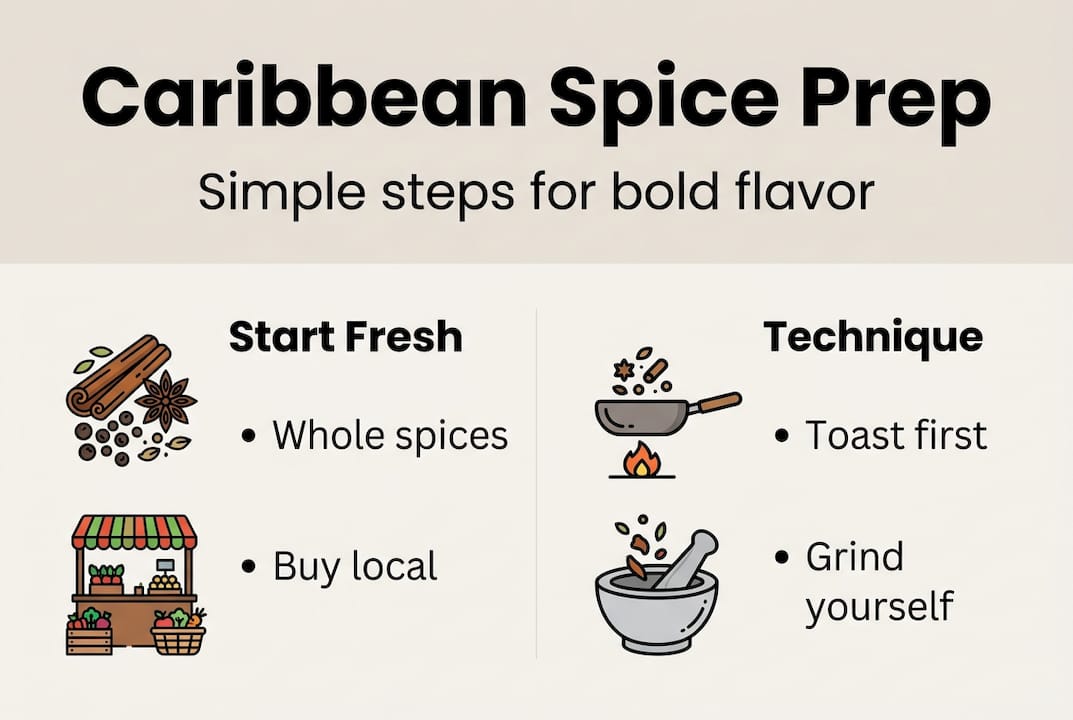
Pro Tip: Always buy whole spices instead of pre-ground. Whole spices retain their essential oils far longer, and grinding them fresh right before blending gives you a noticeably more vibrant, aromatic result.
Preparing your spices: toasting, grinding, and blending
After assembling your tools and ingredients, you’re ready to start the hands-on work. This is where the real transformation happens, and where most home cooks either get it right or lose the flavor entirely.
Step-by-step process for a Jamaican curry powder or jerk dry rub:
- Measure your whole spices before you start. For Jamaican curry, combine allspice, coriander, cumin, turmeric, fenugreek, and bay leaf in separate small bowls.
- Heat your dry skillet over medium-low heat. Do not add oil.
- Add the hardest spices first (allspice, coriander, cumin). Toast for 60 to 90 seconds, stirring constantly.
- Add fenugreek last and toast for no more than 30 seconds. Over-toasting can make fenugreek bitter, so watch it closely.
- Remove from heat immediately and spread spices on a cool plate or baking sheet.
- Let them cool completely before grinding. Grinding hot spices traps steam and creates clumps.
- Grind in batches and sift through a fine mesh strainer for a smooth, even powder.
- Mix your ground spices together in a bowl and taste. Adjust ratios based on your preference.
Toasting whole spices enhances aroma and reduces bitterness in Jamaican curry powder, which is why this step is never optional. The heat activates the essential oils locked inside each seed or berry.
“The difference between a good Caribbean dish and a great one often comes down to whether the spices were toasted fresh or poured straight from a jar.”
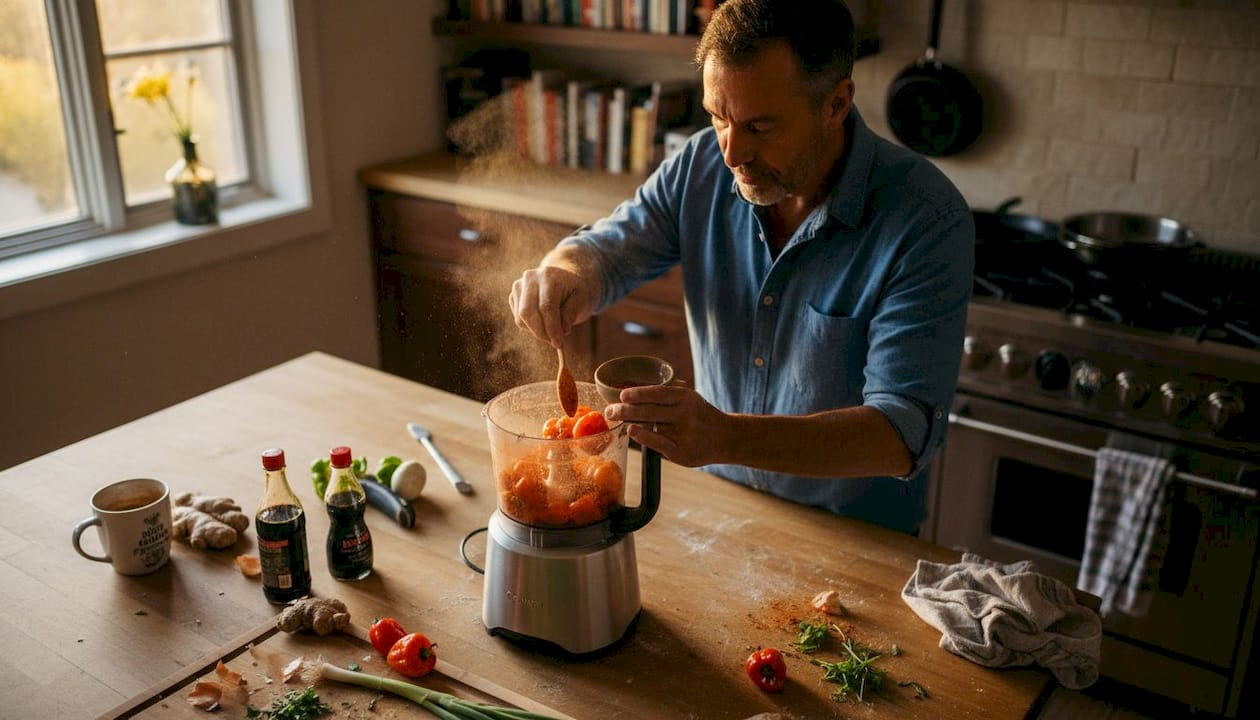
For wet jerk blends, add your ground spices to a food processor with scotch bonnets, garlic, ginger, scallions, soy sauce, and a splash of vinegar. Blend until smooth. To control heat, remove the seeds from your scotch bonnets before blending. For a milder version, substitute with habanero or even cayenne.
To transform your cooking with jerk marinade, coat your meat generously and refrigerate overnight. Twelve hours minimum gives the spices time to penetrate the protein fully.
Pro Tip: After grinding, press a small pinch of your blend between your fingers and smell it. If the aroma doesn’t hit you immediately and intensely, your spices may be old. Start fresh.
Adapting Caribbean spice techniques for every diet
Now that you’ve made your blends, here’s how to tweak the process for every diet. Caribbean spice techniques are incredibly flexible, and you don’t need meat to experience authentic flavor.
Vegan and plant-based cooks can use Caribbean spices on tofu, veggies, and more. The bold, layered flavor of jerk seasoning works beautifully on pressed tofu, portobello mushrooms, cauliflower steaks, and even grilled pineapple.
Ways to adapt your blends:
- Reduce heat: Deseed scotch bonnets before blending, or swap them entirely for cayenne or mild chili powder
- Gluten-free: All pure spice blends are naturally gluten-free; just check any soy sauce or pre-made additions for hidden gluten
- Oil-free wet blends: Use citrus juice (lime or orange) as your liquid base instead of oil for a lighter marinade
- Nut-free: Caribbean blends typically contain no nuts, but always check specialty blends from stores
- Lower sodium: Skip added salt in your blend and season to taste at the end of cooking
For plant-based dishes, marinating time matters just as much as it does for meat. Press your tofu for at least 30 minutes to remove excess moisture, then marinate for a minimum of four hours. The spices need time to soak in.
One practical trick for wet blends is freezing them in ice cube trays. Pour your finished marinade into the tray, freeze overnight, then pop the cubes into a freezer bag. Each cube is a single-use portion ready when you need it. This keeps your blend fresh and flavorful for up to three months.
Also, avoid adding raw onion to wet blends you plan to store. Onion breaks down quickly and shortens shelf life significantly. Use onion powder instead if you want that flavor without the spoilage risk.
Exploring Caribbean spices for plant-based dishes opens up a whole new range of weeknight meals that are bold, satisfying, and rooted in real culinary tradition. Understanding spices’ cultural importance also helps you cook with more intention and respect for the cuisine.
Pro Tip: Grilled fruit like mango or pineapple with a light dusting of jerk dry rub makes an incredible side dish or dessert. The sweetness and heat together are unexpected and memorable.
Storing and verifying your Caribbean spice blends
Finally, make the most of your efforts by storing your blends properly and knowing when to refresh them. Even the best homemade blend loses its punch if stored carelessly.
Best containers for storage:
- Glass jars with airtight lids are ideal. They don’t absorb odors and won’t leach chemicals.
- Opaque tins work well for dry blends because they block light, which degrades spice oils.
- Avoid plastic containers. They absorb odors over time and can affect flavor.
- Label every jar with the blend name and the date you made it.
- Store in a cool, dark cabinet away from the stove. Heat and steam from cooking accelerate flavor loss.
Dry vs. wet blend shelf life:
| Blend type | Refrigerator | Freezer | Pantry |
|---|---|---|---|
| Dry rub or powder | Not needed | Up to 2 years | 6 to 12 months |
| Wet marinade (no onion) | 1 to 2 weeks | Up to 3 months | Not safe |
| Wet marinade (with onion) | 3 to 5 days | Up to 1 month | Not safe |
Store dry rubs in cool, dark places for 6 to 12 months, but use them within six months for peak flavor. After that, potency fades noticeably.
“A spice blend that smells like nothing will taste like nothing. Your nose is the most reliable freshness test you have.”
To verify freshness, open the jar and smell the blend directly. A good blend should hit you with a sharp, layered aroma within a second. If it smells faint or dusty, it’s past its prime. You can try re-toasting a small amount in a dry pan to revive some aroma, then add a pinch of fresh ground spice to boost it.
For storage for lasting freshness, keep wet blends in the back of the refrigerator where temperatures are most stable. Check out this seasonal spice storage guide for tips on rotating your stock throughout the year.
Spoilage signs to watch for in wet blends include off smells, visible mold, or a change in color. When in doubt, throw it out. Spices are inexpensive compared to a ruined meal or a food safety issue.
What most home cooks miss about authentic Caribbean flavor
Here’s the honest truth: most home cooks treat spice blending like a shortcut instead of a craft. They grab a pre-made jar, shake it over the meat, and wonder why the dish tastes flat. The jar isn’t the problem. The mindset is.
Authentic Caribbean flavor is built on process. Toasting is not optional. Overnight marinating is not optional. Proper storage is not optional. These steps exist because Caribbean cooks developed them over generations to coax maximum flavor from every ingredient. Skipping them doesn’t save time. It just produces mediocre food.
We’ve seen Atlanta home cooks light up when they taste the difference between a toasted, freshly ground blend and a pre-ground powder. It’s not subtle. It’s dramatic. And once you experience it, going back feels impossible.
The other thing most cooks miss is sourcing. Understanding spice culture in Atlanta means knowing that the city has incredible access to authentic Caribbean ingredients through local markets and specialty shops. The ingredients are here. The technique is learnable. The only thing standing between you and real Caribbean flavor is the willingness to slow down and do it right.
Bring authentic Caribbean spices to your table
With these skills, you’re ready to expand your kitchen’s repertoire. Making your own blends is satisfying, but sometimes you want a trusted starting point or a hard-to-find ingredient without the hunt.

At TOJ Express, we carry a curated selection of authentic Caribbean spices, seasonings, and specialty ingredients sourced for home cooks who want the real thing. Whether you’re building your pantry from scratch or looking to compare your homemade blend against a traditional one, we’ve got you covered. Browse our selection and use our guide on how to choose spices to find exactly what your next recipe needs. Real flavor starts with real ingredients.
Frequently asked questions
What’s the easiest Caribbean spice blend to start with?
Jamaican curry powder or dry jerk seasoning are both beginner-friendly. Toasting and mixing the basic spices is simple and produces great results right away.
How can I make my homemade spice blend less spicy?
Deseeding or substituting peppers adjusts heat safely. Try replacing scotch bonnets with cayenne or a mild chili for a gentler blend that still has depth.
How long do homemade dry and wet Caribbean seasoning blends last?
Dry rubs last 6 to 12 months stored in a cool, dark spot. Wet seasonings stay fresh for one to two weeks in the refrigerator or up to three months in the freezer.
Where can I buy real Caribbean spices in Atlanta?
Local markets offer hard-to-find Caribbean peppers and spices. DeKalb International Market and Buford Hwy Farmers Market are both excellent options for fresh, authentic ingredients.