
Compare Product Prices and Save on Groceries in Atlanta
TOJEXPRESS.COM-Antonio HenryTL;DR:
- Comparing product prices involves calculating the unit cost and the true final cost after discounts, taxes, and fees. Verifying product equivalence and using simple tools like a calculator or note app ensures accurate comparisons for everyday shopping in Atlanta. Listing all costs upfront helps shoppers make informed, cost-effective choices at local stores like Tojexpress.
The fastest way to compare product prices is to calculate two numbers: the unit cost (price per ounce, per count, or per serving) and the true final cost (sticker price minus usable discounts, plus shipping, taxes, and fees). Whichever option wins on both measures is almost always the better buy. Before you pull out your wallet, run through three quick checks:
- Confirm you are looking at the exact same product (same brand, size, and condition).
- Calculate the unit price for each option so pack-size differences cannot fool you.
- Add every real cost to the sticker price before you compare final totals.
That three-step habit works whether you are standing in a store aisle in Stone Mountain or placing an online order for Jamaican seasonings.
Table of Contents
- How to compare product prices using unit cost math
- Are you actually comparing the same product?
- What does the purchase actually cost you out the door?
- Practical tools Atlanta-area shoppers can use right now
- Worked example: small pack vs. bulk pack with shipping
- Common mistakes shoppers make when comparing prices
- Quick 7-step price-check checklist you can screenshot for in-store use
- Key Takeaways
- A local seller’s perspective on fair pricing
- Tojexpress makes price comparison easier for local shoppers
How to compare product prices using unit cost math
Unit-price conversion is the single most reliable way to strip away packaging tricks. The formula is simple:
Unit price = Total price ÷ Total units
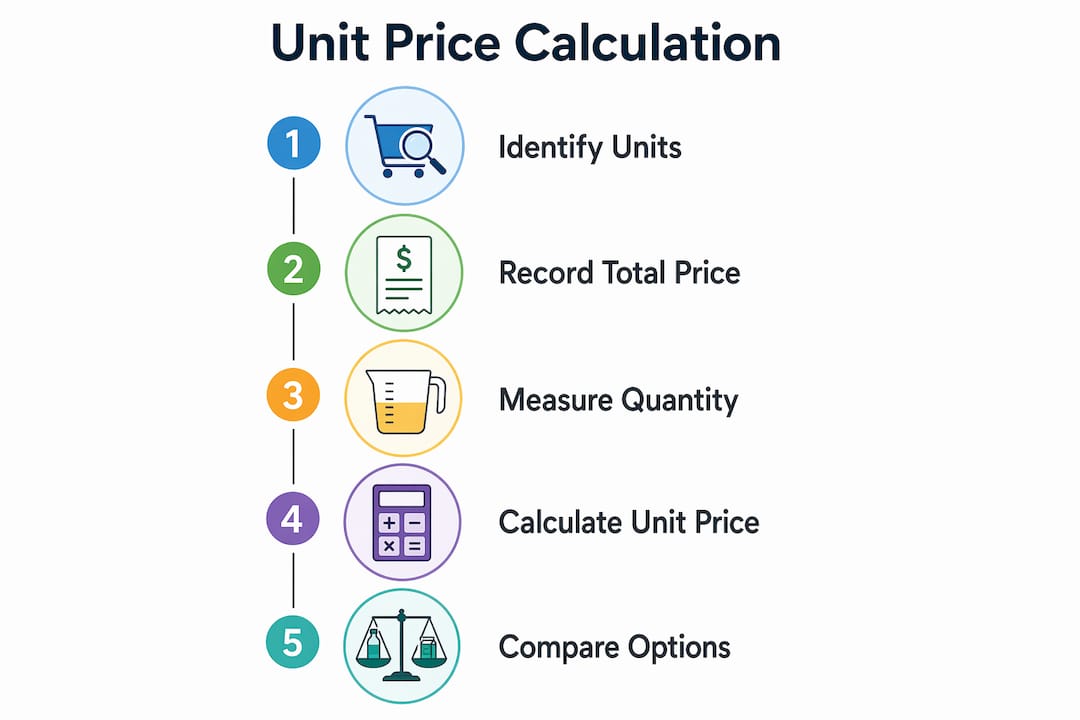
“Units” means whatever the product is measured in: ounces, fluid ounces, count, servings, or loads. Pick the unit that matches the category.
| Grocery category | Best unit to use |
|---|---|
| Dry goods (rice, flour, oats) | Price per ounce |
| Beverages | Price per fluid ounce |
| Canned goods | Price per ounce (drained weight when listed) |
| Paper goods / cleaning | Price per count or per load |
| Spices and seasonings | Price per ounce |
Worked unit-price calculation
Say you are choosing between two bottles of syrup at Tojexpress:
- Small bottle: $3.49 for 12 fl oz → $3.49 ÷ 12 = $0.291 per fl oz
- Large bottle: $5.99 for 24 fl oz → $5.99 ÷ 24 = $0.250 per fl oz
The large bottle costs less per fluid ounce. If you will use it before it expires, the larger size wins on unit cost alone.
Pro Tip: Most grocery shelves already print the unit price on the shelf tag. Look for the small number in the lower-left corner of the label. If it is missing, the calculator on your phone does the math in under ten seconds.

For metric-to-imperial conversions, remember: 1 oz ≈ 28.35 g, and 1 fl oz ≈ 29.57 mL. Caribbean products sometimes list weight in grams; divide the price by grams and multiply by 28.35 to get price per ounce.
Are you actually comparing the same product?
Unit-price math only works when both items are genuinely equivalent. A cheaper price on a different variant is not a deal.
Before you compare prices, confirm:
- Brand and variant: “Grace Coconut Milk” and a store-brand coconut milk are not the same product. Flavor, fat content, and quality differ.
- Size and weight: Net weight vs. drained weight on canned goods can shift the real unit price significantly.
- Condition: New, refurbished, and open-box items carry different risk profiles.
- Seller type: A product fulfilled directly by a retailer usually has cleaner return terms than one sold by a third-party marketplace seller.
- Included extras: Some bundles include a free item; others pad the price without adding real value.
Return policy matters more than most shoppers realize. If a specialty Caribbean spice blend costs $2 less from an unfamiliar seller but that seller charges a $6 restocking fee on returns, the “deal” evaporates the moment the product is not what you expected.
When prices look identical across stores, that is often Minimum Advertised Price (MAP) at work. Manufacturers set a floor that retailers cannot advertise below. The real differences show up in what stores add on top: a free item bundled in, a loyalty credit, or an unadvertised in-store promotion. Ask a staff member — those deals rarely appear online.
Pro Tip: If you are buying a specialty item you have never tried before, choose the seller with the easiest return or exchange policy, even if the sticker price is slightly higher. One bad purchase with no return option costs more than the few cents you saved.
What does the purchase actually cost you out the door?
The sticker price is just the starting point. A reliable method is to calculate:
True final cost = Item price − verified discounts + shipping + taxes + fees − cashback you will actually redeem
Line items that change the final number:
- Shipping and handling: Free-shipping thresholds often mean small orders can carry shipping charges that wipe out any savings.
- Local sales tax: Georgia’s state sales tax and local county taxes may add significantly on top. Grocery items may be exempt or taxed at a reduced rate depending on the item type.
- Membership fees: A warehouse club membership fee, prorated per shopping trip, adds real cost to every purchase.
- Restocking and return fees: These can run 15–20% of the item price on some platforms.
Only count discounts you can verify right now. A coupon that expired last week, a promo code that requires a minimum order you will not hit, or a cashback offer that takes 90 days to post should not factor into your comparison.
Non-price factors worth weighing:
- Delivery speed: If you need an ingredient today, local pickup beats two-day shipping regardless of price.
- Shelf life: Buying a bulk pack of a perishable item is only a deal if you will use it in time.
- Warranty and freshness guarantees: Relevant for health and beauty products and specialty foods.
A quick example of a hidden-cost reversal: a $12 online order for a Caribbean hot sauce looks cheaper than a $14 in-store price until you add $7.99 shipping. The in-store price was the better deal by nearly $6.
Practical tools Atlanta-area shoppers can use right now
You do not need a complicated system. A few targeted tools cover most situations:
- ShopSavvy: Scan a barcode in-store and see prices at nearby and online retailers instantly. Useful for quick checks on packaged goods.
- Google Shopping: Fast for finding price breadth across retailers, but always verify the checkout total. Aggregators often omit shipping and third-party seller return terms until you reach the cart.
- Price.com: Combines price comparison with cash-back tracking across a wide range of stores.
- Your phone’s calculator: The most underrated tool in the aisle. Unit-price math takes ten seconds.
- A simple notes app: Keep a running list of unit prices for items you buy repeatedly. You will stop second-guessing the same products every week.
Local tactics for Atlanta shoppers
Check the shelf unit-price label before you pick up any item. If the label is missing or unclear, ask a staff member. At Tojexpress, in-store bundles and loyalty deals on American and Caribbean groceries are sometimes unadvertised, so it pays to ask directly. When ordering online for local pickup, confirm whether any in-store coupons apply to the pickup order and check whether the order meets the free-shipping or free-pickup threshold.
| Tactic | When to use it |
|---|---|
| Shelf unit-price label | Every in-store visit before picking up an item |
| Ask staff about bundles | When buying specialty or Caribbean items |
| Check free-shipping threshold | Before adding items to an online cart |
| Barcode scanner app | When you want a quick cross-store price check |
Worked example: small pack vs. bulk pack with shipping
You want to buy a 16 oz bag of dried kidney beans. Two options:
- Option A: Small pack, 16 oz, $2.49 in-store, no shipping, $0.16 tax estimate
- Option B: Bulk pack, 48 oz, $5.99 online, $4.99 shipping, $0.48 tax estimate
Step-by-step:
- Add shipping and tax to each option.
- Calculate true final cost.
- Divide by total ounces to get unit price.
- Compare.
| Field | Option A (in-store) | Option B (online bulk) |
|---|---|---|
| Listed price | $2.49 | $5.99 |
| Shipping | — | $4.99 |
| Estimated tax | $0.16 | $0.48 |
| Total ounces | 16 oz | 48 oz |
| Unit price (per oz) | $0.16 | $0.25 |
Option A wins on unit price once shipping is included. If Option B had free shipping, its unit price would drop to $0.135 per oz and the bulk pack would win. That single variable flips the decision.
Common mistakes shoppers make when comparing prices
- Comparing different sizes without converting to unit price. Fix: always divide price by total units before comparing.
- Ignoring shipping and taxes. Fix: add both to every option before deciding.
- Assuming a coupon will work. Fix: verify the coupon code or discount before you count it in your math.
- Overvaluing intro discounts. Fix: calculate what the price becomes after the promotional period ends.
- Skipping the return policy check. Fix: for any item you have not bought before, read the return terms in under 30 seconds.
Analysis paralysis is a real cost too. For routine grocery items, checking two to three trusted sources is enough. Spending 20 minutes comparing $1.50 items is not a good use of your time. Save the deep research for recurring purchases or anything over $20.
Pro Tip: Keep a short notes file on your phone with the winning unit prices for your most-bought items. Next time you shop, you already know the benchmark.
Quick 7-step price-check checklist you can screenshot for in-store use
Save or screenshot this before your next grocery run:
- [ ] Step 1: Confirm exact product (brand, size, variant, condition).
- [ ] Step 2: Write down or note the listed price.
- [ ] Step 3: Apply only verified, working discounts and subtract them.
- [ ] Step 4: Add estimated shipping and local tax.
- [ ] Step 5: Divide true final cost by total units to get the unit price.
- [ ] Step 6: Check the return policy if this is an unfamiliar item or seller.
- [ ] Step 7: Apply your tie-break rule: if the price difference is under $2, choose the fastest or most convenient option.
When shopping at Tojexpress in-store or placing a local pickup order, use Steps 1, 5, and 7 at minimum. Staff can help with bundle pricing and unadvertised deals on Caribbean and American specialty items.
Pro Tip: Set a personal threshold. If two options are within $1.50 of each other after all costs, pick the one with the better return policy or faster availability. That rule alone eliminates most of the hesitation.
Key Takeaways
Comparing product prices correctly comes down to two numbers: the unit cost and the true final cost, which includes shipping, taxes, and fees after verified discounts.
| Point | Details |
|---|---|
| Unit price is the foundation | Divide the true final cost by total units (oz, count, servings) before comparing any two products. |
| True final cost beats sticker price | Add shipping, local tax, and fees; subtract only verified discounts to get the real number. |
| Same product, same terms | Confirm brand, size, condition, and seller type before the math means anything. |
| Two to three sources is enough | For routine grocery items, checking more than three options wastes time without improving the decision. |
| Tojexpress for local shoppers | Tojexpress carries American and Caribbean groceries in Atlanta with in-store unit pricing and staff who can point out unadvertised bundles. |
A local seller’s perspective on fair pricing
Pricing transparency is something Tojexpress takes seriously, showing up in small but meaningful ways: shelf labels that include unit pricing, staff who know which bundles are running that week, and a product mix built around what Atlanta-area shoppers actually need, from Jamaican seasonings to American pantry staples.
The honest truth about specialty grocery pricing is that the sticker price rarely tells the whole story. A Caribbean product that costs $1 more at a specialty store than at a general retailer is often a genuinely different item: fresher, more authentic, or simply the right variant for the recipe. Unit-price math helps, but knowing what you are buying matters just as much. That is why the verification step in this guide comes before the math, not after.
For Atlanta shoppers in Decatur, Lithonia, Conyers, Tucker, Snellville, and Rockdale, the convenience of local pickup also has real dollar value. A $2 price difference disappears fast when the alternative involves $5 in gas or a $7 shipping charge.
Tojexpress makes price comparison easier for local shoppers
If you are buying American and Caribbean groceries in the Atlanta area, Tojexpress gives you a concrete advantage over generic online searches: in-store unit pricing, staff who know the current bundles, and a product selection built for this community. You are not guessing whether a Caribbean seasoning is the right one; the staff can tell you.
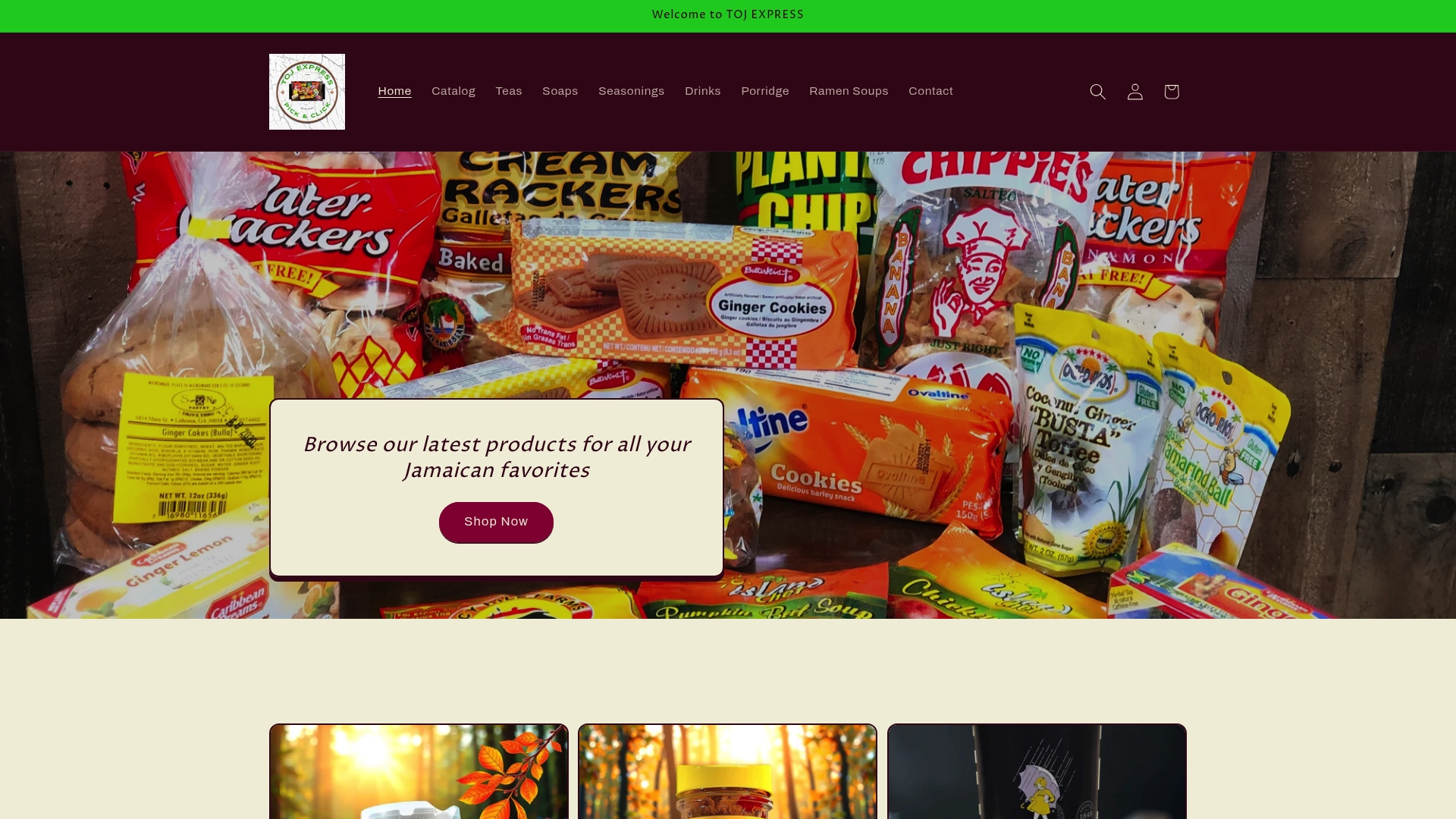
Browse the general grocery collection to see current pricing on pantry staples, or check the snacks collection for convenience items and specialty Caribbean snacks. Bring the 7-step checklist above on your next visit, or use it before you place a pickup order online. If you have questions about a specific product’s bundle pricing or unit cost, ask in-store. That is exactly the kind of question Tojexpress is set up to answer.