
Types of Tropical Drinks: Atlanta Convenience Store Guide
TOJEXPRESS.COM-Antonio HenryPackaged tropical drinks fall into seven categories you’ll find at a convenience store: coconut water, single-fruit juices and nectars (mango, pineapple, guava, passionfruit), blended tropical juices and nectars, ready-to-drink (RTD) tropical beverages, tropical sodas and sparkling juices, tropical energy drinks, and mixers or syrups. The fastest way to pick the right one is to flip the bottle and check the percent juice first.
- Hydration: Grab an unsweetened coconut water (look for “no added sugar” on the label).
- Mixer or smoothie base: Choose a mango or guava nectar with a significant fruit juice content.
- Sweet refresher: A tropical soda or sparkling juice works well straight from the can.
Pro Tip: *At Tojexpress, the label signal that never lies is the percent juice.
Key Takeaways
| Point | Details |
|---|---|
| Seven core categories | Coconut water, single-fruit juices/nectars, blended juices, RTD beverages, tropical sodas, energy drinks, and mixers. |
| Percent juice is the top label check | 100% juice has no added sugar by law; nectar is 25–99% juice; “drink” can be as low as 10% fruit. |
| HPP vs. shelf-stable | HPP/cold-pressed bottles taste fresher but need refrigeration; aseptic cartons are shelf-stable for 12–18 months. |
| “No added sugar” matters most for coconut water | Added sweeteners reduce coconut water’s natural electrolyte and hydration benefits. |
| Tojexpress for Caribbean imports | Tojexpress stocks both mainstream and Caribbean specialty tropical beverages for Atlanta-area shoppers. |
Table of Contents
- What are the main types of tropical drinks you’ll find in stores?
- Does processing method actually change what you taste?
- How do you read a label and pick the right drink in under a minute?
- Which brands should you actually look for on the shelf?
- How long do these drinks last, and how should you store them?
- Where can you find these drinks in Atlanta-area stores?
- A buyer’s note from Antonio at Tojexpress
- Stock up on tropical drinks at Tojexpress
- Sources
What are the main types of tropical drinks you’ll find in stores?
Knowing the category name on the label saves you from grabbing the wrong thing. Here is what each one actually is.
Coconut water is the clear liquid from young green coconuts. It tastes lightly sweet and slightly earthy, not like coconut milk. Single-serve bottles in sizes commonly found at convenience stores, and also larger cartons, are typical. Best for: drinking cold straight or mixing into a smoothie.
Single-fruit juices and nectars cover mango, pineapple, guava, and passionfruit. They come in 11.5 oz cans, 32 oz cartons, and aseptic shelf-stable Tetra Paks. Best for: drinking cold or using as a mixer.
Blended tropical juices and nectars combine two or more fruits, often mango-pineapple or guava-passionfruit. Serving sizes vary from single-serve bottles to larger multi-serve cartons. Best for: party sharing or smoothie bases.
RTD tropical beverages are pre-mixed, lightly sweetened drinks that need no prep. They often include added vitamins or electrolytes. Best for: grab-and-go drinking.
Tropical sodas and sparkling juices are carbonated, usually sweetened, and come in 12 oz cans or 2-liter bottles. Caribbean classics like Ting grapefruit soda fall here. Best for: a cold refresher or a Caribbean beverage mixer.
Tropical energy drinks blend tropical fruit flavors with caffeine and B vitamins. Single-serve 12–16 oz cans are standard. Best for: an energized afternoon pick-me-up.
Mixers and syrups are concentrated, high-sugar products meant to be diluted. They come in small bottles or pouches. Best for: mocktails, cocktail-style drinks, and flavoring sparkling water.
Does processing method actually change what you taste?
Short answer: yes, noticeably. The three methods you’ll see called out on labels are HPP (high-pressure processing), cold-pressed, and thermal pasteurization or aseptic.
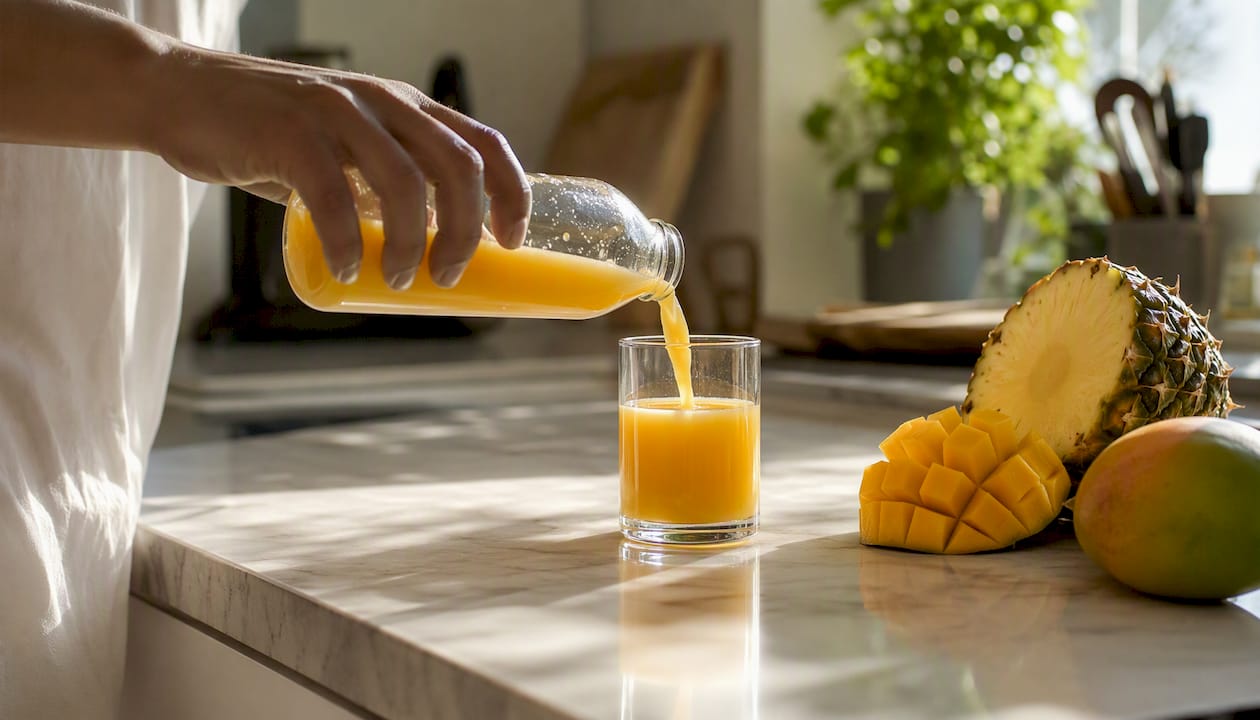
HPP uses cold water pressure at levels commonly used in the industry to eliminate microbes. The result is a juice that tastes closer to fresh-squeezed because heat-sensitive compounds stay intact. A 2025 MDPI review confirms that HPP and other emerging technologies preserve nutritional and sensory quality better than traditional thermal processing. The tradeoff: HPP bottles must stay refrigerated and typically have a shorter shelf life than shelf-stable cartons.
Cold-pressed means the fruit was pressed without heat before bottling. You’ll usually see this paired with HPP. It signals minimal processing and fresher flavor.
Thermal pasteurization and aseptic use heat to extend shelf life. The drink is shelf-stable at room temperature until opened. Flavor is slightly more “cooked,” but the convenience is real. For a pantry stock-up or a long road trip, aseptic cartons win.
Pro Tip: If you want the freshest-tasting mango nectar or coconut water, look for “HPP” or “cold-pressed” on the label and grab it from the refrigerated case. If you’re stocking a cooler for a weekend and need something that won’t spoil, the aseptic shelf-stable carton is the smarter pick. Both are fine; it depends on your timeline.
Mainstream brands are also pushing into fortified territory. Tropicana, for example, launched pineapple-with-coconut-water and mango-with-coconut-water SKUs as part of a functional line with added vitamins and minerals, which means more options but also more label-reading work.
How do you read a label and pick the right drink in under a minute?
Run through this checklist while standing at the cooler.
- Percent juice first. It’s printed on the front panel. 100% = no added sugar by law. Under 25% = mostly water and sweetener.
- Ingredient order. Fruit or coconut water listed first means it dominates the formula. Sugar listed second or third means the drink is sweet-forward.
- “No added sugar” claim. For coconut water especially, Healthline recommends choosing varieties labeled “no added sugar” because added sweeteners reduce its hydration and electrolyte benefits.
- Processing callout. “HPP,” “cold-pressed,” or “not from concentrate” signals fresher flavor. “Pasteurized” or “aseptic” signals shelf-stable convenience.
- Preservatives and artificial flavors. A short ingredient list (fruit, water, maybe citric acid) is a good sign. “Natural flavors” as the only flavor descriptor with no named fruit is a red flag.
- Certifications. Organic and non-GMO seals matter if you’re avoiding pesticide residue. Fair Trade matters for coconut water sourcing.
Ask yourself three quick questions: Am I drinking this straight or using it as a mixer? How sweet do I want it? Do I need it shelf-stable or refrigerated?
Red flags to skip: no best-before date visible, no “refrigerate after opening” instruction on a refrigerated bottle, or a label that says “tropical flavored drink” with no percent juice listed.
Which brands should you actually look for on the shelf?
These are the names most likely to appear at a US convenience store, with a one-line note on what each does best.
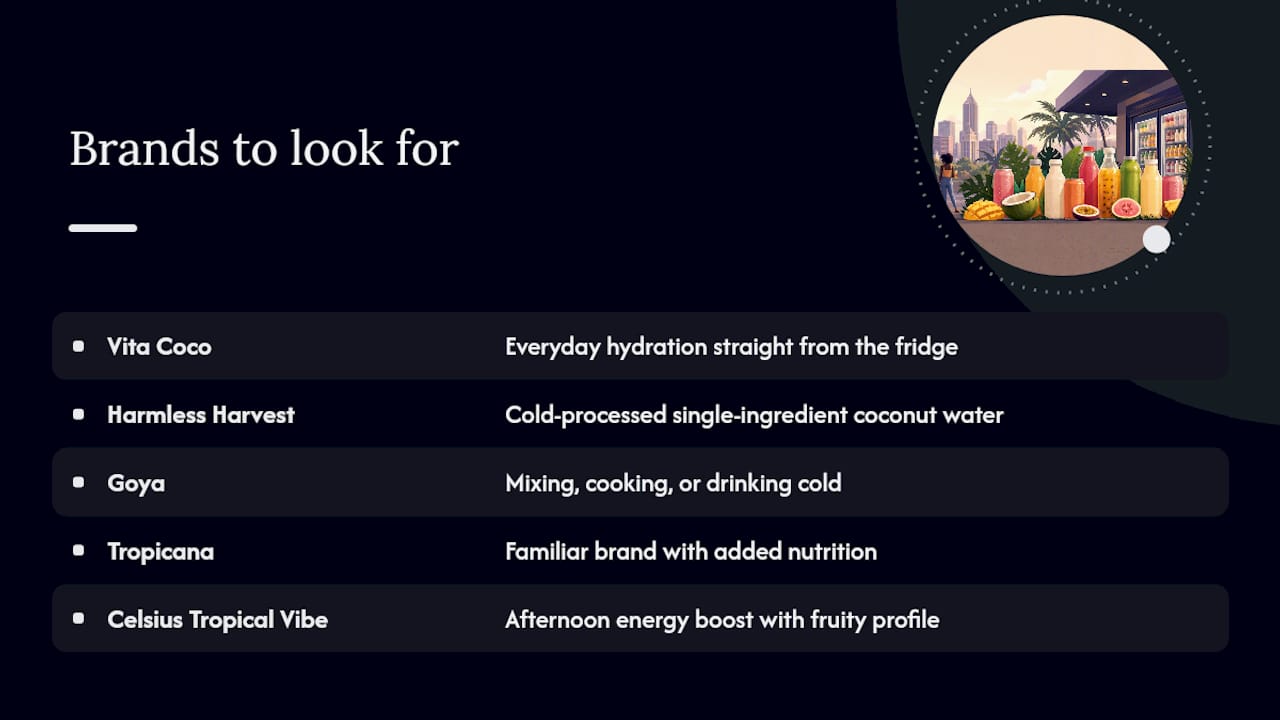
Vita Coco is the most widely distributed coconut water brand in the US. Clean label, widely available in single-serve bottles. Best for everyday hydration straight from the fridge. Coconut water like Vita Coco runs roughly 44–60 calories per 240 ml serving with around 8 g of natural sugar.
Harmless Harvest uses HPP and sources from Thailand. The pink tint is natural (an antioxidant reaction, not dye). Best for shoppers who want cold-processed, single-ingredient coconut water with no additives.
Goya tropical juices and nectars are pantry staples across the Caribbean diaspora. Guava, passion fruit, tamarind, and mango nectars come in 9.6 oz cans and larger cartons. Best for mixing, cooking, or drinking cold. A reliable find at stores with a Caribbean aisle.
Jumex mango, pineapple, and guava nectars are widely stocked in US convenience stores.
Tropicana tropical SKUs cover mainstream pineapple, mango, and now coconut-water blends in the Hydrate+ line. Fortified with vitamins and minerals. Best for shoppers who want a familiar brand with added nutrition. These are easy to find at most US convenience stores.
Celsius Tropical Vibe is the tropical entry in the Celsius energy drink line. It delivers tropical fruit flavor with caffeine and B vitamins in a 12 oz can. Best for an afternoon energy boost with a fruity profile.
For Caribbean specialty imports like Ting grapefruit soda or regional brands such as Bigga, mainstream chains often don’t carry them. That’s where a Caribbean-focused store matters. Ting, for instance, is a classic grapefruit soda that doubles as a mixer and comes in 2-liter bottles for sharing. You’ll find options like these at Tojexpress, which stocks both mainstream and Caribbean specialty beverages. For a deeper look at what’s worth trying, the Caribbean beverage recommendations guide covers standout picks.
How long do these drinks last, and how should you store them?
Storage rules differ sharply by processing method.
- Shelf-stable aseptic cartons and cans: Unopened, these last 12–18 months at room temperature. Once opened, refrigerate and drink within 3–5 days.
- Refrigerated HPP/cold-press bottles: These must stay cold from purchase. Unopened shelf life is typically 30–60 days from production. Once opened, drink within 2–3 days.
- Tropical sodas (canned): Best consumed within 9–12 months of the production date. Carbonation fades after opening; drink the same day.
- Signs a drink has gone off: off smell, visible separation that doesn’t remix, cloudiness in a product that should be clear, or a best-before date that’s passed.
For serving, coconut water and single-fruit juices taste best at 35–40°F, straight from the fridge. Nectars used as smoothie bases blend well frozen or chilled. Tropical sodas lose carbonation fast once opened, so pour over ice immediately. For a snack pairing, Asian mango popcorn pairs well with a cold mango nectar or coconut water. For storage tips that go beyond beverages, Tojexpress’s guide on storing Caribbean products covers the full pantry picture.
Where can you find these drinks in Atlanta-area stores?
Inside a convenience store, check three spots: the refrigerated juice case (coconut water, HPP bottles, RTD beverages), the Caribbean or international aisle (Goya, Jumex, aseptic nectars, tropical sodas), and the energy drink cooler (Celsius Tropical Vibe and similar).
NACS reporting shows convenience stores are grouping functional beverages by role (hydrate, replenish, energy) in coolers to help shoppers find what they need faster. If your local store uses this layout, the “hydrate” section is where coconut water and electrolyte RTDs land.
Timing tip: Shop mornings for the freshest chilled HPP and RTD stock. Weekends and late afternoons are high-turn periods when shelves get restocked most frequently.
For specific SKUs, especially Caribbean imports like Ting, Bigga, or regional nectars, local mainstream chains are hit-or-miss. Checking Tojexpress online before you drive saves the trip. The store serves Atlanta and surrounding areas including Stone Mountain, Decatur, Lithonia, Conyers, Tucker, Snellville, and Rockdale.
A buyer’s note from Antonio at Tojexpress
If you’re new to Caribbean beverages and not sure where to start, my honest recommendation is coconut water or a mango nectar. Both are forgiving choices: coconut water is light and hydrating with no prep needed, and a good mango nectar is versatile enough to drink cold, blend into a smoothie, or use as a mixer. At Tojexpress, we stock both mainstream options and Caribbean specialty imports because Atlanta shoppers deserve more than what the big-box stores carry. Start with one bottle, read the label, and you’ll know exactly what you want next time.
Stock up on tropical drinks at Tojexpress
Atlanta shoppers can skip the guesswork and browse the full Tojexpress drinks collection online before heading in-store. Tojexpress carries American and Caribbean tropical beverages and mixers, from coconut water and mango nectars to Caribbean sodas and specialty imports, serving Atlanta, Stone Mountain, Decatur, Lithonia, Conyers, Tucker, Snellville, and Rockdale. Check current stock online and place your order for in-store pickup or delivery.
Sources
- Research Progress in Coconut Water: A Review of Nutritional Composition, Biological Activities, and Novel Processing Technologies
- Tropicana taps functional trend with Hydrate+ launch
- The Benefits of Coconut Water for Everyday Hydration
- The Benefits of Coconut Water for Everyday Hydration