
Caribbean Beverage Recommendations: 10 Must-Try Drinks
TOJEXPRESS.COM-Antonio HenryTL;DR:
- Caribbean beverages include rum cocktails, fermented bark drinks, and tropical punches that reflect island culture. Popular options like Painkiller, Rum Punch, and Piña Colada highlight the region’s diverse drinking traditions. Fresh ingredients and precise techniques are essential for authentic Caribbean flavor and cultural authenticity.
Caribbean beverages are defined by a blend of rum-forward cocktails, fermented bark drinks, and tropical fruit punches that reflect centuries of island culture. The best Caribbean beverage recommendations span everything from the iconic Painkiller to the probiotic-rich Mauby, giving you a full picture of what island drinking culture actually looks like. TasteAtlas ranks 68 types of Caribbean beverages, including 37 widely recognized classic cocktails. That range tells you this is not a one-drink culture. Whether you are planning a party, exploring Caribbean cuisine, or just curious about what to drink in the Caribbean, this list covers the classics and the hidden gems.
1. Caribbean beverage recommendations: start with the Painkiller
The Painkiller is the most structurally distinct cocktail in the Caribbean canon. Unlike the Piña Colada, it uses dark rum and requires no blending. The standard Painkiller recipe calls for 60ml dark rum, 120ml pineapple juice, 30ml orange juice, and 30ml cream of coconut, served over crushed ice. Pusser’s Rum holds the trademark on the name, though Goslings Black Seal and Mount Gay Black Barrel are quality alternatives. The single most important finishing touch is freshly grated whole nutmeg. Pre-ground nutmeg loses its volatile oils and delivers a flat, muted aroma by comparison.
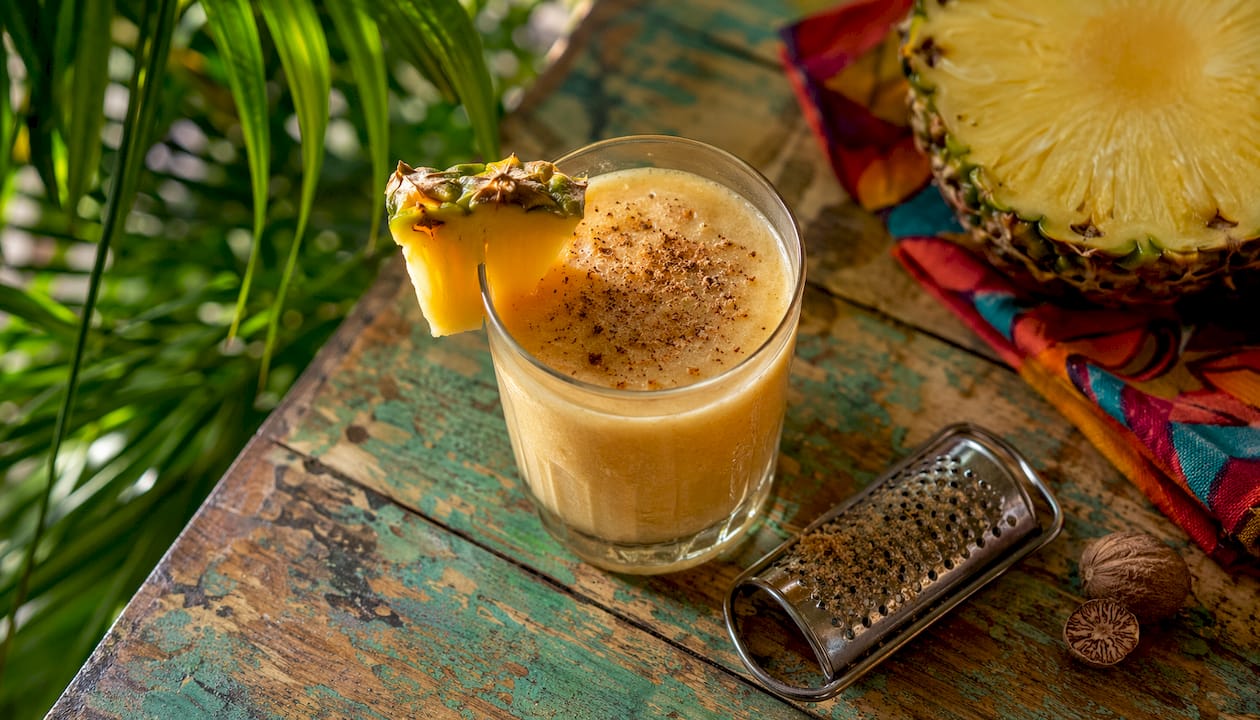
Pro Tip: Grate nutmeg directly over the glass right before serving. The oils release on contact with the cold drink and lift the entire flavor profile.
2. Rum Punch: the original island crowd-pleaser
Rum Punch is the backbone of Caribbean party culture. The classic formula follows a simple ratio: one part sour (lime juice), two parts sweet (simple syrup or grenadine), three parts strong (rum), and four parts weak (fruit juice or water). Regional variations are significant. Barbadian Rum Punch leans on Falernum, a spiced syrup made with lime and almond. Jamaican versions often add Angostura bitters. The drink scales easily for large groups, which makes it the go-to for cultural events and outdoor gatherings.
3. Piña Colada: Puerto Rico’s most famous export
The Piña Colada is Puerto Rico’s national drink and one of the top-rated staples across the Caribbean. It blends white rum, pineapple juice, and cream of coconut into a frozen, creamy drink that reads as dessert as much as cocktail. The key ingredient distinction is cream of coconut versus coconut milk. Cream of coconut, such as Coco Lopez, is sweetened and thick. Coconut milk is unsweetened and thin. Using coconut milk instead of cream of coconut produces a watery, undersweetened result that misses the mark entirely.
4. Mojito: Cuba’s contribution to global cocktail culture
The Mojito is Cuba’s most recognized drink and one of the most ordered cocktails worldwide. It combines white rum, fresh lime juice, sugar, mint leaves, and soda water. The technique matters more than most people realize. Muddling the mint too aggressively releases bitter compounds from the stems. Press gently to release the oils without shredding the leaves. The Mojito works equally well as a Caribbean mocktail recipe by replacing rum with sparkling water and adding extra lime.
5. Goombay Smash: the Bahamas in a glass
The Goombay Smash originated at Miss Emily’s Blue Bee Bar on Green Turtle Cay in the Bahamas. It combines coconut rum, dark rum, pineapple juice, and orange juice into a drink that is sweet, tropical, and deceptively strong. Bahamian cocktails balance traditional rum intensity with modern mixology for a refreshing result. The Goombay Smash is the clearest example of that balance. It tastes light but carries a full rum base that catches first-time drinkers off guard.
Key ingredients:
- Coconut rum (1.5 oz)
- Dark rum (0.5 oz)
- Pineapple juice (3 oz)
- Orange juice (1 oz)
- Fresh pineapple wedge for garnish
6. Cuba Libre: rum and cola with a twist
The Cuba Libre is rum and cola with fresh lime, and the lime is not optional. Without it, the drink is just a rum and Coke. The lime juice cuts through the sweetness of the cola and adds a citrus brightness that changes the entire character of the drink. Dark or aged rum works best here. White rum gets lost against the strong flavor of cola. This is one of the most accessible popular island cocktails for people new to rum-based drinks.
7. Daiquiri: simplicity as a standard
The classic Daiquiri uses white rum, fresh lime juice, and simple syrup in a 2:1:0.75 ratio, shaken hard and served up. Frozen fruit variations came later and are a separate category entirely. The original version is tart, clean, and spirit-forward. It is also the best drink for testing the quality of a rum, since there is nowhere to hide behind heavy mixers. White rum’s delicate flavor makes it the right base for fruit-forward blends like the Daiquiri.
8. Kendie’s Kick: a modern island punch
Kendie’s Kick is a Caribbean rum punch developed by mixologist Kendie Williams. It highlights the technique of balancing warm spiced rum with bright tropical acidity from tamarind and passion fruit. That contrast between earthy warmth and sharp fruit is what separates a well-built island punch from a generic fruit drink. Spiced rum carries vanilla, cinnamon, and clove notes that pair naturally with tamarind’s sour depth. This drink is a strong reference point for anyone learning Caribbean mixology.
9. Bahama Mama: layered tropical flavor
The Bahama Mama layers coconut rum, dark rum, coffee liqueur, orange juice, and pineapple juice into a drink with more complexity than its tropical appearance suggests. The coffee liqueur adds a bitter, roasted note that grounds the sweetness of the fruit juices. It is one of the few Caribbean cocktail ideas that works equally well at brunch or as an evening drink. Serve it over ice with a cherry and orange slice to honor the classic presentation.
10. Dark and Stormy: Bermuda’s signature serve
The Dark and Stormy is Goslings Black Seal Rum poured over ginger beer, finished with a lime wedge. Goslings holds the trademark on the name when used with their rum specifically. The drink works because dark rum and ginger beer share a spiced, slightly bitter profile that reinforces rather than competes. It is one of the easiest must-try Caribbean drinks to make at home with only two main ingredients. The ginger beer must be real ginger beer, not ginger ale. Ginger ale lacks the bite that makes the drink work.
11. Mauby: the Caribbean’s most underrated traditional drink
Mauby is a fermented bark drink common in Trinidad, Barbados, Puerto Rico, and the Dominican Republic. It has a bittersweet, root-beer-like flavor with warm spices and a slight fizz from fermentation. The preparation involves boiling mauby bark with sugar and spices, cooling the liquid, then fermenting it with a starter or wild yeast. A short ferment of 1–3 days produces a mild, lightly fizzy drink. Extending fermentation to 7 days develops a deeper probiotic profile and a more sour, complex flavor.
| Drink | Fermentation time | Flavor profile |
|---|---|---|
| Mauby (quick) | 1–3 days | Lightly sweet, mild bitterness |
| Mauby (full) | 5–7 days | Sour, complex, probiotic-rich |
| Sorrel | 2–5 days | Tart, floral, hibiscus-forward |
| Ginger beer | 1–3 days | Spicy, bright, lightly sweet |
Pro Tip: Mauby tastes best consumed cold within 3–4 days of reaching your preferred fermentation level. After that, the sourness overtakes the bittersweet balance.
12. Sorrel: the Caribbean holiday staple
Sorrel is made from dried hibiscus petals steeped with ginger, cloves, and cinnamon, then sweetened and served cold. In Jamaica and Trinidad, it is the defining drink of the Christmas season. The flavor is tart, floral, and deeply spiced. It works as a traditional Caribbean non-alcoholic beverage on its own, or spiked with rum for a festive punch. The color is a vivid deep red that makes it visually striking at any event. Pair it with jerk chicken or oxtail for a classic Caribbean food combination.
13. Ginger beer: the base that builds everything
Caribbean ginger beer is a standalone drink and a foundational mixer. Homemade versions use fresh ginger root, lime juice, sugar, and water, fermented briefly for natural carbonation. The heat level varies by island and by maker. Trinidadian ginger beer tends to be sharper and more pungent than Jamaican versions. As a mixer, it pairs with dark rum in a Dark and Stormy, with vodka in a Moscow Mule, or simply served over ice with lime as a non-alcoholic Caribbean option.
How to choose the right drink for your occasion
Selecting the right Caribbean drink depends on three factors: alcohol strength, sweetness level, and the setting.
| Occasion | Best drink choice | Alcohol level |
|---|---|---|
| Casual backyard party | Rum Punch or Goombay Smash | Medium |
| Cultural dinner event | Sorrel or Mauby | None |
| Beach or pool day | Piña Colada or Mojito | Low to medium |
| Evening cocktail hour | Painkiller or Kendie’s Kick | Medium to high |
| Non-drinker preference | Ginger beer or virgin Mojito | None |
For food pairings, Caribbean food combinations follow a clear logic. Spicy jerk dishes need sweet, cooling drinks like Piña Colada or sorrel. Rich stewed meats pair better with the bitterness of Mauby or the sharpness of ginger beer. Fried fish and seafood work well with the citrus brightness of a Daiquiri or Mojito.
Mixology tips for making Caribbean drinks at home
The foundation of every great Caribbean drink is the balance between sweet, sour, and spiced. Expert mixologists emphasize this balance as the defining characteristic of Caribbean flavor profiles. Getting it right at home requires attention to a few specific choices.
Rum selection is the most important decision:
- Use white rum for blended fruit drinks like Daiquiris and Piña Coladas
- Use dark or aged rum for richer bases like Rum Punch and Painkillers
- Use spiced rum when the recipe calls for warm, earthy notes like tamarind or passion fruit
- Avoid flavored rums in classic recipes since they disrupt the intended flavor balance
Fresh ingredients make a measurable difference. Fresh lime juice versus bottled lime juice produces a noticeably brighter, cleaner flavor. Fresh mint bruises differently than dried herbs. Freshly grated nutmeg, as noted above, releases oils that pre-ground powder cannot replicate.
Pro Tip: When in doubt about sweetness, start with less sugar and adjust upward. You can always add sweetness, but you cannot remove it once it is in the glass.
For cream of coconut, use Coco Lopez or a comparable sweetened coconut cream product. Substituting coconut milk changes the texture and sweetness of any recipe that calls for cream of coconut. The two products are not interchangeable. For a deeper look at blending Caribbean drinks at home, the technique guides from Tojexpress break down each step clearly.
Key Takeaways
The best Caribbean drinks balance rum quality, fresh tropical ingredients, and cultural tradition to deliver flavors that no generic cocktail can replicate.
| Point | Details |
|---|---|
| Rum selection defines the drink | Use white rum for fruit blends and dark or spiced rum for richer, earthier bases. |
| Fermented drinks offer real depth | Mauby and sorrel provide probiotic benefits and cultural significance beyond any cocktail. |
| Fresh ingredients are non-negotiable | Fresh lime juice, whole nutmeg, and fresh mint produce results that bottled substitutes cannot match. |
| Occasion guides your choice | Match drink strength and sweetness to the setting, from casual parties to formal cultural dinners. |
| Mocktail versions are fully viable | Most Caribbean cocktails convert cleanly to non-alcoholic versions without losing their core flavor identity. |
Why Caribbean drinks hit differently than any other cocktail culture
I have tasted rum punches in hotel bars across three continents, and none of them come close to the real thing. The difference is not just the rum. It is the understanding that every ingredient in a Caribbean drink carries a story. Mauby is not just a fermented bark drink. It is a recipe that families argue about across generations, with debates over sugar-to-bark ratios that get passed down like heirlooms. That cultural weight shows up in the flavor.
What surprises most people is how technically demanding these drinks actually are. The Painkiller looks simple. Four ingredients, no blending. But the freshly grated nutmeg, the ratio of cream of coconut to pineapple juice, the choice of dark rum over white: each decision shifts the result significantly. Caribbean mixology rewards attention to detail in the same way that French cooking does.
My honest advice is to start with Mauby or sorrel before you touch the cocktails. Those drinks tell you what Caribbean flavor actually tastes like at its base level, without alcohol masking anything. Once you understand that bittersweet, spiced, tropical foundation, every cocktail on this list makes more sense. You stop tasting rum and fruit juice and start tasting a place.
— ANTONIO
Tojexpress: your source for authentic Caribbean beverages
Tojexpress stocks a wide range of authentic Caribbean products, from traditional ingredients like cream of coconut and mauby bark to ready-to-drink island favorites. Whether you are building a home bar or sourcing drinks for a cultural event, the selection covers both alcoholic and non-alcoholic options.
The Tojexpress blog also covers the culture and craft behind these drinks in detail. You will find guides on what makes Caribbean drinks unique, ingredient sourcing tips, and step-by-step recipes for classics like Rum Punch and Mauby. Browse the full Caribbean beverage selection at Tojexpress to find the ingredients and drinks you need to bring island flavor home.
FAQ
What are the most popular Caribbean cocktails?
The most popular Caribbean cocktails include the Painkiller, Rum Punch, Piña Colada, Mojito, and Goombay Smash. TasteAtlas ranks these among the top-rated Caribbean beverages across the region.
What is Mauby and is it alcoholic?
Mauby is a fermented bark drink made from mauby bark, sugar, and spices. It is traditionally non-alcoholic, though extended fermentation beyond 7 days can produce a mildly alcoholic version.
What rum should I use for Caribbean cocktails?
Use white rum for blended fruit cocktails like Daiquiris and Piña Coladas. Use dark or spiced rum for richer drinks like the Painkiller or Kendie’s Kick, where dark rum pairs best with earthy, tart ingredients.
What are good non-alcoholic Caribbean drink options?
Mauby, sorrel, and homemade ginger beer are the strongest traditional non-alcoholic options. The Mojito also converts cleanly to a mocktail by replacing rum with sparkling water.
How do I pair Caribbean drinks with food?
Spicy dishes like jerk chicken pair best with sweet, cooling drinks like Piña Colada or sorrel. Rich stewed meats work better with bitter or sharp drinks like Mauby or ginger beer.