

Why Caribbean Spices Matter for Flavor and Culture
TOJEXPRESS.COM-Antonio HenryFinding true Caribbean spices in Atlanta can feel like a quest for home in every bite. The vibrant mix of flavors—blending Indigenous, African, European, and Asian traditions—does more than spice up your meal. It reconnects you to family memories and cultural roots while delivering bold, layered authenticity. Discover how the chemistry of these spices and their unique processing unlock flavor, health, and tradition that make your Atlanta kitchen feel like the islands.
Table of Contents
- What Makes Caribbean Spices Unique
- Common Types and Their Key Uses
- Cultural Importance for Caribbean Communities
- Health Benefits and Nutritional Value
- Choosing Authentic Spices in Atlanta
Key Takeaways
| Point | Details |
|---|---|
| Unique Fusion of Cultures | Caribbean spices blend indigenous, African, European, and Asian influences for distinct flavors. |
| Chemical Properties Enhance Taste | Spices contain specific compounds that provide rich flavors and health benefits. |
| Geography Affects Flavor Quality | The Caribbean’s soil and climate yield potent spices, distinct from other regions. |
| Cultural Connection Through Cooking | Using authentic Caribbean spices fosters connections to heritage and community traditions. |
What Makes Caribbean Spices Unique
Caribbean spices stand apart because they combine multiple cultural traditions into single flavor profiles that you won’t find anywhere else. What you taste isn’t just one spice—it’s layers of history, geography, and chemistry working together.
The region’s unique blend reflects indigenous, African, European, and Asian influences that shaped the islands over centuries. This multicultural fusion created flavor combinations that are genuinely distinctive.
The Chemistry Behind the Flavor
Caribbean spices contain specific active compounds that most other spices lack. Allspice (pimento) delivers warm clove, cinnamon, and nutmeg notes in a single spice, while Scotch bonnet peppers balance fiery heat with fruity flavors that keep you coming back.
Here’s what makes them special at the molecular level:
- Sulfur compounds in garlic and onion create bold, savory foundations
- Curcuminoids in turmeric deliver earthiness and anti-inflammatory benefits
- Oleoresins in various spices contribute depth and complexity
- Natural preservatives that protect food while enhancing flavor
These aren’t random properties. The antimicrobial and antioxidant properties in Caribbean spices served practical purposes for centuries, keeping food safe in tropical climates while creating incredible taste.
Geography Shapes Everything
Where spices grow matters tremendously. Caribbean soil, tropical climate, and rainfall patterns create conditions that produce more potent, flavorful spices than many other regions.
The islands’ specific processing methods add another layer of uniqueness. Drying times, temperatures, and storage conditions differ from commercial operations elsewhere, resulting in richer essential oils and more pronounced flavors.
The Synergistic Effect
Caribbean cooking doesn’t rely on single spices. Traditional recipes layer multiple spices together, and they amplify each other’s strengths. Thyme with garlic, allspice with Scotch bonnet, cinnamon with cloves—each combination creates something greater than the individual parts.
Traditional Caribbean spice blends create bold, layered flavors you can’t replicate by using one spice at a time.
This is why authentic Caribbean dishes feel so different from dishes using the same individual spices in Western cooking. The synergy is real.
What This Means for Your Kitchen
When you cook with Caribbean spices, you’re working with ingredients designed for bold, complex flavor. They’re not subtle—they’re meant to shine.
For Atlanta’s Caribbean community, accessing authentic spices keeps your cooking connected to home. The difference between a Caribbean spice blend sourced from the islands and a generic supermarket substitute is noticeable in every bite.
Pro tip: Store your Caribbean spices in airtight containers away from heat and light to preserve their potent oils and flavor compounds for months longer than you’d expect.
Common Types and Their Key Uses
Caribbean cooking relies on a specific set of spices that each bring something different to the table. Understanding what each one does helps you build authentic flavors in your own kitchen.
Allspice: The Backbone of Caribbean Cooking
Allspice (also called pimento) is arguably the most important Caribbean spice. It tastes like cinnamon, nutmeg, and clove all at once, which makes it incredibly versatile.
You’ll find allspice in:
- Jerk marinades for chicken, pork, and fish
- Stews and soups that simmer for hours
- Tropical fruit dishes and desserts
- Rice and bean preparations
Allspice forms the foundation of jerk marinades, which is why it’s non-negotiable if you’re cooking Caribbean food seriously.
Scotch Bonnet Peppers: Heat With Personality
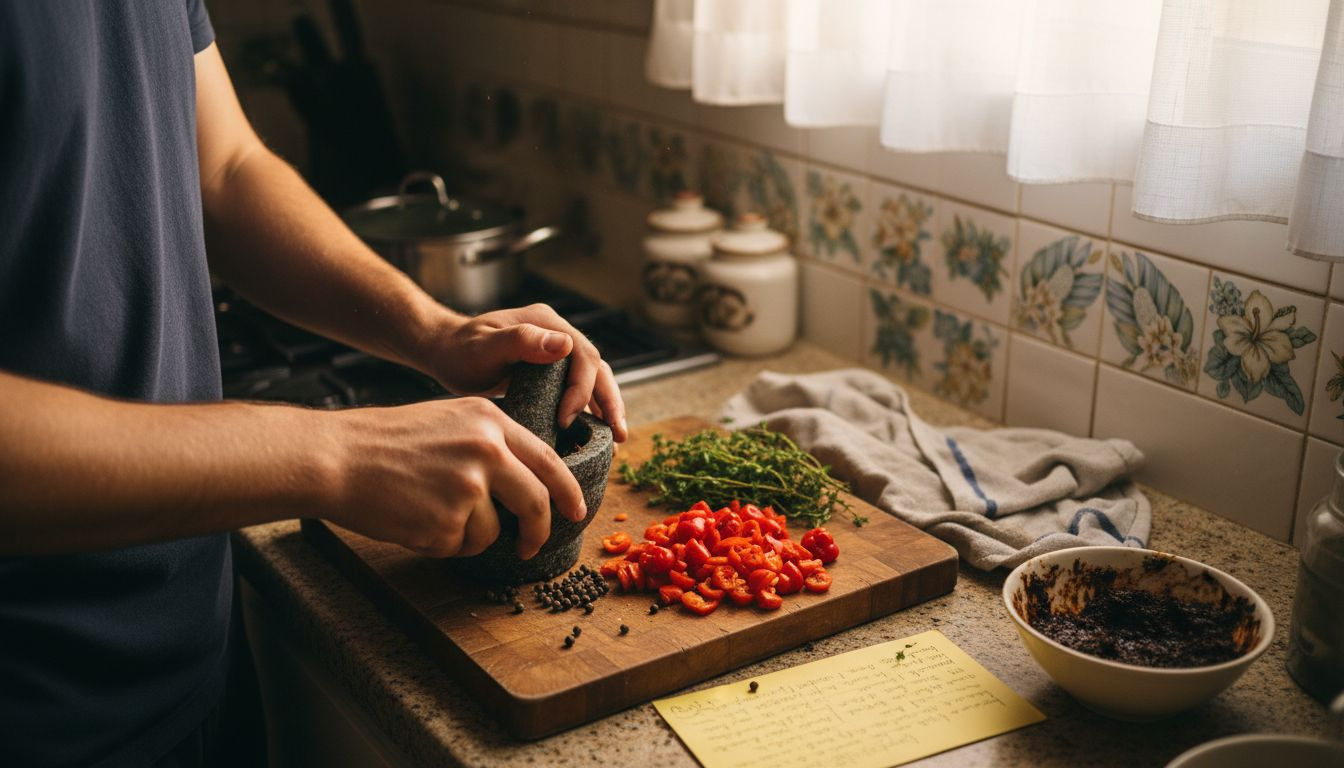
Scotch bonnet peppers deliver fruity heat that’s completely different from other hot peppers. They’re not just hot—they have flavor underneath the burn.
These peppers shine in:
- Hot sauces and pepper sauces
- Marinades for grilled meats
- Stews and soups for depth
- Condiments served tableside
Atlanta residents know the difference between generic hot sauce and authentic Caribbean pepper sauce. Scotch bonnets create that distinctive fruity complexity.
The Supporting Cast
These spices work alongside allspice and Scotch bonnet to create layered flavor:
- Thyme adds herbaceous warmth to soups, stews, and rice dishes
- Nutmeg brings earthiness and subtle sweetness to beverages and baked goods
- Cinnamon contributes warmth to savory and sweet applications
- Garlic creates bold, savory foundations in marinades and seasonings
- Ginger adds brightness and warmth to curries, soups, and drinks
Using fresh or properly processed Caribbean spices maximizes both flavor and functional properties.
The difference between dried supermarket spices and quality Caribbean spices is dramatic. Fresh herbs and properly dried spices from island sources deliver potency that grocery store versions can’t match.
Here’s how core Caribbean spices compare at a glance:
| Spice Name | Distinctive Flavor Notes | Key Traditional Role |
|---|---|---|
| Allspice | Warm, clove, cinnamon | Foundation in jerk recipes |
| Scotch Bonnet | Fruity, fiery heat | Iconic in sauces & marinades |
| Thyme | Herbaceous, earthy warmth | Essential in stews & rice |
| Nutmeg | Earthy, mildly sweet | Popular in desserts & drinks |
| Cinnamon | Sweet, spicy warmth | Used in both sweet & savory |
| Garlic | Pungent, savory | Base for many seasonings |
| Ginger | Spicy, citrusy brightness | Adds depth to curries & teas |
How to Use Them Together
Caribbean cooking combines these spices in specific ways. Jerk seasoning blends allspice with thyme, garlic, and Scotch bonnet. Curry dishes layer turmeric, ginger, garlic, and cinnamon.
These combinations aren’t random—they’re traditional formulas that work because each spice strengthens the others.
Pro tip: Buy whole spices when possible and grind them fresh for each meal; ground spices lose their potency quickly, but whole spices maintain their essential oils and flavor for months.
Cultural Importance for Caribbean Communities
For Caribbean expatriates in Atlanta, spices are far more than ingredients. They’re connections to home, reminders of family recipes, and physical links to ancestors who lived thousands of miles away.
Identity and Heritage in Every Pinch
Caribbean spices carry stories. Culinary practices involving spices serve as mediums of cultural expression and community bonding within Caribbean populations worldwide, maintaining cultural continuity amidst diaspora and globalization.
When you cook with allspice or Scotch bonnet, you’re doing exactly what your parents and grandparents did. That continuity matters tremendously.
These spices reflect centuries of blended history:
- Indigenous traditions that shaped Caribbean agriculture
- African influences brought through forced migration and cultural resistance
- European colonialism that altered the islands permanently
- Asian contributions that enriched flavor profiles
Each spice tells a story of adaptation and survival. They represent resilience.
More Than Just Cooking
Caribbean spices hold significance far beyond the kitchen. Many carry medicinal and spiritual traditions tied to healing practices and cultural ceremonies rooted in indigenous, African, and European heritage.
Thyme doesn’t just season soups—it’s been used for respiratory health for generations. Ginger addresses nausea and inflammation in ways that preceded modern medicine. These aren’t superstitions; they’re accumulated knowledge passed down through families.
Caribbean spices narrate stories of ancestry, adaptation, and cultural identity across generations.
Spiritual and healing ceremonies use specific spices in intentional ways. This dimension transforms cooking from a practical task into an act of cultural preservation and spiritual connection.
Connection for Diaspora Communities
Atlanta’s Caribbean community understands something unique. Cooking Caribbean food keeps you connected when geography separates you from home.
Shared meals around authentic spices create moments where:
- Children learn family recipes and stories simultaneously
- Community members celebrate holidays with familiar flavors
- New arrivals feel less isolated through recognizable tastes
- Cultural identity strengthens through collective practice
When you serve jerk chicken seasoned with proper allspice to friends, you’re not just feeding them—you’re representing your culture. That matters.
Why Authenticity Counts
Using genuine Caribbean spices isn’t about pretension. It’s about respect for your heritage and honoring the generations who preserved these traditions through difficulty.
Generic supermarket spices feel like a compromise. Authentic Caribbean spices feel like home.
Pro tip: Cook Caribbean meals for friends and family regularly; shared meals around authentic spices become the strongest way to pass cultural knowledge to the next generation and keep traditions alive.
Health Benefits and Nutritional Value
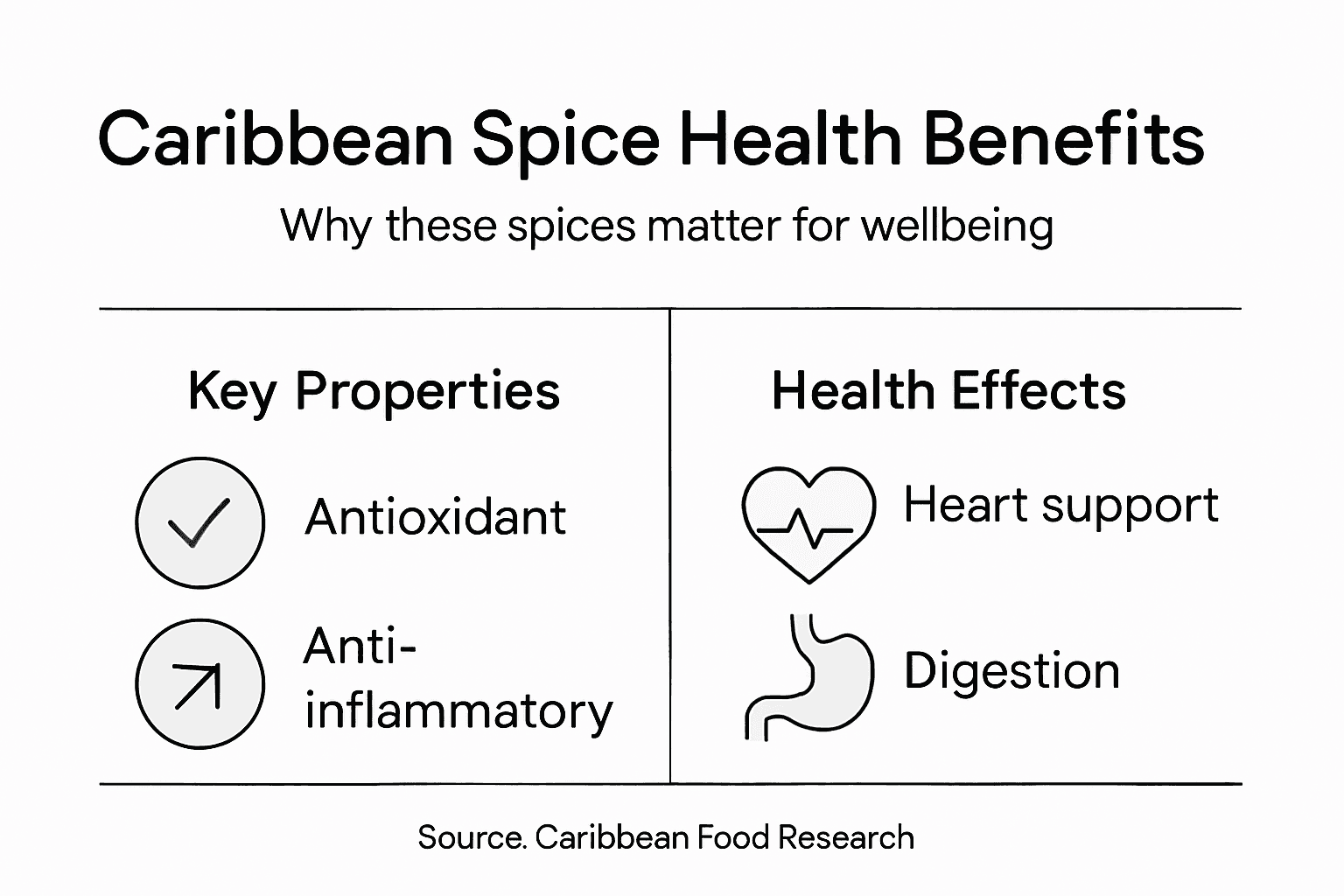
Caribbean spices aren’t just flavor powerhouses—they’re functional foods that have been supporting health for generations. Modern science is finally catching up to what Caribbean communities have always known.
Anti-Inflammatory and Antioxidant Power
Combat inflammation with spices you already use in your kitchen. Turmeric, cinnamon, ginger, and thyme contain bioactive compounds that reduce inflammation throughout your body.
These spices offer documented benefits:
- Reduce joint pain and stiffness
- Lower inflammation markers in blood work
- Protect cells from oxidative stress
- Support recovery after physical activity
- Combat chronic disease development
Culinary herbs and spices possess antioxidant and anti-inflammatory properties supported by scientific research, making them valuable additions to daily eating patterns rather than occasional seasonings.
Blood Sugar and Heart Health
Caribbean spices help regulate blood sugar and support cardiovascular function. Cinnamon improves insulin sensitivity, while allspice and coriander contribute to better metabolic regulation.
This matters tremendously for Atlanta residents managing diabetes or pre-diabetes. Using these spices regularly can reduce your reliance on medication or help prevent disease entirely.
Brain Function and Immune Support
Ginger and cayenne pepper boost immune system response, helping your body fight infections naturally. Allspice and turmeric contain compounds that may improve memory and cognitive function.
When you cook Caribbean meals, you’re not just satisfying hunger—you’re actively supporting your neurological health and immune resilience.
Caribbean spices reduce risks of chronic diseases while contributing essential nutrients and bioactive compounds beyond basic nutrition.
Digestive Benefits
Theme in Caribbean cooking includes ginger, thyme, and coriander, all known to enhance digestion. Ginger reduces nausea and bloating. Thyme supports gut health. Coriander aids nutrient absorption.
This is why Caribbean dishes rarely leave you feeling sluggish after eating. The spice combinations actively support digestive function.
Making Spices Part of Your Health Strategy
Using Caribbean spices isn’t supplementing—it’s eating smarter. You gain health benefits while enjoying authentic, flavorful meals that connect you to your culture.
The compounds in these spices accumulate over time. Regular consumption creates measurable health improvements in weeks, not months.
Pro tip: Use Caribbean spices daily in cooking rather than relying on supplements; whole spices provide superior bioavailability of health compounds compared to isolated extracts or pills.
Choosing Authentic Spices in Atlanta
Finding genuine Caribbean spices in Atlanta requires knowing where to look and what to prioritize. The difference between authentic and generic spices affects everything—flavor, health benefits, and your connection to home.
Know What You’re Looking For
Authentic Caribbean spices should be fresh, potent, and sourced from the islands or Caribbean-focused distributors. Stale spices lose their essential oils and bioactive compounds, leaving you with expensive dust.
Look for these quality markers:
- Vibrant color indicating recent processing
- Strong aroma when you open the container
- Clear origin information on packaging
- Freshness dates that aren’t months old
- Whole spices rather than pre-ground whenever possible
Generic supermarket spices often sit on shelves for months. Caribbean specialty stores rotate inventory faster because their customers know the difference.
Where to Find Authentic Spices in Atlanta
Spice House Atlanta provides authentic Caribbean spices and traditional seasoning blends sourced for freshness and cultural authenticity. They emphasize quality over convenience, which is exactly what you need.
Beyond specialty stores, explore:
- Caribbean markets in your neighborhood
- Online retailers specializing in Caribbean products
- Community grocery stores owned by Caribbean families
- Farmers markets with Caribbean vendors
These sources prioritize authenticity because their customers demand it. The people shopping there grew up with these spices—they won’t tolerate inferior quality.
Read Labels Carefully
Origin matters. Spices grown in the Caribbean and processed there taste different from spices grown elsewhere. The soil, climate, and processing methods all contribute to flavor intensity.
Check for:
- Country of origin clearly stated
- Processing date or harvest season
- No added fillers or anti-caking agents
- Organic certification if that matters to you
Authentic Caribbean spices deliver superior flavor and functional properties compared to mass-market alternatives.
If the label doesn’t tell you where the spice comes from, it’s probably not worth buying.
Build Relationships With Vendors
Talk to people who work at Caribbean specialty stores. They can tell you which suppliers are reliable, which spices are in season, and what’s truly fresh.
Regular customers get recommendations and may learn about new stock before it hits shelves. You’re not just buying spices—you’re becoming part of a community that values authenticity.
Storage Matters After Purchase
Once you buy authentic spices, protect them. Store in airtight containers away from heat, light, and moisture.
Proper storage extends potency significantly. Whole spices last months; ground spices last weeks when stored correctly.
Compare storage methods for maximizing spice quality:
| Storage Method | Flavor Retention | Recommended For |
|---|---|---|
| Whole Spice, Airtight | Months of potency | Allspice, nutmeg, cloves |
| Ground Spice, Airtight | Loses strength in weeks | Cinnamon, ginger, garlic |
| Plastic Bag | Rapid aroma loss | Short-term only |
| Exposed to Light | Fastest flavor decline | Avoid for all spices |
Pro tip: Buy smaller quantities of ground spices and larger amounts of whole spices; grind whole spices fresh when cooking for maximum flavor, aroma, and health benefits.
Experience Authentic Caribbean Flavor and Culture Today
If you have ever felt the challenge of finding fresh, potent Caribbean spices that truly capture the warmth and heritage of the islands then you are not alone. The article highlights how authentic spices like allspice and Scotch bonnet peppers preserve cultural identity and unlock vibrant flavors that generic alternatives simply cannot match. The struggle to keep tradition alive with every meal is real especially for Caribbean communities far from home.

Discover the difference at TOJ Express where we bring you a carefully selected range of authentic Caribbean and American products designed to connect you with your roots. From aromatic allspice to flavorful Scotch bonnet peppers our convenience store offers the quality and freshness you need to elevate your cooking and celebrate your heritage. Don’t settle for less when your meals deserve the best. Explore our selection now at TOJ Express and experience true Caribbean authenticity today.
Frequently Asked Questions
What are the primary cultural influences that shape Caribbean spices?
Caribbean spices reflect a fusion of indigenous, African, European, and Asian influences, creating unique flavor profiles that blend history, geography, and culinary traditions.
How do the chemical compounds in Caribbean spices contribute to their flavor and health benefits?
Caribbean spices contain specific active compounds like sulfur in garlic, curcuminoids in turmeric, and oleoresins in various spices that create bold flavors and offer health benefits such as anti-inflammatory and antimicrobial properties.
Why is it important to use fresh, authentic Caribbean spices in cooking?
Using fresh, authentic Caribbean spices enhances the flavor and complexity of dishes, while also providing superior health benefits compared to generic supermarket spices that may be stale and lack potency.
How do Caribbean spices contribute to health and dietary needs?
Caribbean spices like turmeric, ginger, and cinnamon have documented health benefits, including anti-inflammatory effects, support for digestive health, and contributions to heart health, making them valuable additions to a balanced diet.