

Caribbean Home Cooks: Use 1/3–1/2 Cloves When Swapping for Allspice
TOJEXPRESS.COM-Antonio HenryClove is the stronger spice, so when a recipe calls for allspice and you only have cloves, use roughly a third to half as much. Reverse the swap and you can go closer to 1:1, though your dish will lose the peppery, cinnamon-like roundness allspice brings. The one time you shouldn’t improvise: delicate baked goods where clove’s sharp edge can take over the whole batch.
TL;DR:
- Allspice is a single spice with a warm, rounded flavor that combines cinnamon, nutmeg, and clove, making it suitable for long-simmered dishes.
- Cloves are much more pungent and intense, with a medicinal taste that can overwhelm if used excessively or swapped blindly for allspice.
- When substituting cloves for allspice, use about a third to half the amount called for, while allspice can usually replace cloves roughly one-to-one.
- Whole spices retain aroma longer than ground versions, so grinding fresh before use dramatically improves flavor and shelf life.
- Proper management of spice intensity and tasting during cooking is crucial for achieving balanced flavor, especially when substituting these powerful spices.
Table of Contents
- Allspice vs Cloves: Where Each Spice Actually Comes From
- How Do Allspice and Cloves Actually Taste Different?
- When to Use Cloves vs Allspice in Cooking
- Allspice Substitute and Clove Swap Ratios That Actually Work
- Buying and Storing Allspice for Caribbean Cooking
- What Really Matters When You’re Choosing Between Them
- Where to Buy Authentic Allspice and Cloves
- Sources
Allspice vs Cloves: Where Each Spice Actually Comes From
Allspice and cloves look similar on a spice rack, but they come from unrelated plants and different parts of those plants entirely. Allspice is the dried, unripe berry of Pimenta dioica, a tree native to Jamaica and southern Mexico, and it’s often sold under the names pimento or Jamaica pepper. Cloves are something else altogether: the dried flower buds of Syzygium aromaticum, a tree originally grown in Indonesia’s Maluku Islands, according to UCLA’s botanical spice descriptions. One is a fruit. The other is a flower that never got the chance to bloom.
Both spices show up on shelves in whole and ground form, and the difference matters more than most cooks assume.
- Whole allspice berries resemble large, dark peppercorns and hold their aroma for years in a sealed jar.
- Whole cloves look like tiny wooden nails, with a bulbous head and a slender stem, and they’re just as durable in storage.
- Ground versions of both lose potency within months as the volatile oils evaporate, which is why The Spruce Eats recommends grinding whole spice just before you cook with it.
- Allspice is genuinely a single spice, not a blend, though its name comes from tasting like several spices at once, per Wikipedia’s entry on allspice.
If you’re stocking a pantry for real Caribbean cooking, buying whole and grinding as needed isn’t a luxury step. It’s the difference between jerk seasoning that tastes alive and one that tastes like cardboard.
How Do Allspice and Cloves Actually Taste Different?
Allspice earns its name honestly: it tastes like cinnamon, nutmeg, and clove layered together, finished with a gentle peppery bite. It’s warm without being aggressive, which is why it blends into so many dishes without announcing itself.
Cloves don’t blend in quietly, as their distinct profiles are described in this coffee flavor profiles guide that skillfully breaks down nuanced tasting notes. They’re intensely pungent, almost numbing on the tongue in large amounts, and that punch comes from eugenol, the aromatic compound that makes cloves smell like a dentist’s office and taste like it could take over a whole pot of stew, according to The Kitchen Community’s comparison of the two spices.
- Allspice: rounded, sweet-savory, subtle pepper finish. Good for dishes where you want warmth without a dominant flavor.
- Cloves: sharp, medicinal-sweet, long-lasting on the palate. Good for dishes built to showcase a bold spice note.
- Allspice works well in dishes simmered a long time, since it mellows rather than intensifies.
- Cloves intensify the longer they cook, so timing and quantity matter more.
Statistic Callout: Eugenol makes up a large share of clove’s essential oil, which is exactly why a quarter teaspoon can dominate a dish that calls for a full teaspoon of allspice. Cooks trying to swap one for the other need to respect that gap in intensity, not just the flavor notes.
When to Use Cloves vs Allspice in Cooking
1. Sweet baking. Pumpkin pie, spice cookies, and fruit cakes usually lean on allspice as the backbone spice, since its rounded profile plays well with cinnamon and nutmeg without fighting them. Cloves show up in smaller supporting roles here, often just a pinch alongside allspice rather than in place of it.
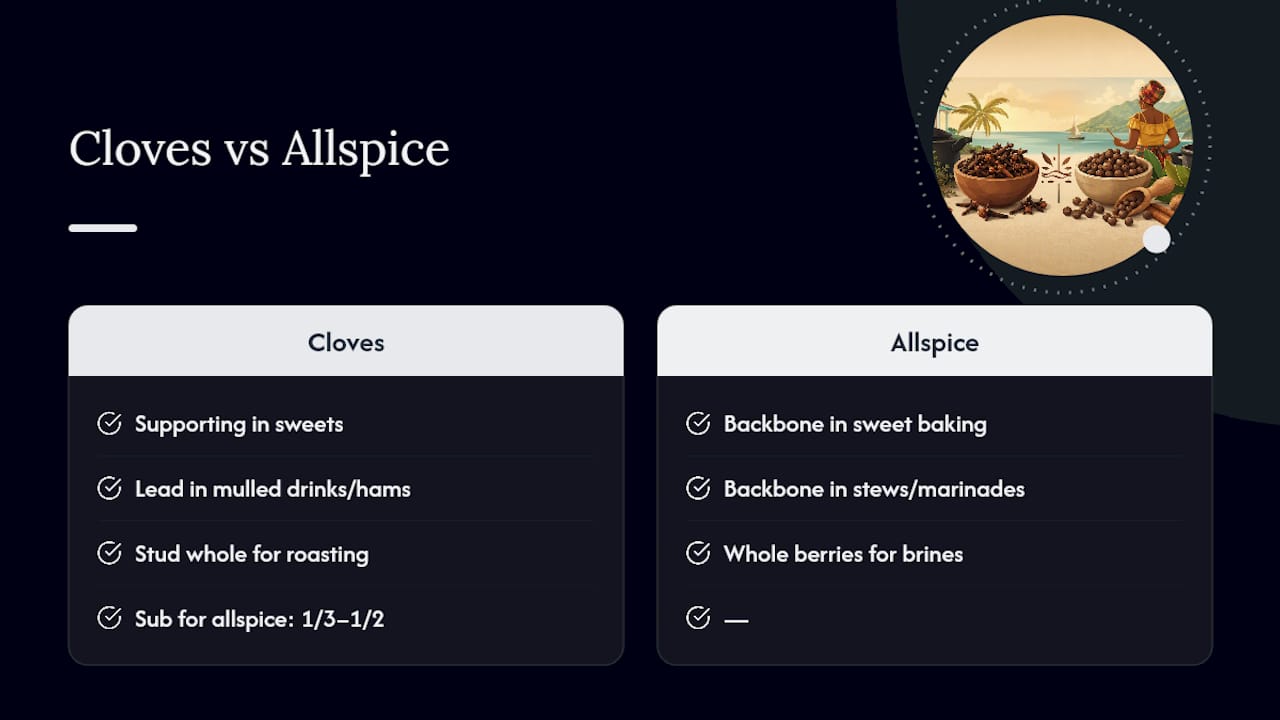
2. Savory and marinades. Jamaican jerk seasoning, Caribbean stews, and pickling brines depend on allspice, frequently in whole-berry form so the flavor releases slowly during a long simmer, a technique The Spruce Eats notes works much like using whole peppercorns. Cloves take the lead in mulled wine, spiced cider, and studded holiday hams.
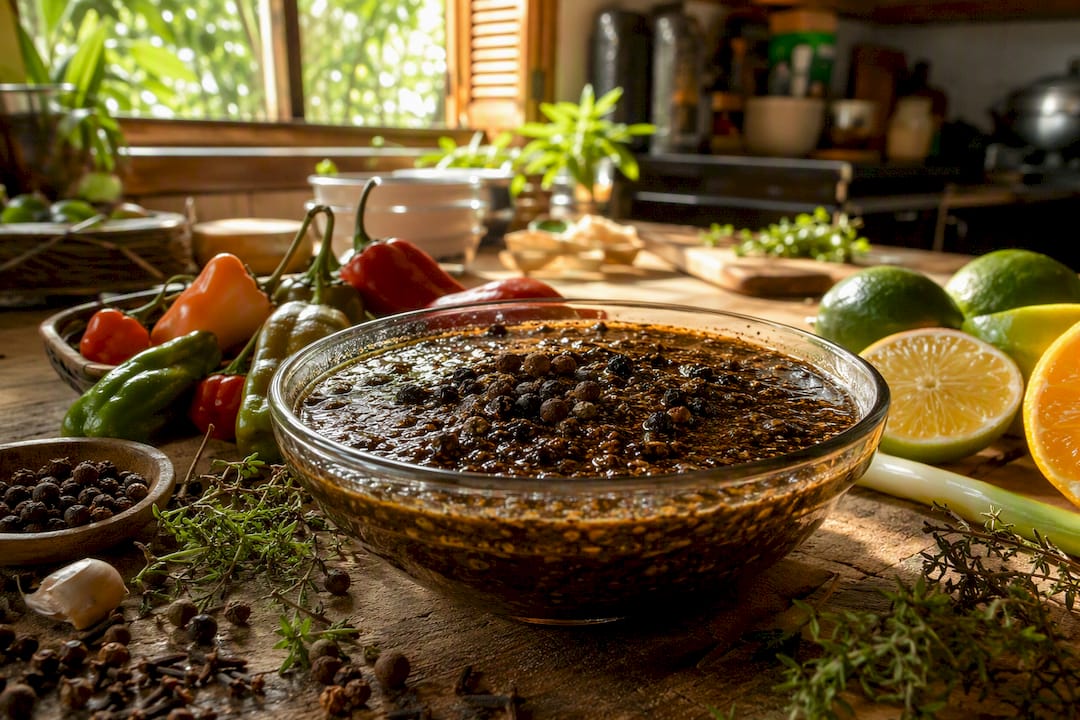
3. Whole-spice techniques. Studding a ham with whole cloves before roasting, or dropping whole allspice berries into a pickling brine, gives you concentrated flavor you can pull out before serving. For pickling specifically, whole allspice infuses cleaner and is far easier to fish out of the jar than ground spice ever will be, a point Allrecipes backs up in its substitution guidance.
Try this: swap ground cloves for allspice in your next batch of gingerbread and taste the difference side by side. It’s the fastest way to understand why professional bakers rarely treat these two as equals.
Allspice Substitute and Clove Swap Ratios That Actually Work
Here’s the rule that saves recipes: cloves are the stronger spice, so when cloves stand in for allspice, use about a third to half the amount the recipe calls for. Going the other direction, allspice for cloves, you can usually get closer to a 1:1 ratio, adjusted slightly upward if the dish leans savory and needs more punch.
- Allspice called for, only cloves on hand: use 1/3 to 1/2 teaspoon ground cloves per 1 teaspoon allspice.
- Cloves called for, only allspice on hand: use roughly 3/4 to 1 teaspoon allspice per 1 teaspoon cloves.
- No allspice or cloves at all: mix equal parts ground cinnamon, nutmeg, and cloves, a combination cooks have leaned on for generations as a reasonable stand in.
- Quick fix version: 1/2 teaspoon cinnamon plus 1/2 teaspoon ground cloves approximates 1 teaspoon allspice in a pinch.
Extension services that publish tested substitution charts back this cinnamon-nutmeg-clove approach as a reliable stand in when allspice isn’t available, per Colorado State University Extension. For delicate desserts especially, some cooks find that starting with just a third of the suggested clove amount avoids overpowering the batch, an approach The Kitchen Community recommends for sensitive recipes like custards and light cakes.
Adjust for volume carefully. Doubling a recipe doesn’t mean doubling the clove substitute proportionally, since intensity compounds faster than volume does in larger batches. If you’re missing that peppery finish allspice normally provides, a small pinch of black pepper stirred into a cinnamon-forward substitute can bring it back without adding more clove.
Pro Tip: Taste as you go, especially with cloves. If a dish tastes bitter or medicinal after adding your substitute, a small spoonful of sugar or a splash of acid, like lemon juice or vinegar, can pull the flavor back into balance faster than trying to dilute it with more liquid.
For Jamaican-specific recipes where the ratios shift depending on the dish, Tojexpress’s guide to Jamaican spice substitutes breaks down adjustments by recipe type.
Buying and Storing Allspice for Caribbean Cooking
Whole allspice berries aren’t optional in real jerk seasoning. They’re the backbone of it, and no ground jar from a supermarket rack matches the aroma of berries ground fresh right before they hit the marinade.
Buy whole allspice whenever you can find it. It keeps its oils sealed inside the berry for years, while ground allspice starts fading within months of opening the jar. Grinding a small batch fresh, right before you season a jerk marinade or a pot of stew, is the single biggest upgrade a home cook can make without spending more money.
Store both allspice and cloves in airtight containers away from heat and light, and buy in quantities you’ll actually use within a year. Tojexpress carries both whole and ground versions for cooks who want the real thing rather than a diluted grocery-store substitute. For more on handling whole Caribbean spices day to day, Tojexpress’s home cook’s guide to preparing Caribbean spices covers grinding technique and shelf life in more depth.
What Really Matters When You’re Choosing Between Them
Most substitution charts treat allspice and cloves like interchangeable pepper shakers, and that’s the part of the conventional advice that falls apart in practice. They’re not close enough in strength to swap blindly, and treating them that way is how home cooks end up with a pie that tastes like a candle store.
What actually matters is intensity management, not flavor matching. Cloves will always punch harder than allspice, so the real skill isn’t memorizing a ratio, it’s tasting as you adjust and understanding that you can always add more spice but you can’t easily take it out. Recipes that lean on allspice for background warmth, like jerk marinades or spiced stews, tolerate substitution far better than recipes where allspice is the star, like a spice cake or a pumpkin pie.
If you take one thing from this comparison, it’s this: buy both spices whole, grind them fresh, and treat the substitution ratios as a starting point, not a formula. The rest is just tasting and adjusting, which is a skill no chart can replace.
— ANTONIO
Where to Buy Authentic Allspice and Cloves
Tojexpress stocks both spices in whole and ground form, sourced with the same Caribbean pantry standards that go into jerk seasoning back home, not the thinned-out versions found on most supermarket shelves. Whole allspice berries and whole cloves sit right alongside ground jars for cooks who want the option to grind fresh or reach for convenience depending on the night.

If you’re building out a spice cabinet for authentic Caribbean and American cooking, browse the current selection at Tojexpress and add both spices to your next order before your jerk marinade or holiday ham recipe needs them. For guidance on rounding out the rest of your pantry, Tojexpress’s essential Caribbean spices guide covers what else belongs on the shelf next to your allspice and cloves.
Sources
- UCLA spice botanical descriptions
- Colorado State Extension — ingredient substitutions
- Cloves vs Allspice — The Kitchen Community
- What Is Allspice and How To Cook With It? — The Spruce Eats