

The Best Jamaican Spice Substitutes for Authentic Flavor
TOJEXPRESS.COM-Antonio HenryIf you’re mid-recipe and out of allspice or scotch bonnet, here’s the short answer: swap allspice 1:1 with an equal-parts mix of ground cloves, cinnamon, and black pepper. Replace scotch bonnet with habanero at the same quantity. Add dried thyme, brown sugar, and fresh garlic, and you have the backbone of authentic jerk flavor from pantry staples.
Quick dry rub: 1 tbsp allspice (or cloves+cinnamon+pepper blend), 1 tsp dried thyme, 1 tsp brown sugar, ½ tsp habanero powder, ½ tsp garlic powder, ¼ tsp cinnamon, ¼ tsp nutmeg.
Quick wet marinade: Blend the dry rub above with 2 tbsp soy sauce, 2 tbsp lime juice, 1 tbsp olive oil, and 1 tbsp brown sugar. Marinate chicken 4–8 hours, pork overnight.
Habaneros are in the same heat range as scotch bonnet peppers, offering comparable spicy heat. Start at half the called-for amount if you’re heat-sensitive, then build up.
Pro Tip: If your pre-ground spices have been stored for a long time, use slightly less initially and adjust to taste, as spice potency decreases over time.
Key takeaways
The most reliable Jamaican spice substitutes keep allspice, thyme, and habanero as the three non-negotiable pillars, then fill gaps with pantry staples and technique.
| Point | Details |
|---|---|
| Allspice substitute | Use equal parts cloves + cinnamon + black pepper at 1:1 volume; reduce by 30% if spices are older than six months. |
| Scotch bonnet substitute | Habanero replaces scotch bonnet 1:1 in heat and fruity aroma; start at 50–75% and adjust. |
| Browning sauce substitute | Dark molasses works 1:1 for both savory and sweet dishes; avoid soy or Worcestershire in desserts. |
| Smoke without pimento wood | Add smoked paprika to the rub or use cherry/apple wood chips on the grill; reserve liquid smoke as a last resort. |
| Tojexpress sourcing | Whole allspice, scotch bonnet products, and browning sauce are available at Tojexpress for Atlanta-area cooks. |
Table of Contents
- What makes Jamaican jerk flavor different from other spice blends?
- Ingredient-by-ingredient substitutes with exact swap ratios
- Two plug-and-play recipes: dry rub and wet marinade
- Which substitutes work best by dish type?
- How to recreate smoke, crust, and depth without pimento wood
- When to use substitutes vs. when to buy the real thing
- Tojexpress carries the Caribbean pantry staples you actually need
- Sources
What makes Jamaican jerk flavor different from other spice blends?
Jerk seasoning’s core components are allspice (the aromatic anchor), scotch bonnet or habanero for fruity heat, dried thyme for herbal backbone, and warm supporting spices like cinnamon and nutmeg, with brown sugar for caramelization and balance. Every element has a job.
- Allspice carries the warm, clove-like base note that no other single spice replicates cleanly. It’s the non-negotiable.
- Scotch bonnet brings fruity, floral heat that’s distinct from the sharper burn of cayenne or jalapeño.
- Dried thyme gives the herbal backbone. Without it, jerk tastes flat and one-dimensional.
- Brown sugar does two things: it balances heat and creates the caramelized bark that defines grilled jerk.
- Garlic, ginger, and scallions provide the savory aromatic layer underneath everything else.
Cajun and Creole blends are not direct jerk replacements because they lean on paprika and garlic rather than the allspice-thyme backbone. You can use them as a starting base, but you’ll need to add cinnamon, nutmeg, and extra habanero or cayenne to get anywhere close. Think of commercial blends as a scaffold, not a finish.
Pro Tip: Prioritize the three pillars in this order when substituting: allspice first, then thyme, then scotch bonnet or habanero. Get those three right and the rest is fine-tuning.
Also worth knowing: jerk is both a seasoning and a cooking method. Spice swaps alone can’t reproduce pimento wood smoke. That gap gets closed with technique, covered below.
Ingredient-by-ingredient substitutes with exact swap ratios
| Ingredient | Best Substitute | Swap Ratio | Flavor Impact |
|---|---|---|---|
| Ground allspice | Equal parts cloves + cinnamon + black pepper | 1:1 by volume | Approximates warmth; lacks unified pimento character |
| Scotch bonnet | Habanero (fresh or powder) | 1:1 | Nearly identical heat and fruity aroma |
| Scotch bonnet (mild) | Ají dulce + smoked paprika | 1:1 | Fruity flavor, no significant heat |
| Fresh thyme | Dried thyme | 1 tsp fresh = ⅓ tsp dried | Slightly less bright, still effective |
| Brown sugar | Dark muscovado or coconut sugar | 1:1 | Deeper molasses note |
| Browning sauce | Dark molasses | 1:1 | Rich color and sweetness; works savory and sweet |
| Browning sauce | Soy sauce or Worcestershire | 1:1 | Savory depth only; avoid in desserts |
| Whole nutmeg | Pre-ground nutmeg | ½ tsp ground = 1 small whole | Noticeably less aromatic |
| Pimento wood smoke | Smoked paprika + extra allspice | ½ tsp per serving | Approximates smoke; see technique section |
Jerkpit, whole allspice berries ground fresh are far more aromatic than pre-ground, delivering noticeably stronger pimento character. If you can find whole berries, a small spice grinder pays for itself the first time you use it.
For the cloves+cinnamon+black pepper blend standing in for allspice, use equal parts of each by volume. The result approximates the warmth but lacks the unified pimento character of true allspice. It works well in marinades and stews; it’s slightly less convincing in a dry rub where allspice’s singular note is more exposed.
For browning sauce, dark molasses is the most versatile substitute because it works in both savory dishes and desserts. Soy sauce or Worcestershire add umami and color to stews but will ruin a Jamaican fruit cake or sweet bread.
Pro Tip: When using the cloves+cinnamon+black pepper blend in place of allspice, reduce the total volume by about 30% if your pre-ground spices are older than six months. The blend can taste sharp and unbalanced when the individual components are stale.
Store ground spices in airtight containers away from heat. Most ground spices lose meaningful potency after 12 months. Whole allspice berries stay viable for up to three years stored correctly.
Two plug-and-play recipes: dry rub and wet marinade
Dry jerk seasoning rub
- 1 tbsp ground allspice (or cloves+cinnamon+black pepper blend)
- 1½ tsp dried thyme
- 1 tsp brown sugar
- 1 tsp garlic powder
- ½ tsp habanero powder (or cayenne at ¼ tsp for milder heat)
- ½ tsp onion powder
- ½ tsp smoked paprika (adds smoke when you can’t grill with wood chips)
- ¼ tsp ground cinnamon
- ¼ tsp ground nutmeg
- ¼ tsp black pepper
- ½ tsp salt
Mix and store in a sealed jar for up to three months. Use 1 tbsp per pound of protein as a starting point.
Wet jerk-style marinade
Combine the dry rub above with: 3 tbsp soy sauce, 2 tbsp lime juice, 1 tbsp olive oil, 1 tbsp brown sugar, and 1 tbsp habanero hot sauce (or habanero paste). Blend until smooth. This makes enough for about 2 lbs of chicken or pork.
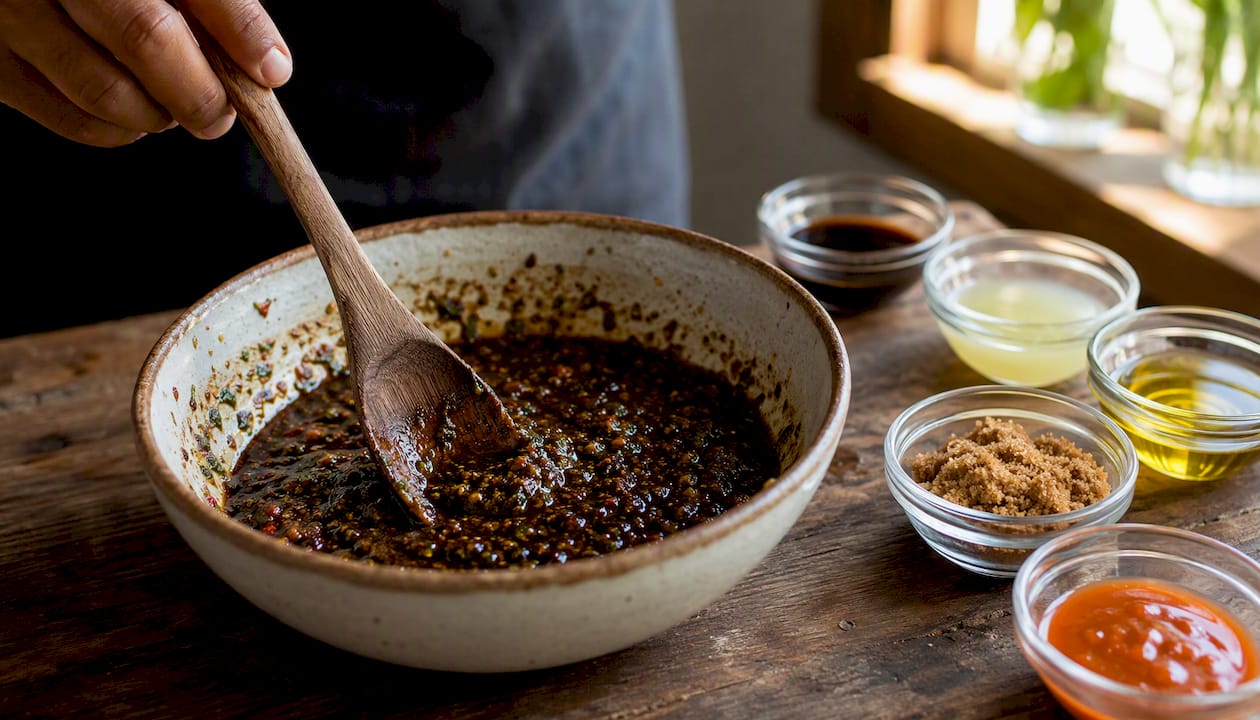
Marinate chicken pieces 4–8 hours, whole chicken overnight, pork shoulder 12–24 hours. Fish needs only 30–45 minutes or the acid will start to break down the texture.
A practical dry rub substitute built around ground allspice, cayenne, and thyme produces a passable jerk profile when allspice is present. The wet marinade version above adds the oil-acid-umami structure that helps the spices penetrate the protein rather than just coat the surface.
Pro Tip: Use freshly grated whole nutmeg and freshly ground allspice when you can. The aromatic difference between fresh-ground and a jar that’s been open a year is significant enough to change the dish.
Which substitutes work best by dish type?
Grilled meats: The dry rub is your best tool. Prioritize allspice and habanero, use brown sugar for bark formation, and add smoked paprika or cherry or apple wood chips when grilling for smoke. Skip liquid smoke here; the grill handles it.
Stews and braises: Use the wet marinade or add browning sauce, dark molasses, or a splash of soy sauce directly to the pot. Soy and Worcestershire work well in savory stews. Check out Caribbean food pairing ideas for stew combinations that hold up well with substitute spices.
Baked goods and desserts: Never use soy sauce or Worcestershire as a browning sauce substitute here. Homemade browning sauce made by caramelizing 1 cup white sugar until dark brown, then deglazing slowly with about ½ cup water, stores in the refrigerator for up to six months and works in both sweet and savory applications.
Sauces and dressings: Use small amounts of habanero hot sauce plus ground allspice for jerk notes. Be conservative; a sauce that’s too hot or too clove-forward can overpower a dressing.
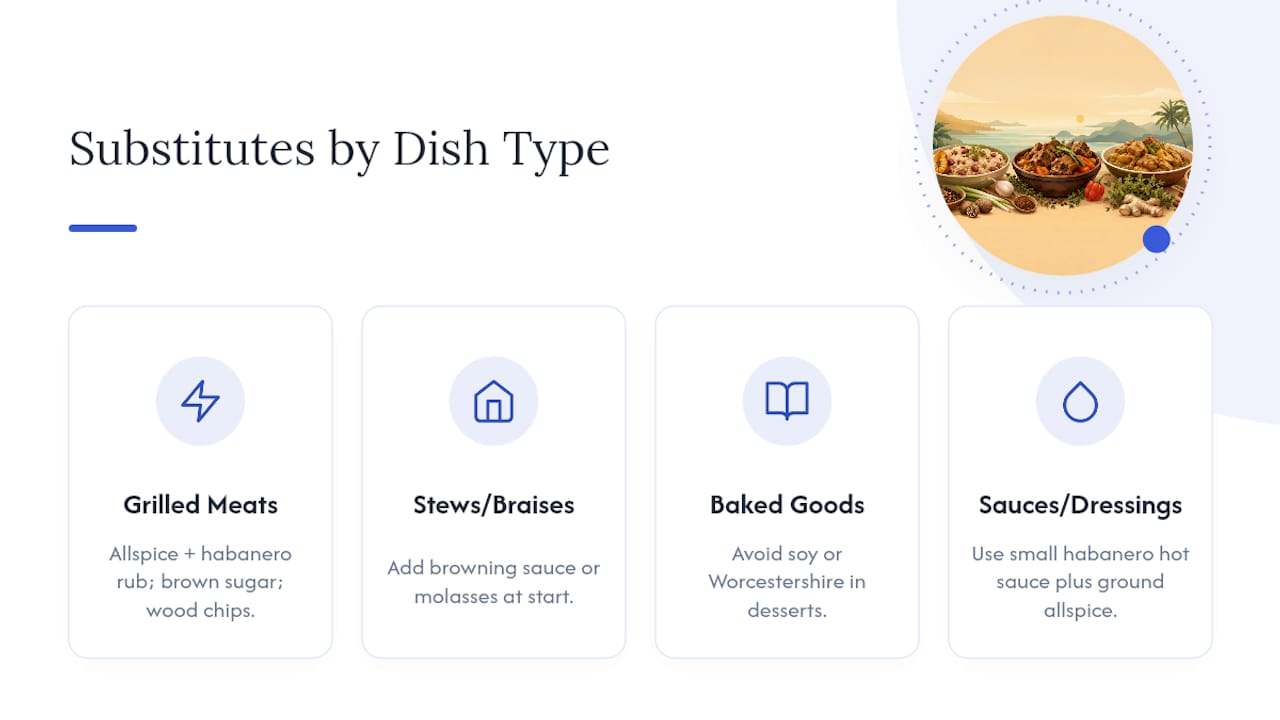
Pro Tip: For stews, add browning sauce or molasses at the beginning of cooking so the color and sweetness integrate fully. Added at the end, it can taste raw and sharp.
How to recreate smoke, crust, and depth without pimento wood
- Smoked paprika in the rub: Add ½–1 tsp per serving directly to your dry rub. It approximates the color and mild smokiness of pimento wood without any equipment.
- Wood chips on the grill: Cherry or apple wood chips are the closest grill-side substitute for pimento wood. Soak chips 30 minutes, then add to coals or a smoker box.
- Liquid smoke in the marinade: Add ½ tsp to a wet marinade only when grilling with wood chips isn’t possible. More than that and the artificial note becomes obvious.
- Oven sear and broil finish: Sear protein in a cast-iron pan over high heat, then finish under the broiler for 3–5 minutes. You get crust and caramelization without a grill.
- Brown sugar for bark: Brown sugar in the rub caramelizes under heat and creates the sticky, slightly charred exterior that’s part of jerk’s texture.
Start heat at 50–75% of the suggested habanero or cayenne quantity. Taste the marinade before applying, then adjust. Heat is easier to add than to remove.
Pro Tip: Add ½ tsp liquid smoke to a wet marinade only when you genuinely can’t grill with wood chips. Use it sparingly; a little goes a long way before it starts tasting like a chemistry set.
When to use substitutes vs. when to buy the real thing
Pantry substitutions work well for weeknight cooking, quick marinades, and dishes where the spices are one of several flavor layers. For a signature jerk chicken you’re serving to guests, or a Jamaican fruit cake at the holidays, the real ingredients make a difference that substitutes can’t fully close.
Whole allspice berries, fresh scotch bonnet peppers, and quality browning sauce are the three items worth sourcing authentically when the dish matters. For Atlanta-area cooks, Tojexpress stocks these Caribbean staples in-store and online, including Caribbean spices selected for authentic flavor. The store’s curated pantry means you’re not hunting through generic grocery aisles for ingredients that may not even be stocked.
Short buying checklist for your first authentic jerk pantry:
- Whole allspice berries (grind fresh as needed)
- Fresh thyme or quality dried thyme
- Scotch bonnet peppers or habanero as a close substitute
- Browning sauce or dark molasses
- Brown sugar
Tojexpress carries the Caribbean pantry staples you actually need
If you’ve been working around substitutes because authentic Jamaican ingredients are hard to find locally, Tojexpress solves that directly. The store carries a curated selection of Caribbean pantry items, including whole allspice, jerk blends, browning sauce, habanero products, and brown sugar, available for online order or in-store pickup in the Atlanta area.

Beyond the spices themselves, Tojexpress’s blog includes Antonio’s how-to guides on Caribbean cooking, so you’re not just buying ingredients but learning how to use them. The Caribbean pantry checklist is a good starting point for stocking up. Browse the Tojexpress snacks and pantry collection to find what you need for your next jerk recipe.
Sources
The substitution ratios and technique guidance in this article draw from the following sources:
- Jerk seasoning substitute | PepperScale
- Jerk seasoning substitute | Spiceography
- 7 BEST Browning Sauce Substitutes - Pantry & Larder
- Jamaican Jerk Seasoning (dry spice mix) - Food Fidelity
- Best browning sauce substitutes | Tasting Table
- Jerkpit
- Jamaican Jerk Seasoning for 15 Minutes - Kitchen20
For deeper guidance on Caribbean spice selection and Atlanta-area sourcing, visit the Tojexpress blog and Antonio’s full series on Caribbean cooking.