

2 Heaping Tbsp per lb: Green Seasoning Uses for Caribbean Home Cooks
TOJEXPRESS.COM-Antonio HenryGreen seasoning does three jobs in a Caribbean kitchen: it marinates meat and seafood, it forms the aromatic base for curries, stews, and rice, and it finishes a dish as a fresh spoonful of sauce or dressing. Most cooks use it for at least two of those roles in the same meal. The details on dosage, timing, storage, and swaps follow below.
TL;DR:
- Store homemade or jarred seasoning in the fridge for up to two weeks and freeze in ice cubes for several months to maintain freshness.
- When marinating, chicken and pork benefit from up to 24 hours, while seafood should only marinate briefly to avoid texture changes.
- A smoother purée is best for dressings and rice, whereas coarser textures suit rubs and stews.
- Chief Green Seasoning offers consistent flavor for quick meals and can be diluted or boosted with fresh ingredients as needed.
Table of Contents
- Green Seasoning Uses at a Glance
- Recipe Examples You Can Cook Tonight
- How to Use Green Seasoning as a Marinade
- Storing and Batch-Prepping Green Seasoning
- Substitutions and Regional Variations
- Common Mistakes to Avoid
- What Antonio at TOJ Express Has Learned About Green Seasoning
- Reach for Chief Green Seasoning When Time Is Short
- Sources
Green Seasoning Uses at a Glance
If you already have a jar or a batch made, here’s where it earns its keep fastest. Green seasoning works as a marinade, a cooking base, a finishing touch, or a mix-in, and each application calls for a slightly different amount.
- Marinade for meat and seafood. Use about 2 heaping tablespoons per pound of chicken, pork, or beef, and closer to 1 to 1.5 tablespoons per pound for fish and shellfish, since seafood picks up flavor faster and can turn mushy with too much acid.
- Cooking base for curries, stews, and pelau. Sauté a spoonful in oil before adding your protein and liquid, or stir it in early so the herbs cook down into the sauce instead of floating on top.
- Rice dishes. About 1 tablespoon per cup of raw rice, added and cooked into the base rather than sprinkled on afterward, gives the grains real color and flavor instead of a garnish taste.
- Finishing spoonful. A small dollop on grilled or roasted meat right before serving brightens the plate the way a chimichurri would.
- Mix-ins. Whisk it into oil and vinegar for a salad dressing, fold it into softened butter for a compound butter, or stir it into beans, scrambled eggs, or pressed tofu for a quick flavor boost.
Texture decides which of these it’s suited for. A coarser, pesto-like grind holds up in a rub or a chunky stew, while a smoother purée blends more evenly into dressings and rice.
Recipe Examples You Can Cook Tonight
These aren’t full recipes so much as timing and ratio cheat sheets. Once you know the numbers, you can build almost any Caribbean-style dish around them.
- Marinated grilled chicken. Toss chicken thighs or breasts with a suitable amount of green seasoning per pound, plus a splash of oil. Marinate in the fridge for several hours (overnight if you have time), then grill over medium-high heat until the internal temperature hits 165°F. The sugars in the peppers and onion will char slightly, which is exactly what you want.
- Pelau-style rice. Brown your protein first, then stir in about 1 tablespoon of green seasoning per cup of raw rice before you add stock or water. Let the seasoning cook into the oil for a minute before the liquid goes in. Skipping this browning step is the most common reason pelau tastes flat.
- Fish stew. Sear or lightly fry fish fillets first to set the exterior, then simmer them in a tomato or coconut broth with 1 to 1.5 tablespoons of green seasoning per pound of fish. Add the seasoning to the broth, not directly onto raw fish, so it doesn’t overpower delicate flesh.
- BBQ wings or tofu. Marinate wings or firm tofu in green seasoning for at least an hour, then bake or grill, brushing on a reduced glaze (green seasoning mixed with a little honey or brown sugar) in the last 10 minutes. For more heat, blend in extra scotch bonnet; for a milder, sweeter version, swap in cubanelle or pimento peppers.
How to Use Green Seasoning as a Marinade
Dosage is the part most home cooks guess at, and guessing is where things go wrong. These ranges give you a real starting point:
- Meat: about 2 heaping tablespoons per pound.
- Fish and shrimp: 1 to 1.5 tablespoons per pound, since seafood is more delicate and absorbs flavor faster.
- Rice: roughly 1 tablespoon per cup, cooked in rather than added raw.
Marinating time varies by protein; delicate seafood needs only a short marination to avoid textural changes into something closer to ceviche. Chicken and pork do well anywhere from 2 hours to overnight. Beef, especially tougher cuts, benefits from a longer soak, up to 24 hours, since the connective tissue takes more time to absorb flavor.
Before you season anything, taste your green seasoning on its own. Many jarred and homemade versions skew salty, and stacking extra salt on top of an already-salted marinade is the fastest way to ruin a cut of meat.
Pro Tip: Use a vacuum-sealed bag or a zip-top bag with the air pressed out instead of an open dish. The marinade contacts more surface area, so you get even coverage with less seasoning overall.
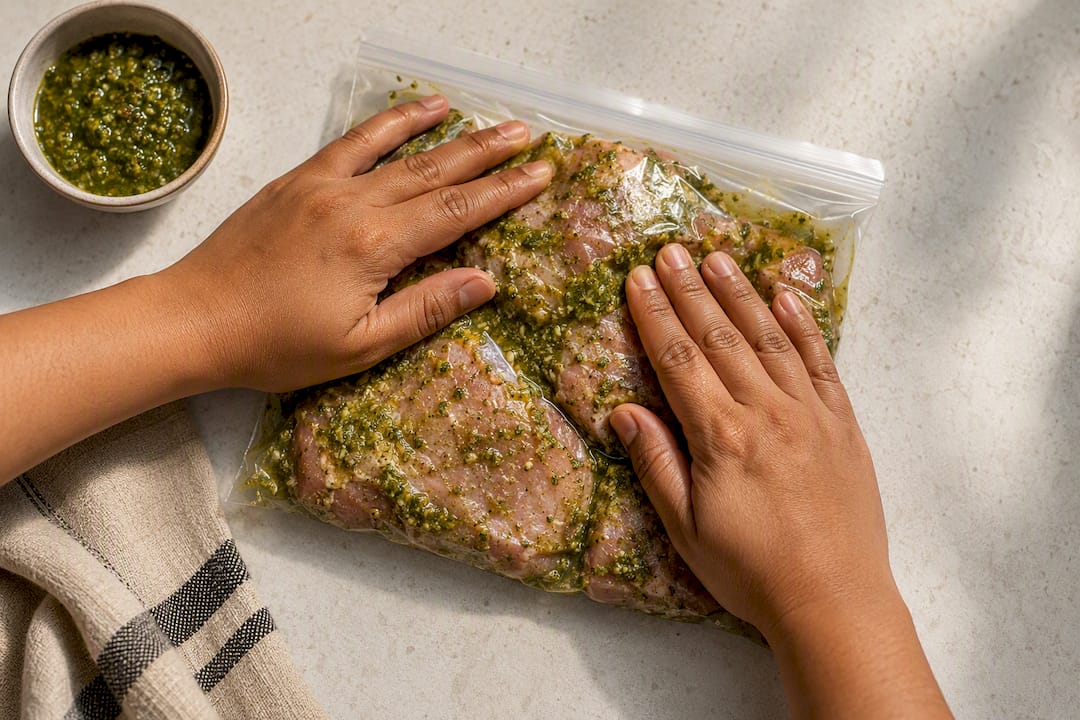
Rub thicker cuts by hand for better contact, and sear high-fat meats like pork shoulder before slow-cooking them so the exterior caramelizes instead of steaming in its own juices.
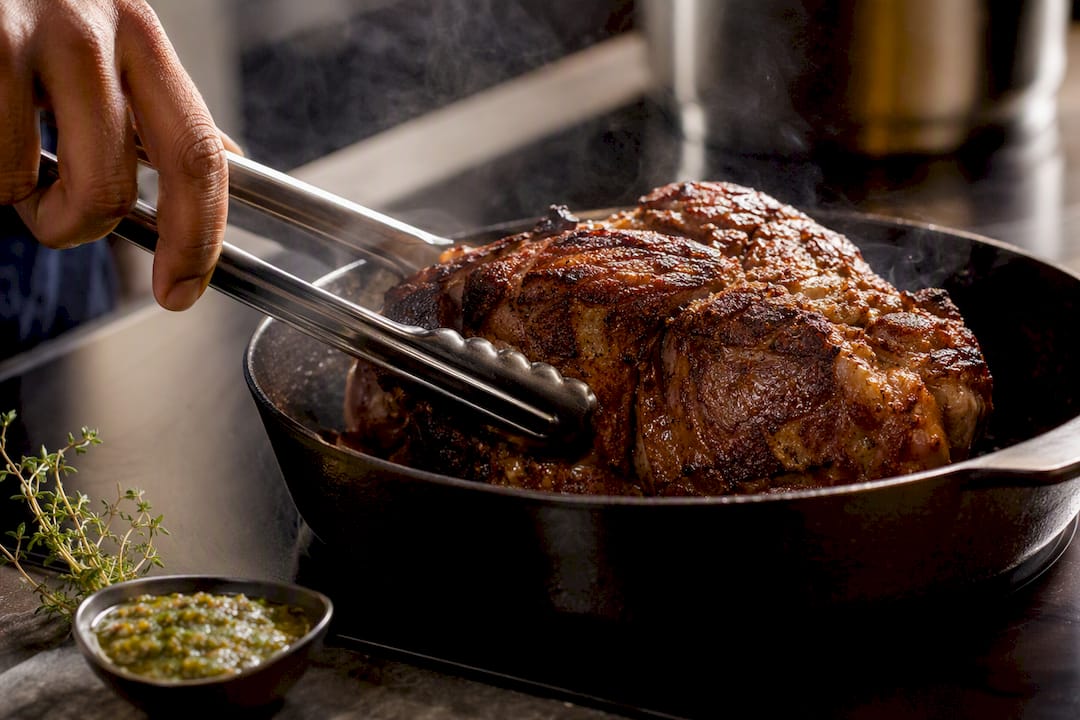
Storing and Batch-Prepping Green Seasoning
Made in a big batch, green seasoning keeps in the fridge for a couple of weeks, though raw onion and garlic shorten that window since they ferment faster than herbs alone. Watch for a sour smell or a change in color as your cue to toss it.
- Freeze extra portions in ice-cube trays or silicone molds, then transfer the frozen cubes to an airtight freezer bag to keep freezer burn off.
- Frozen cubes stay usable for several months.
- Drop frozen cubes directly into a hot pan for stews and curries; thaw them first if you’re making a raw dressing or a quick marinade.
- Label bags with the date. It’s easy to forget how old a freezer stash actually is.
- Vinegar helps hold the green color longer, but it will eventually oxidize and dull the seasoning, and it changes the flavor profile compared to a fresher, citrus-forward batch.
Substitutions and Regional Variations
Every island version of green seasoning leans on the same handful of herbs and peppers, just in different ratios. If cilantro is all you can find, it works in place of culantro, though culantro carries a noticeably stronger, almost soapy-sharp flavor that cilantro won’t fully replicate.
- Swap scotch bonnet for habanero if that’s what’s on the shelf; both bring serious heat, so start with less than you think you need.
- Prefer something milder? Pimento peppers or cubanelle keep the flavor without the burn.
- Fresh lime juice gives a brighter, more perishable seasoning; vinegar trades some of that brightness for a longer shelf life.
- Green seasoning, sofrito, and epis are close cousins and can stand in for each other in a pinch, but each has its own herb balance, so taste and adjust salt or acid after swapping.
Common Mistakes to Avoid
Most green seasoning problems trace back to a handful of habits. Taste before you salt anything else, since most blends already carry plenty. Match texture to task: coarse for rubs and stews, smooth for dressings and rice. If you’re freezing for later, go light on raw onion, since it’s usually the first ingredient to turn. And when your herbs are especially potent, culantro in particular, start with less than the recipe calls for and build up.
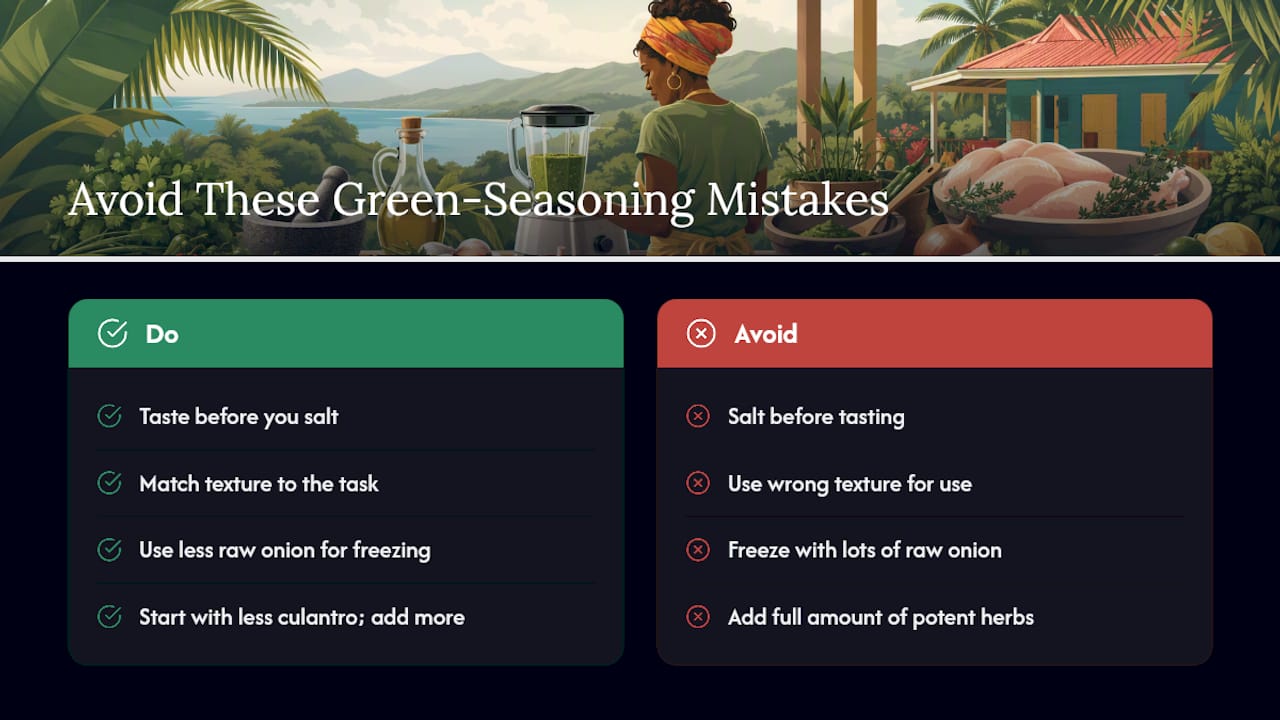
Pro Tip: Fresh herbs vary a lot in strength depending on the season, so treat every recipe’s herb amount as a starting point, not a fixed rule.
What Antonio at TOJ Express Has Learned About Green Seasoning
Green seasoning rewards cooks who treat it as a tool, not a garnish. Antonio has watched TOJ Express customers use it three ways most often: batch-making a jar’s worth for the week, freezing cubes for weeknight stews, and keeping a favorite blend on hand for grilled meat. For more on how it stacks up against related bases, see the breakdown of sofrito versus green seasoning and a fuller ingredient primer on what Caribbean green seasoning actually is.
— ANTONIO
Reach for Chief Green Seasoning When Time Is Short
A jar of Chief Green Seasoning from TOJ Express gives you the same marinade, cooking base, and finishing sauce this whole guide has walked through, minus the chopping and blending. It holds a consistent flavor batch to batch, which matters when you’re following the dosage ranges above and don’t want to recalculate every time your homemade mix comes out stronger or weaker. If it tastes a little concentrated for a light dressing, thin it with a splash of oil or citrus juice; if you want more punch in a marinade, add fresh scotch bonnet or extra thyme straight into the jar. It’s especially handy for quick weeknight marinades, last-minute dressings, or a finishing spoonful when you don’t have 20 minutes to prep herbs from scratch. Check the Chief Green Seasoning product page to see current availability and get a jar into your fridge before the next time you’re standing over raw chicken with no plan.
Sources
For deeper dives, Simply Recipes covers dosage and freezing in detail, Food & Wine traces regional ingredient variation, and Bon Appétit breaks down texture and versatility.
- Caribbean Green Seasoning Recipe
- Turn Your Bounty of Herbs Into Trinidadian Green Seasoning | Bon Appétit