

Sofrito vs Green Seasoning: The Real Caribbean Difference
TOJEXPRESS.COM-Antonio HenrySofrito is a tomato-based seasoning rooted in Spanish-speaking Caribbean kitchens, while green seasoning is tomato-free and herb-forward, built around culantro and built for the English-speaking Caribbean. That single distinction, tomato or no tomato, decides almost everything else about color, acidity, and which dishes each one belongs in. Swap one for the other and your rice and beans will still taste fine, but it won’t taste like the dish you meant to make.
TL;DR:
- Substituting cilantro for culantro requires using significantly more due to flavor strength differences, which may alter the dish’s intensity.
- Replacing sofrito with green seasoning changes the dish’s color to green and reduces acidity, affecting overall flavor balance.
- Green seasoning can be stored for up to six months frozen or two weeks refrigerated, making batch preparation efficient.
- Using jarred or dried seasonings often results in a saltier flavor, so reducing added salt is recommended to avoid overpowering dishes.
- Regional variations, like culantro in Trinidad and tomato in Puerto Rican sofrito, reflect distinct culinary traditions worth respecting when customizing recipes.
Table of Contents
- Sofrito vs Green Seasoning at a Glance
- What Goes Into Each One?
- How Do You Actually Cook With These?
- Sofrito, Recaito, Epis, and Green Seasoning Explained
- How Long Does Green Seasoning Last?
- When Can You Substitute One for the Other?
- Sourcing These Ingredients as a Home Cook
- Why Regional Differences Are Worth Respecting
- Stock Your Kitchen for Both Traditions
- Sources
Sofrito vs Green Seasoning at a Glance
Sofrito reads warm and slightly sweet, thanks to tomato paste or fresh tomato blended with onion, garlic, and peppers. It’s the backbone of Puerto Rican and Dominican cooking, the thing that goes into the pot before the rice or beans do. Green seasoning skips the tomato entirely and leans on a wall of fresh herbs, culantro chief among them, giving it a sharper, grassier bite that’s closer to a marinade than a sauce base.
Sofrito works best for:
- Rice and bean dishes like arroz con gandules
- Bean and legume stews needing body and color
- Braised meats simmered low and slow
- Soups that need a savory tomato foundation
Green seasoning works best for:
- Marinating chicken, fish, or oxtail before cooking
- Curries and stews across Trinidad and Jamaica
- Finishing rice or callaloo with fresh herb flavor
- Quick weeknight marinades for grilling
Substituting one for the other changes the dish’s color and acidity noticeably. Sofrito will tint a pot orange-red; green seasoning keeps things green and grassy. Use them interchangeably only when you’re not chasing a specific regional flavor.
What Goes Into Each One?
Classic sofrito starts with onion, garlic, cubanelle or bell pepper, cilantro, and a tomato element, either paste or fresh tomato, sometimes rounded out with ají dulce peppers or a splash of oil. Some Dominican versions skip tomato paste for fresh tomato and add oregano; Puerto Rican recaito, a close cousin, drops the tomato altogether and stays green.
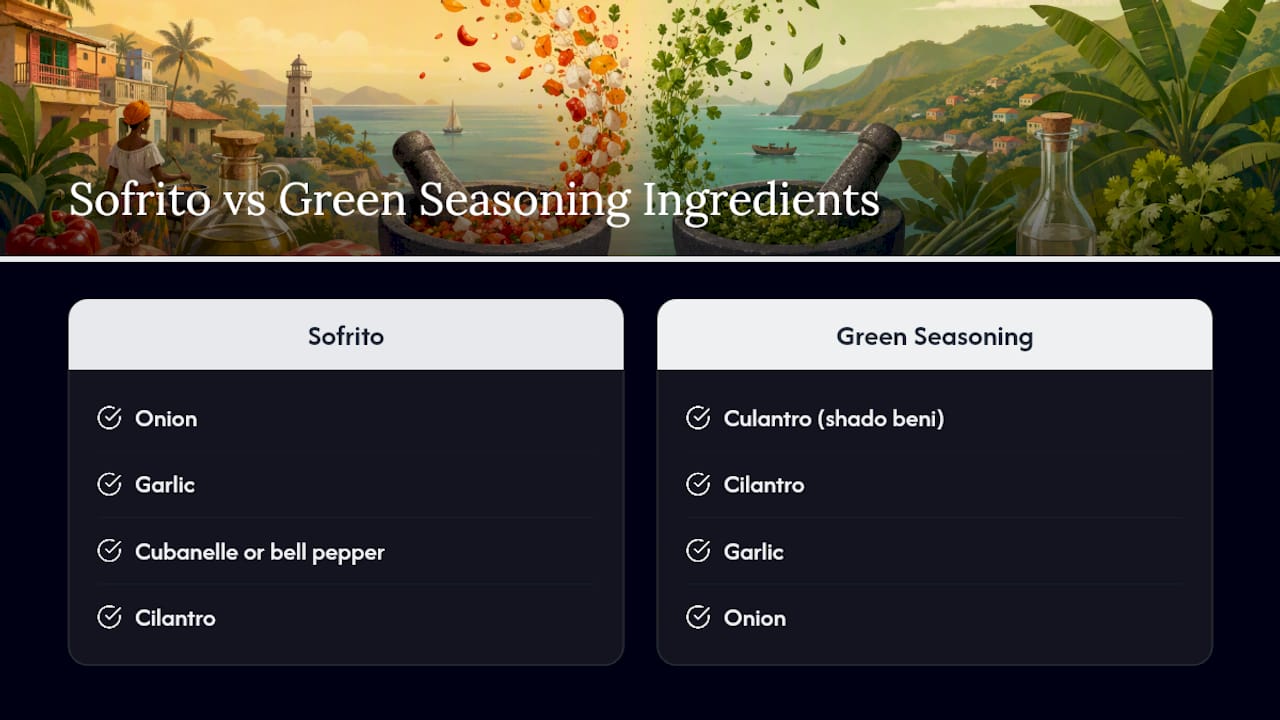
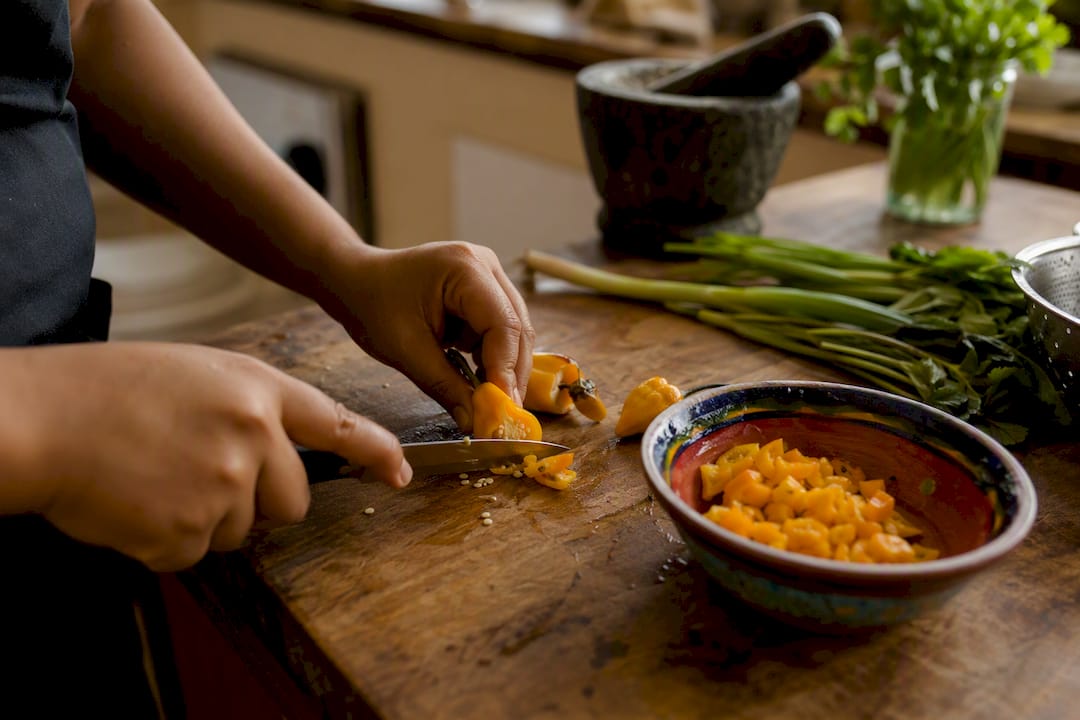
Green seasoning is a different animal. The base usually includes culantro, cilantro, garlic, onion, celery, chive, thyme, and a hot pepper like Scotch bonnet or habanero, blended into a loose, spoonable paste. Culantro, also called shado beni, is the herb that makes or breaks it. It looks like a jagged, long-leafed cousin of cilantro but tastes earthier and more intense, with a flavor that lingers longer on the tongue than cilantro’s brighter, more fleeting note. Culantro’s punch doesn’t translate one-to-one to cilantro, so recipes built around it taste noticeably softer when cilantro stands in alone.
Heat calibration matters just as much as herb choice. A whole Scotch bonnet blended in with seeds intact will produce a green seasoning hot enough to clear sinuses, while a seeded, deveined pepper gives you the fruity flavor without the fire. Cooks routinely adjust pepper quantity to match whatever protein they’re marinating, since a heavier cut like oxtail can handle more heat than a delicate fish fillet.
How Do You Actually Cook With These?
Both seasonings do their real work before the pot ever hits the stove, but they play different roles once you’re cooking.
- As a marinade: Rub green seasoning directly onto chicken, fish, or goat, then let it sit anywhere from 30 minutes to overnight in the fridge. The herbs and acid start breaking down the surface of the meat, deepening flavor without a formal marinade recipe.
- As a cooking base: Sofrito goes into hot oil first, sautéed for a few minutes until the tomato and aromatics soften, forming the flavor foundation for rice, beans, or a braise.
- As a finishing touch: Stir a spoonful of green seasoning into rice or callaloo right at the end of cooking for a fresh herbal lift that survives high heat cooking.
Home cooks often treat green seasoning like a Caribbean pesto, versatile enough for marinating one night and finishing a soup the next. Sofrito’s tomato backbone makes it the better fit whenever a dish already leans on tomato, beans, or a slow braise.
Sofrito, Recaito, Epis, and Green Seasoning Explained
These pastes are cousins, not twins, and the differences carry real weight in the pot. Epis, sofrito, and green seasoning share a function but diverge on tomato use, oil, and acid.
- Sofrito (Puerto Rico, Dominican Republic): tomato-based, often includes ají dulce.
- Recaito (Puerto Rico): sofrito’s tomato-free sibling, still built on cilantro and peppers.
- Epis (Haiti): a raw, garlicky herb paste with citrus or vinegar for acidity, used as both marinade and base.
- Green seasoning (Trinidad, Jamaica, Guyana): culantro-forward, tomato-free, built for marinating.
When a recipe calls for “sofrito,” check whether tomato appears in the ingredient list. No tomato usually signals recaito or a green seasoning variant instead, regardless of what the recipe title says.
How Long Does Green Seasoning Last?
Fresh green seasoning holds up well for about two weeks refrigerated and up to six months frozen, which makes batch prep worthwhile. Freeze it in ice cube trays, pop out a cube or two per use, and you’ve got portioned flavor ready without thawing a whole jar.
Blending technique affects texture more than most cooks expect. Working in two or three smaller batches, pulsing and scraping the sides between rounds, keeps the paste smooth instead of chunky in spots and stringy in others, and it saves your food processor’s motor from grinding through a dense load all at once. A pinch of salt and a splash of vinegar or citrus juice do double duty, seasoning the paste while extending its fridge life. For general batch cooking and freezing strategy beyond seasoning pastes, these meal-prep techniques apply just as well to a big Sunday cook-up.
Pro Tip: Thaw a frozen cube in the fridge overnight rather than the microwave. Fast thawing breaks down the herbs and leaves the seasoning watery and dull.
When Can You Substitute One for the Other?
Sometimes a straight swap works. Sometimes it wrecks the dish. Here’s how to tell the difference.
- Cilantro can stand in for culantro in a pinch, but use noticeably more, since culantro’s flavor runs stronger and earthier and cilantro alone tastes thinner by comparison.
- Sofrito can replace green seasoning in a stew or braise, but expect a redder color and a milder herb presence, since the tomato mutes the sharpness culantro provides.
- Jarred or dried seasoning blends usually run saltier than homemade versions, so cut back on added salt and stir in fresh herbs or a squeeze of lime to wake the flavor back up.
- No fresh herbs on hand? Blend parsley with a little extra garlic and a hot pepper for a rough stand-in. It won’t match culantro’s depth, but it beats skipping the seasoning step.
Culantro’s inconsistent availability at U.S. grocery stores is exactly why substitution comes up so often for cooks outside the Caribbean.
Sourcing These Ingredients as a Home Cook
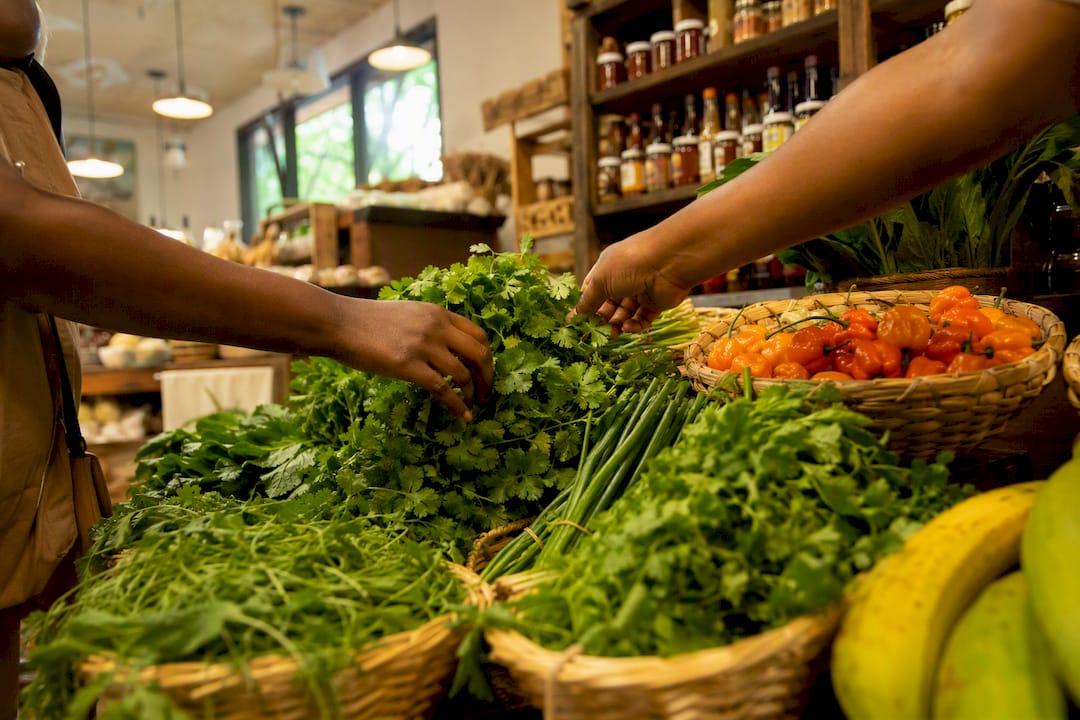
Tojexpress stocks the ingredients behind both traditions, from fresh aromatics to bottled versions for nights when blending from scratch isn’t happening. Culantro can be tough to find fresh depending on the week, and Scotch bonnet peppers vary in availability too, so having a frozen or bottled backup on hand keeps a recipe from stalling out mid-prep. Our green seasoning breakdown covers the regional adaptations in more detail, and our Caribbean sauces checklist is a solid starting point if you’re stocking a pantry for the first time. Before you shop, run through the basics: a hot pepper, a bundle of fresh herbs, and at least one shelf-stable jar for backup.
Why Regional Differences Are Worth Respecting
Sofrito and green seasoning didn’t develop in isolation. Each grew out of specific ingredients, trade routes, and household habits tied to particular islands, and flattening them into one generic “Caribbean seasoning” erases that history. I’d rather see a home cook get curious about why Trinidadian cooking leans on culantro while Puerto Rican cooking leans on tomato, then build their own blend from there, than see either tradition treated as interchangeable filler.
— ANTONIO
Stock Your Kitchen for Both Traditions
Tojexpress carries what both traditions actually call for, not a generic seasoning aisle substitute. If you’ve been improvising with whatever’s in the spice rack, that’s the real cost of not having the right ingredients on hand: flatter flavor and guesswork instead of the sharp, specific taste these seasonings are built to deliver.

Start with three things: a bundle of fresh culantro or cilantro, a Scotch bonnet pepper for heat, and a shelf-stable jarred sofrito or green seasoning for backup on busy weeknights. Browse Tojexpress’s Caribbean seasoning selection to build out your pantry, and check our substitute guide if a specific fresh herb isn’t in stock this week.
Sources
- Jerk Seasoning, Sofrito, and Green Seasoning
- Culantro vs cilantro: how are they different?
- Green seasoning storage and meal-prep guidance
- Caribbean green seasoning recipe and notes