

Caribbean Green Seasoning: What It Is and How to Use It
TOJEXPRESS.COM-Antonio HenryWhat is Caribbean green seasoning?
Caribbean green seasoning is a fresh herb paste used to marinate meats, season seafood, and build flavor in stews, rice, and vegetables. Think of it as the Caribbean kitchen’s all-purpose flavor base, the first thing that goes on chicken before it ever sees a pan.
The core ingredients are:
- Culantro or cilantro (the leafy, aromatic backbone)
- Garlic and onion (the savory foundation)
- Scallions and fresh thyme
- Scotch bonnet or pimento peppers for heat and depth
- Parsley and basil in many versions
- Vinegar or lime juice for brightness and preservation
Top Chef winner Tristen Epps calls it the “lifeblood of marinating meat” in the Caribbean, and that description holds up across every island. The name shifts by region: it’s epis in Haiti, sofrito or sazón in the Dominican Republic, and simply “green seasoning” across Trinidad, Barbados, and the eastern Caribbean. Same idea, different accents.
Table of Contents
- How to make Caribbean green seasoning at home
- How you can use green seasoning in everyday cooking
- Why green seasoning matters across Caribbean culture
- Finding ingredients and smart substitutions in the U.S.
- Key Takeaways
How to make Caribbean green seasoning at home
The ingredient list is flexible by design. What you need:
- 1–2 bunches cilantro (or culantro if you can find it)
- ½ bunch parsley
- 1 small onion, quartered
- 4–6 garlic cloves
- 4 scallions
- A few sprigs of fresh thyme
- 1 pimento or Scotch bonnet pepper (adjust for heat)
- 1–2 tablespoons white vinegar or fresh lime juice
- Optional: ginger, basil, celery, red bell pepper
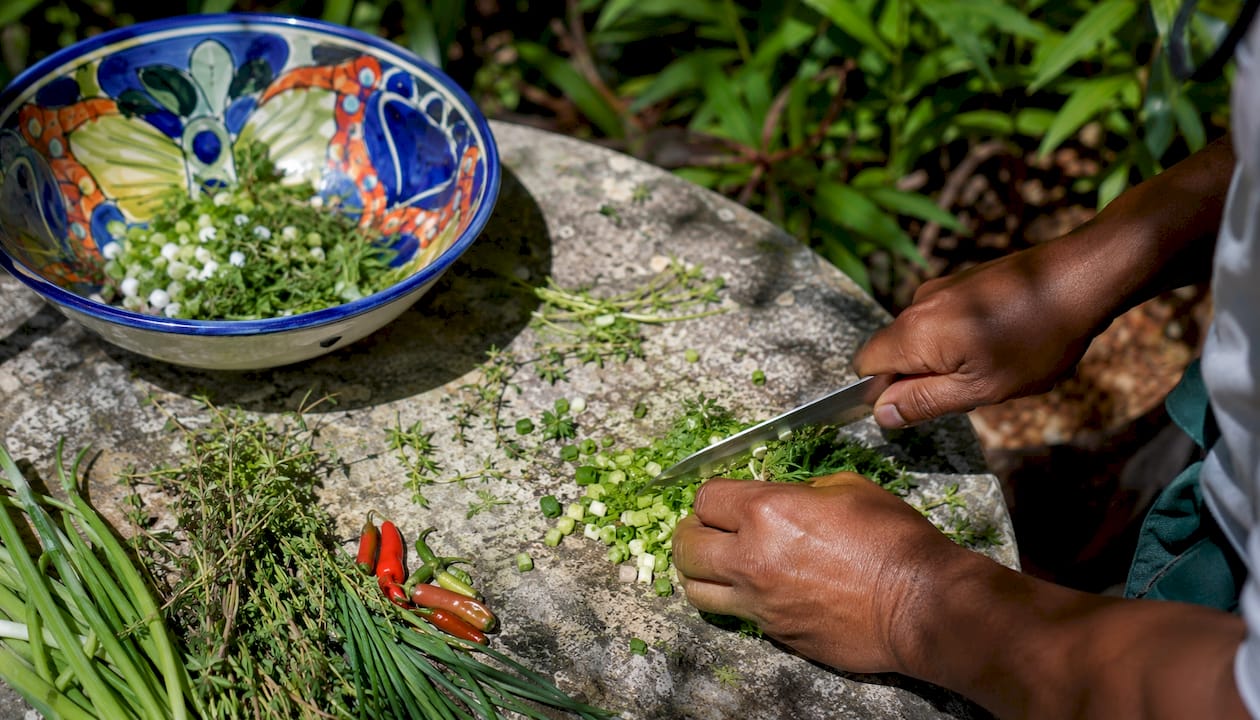
Rough-chop everything, then blend in a food processor or high-speed blender until you get a coarse, spreadable paste. Add a splash of water or extra vinegar only if the blender stalls.
Pro Tip: Process in two batches rather than cramming everything in at once. You get a more even texture and avoid the watery, over-blended result that kills the seasoning’s punch.
Keep salt out of the blend or use very little. Green seasoning already concentrates bold flavors, and many Caribbean dishes are seasoned further during cooking. Adding salt to the paste makes it easy to overshoot.
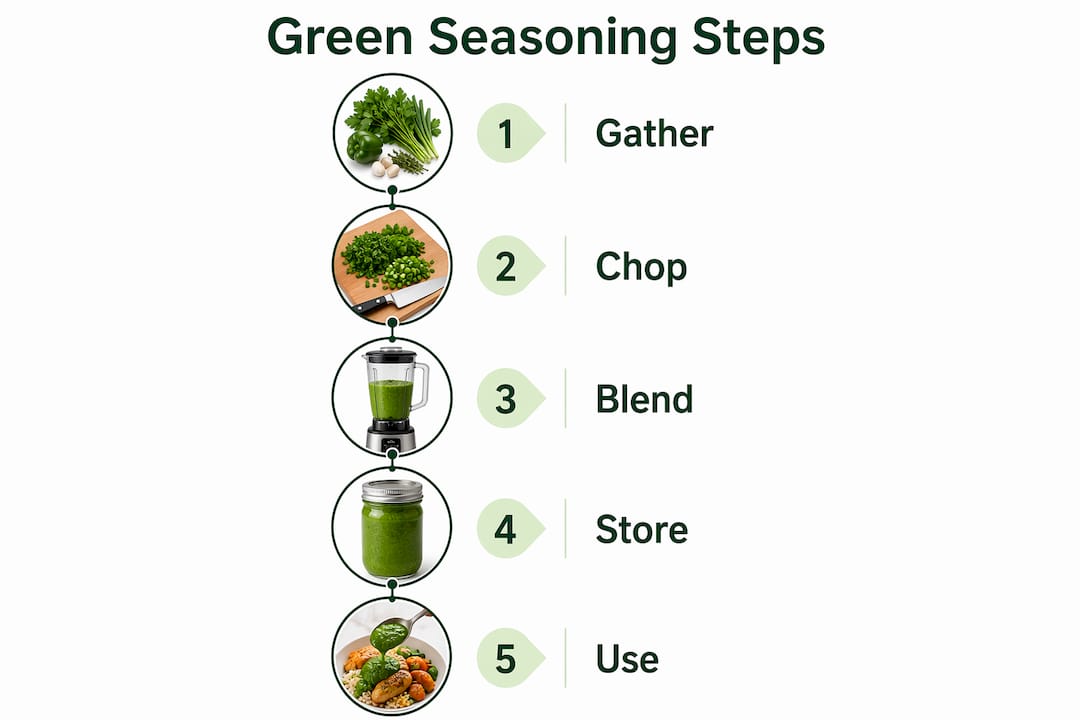
Store the finished paste in a sealed jar in the refrigerator for up to two weeks. For longer storage, freeze in ice cube trays and transfer the cubes to a bag once solid. They keep for up to six months and drop straight into a hot pan without thawing.
How you can use green seasoning in everyday cooking
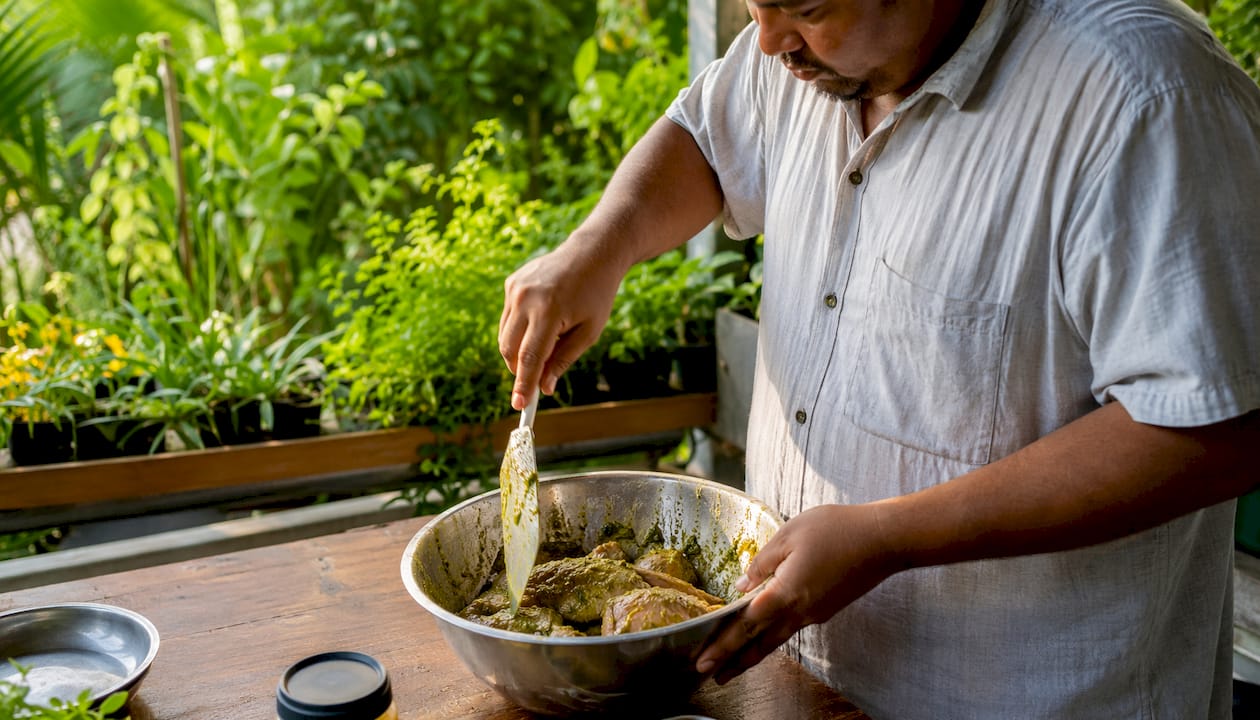
Green seasoning works differently from a dry rub. Because it’s a wet paste, it penetrates proteins and vegetables rather than just coating the surface, which means the flavor goes all the way through, not just on the outside.
Here’s where it earns its place:
- Meat and poultry marinades: Coat chicken, oxtail, or beef and refrigerate overnight. One to two tablespoons per pound is a reliable starting point.
- Fish and seafood: A shorter marinade, 30 minutes to an hour, is enough for fish fillets or shrimp before grilling or pan-frying.
- Stews and curries: Stir a few tablespoons into the pot early in cooking to build the flavor base.
- Rice and grains: Mix a spoonful into rice before it cooks, or stir it into couscous or quinoa after.
- Soups: Add near the end for a bright, fresh lift that dry spices can’t replicate.
- Plant-based proteins: Tofu, tempeh, and jackfruit all take the marinade well, making green seasoning a natural fit for vegan Caribbean cooking.
- Finishing sauce: A small spoonful over a finished dish adds a fresh, herby punch, though watch the salt level if the dish is already seasoned.
Why green seasoning matters across Caribbean culture
Green seasoning is not just a recipe. It’s the cornerstone of flavor in Caribbean home cooking, the thing that signals a dish was made with care rather than shortcuts. Most Caribbean cooks grew up watching a parent or grandparent blend a batch, and the specific ratio of herbs in any family’s version carries real meaning.
A few things that shape regional differences:
- Trinidad and the eastern Caribbean lean heavily on culantro (called “chadon beni” or “shadow beni” locally), garlic, and thyme, reflecting French and African culinary influences.
- Haiti’s epis often includes cloves and bell peppers alongside the standard herb base.
- Spanish-speaking islands like the Dominican Republic and Puerto Rico use sofrito, which tends to include tomatoes and annatto for color.
- Jamaica favors pimento seeds (allspice) and Scotch bonnet, giving its version a warmer, spicier profile.
No two family recipes are identical. The seasoning changes with the season and with what’s fresh at the market, which is exactly the point. That flexibility is a feature, not a flaw.
Beyond flavor, the herbs in green seasoning carry real nutritional weight. Thyme contains thymol, an antimicrobial compound that supports digestive health. Garlic and onions contribute allicin and quercetin, both linked to cardiovascular and anti-inflammatory benefits. Fresh herbs also make green seasoning a preservative-free alternative to commercial blends, which often rely on sodium and additives for shelf life. Choosing fresh prepared food over processed shortcuts is one of the clearest ways to control what goes into your meals.
Finding ingredients and smart substitutions in the U.S.
Culantro is the traditional choice, but it’s genuinely hard to find outside Caribbean, Latin, or Asian grocery stores. Cilantro is the standard substitute and works well in most recipes. The flavor is lighter and less bitter, but the herbaceous character carries through.
A few practical tips for U.S. cooks:
- Cilantro for culantro: Use roughly the same volume; cilantro is milder, so you may want a bit more.
- Parsley and basil: Both work as supporting herbs when thyme or culantro isn’t available.
- Peppers: Scotch bonnet is ideal but hard to find in many areas. Habanero is a close substitute for heat; pimento or Cubanelle peppers give flavor without much burn.
- Keep the base intact: Onion, garlic, and at least one fresh herb are non-negotiable. Everything else is adjustable.
- Vinegar vs. lime: Either works as the acidic element. White vinegar extends shelf life slightly; lime juice gives a fresher, brighter result.
Pro Tip: If you’re new to green seasoning, start with mild peppers and taste as you go. You can always add heat, but you can’t take it out once it’s blended.
Tojexpress carries a range of Caribbean herbs and spices that make it easier to source the real ingredients, including culantro and Scotch bonnet peppers, without hunting through multiple stores. For a deeper look at building Caribbean flavor from scratch, the Caribbean spice preparation guide on the Tojexpress site walks through marinade basics and spice blending techniques.

Key Takeaways
Caribbean green seasoning is a fresh herb and spice paste that functions as a marinade, flavor base, and finishing sauce across Caribbean cooking traditions.
| Point | Details |
|---|---|
| Core ingredients | Culantro or cilantro, garlic, onion, scallions, thyme, and peppers form the base. |
| Blending technique | Process in two batches for even texture and to avoid a watery result. |
| Storage life | Freeze in ice cube trays for up to six months without losing flavor. |
| Regional names | Called epis in Haiti and sofrito in the Spanish-speaking Caribbean. |
| U.S. substitution | Cilantro replaces culantro; habanero stands in for Scotch bonnet when needed. |