

Use Ackee Safely in U.S. Kitchens: Boil Fresh 15–20 Minutes
TOJEXPRESS.COM-Antonio HenryUse canned ackee if you can’t confirm that fresh pods split open on their own. If you’re working with fresh pods that opened naturally, remove the black seeds and pink membrane, then boil the arils in salted water until tender before adding them to anything. Handle ackee gently once it’s cooked. It bruises easily, so fold it into other ingredients instead of stirring hard.
TL;DR:
- Only use ackee pods that open naturally on the tree to avoid toxicity from unripe fruit containing hypoglycin A.
- Rinse fresh arils twice and boil in salted water for at least 15 minutes before consumption, discarding the water afterward.
- Canned ackee is a safer, more convenient option because it is processed from ripened fruit and does not require careful ripeness verification.
- Never pry open closed or partially cracked pods, and remove all black seeds and pink membranes to ensure safety and proper preparation.
- When using canned ackee, rinse thoroughly and reheat gently in water or skillet, adding last to dishes to prevent overcooking and preserve texture.
Table of Contents
- What Ackee Is and the Safety Rules You Must Follow
- Fresh vs Canned Ackee: How to Pick Which to Use
- How to Clean and Prepare Fresh Ackee
- How to Use Canned Ackee Without Ruining It
- A Testable Ackee and Saltfish Recipe
- Other Ways to Use Ackee Beyond the Classic Dish
- Troubleshooting Common Ackee Mistakes
- A Home Cook’s Take on Cooking Ackee
- Where to Buy Canned Ackee and Caribbean Pantry Staples
- Sources
What Ackee Is and the Safety Rules You Must Follow
Ackee grows on a tree, technically making it a fruit, but Jamaican cooks treat it as a savory ingredient closer to scrambled eggs than fruit salad. Only the peeled, ripe yellow arils, the fleshy lobes inside each pod, are edible. Everything else on the plant is off the table, literally.
The danger comes from hypoglycin A, a toxin concentrated in unripe ackee. It causes what’s known regionally as Jamaican vomiting sickness, and it’s serious enough that FDA import alerts restrict certain ackee shipments into the United States. Here’s the detail most people miss: boiling does not reliably destroy that toxin once you’ve forced a pod open before it was ready. Ripeness has to happen on the tree, not in your kitchen.
That’s why the rules around fresh ackee are strict:
- Only use pods that opened naturally on their own.
- Discard every black seed you find inside.
- Remove the pink membrane completely. It’s not garnish.
- Never pry open a closed or partially cracked pod.
Because canned ackee is processed from fruit harvested at the correct ripeness stage, it removes that judgment call entirely. If you’re cooking outside Jamaica and can’t personally verify a pod’s ripeness, canned ackee is the far safer starting point, and it’s what most home cooks in Atlanta and similar cities reach for anyway.
Fresh vs Canned Ackee: How to Pick Which to Use
Fresh ackee gives you more control over texture. Cooks who grew up with it often prefer the slightly firmer bite and the seasonal ritual of buying it when pods are splitting open at the market. But fresh ackee demands more from you: careful inspection, precise seed and membrane removal, and a full boil before it touches anything else.
Canned ackee trades a bit of that texture for total convenience and built in safety, since the processing already accounted for ripeness. For most home cooks, especially anyone shopping outside the Caribbean, canned is the practical answer.
A few things to check before buying either:
- Fresh pods: look for a natural split with visible yellow arils inside. A pod that’s cracked open by force, rather than by ripening, is not safe to eat regardless of how it looks.
- Canned ackee: read the label for whether it’s packed in brine or water, and stick with recognizable Caribbean food brands.
- Tin condition: avoid dented, bulging, or rusted cans.
Caribbean specialty grocery aisles carry canned ackee reliably, and online specialty retailers are a solid backup if your local store runs out. Home cooks in and around Atlanta looking for where to buy ackee generally find it easiest to source in tins rather than fresh.
How to Clean and Prepare Fresh Ackee
If you’ve got fresh pods that opened on their own, here’s the exact sequence to follow before anything hits the pan.
- Inspect every pod. Confirm it opened naturally. Toss anything that looks forced, damaged, or discolored.
- Pull out the arils. Discard the black seeds and the pink membrane surrounding them without exception.
- Rinse twice. A single rinse under running water often leaves debris behind, so give the arils a second pass.
- Boil in salted water. Start timing once the water returns to a full boil, and cook for 15 to 20 minutes.
- Test with a fork. Pierce the thickest part of an aril. It should give with almost no resistance when it’s done.
- Drain and discard the water. Never reuse it for stock or sauce.
Pro Tip: Set a timer the second the pot returns to a rolling boil, not when you first turn on the burner. A few extra minutes on either end changes the texture more than most recipes admit.
How to Use Canned Ackee Without Ruining It
Canned ackee arrives already cooked, which means your job shifts from cooking it to not overcooking it. Drain the can fully, then rinse the arils under cool water to strip away the brine or tin flavor that clings to them straight out of the can.
If you’re not sure how the can was processed, a short 2 to 5 minute simmer in fresh water is a reasonable extra step. Otherwise, a gentle 5 to 7 minute reheat in a skillet is plenty, since the fruit is already tender.
- Add the ackee last, after your other ingredients are cooked through.
- Fold it in with a spatula rather than stirring aggressively.
- Build flavor first with onion, scallion, bell pepper, and thyme over low heat before the ackee ever touches the pan.
Pro Tip: Think of canned ackee the way you’d treat already scrambled eggs you’re reheating. The goal is warming it through, not cooking it a second time.
A Testable Ackee and Saltfish Recipe
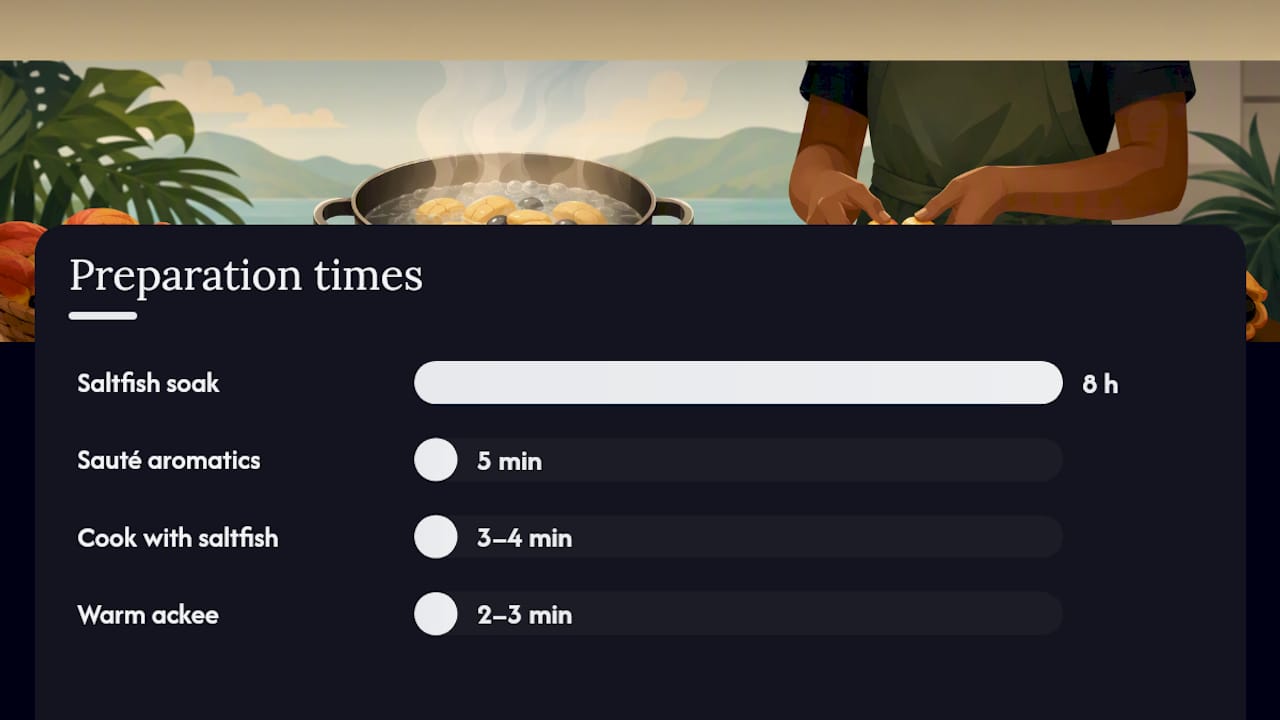
This is the dish most people picture when they think of ackee, and it’s a good way to put every rule above into practice.
Ingredients (serves 4):
- 1 can (19 oz) ackee, drained and rinsed, or 2 cups boiled fresh arils
- 1/2 pound saltfish (salted cod), desalted
- 1 medium onion, sliced
- 2 scallions, chopped
- 1 bell pepper, sliced
- 2 cloves garlic, minced
- 1 scotch bonnet pepper, whole (for heat without breaking it open)
- 2 sprigs fresh thyme
- 2 tablespoons vegetable oil
- Black pepper to taste
Method:
- Soak the saltfish in cold water for at least 8 hours, changing the water two or three times, to pull out excess salt.
- Boil the desalted saltfish until cooked through, then drain, cool, and flake it into bite sized pieces, discarding skin and bones.
- Heat the oil in a wide skillet over medium heat. Sauté onion, scallion, bell pepper, garlic, and thyme until softened, about 5 minutes.
- Add the flaked saltfish and the whole scotch bonnet, stirring to combine, for another 3 to 4 minutes.
- Add the ackee last. Fold it in gently once or twice, just enough to distribute the aromatics.
- Cook another 2 to 3 minutes on low heat, until warmed through, then remove the scotch bonnet before serving.
Serve with fried dumplings, boiled green bananas, or breadfruit. For a vegetarian version, swap the saltfish for sautéed mushrooms or jackfruit and season with extra thyme and a splash of soy sauce for depth.
Other Ways to Use Ackee Beyond the Classic Dish
Ackee’s creamy texture makes it a natural stand in for scrambled eggs in a vegan breakfast, especially when seasoned with turmeric for color and a pinch of nutritional yeast for savoriness.
- Toss cooked ackee into a quick stir-fry with garlic, bell peppers, and onions, added at the very end so it doesn’t break apart.
- Fold it into a mild curry base for a softer, richer finish than coconut milk alone provides.
- Pair it with rice and peas, fried plantain, or a light Caribbean stew for a fuller plate.
- Skip animal protein entirely and let ackee carry the dish on its own with sautéed vegetables.
Troubleshooting Common Ackee Mistakes
Mushy ackee almost always means it sat in the pan too long. Once it’s tender, pull it off the heat, since a few extra minutes turns firm arils into paste.
- If canned ackee tastes briny or metallic, an extra rinse or a short simmer in fresh water usually clears it up.
- Always fold, never stir hard, to keep the arils whole.
- Keep the heat low once ackee joins the pan. High heat breaks it down fast.
- Never eat seeds, pink membrane, or arils from a pod that didn’t open on its own, and always discard the water used to boil fresh ackee.
Pro Tip: If your ackee looks watery after cooking, your pan was too crowded. Cook it in batches so each aril actually touches the hot surface instead of steaming in a crowd.
A Home Cook’s Take on Cooking Ackee
The biggest mistake I see isn’t undercooking ackee, it’s treating it like a vegetable that needs to be broken down. Ackee wants to be handled like a finished ingredient, not a raw one. Stocking a reliable canned option takes the ripeness guesswork off your plate entirely. Try the saltfish recipe above, then poke around the site’s other Caribbean cooking guides for what to make next.
— ANTONIO
Where to Buy Canned Ackee and Caribbean Pantry Staples
Once you’ve got the technique down, sourcing good canned ackee becomes the real bottleneck for home cooks who don’t live near a Caribbean market. Tojexpress carries Jamaica Country Style Ackee alongside the seasonings, saltfish, and pantry staples that round out a full ackee and saltfish dinner, all available online and in store for Atlanta area shoppers in Stone Mountain, Decatur, Lithonia, Conyers, Tucker, Snellville, and Rockdale.

When you’re comparing tins, check the same things covered above: whether it’s packed in brine or water, the brand’s reputation, and the tin size relative to how many servings you need. If you’re stocking up for a full ackee and saltfish night or just want the seasonings on hand for a weeknight stir-fry, visit the Tojexpress storefront to place an order or check what’s in stock at your nearest location.