

Discover Caribbean Stew: Flavors, Traditions, Tips
TOJEXPRESS.COM-Antonio HenryTL;DR:
- Caribbean stew is a cooking philosophy emphasizing slow layering of bold flavors, not a single recipe.
- Key ingredients include marinated proteins, aromatic spices, root vegetables, and techniques like browning and slow simmering.
- Variations across the Caribbean adapt to local ingredients, reflecting a rich cultural exchange and tradition.
Caribbean stew is one of those culinary categories that gets flattened into a single image, a dark, thick pot of chicken or beef simmering on a stove. But that picture barely scratches the surface. Across the islands and into diaspora communities in cities like Atlanta, Caribbean stew represents a whole family of dishes shaped by centuries of cultural exchange, resourcefulness, and bold flavor. Whether you’re new to Caribbean cooking or already a fan, understanding what truly defines these stews will change how you cook and how you eat.
Table of Contents
- What is Caribbean stew? Origins and core concept
- Essential ingredients: What goes into a classic Caribbean stew
- How Caribbean stews are made: Key techniques, steps, and tips
- Popular variations: Jamaican, Trinidadian, Ital, and more
- Cooking Caribbean stew at home in Georgia: Local adaptations and serving tips
- Why Caribbean stews defy easy definition—and what that means for adventurous cooks
- Bring Caribbean flavors home with TOJ EXPRESS
- Frequently asked questions
Key Takeaways
| Point | Details |
|---|---|
| Technique over recipe | Caribbean stew is defined by its process and flavor layering, not a fixed ingredient list. |
| Bold core flavors | Essential ingredients include marinated proteins, root vegetables, bold spices, and rich gravies. |
| Regional diversity | Each Caribbean island brings its own stew tradition, from Jamaican brown stew to Trinidadian herbal versions. |
| Easy home adaptations | With simple ingredient swaps and sourcing tips, home cooks in Georgia can create authentic Caribbean stews. |
| Experimentation welcomed | Authentic Caribbean stew adapts to available ingredients and personal taste, making every pot unique. |
What is Caribbean stew? Origins and core concept
Caribbean stew is not a recipe. It’s a cooking philosophy. The technique shows up in Jamaican kitchens, Trinidadian homes, Guyanese Sunday meals, and Barbadian family gatherings, each version shaped by the ingredients on hand and the cook’s cultural memory. What unites them is a commitment to deep flavor built slowly, not quickly.
The roots of Caribbean stew run through multiple continents. African enslaved people brought knowledge of slow-cooked one-pot meals and the use of bold aromatics. Indian indentured laborers introduced curry spices and legume-heavy dishes. Indigenous Taino people contributed cassava, peppers, and cooking methods tied to the land. European colonizers added their own proteins and preservation techniques. The result is a culinary tradition that belongs to no single group but carries all of them.
“Caribbean stews emphasize patience and layering flavors, reflecting African, Indian, and indigenous influences; not one recipe but a technique adapting to local proteins and vegetables.”
This flexibility is not a weakness. It’s the whole point. A cook in Trinidad might use green seasoning and more herbs. A cook in Jamaica might lean on browning sauce and allspice. A cook in Georgia might swap in what’s available at the local market and still land something deeply authentic.
The core features that define Caribbean cuisine influences across stew traditions include:
- Proteins marinated for hours before cooking
- Aromatics built into every layer of the dish
- Low, slow heat that breaks down tough cuts
- Sauces that thicken naturally through reduction
- Spices that add heat, sweetness, and earthiness together
In diaspora communities across the American South, including Georgia, Caribbean products and culture keep these stew traditions alive and evolving. The dish travels with the people who make it.
With the mystery of Caribbean stew unveiled, let’s explore what goes into making these dishes so unique.
Essential ingredients: What goes into a classic Caribbean stew
The ingredient list for a Caribbean stew reads like a pantry tour of the tropics. Each component plays a specific role, and skipping even one can flatten the flavor significantly.
Proteins anchor the dish. The most common choices are:
- Chicken thighs or drumsticks (bone-in for best flavor)
- Beef chuck or stew cuts
- Goat (especially popular in Jamaican cooking)
- Oxtail (slow-cooked until fall-off-the-bone tender)
- Pork shoulder
- Kidney beans or chickpeas for plant-based versions
Root vegetables add body and absorb the stew’s rich gravy. Potatoes, carrots, and yams are the most common, and they’re added later in the cook so they don’t turn to mush.
Aromatics are non-negotiable. Garlic, onion, scallion, and fresh thyme form the base of almost every Caribbean stew. These are often blended into a green seasoning paste used for marinating.
Here’s a breakdown of the flavor-building components:
| Ingredient | Role in the stew |
|---|---|
| Scotch bonnet pepper | Heat and fruity depth |
| Allspice (pimento) | Warm, clove-like sweetness |
| Coconut milk | Creaminess and subtle sweetness |
| Browning sauce | Deep color and caramelized flavor |
| Thyme | Herbal backbone |
| Garlic and onion | Savory base |
As core ingredients like allspice and Scotch bonnet show, the spice profile is what separates Caribbean stew from a generic Western braise. These are bold, intentional flavors. Learning about essential Caribbean spices will help you understand why each one matters.
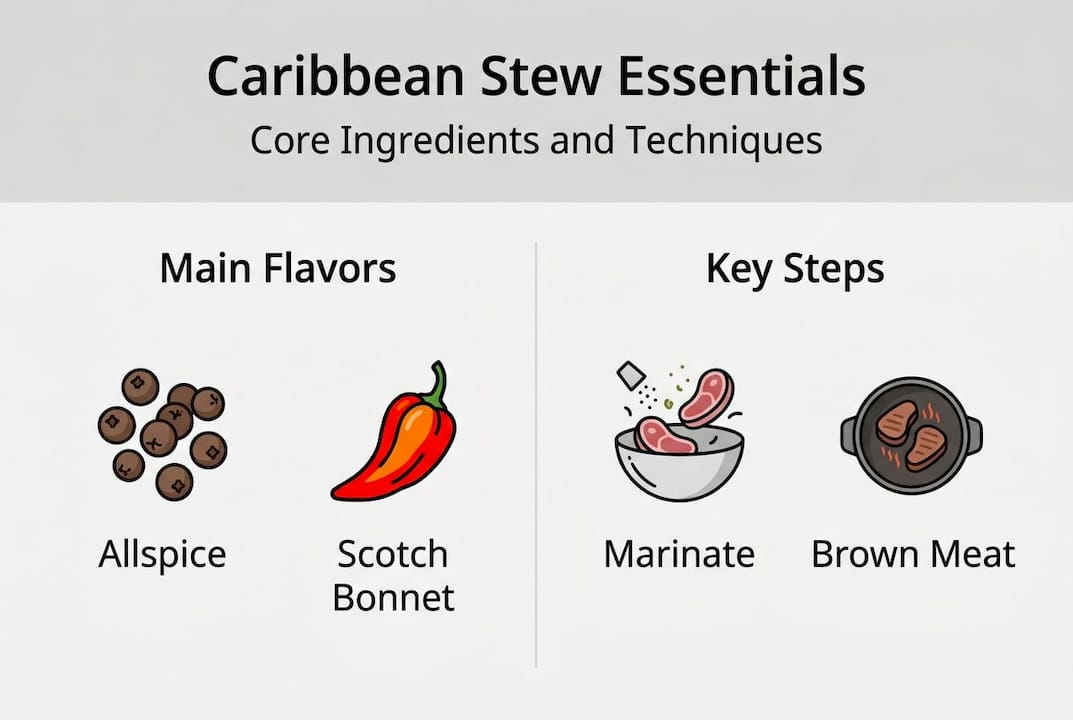
Pro Tip: Toast whole allspice berries in a dry pan for 30 seconds before grinding. The heat unlocks an aroma that pre-ground allspice simply can’t match.
For those selecting spices for authentic flavor, freshness is everything. Dried spices older than six months lose potency fast, and Caribbean stews depend on full-strength flavor at every stage.
Understanding the main components sets the stage for executing the dish. But how are these ingredients transformed into a stew? Let’s dive into the techniques.
How Caribbean stews are made: Key techniques, steps, and tips
The method matters as much as the ingredients. Follow these steps and you’ll understand why Caribbean stews taste the way they do.
- Marinate the protein. Coat your meat in green seasoning, garlic, thyme, scallion, and Scotch bonnet. Let it sit for at least one hour, ideally overnight. The longer the marinade, the deeper the flavor penetrates.
- Brown the meat. Heat oil in a heavy pot. Add sugar and let it caramelize until dark amber, then add the protein. This browning technique gives Jamaican stews their signature deep color and slightly sweet, smoky depth.
- Build the base. Add aromatics like onion, garlic, and peppers to the pot after browning. Scrape up the fond (the browned bits) from the bottom. That’s flavor.
- Add liquid and simmer low. Pour in stock, coconut milk, or water. Bring to a boil, then reduce to a gentle simmer. Cover and let it cook slowly.
- Add vegetables in stages. Hard root vegetables like yam and potatoes go in about halfway through. Softer additions like bell pepper go in near the end.
- Reduce the gravy. Remove the lid for the final 10 to 15 minutes. This thickens the sauce and concentrates the flavor.
The key cooking methodology of marinating, browning, and slow simmering is what separates a great Caribbean stew from a watery, flat one. Chicken takes 45 to 60 minutes. Oxtail or beef can take up to three hours.
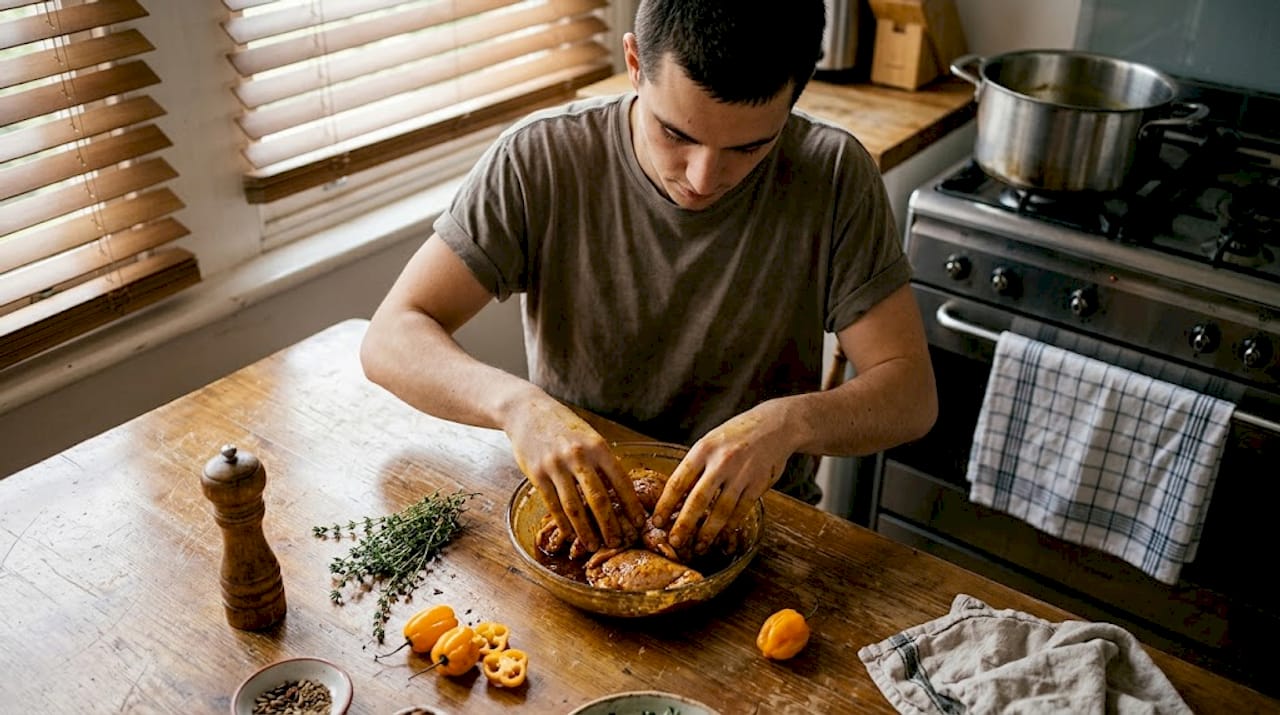
Pro Tip: When preparing Caribbean spices for your marinade, blend them wet with a splash of vinegar or citrus juice. This helps the seasoning cling to the meat and start tenderizing it immediately.
Using Caribbean seasonal ingredients when they’re at peak freshness also makes a real difference. And if you’re cooking in Georgia, knowing the top Caribbean seasonings available locally will save you time sourcing.
With the foundational techniques covered, you’ll notice that stews across the Caribbean aren’t all the same. Let’s compare some popular variations.
Popular variations: Jamaican, Trinidadian, Ital, and more
The Caribbean stew family is wide. Here are the most beloved regional styles:
| Style | Key features | Protein |
|---|---|---|
| Jamaican brown stew | Browning sauce, allspice, dark gravy | Chicken, oxtail |
| Trinidadian stew | Green seasoning, herbal, lighter color | Chicken, beef |
| Ital stew | Vegan, beans, root vegetables | Beans, tofu |
| Stew peas | Kidney beans, coconut milk, spinners | Pork, salt beef |
| Oxtail stew | Long cook, gelatinous, rich | Oxtail |
Popular variations like Jamaican brown stew and Trinidadian green seasoning versions show how geography shapes flavor. Jamaican cooks lean on browning sauce and allspice for that dark, caramelized profile. Trinidadian cooks favor a greener, more herbal base.
Ital cooking comes from Rastafarian tradition and avoids meat entirely. Ital vegan versions use beans and root vegetables with the same bold spice profile as meat-based stews. The result is hearty, satisfying, and completely plant-based.
For Georgia home cooks, the good news is that most variations are adaptable:
- Swap goat for lamb if goat is hard to find
- Use habanero instead of Scotch bonnet for similar heat
- Replace fresh thyme with dried in a pinch (use half the amount)
- Add a can of coconut milk to any version for a richer, creamier texture
Pro Tip: If you’re cooking oxtail for the first time, don’t rush it. Three hours at a low simmer is the minimum. The collagen in the bones melts into the gravy and creates that silky, thick texture you can’t fake with shortcuts.
Exploring Caribbean holiday stews is also a great way to see how these variations show up in celebration cooking across the islands.
Now that you know the spectrum of Caribbean stews, let’s get hands-on with practical cooking advice for Georgia home cooks.
Cooking Caribbean stew at home in Georgia: Local adaptations and serving tips
Georgia home cooks have more access to Caribbean ingredients than ever before. Atlanta especially has a strong Caribbean community with markets and specialty stores stocked with the real thing.
Here’s how to set yourself up for success:
- Find Scotch bonnet peppers at Caribbean or international grocery stores in Atlanta, or order them online. They’re worth seeking out for their fruity, floral heat that habaneros approximate but don’t fully replicate.
- Allspice berries are often sold whole in Caribbean markets. Buy whole and grind fresh for the best flavor.
- Browning sauce (like Grace or Kitchen Bouquet) is available at many Atlanta-area stores and online.
- Green seasoning can be made at home with scallion, thyme, garlic, parsley, and Scotch bonnet, or bought pre-made in bottles.
For Georgia home cooks sourcing ingredients, substituting habanero for Scotch bonnet works well in a pinch. The flavor is slightly different but the heat level is comparable.
Pro Tip: Caribbean stews freeze beautifully. Make a double batch on Sunday, portion it into freezer-safe containers, and you have weeknight meals ready to go for two weeks. The flavor actually deepens after a day or two in the fridge.
Serving the stew right matters too. Pair it with:
- Rice and peas (cooked in coconut milk with kidney beans)
- Steamed white rice
- Fried plantains
- Hard dough bread or roti for scooping
Knowing how to shop for Caribbean groceries in Atlanta makes the whole process easier. And if you want to keep your pantry stocked between shopping trips, check out Caribbean frozen food tips for smart storage ideas.
Having explored both tradition and adaptation, see why Caribbean stews offer more than meets the eye in the final perspective.
Why Caribbean stews defy easy definition—and what that means for adventurous cooks
Here’s the uncomfortable truth most cooking guides won’t tell you: there is no single “correct” Caribbean stew. Every recipe you find online is one cook’s version of a living tradition. The cooks who make these dishes best are the ones who understand the principles behind them, not the ones who follow measurements to the letter.
Authenticity in Caribbean cooking is about spirit, not strict formulas. It’s about patience with the simmer, respect for the marinade, and confidence with the spice. When you understand why browning creates depth, why marinating matters, and why root vegetables go in late, you stop needing a recipe. You start cooking.
The cultural flavor diversity behind Caribbean stews is exactly what makes them so rewarding to explore. There’s always a new variation to try, a new spice to understand, and a new technique to master. For Georgia home cooks, that’s not intimidating. That’s an invitation.
Bring Caribbean flavors home with TOJ EXPRESS
Ready to cook your first Caribbean stew or level up the one you already make? TOJ EXPRESS is your go-to source for authentic Caribbean and American products right here in Georgia.

From essential Caribbean spices to hard-to-find pantry staples, we stock the ingredients that make the difference between a good stew and a great one. Browse our full selection at TOJ EXPRESS and find everything you need to cook with confidence. We’re not just a store. We’re a resource for home cooks who take Caribbean flavor seriously.
Frequently asked questions
What makes Caribbean stew different from other stews?
Caribbean stews stand out because of their marinated proteins and browning technique, which creates a thick, savory-sweet gravy with layers of spice that most Western stews don’t have.
Can I make a vegetarian or vegan Caribbean stew?
Absolutely. Ital vegan versions use beans and root vegetables seasoned with the same bold spice profile as meat-based stews, and they’re just as satisfying.
What’s the best way to get Scotch bonnet peppers or allspice in Georgia?
Shop at Caribbean or international markets in Atlanta, or order online. If needed, substitute habanero for Scotch bonnet since the heat level is similar.
What is browning sauce, and why is it important?
Browning sauce adds deep color and a caramelized, slightly smoky flavor by searing in caramelized sugar before the protein is added. It’s a signature technique in Jamaican stews.
How long does it take to cook Caribbean stew?
Chicken stews take 45 to 60 minutes at a low simmer, while tougher cuts like oxtail or beef need 2 to 3 hours to become fully tender.