

Sorrel vs Hibiscus Tea: Same Plant, Different Traditions
TOJEXPRESS.COM-Antonio HenryBLUF: In most kitchens, sorrel and hibiscus tea start from the same plant, Hibiscus sabdariffa, but they’re not the same drink. Caribbean sorrel is a spiced, sweetened holiday punch made from dried hibiscus calyces, while hibiscus tea is a plain, tart infusion of those same calyces served worldwide, hot or cold, without the spice cabinet involved.
One caveat matters before you shop: “sorrel” occasionally refers to a completely different plant, garden sorrel in the Rumex family, which is a leafy green with a sour, lemony bite and nothing to do with tea at all. Check the label.
- Roselle: the horticultural name for the same hibiscus plant used in sorrel and hibiscus tea
- Agua de Jamaica: the Mexican and Central American name for hibiscus tea
- Bissap: the West African name for the same drink, often flavored with mint or ginger
Key Takeaways
Sorrel and hibiscus tea both come from Hibiscus sabdariffa, but sorrel adds spice and sugar for a festive Caribbean drink while hibiscus tea stays plain for everyday, health-focused drinking.
| Point | Details |
|---|---|
| Same plant, different drinks | Both sorrel and hibiscus tea typically use dried calyces of Hibiscus sabdariffa, not two separate plants. |
| Watch the Rumex mix-up | Garden sorrel (Rumex) is a leafy vegetable unrelated to tea; check labels for “Hibiscus sabdariffa.” |
| Spice makes the difference | Ginger, cloves, cinnamon, and orange peel turn plain hibiscus tea into Caribbean sorrel. |
| Health benefits favor unsweetened hibiscus | Clinical reviews link hibiscus to lower blood pressure, but sorrel’s sugar and rum reduce that benefit. |
| Check medication interactions first | Hibiscus can interact with blood pressure medication, so consult a doctor before daily use. |
| Source ingredients from Tojexpress | Tojexpress sells dried sorrel and the ginger, clove, and cinnamon spices this recipe requires. |
Table of Contents
- Sorrel Vs Hibiscus Tea: Sorting Out the Botanical Identity
- What Is Hibiscus Tea and How Is It Made Around the World?
- Flavor and Culinary Differences Between Sorrel and Hibiscus Tea
- How to Make Hibiscus Tea and Caribbean Sorrel at Home
- Health Benefits and Cautions Worth Knowing Before You Brew
- Why Sorrel Means Christmas and Hibiscus Tea Means Any Day
- Why Trust This Guide on Sorrel and Hibiscus Tea
- What This Guide Gets Right That Most Recipe Sites Miss
- Shop Dried Sorrel and Caribbean Spices at Tojexpress
- Sources
Sorrel Vs Hibiscus Tea: Sorting Out the Botanical Identity
Caribbean sorrel almost always comes from Hibiscus sabdariffa, a tropical shrub grown for its fleshy red calyx, the part left behind after the flower drops. Cooks dry that calyx, then steep it into the deep crimson liquid that becomes both hibiscus tea and Christmas sorrel. In the United States, extension horticulture programs often call this same plant Florida cranberry or Jamaica sorrel, a naming overlap that trips people up at the grocery store, according to UF/IFAS Gardening Solutions.
Garden sorrel, the Rumex species you might know from French sorrel soup, is an entirely different plant. It’s a leafy vegetable, not a flower calyx, and it carries high oxalate levels that make it unsuitable in large quantities for people prone to kidney stones. Confusing the two isn’t dangerous if you’re just making tea, but it explains why recipes calling for “sorrel leaves” and recipes calling for “dried sorrel” for drinks are talking about two unrelated plants entirely.
- Look for “Hibiscus sabdariffa” printed on the package, not just “sorrel”
- Dried calyces look like small, dark red, papery petals, not green leaves
- If a recipe calls for boiling leafy greens, you’ve found garden sorrel, not the tea plant
Roselle calyces are typically harvested and dried for storage, which is exactly why Caribbean households can stock dried sorrel year round and still associate the drink with a specific holiday season.
What Is Hibiscus Tea and How Is It Made Around the World?
Hibiscus tea is the simplest version of this drink: dried calyces steeped in hot water, strained, and served plain or lightly sweetened. No spice blend, no ceremony, just a tart, ruby colored infusion that tastes something like cranberry juice crossed with citrus. Most recipes call for a handful of dried calyces per quart of water, a steep of five to ten minutes, and a strain before drinking hot or over ice.
The drink goes by different names depending on where you land. In Mexico and Central America it’s Agua de Jamaica; in Egypt and Sudan, karkadé; in Senegal and much of West Africa, bissap; in Nigeria, zobo, often spiked with ginger and pineapple peel. All of them draw from the same calyx, prepared with minimal fuss.
On store shelves, you’ll typically find three forms:
- Loose dried calyces, sold in bags, best for strong, customizable brews
- Tea bags, pre-measured and convenient but often weaker
- Powdered extract, used more in blended beverages and cocktails than traditional tea
Look for these in the international or tea aisle, sometimes labeled hibiscus, sometimes karkadé, sometimes just “flor de Jamaica.”
Flavor and Culinary Differences Between Sorrel and Hibiscus Tea
Plain hibiscus tea tastes bright and sharply tart, close to unsweetened cranberry juice with a floral edge. Sorrel takes that same base and layers in warmth: ginger, cloves, cinnamon, allspice, and orange peel turn a simple tart infusion into something rounder and more complex, almost like spiced cider with a tang running through it.
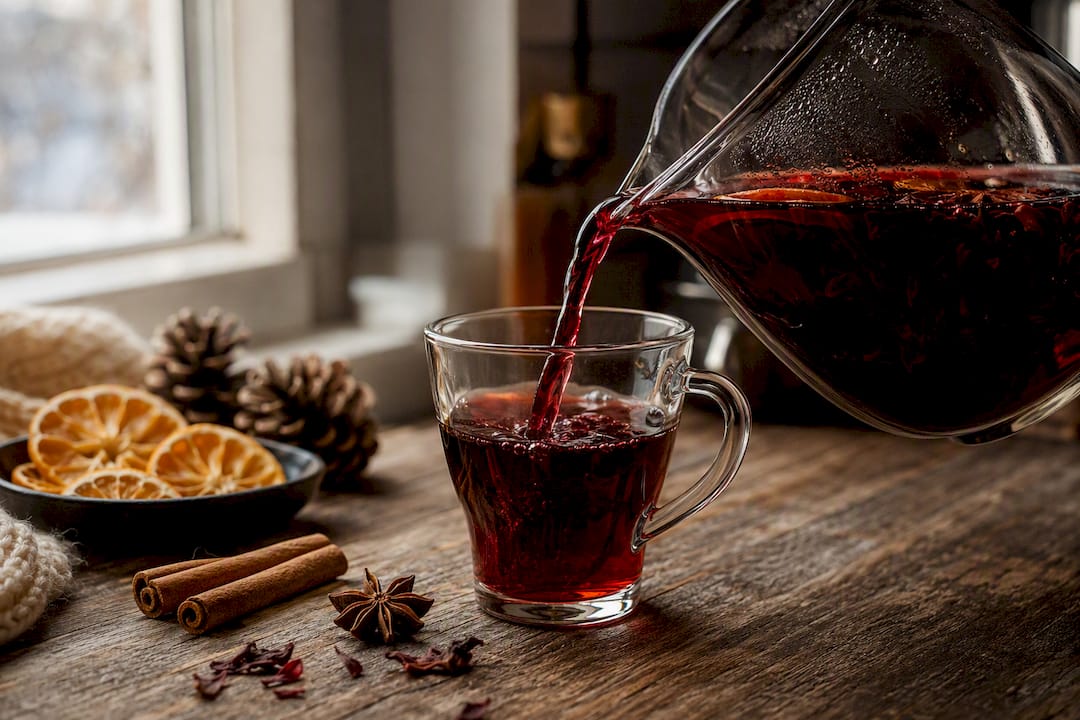
The spices don’t just add flavor, they change how the tartness reads on your palate, as shown by these vibrant food presentations that inspire creative ways to serve sorrel and hibiscus tea. Ginger sharpens the finish, cloves and cinnamon add a lingering warmth that tames the sourness, and orange peel bridges the two with a citrus note that echoes the hibiscus itself. Sugar does real work here too, since sorrel is traditionally served sweet enough to balance all that spice, while hibiscus tea is often left unsweetened or barely touched with honey.
- Pure hibiscus: tart, cranberry-like, clean finish, best served cold with ice
- Spiced sorrel: warm, layered, festive, traditionally served chilled after a long steep
- Rum or dark rum is a common addition to sorrel for holiday gatherings, never to plain hibiscus tea
Pro Tip: If your sorrel tastes flat, you probably under-spiced it, not under-sweetened it. Add a cinnamon stick and let it steep an extra 20 minutes before reaching for the sugar.
For serving, hot spiced sorrel works well as a winter welcome drink, while chilled versions of either drink make better warm weather refreshers. A splash of orange juice or a slice of lime brightens both.
How to Make Hibiscus Tea and Caribbean Sorrel at Home
Basic hibiscus tea:
- Bring 4 cups (about 1 liter) of water to a boil.
- Remove from heat and add ½ cup (about 15 grams) dried hibiscus calyces.
- Steep 8 to 10 minutes, then strain.
- Sweeten to taste or serve plain, hot or over ice.
Caribbean sorrel:
- Combine 2 cups dried sorrel (hibiscus calyces), 2 to 3 inches of fresh ginger (sliced), 6 whole cloves, one cinnamon stick, and the peel of one orange in a large pot.
- Add 8 cups (about 2 liters) of water and bring to a gentle simmer, never a hard rolling boil.
- Simmer 15 minutes, then remove from heat and let steep, covered, for at least 4 hours or overnight in the refrigerator.
- Strain, sweeten generously with sugar or simple syrup, and add rum if desired.
- Serve well chilled, garnished with a cinnamon stick.
Turning plain hibiscus tea into a stand-in for sorrel is a legitimate shortcut when you’re short on time. Steep your hibiscus tea slightly stronger than usual, then simmer it briefly with fresh ginger, a cinnamon stick, and a few cloves for 10 minutes before chilling. Add sugar last, once the spices have had time to infuse, so you’re not oversweetening before you know the final flavor balance.
- Never boil dried calyces at a hard rolling boil for long stretches, since that pulls out excess tannins and turns the drink bitter
- A gentle simmer or true cold brew produces a smoother cup with far less harsh edge
- If your batch turns bitter anyway, a splash of orange juice or extra sugar can mask it in a pinch
For more ideas on balancing spice blends and building layered Caribbean drinks, Tojexpress’s guide to blending Caribbean drinks walks through ratios that work well for both sorrel and other spiced infusions.
Health Benefits and Cautions Worth Knowing Before You Brew
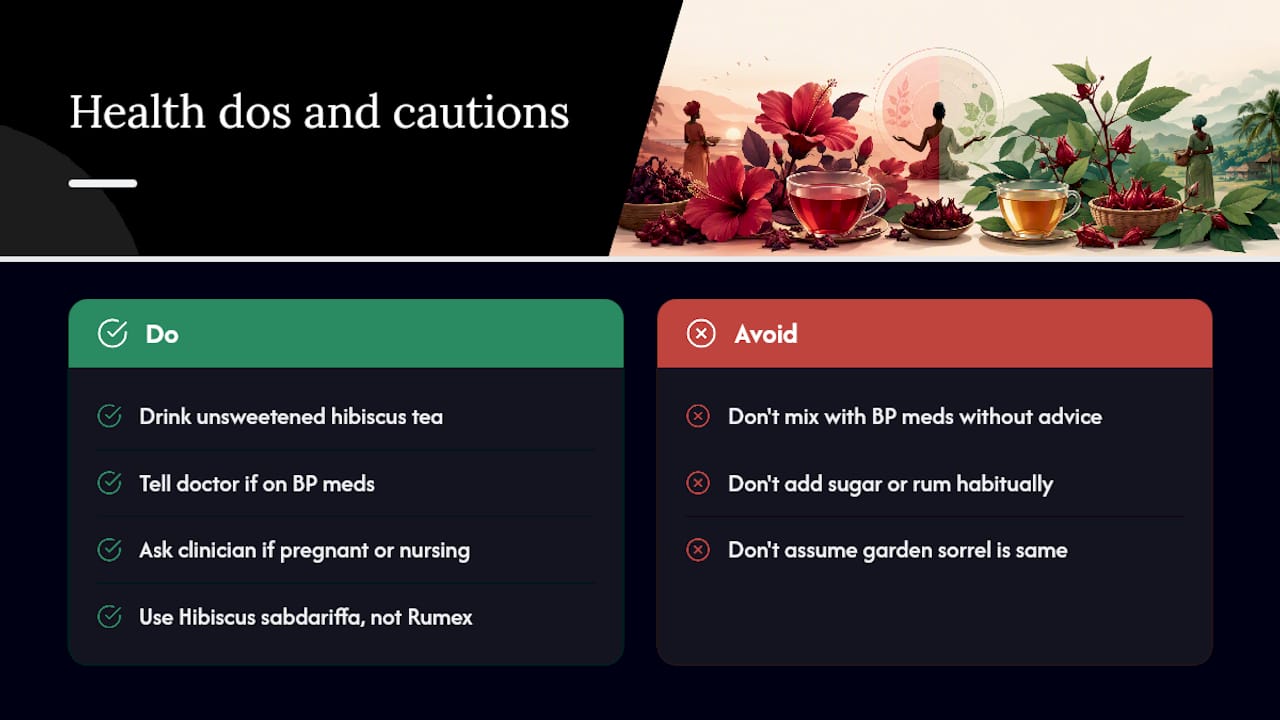
Hibiscus sabdariffa has real clinical backing for one specific effect: lowering blood pressure. Reviews of clinical trials and pharmacological studies report that daily consumption of hibiscus, sometimes called “sour tea” in the research literature, can reduce both systolic and diastolic blood pressure, with some studies showing effects sometimes comparable to standard antihypertensive agents, according to a pharmacological review of sour tea. The calyces are also rich in anthocyanins and vitamin C, the same pigments responsible for that deep red color, which contribute antioxidant activity beyond the blood pressure effect, per botanical overviews of roselle.
The same review that documents hibiscus’s blood pressure benefits also flags a real caution: hibiscus may interact with prescription antihypertensive drugs, potentially amplifying their effect, and animal studies suggest it can reduce absorption of certain medications like captopril.
That interaction risk means anyone on blood pressure medication should talk to a doctor before making hibiscus tea or sorrel a daily habit, not an occasional holiday treat. Pregnant or breastfeeding readers should also check with a clinician first, since safety data in that population remains limited. And remember, this evidence applies to Hibiscus sabdariffa specifically, not to garden sorrel (Rumex), which carries its own oxalate-related concerns and isn’t the plant used in any of these teas.
For the actual health upside, skip the sugar. Traditional sorrel’s added sugar and occasional rum meaningfully cut into the antioxidant benefit you’d get from a plain, unsweetened hibiscus infusion.
Why Sorrel Means Christmas and Hibiscus Tea Means Any Day
Sorrel’s tie to Christmas in Jamaica, Trinidad, and across the Caribbean isn’t arbitrary. Roselle plants are photoperiod sensitive and tend to flower in late summer or early fall in warm climates, which means the calyces get harvested and dried right around the time families start prepping for December, according to UF/IFAS production notes. That harvest rhythm turned into a holiday tradition, with families gathering to make big batches together, often passing down spice ratios like heirlooms.
Elsewhere, hibiscus never carried that seasonal weight. In West Africa, Latin America, and Egypt, it’s simply what you drink on a hot afternoon, no holiday required. As Caribbean families moved abroad, sorrel recipes traveled with them, adapting to local sugar preferences and whatever spices were easiest to find on American grocery shelves.
- Jamaica and Trinidad: sorrel as a Christmas centerpiece, often homemade in bulk
- West Africa and Egypt: hibiscus as a daily refresher, no seasonal tie
- Diaspora kitchens: recipes adjusted for available spices and family sweetness preferences
Why Trust This Guide on Sorrel and Hibiscus Tea
This guide draws on horticultural extension research, published pharmacological reviews, and encyclopedic botanical references rather than recipe blogs guessing at Latin names. Tojexpress brings direct category experience sourcing and selling Caribbean pantry staples, including the dried sorrel and spices this article describes, which shapes the practical, ingredient-level advice here.
- UF/IFAS Gardening Solutions supports the botanical identity and U.S. naming conventions
- The sour tea pharmacological review backs the blood pressure and medication interaction claims
- Wikipedia’s hibiscus tea overview confirms regional names and preparation styles
None of this replaces a conversation with your own doctor, especially if you’re already managing blood pressure with medication. Treat the clinical findings here as a reason to ask questions, not a substitute for one.
What This Guide Gets Right That Most Recipe Sites Miss
Most articles on this topic either flatten sorrel and hibiscus tea into the same drink or overcomplicate the botany until readers give up. The truth sits in between: one plant, two very different culinary intentions. Sorrel isn’t a regional nickname for hibiscus tea, it’s a distinct preparation built around spice and ceremony, and treating it as interchangeable with a quick hibiscus infusion shortchanges what makes Christmas sorrel worth the effort.
Where conventional advice falls short is the health framing. Plenty of wellness content touts hibiscus tea’s blood pressure benefits without mentioning that sorrel’s sugar and rum undercut much of that advantage, or that the medication interaction risk applies just as much to a daily glass of sorrel as it does to hibiscus tea. If you’re drinking either for health reasons, unsweetened hibiscus wins every time.
My advice: learn the plain hibiscus tea method first, since it teaches you what the base flavor actually tastes like before spices mask it. Once you understand that tartness, sorrel’s spice ratios will make far more sense, and you’ll know exactly how much ginger or clove is doing the work.
Shop Dried Sorrel and Caribbean Spices at Tojexpress
Finding real Hibiscus sabdariffa calyces at a regular grocery store is hit or miss, and the spice blend for proper sorrel, ginger, cloves, cinnamon, means multiple trips if you’re piecing it together yourself. Tojexpress stocks dried sorrel alongside the Caribbean spices this recipe actually calls for, so one order covers the whole pot instead of five separate aisle searches.

Beyond sorrel itself, Tojexpress carries ready-made options like Caribbean Dreams Instant Ginger Tea for when you want that warming ginger note without simmering fresh root, plus a broader lineup of Caribbean pantry staples available online and in-store for shoppers around Atlanta, Stone Mountain, Decatur, Lithonia, Conyers, Tucker, and Snellville. Browse the current sorrel and spice selection at Tojexpress and get everything you need for your next batch shipped or ready for pickup.
Sources
- Pharmaceutical properties of sour tea (Hibiscus sabdariffa), toward an ideal treatment for Hypertension
- Roselle (Hibiscus sabdariffa) — UF/IFAS Gardening Solutions
- Hibiscus tea — Wikipedia