
The Role of Family-Owned Shops in Your Community
TOJEXPRESS.COM-Antonio HenryTL;DR:
- Family-owned shops play a crucial role in local economies by employing neighbors and preserving cultural traditions.
- Despite facing rising costs and digital competition, they remain vital community hubs that foster social and cultural bonds.
Most people walk past family-owned shops every day without realizing how much economic and cultural weight those storefronts carry. The role of family-owned shops goes far beyond selling goods. They employ neighbors, preserve cultural traditions, mentor youth, and keep money circulating locally in ways that corporate chains simply cannot replicate. Dismiss them as relics of a pre-digital era and you miss the fact that family-owned businesses make up about 27.3% of U.S. businesses, quietly anchoring communities across the country.
Table of Contents
- Key Takeaways
- The role of family-owned shops in local economies
- How family shops shape community and culture
- Challenges family-owned shops face today
- Innovation, sustainability, and staying competitive
- How you can support and benefit from family shops
- My take: why this matters more than most people realize
- Discover authentic flavors at Tojexpress
- FAQ
Key Takeaways
| Point | Details |
|---|---|
| Economic backbone | Family-owned shops drive local employment and GDP contributions that extend far beyond their small footprint. |
| Cultural preservation | These shops anchor neighborhood identity, traditions, and intergenerational memory that no chain store replicates. |
| Real vulnerabilities exist | Rising costs, digital competition, and succession gaps threaten even the most established family businesses. |
| Innovation is possible | Governance restructuring and community engagement allow family shops to modernize without losing their core identity. |
| Your spending matters | Where you shop directly shapes whether family-run businesses survive or close permanently. |
The role of family-owned shops in local economies
Family-owned shops are not a niche category. They are the backbone of commerce in nearly every country. In the United States, Idaho leads all states with 39.77% family-owned business concentration, and nearly half of that state’s entire workforce is employed by family firms. That is not a regional quirk. It reflects a national pattern where family businesses power Main Streets from coast to coast.
The picture looks similar globally. 75% of UK SMEs are family-owned, actively managed by the owning family. In Spain, the numbers are even more striking. Family-run businesses represent 89% of companies and generate 67% of private-sector employment there. These figures make clear that the importance of family businesses is not sentimental. It is structural.
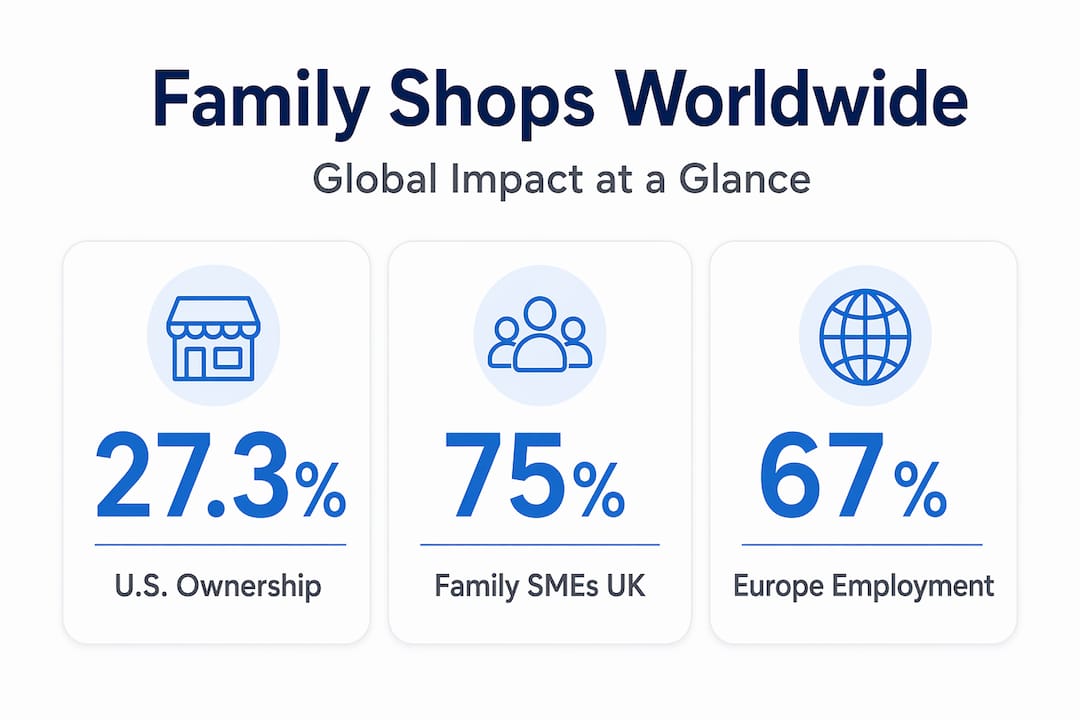
Here is a snapshot of family business prevalence across four regions:
| Country/Region | Family Business Share | Employment Contribution |
|---|---|---|
| United States | ~27.3% of all businesses | Significant share of local GDP |
| Idaho (U.S.) | 39.77% concentration | 46.74% of workforce |
| United Kingdom | 75% of SMEs | Varies by region and sector |
| Spain | 89% of companies | 67% of private-sector employment |
The family-owned store impact on local employment is hard to overstate. When a family shop hires locally, those wages get spent at nearby restaurants, grocery stores, and service providers. That money circulates within the community rather than flowing to distant corporate shareholders.
That said, family shops do face real economic pressure. Fixed costs like rent, utilities, and staffing do not flex the way revenues sometimes do. Competition from large digital retailers and national chains compounds the problem because those competitors operate at margins a small family shop cannot touch.
- Fixed overhead costs remain high regardless of seasonal revenue swings
- Corporate chains use bulk purchasing power to undercut on price
- Digital platforms offer 24/7 convenience that physical stores must work to match
- Limited capital access makes renovations and technology upgrades harder to fund
Pro Tip: If you own or manage a family shop, look into local small business development centers (SBDCs) for free consulting on cost management and access to funding you may not know exists.
How family shops shape community and culture
Numbers tell part of the story. The community role of family stores goes much deeper than any spreadsheet captures.
Consider Just Right Barber Shop in Overtown, Miami. This 76-year-old family business has survived urban redevelopment, economic shifts, and demographic change by doing something no algorithm can replicate. It mentors young people, provides employment opportunities for neighborhood youth, and serves as a trusted gathering place where community members feel genuinely seen. The second generation managing it today did not just inherit a business. They inherited a responsibility.
This is what makes family shops irreplaceable as informal community infrastructure. They provide mentorship, safe spaces, and economic opportunity that extend well beyond the transaction at the counter. You cannot measure that in quarterly earnings.
“Family businesses act as the connective tissue of neighborhoods, holding together the cultural, social, and economic fabric that makes a community feel like home.”
The cultural anchoring these shops provide is equally significant. A Caribbean grocery that stocks specific plantain varieties, a Polish deli that carries imported pickles, or a Jamaican bakery baking hard dough bread on Saturdays. Each of these shops carries lived culture. When they close, that culture becomes harder to access and easier to forget.
The family-run shop advantages in this space are distinct:
- They employ people who often live in the same neighborhood, building real accountability
- They stock products reflecting the cultural preferences of local residents
- They maintain pricing relationships with longtime customers during tough stretches
- They pass down skills, recipes, and business knowledge across generations
- They create intergenerational legacy that gives communities a shared identity over time
The local stores in Atlanta food heritage story illustrates this perfectly, showing how family-run food shops preserve cultural roots while serving thousands of neighbors over decades.
Challenges family-owned shops face today
Understanding how family businesses thrive requires first acknowledging the very real pressures threatening their survival. These challenges are specific and serious.
-
Rising fixed costs and tax burdens. A North Yorkshire sweet shop, reportedly one of the world’s oldest, has had to pass tax increases directly to customers while deferring planned investments. Higher National Insurance contributions and energy costs squeeze margins that were already thin.
-
Digital competition. Large online retailers sell almost everything a family shop carries, often cheaper and delivered to the door. The playing field is not level, and family shops rarely have the marketing budget to close that perception gap.
-
Closure rates that reveal structural fragility. In Spain, 1,132 small family-run businesses close monthly due to financial and policy pressures. That pace of loss points to a systemic problem, not just individual business failures.
-
Succession complexity. When a founder retires or passes away, passing the business to the next generation is far more complex than handing over keys. Legal ownership, governance authority, and operational knowledge must all transfer smoothly or the shop fractures.
-
Modernization gaps. Many family shops carry tremendous local loyalty but lack the digital tools or social media presence to attract younger customers who discover everything online first.
-
Policy neglect. Government policy often favors large employers or digital enterprises when crafting incentives. Family shops rarely have the lobbying power to shape the rules that govern their survival.
Pro Tip: For family shops worried about succession, consider a split ownership model where next-generation family members each hold distinct location or operational responsibilities. A Canadian multigeneration boutique used exactly this approach to resolve governance gridlock without dissolving the family enterprise.
Innovation, sustainability, and staying competitive
The most resilient family shops are not the ones that resist change. They are the ones that figure out how to modernize without losing what made them worth saving in the first place.
Research from KPMG shows that family businesses engaged in sustainability report high performance levels, and that mergers and acquisitions activity correlates with 14% higher performance. That finding challenges the assumption that staying small and traditional is the safe path. Growth, when pursued thoughtfully, strengthens family shops rather than diluting them.
Governance is often the hidden variable. According to research from IMD, governance that restricts outside input can stall innovation even in businesses that want to evolve. Empowering outside advisors or managers to contribute without overriding family values is the balance that allows modernization to actually stick.
Here is how traditional and modernizing family shops compare across key dimensions:
| Dimension | Traditional approach | Modernized approach |
|---|---|---|
| Customer experience | In-person, relationship-driven | In-person plus online presence and reviews |
| Inventory management | Owner-managed by instinct | Data-informed with digital tracking tools |
| Succession planning | Informal handoff | Structured governance with legal frameworks |
| Community engagement | Organic and ongoing | Intentional programs plus social media |
| Sustainability | Implicit in longevity | Documented practices linked to brand identity |
The Canadian fashion boutique mentioned earlier demonstrates this well. Customers value the tactile shopping experience that no e-commerce platform provides. The owners leaned into that advantage while restructuring governance so the next generation could step into defined roles rather than undefined family politics. That is how family businesses thrive in competitive markets.
There is also a compelling argument from Harvard Business Review that familiness is a competitive edge forged through trust and long-term commitment. The risk is over-professionalizing to the point where that edge disappears. Knowing where that line sits is the work.
How you can support and benefit from family shops
Supporting family enterprises is not charity. It is a practical decision that returns real value to you and your neighborhood. When you spend money at a family shop, a larger share of that dollar stays local compared to spending at a chain store, circulating through other local businesses, schools, and services.
Here is what your support actually does:
- It stabilizes local employment for people who live where you live
- It funds the cultural preservation of foods, crafts, and traditions tied to your neighborhood’s identity
- It keeps distinctive shopping experiences alive that chains cannot offer
- It helps family businesses plan for the future by giving them the revenue stability to invest in the next generation
- It strengthens community resilience by reducing dependence on distant supply chains and corporate decisions made far from your zip code
The benefits of local shops are also personal. Family shop owners know their regulars. They remember preferences, flag new arrivals, and sometimes hold items. That relationship has practical value you cannot replicate by clicking Add to Cart. Neighborhood stores can also improve food access in ways that matter directly to your household, as this piece on food access in Atlanta makes clear. When you make supporting family enterprises part of your regular routine, you are investing in the kind of neighborhood you actually want to live in.
My take: why this matters more than most people realize
I’ve worked around food retail long enough to know that the conversation about family shops almost always focuses on what they’re up against. The competition. The costs. The succession headaches. And those things are real. But in my experience, that framing misses the most important part of the story.
What I’ve seen, especially at Tojexpress, is that the value a family shop delivers to a neighborhood cannot be separated from the personal investment the owners make. When someone stakes their family’s name on a business, they are not optimizing for quarterly returns. They are building something they want their kids to be proud of. That motivation produces a quality of care and community connection that a corporate store manager hired from a staffing agency simply cannot fake.
What I’ve also learned is that the shops that survive long-term are the ones that refuse to treat innovation and tradition as opposites. The barber shop in Overtown didn’t survive 76 years by doing everything the same way. It survived by knowing which things were sacred and which things needed to evolve.
My honest take: if your neighborhood has family shops and you are not using them regularly, you are accepting a tradeoff you may not fully understand yet. You’ll feel it when they close.
— ANTONIO
Discover authentic flavors at Tojexpress
At Tojexpress, we understand the role family-owned shops play in keeping culture alive and communities connected. That’s exactly why we stock American and Caribbean products that reflect real heritage, real flavor, and real community.
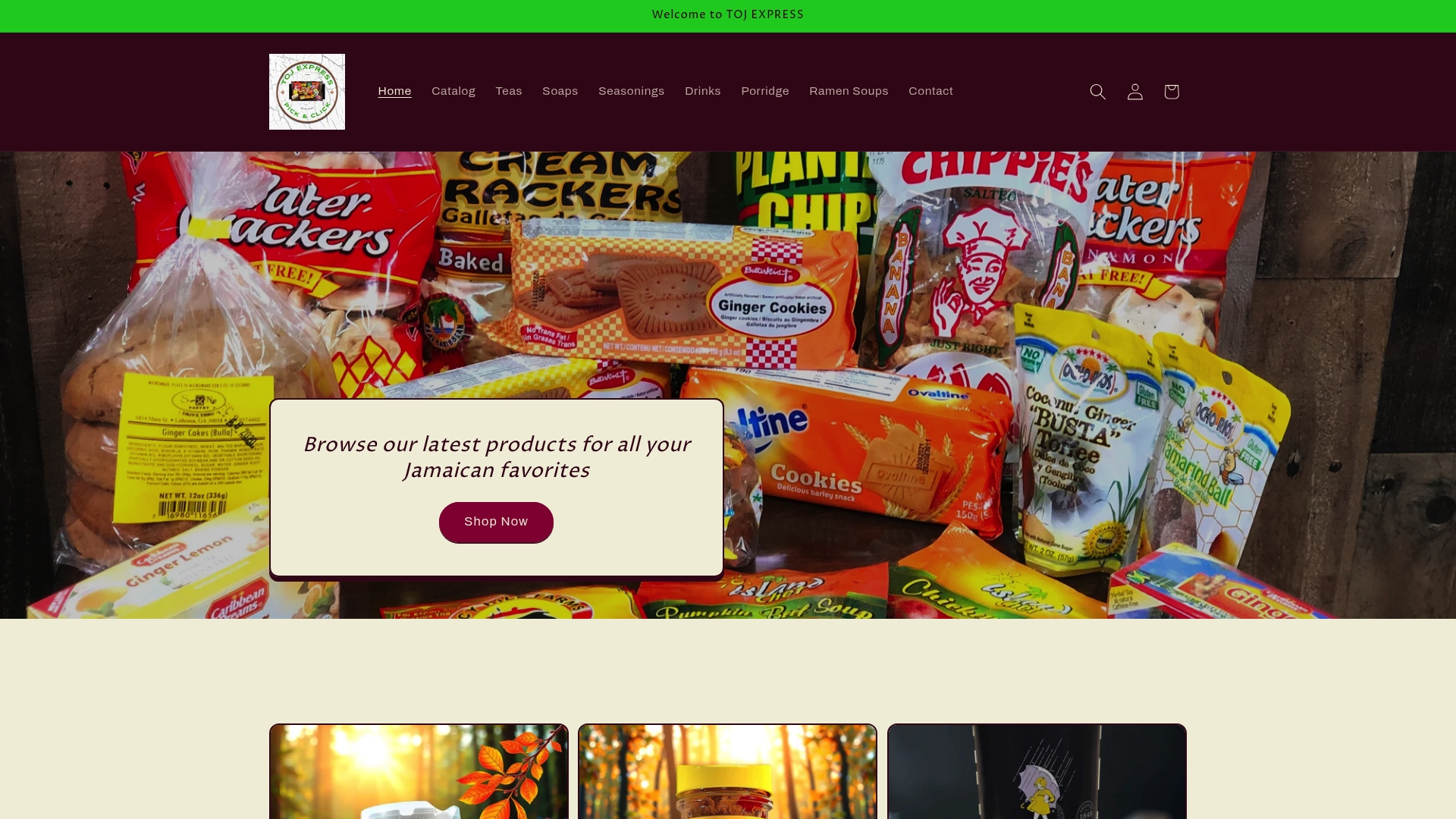
Whether you’re looking for authentic Caribbean snacks to share with your family or stocking up on drinks from local and regional producers, Tojexpress brings the family-shop experience to your doorstep. We believe that shopping locally in Atlanta supports the kind of food culture worth preserving. Every purchase you make with us keeps that tradition going one shelf at a time.
FAQ
What is the role of family-owned shops in the economy?
Family-owned shops contribute significantly to local employment, GDP, and money circulation within communities. In the U.S., they make up about 27.3% of all businesses and anchor local economies in every state.
Why are family businesses closing at high rates?
Rising fixed costs, tax burdens, and competition from digital retailers are the primary drivers. In Spain alone, over 1,100 small family-run businesses close every month due to these combined pressures.
How do family shops differ from corporate chain stores?
Family shops offer personalized service, culturally specific products, and deeper community investment. They are managed by people with a personal stake in the neighborhood rather than by regional managers following corporate directives.
How can consumers support family-owned shops?
Shop there regularly, leave honest reviews, and spread the word in your network. Consistent spending gives family shops the revenue stability they need to plan, invest, and pass the business to the next generation.
Can family-owned shops compete with online retailers?
Yes, especially when they focus on in-person experience, community relationships, and product specialization that digital platforms cannot replicate. Governance improvements and selective technology adoption also help family shops remain competitive.