
The Role of Flavor Variety in Culinary Enjoyment
TOJEXPRESS.COM-Antonio HenryTL;DR:
- Flavor variety enhances culinary satisfaction by exposing people to diverse tastes, aromas, and textures. Research shows that high-variety conditions increase food intake and emotional connection, but too many options can cause choice overload. Socioeconomic factors and cultural understanding significantly influence access to and appreciation of flavor diversity.
Flavor variety is defined as the deliberate exposure to multiple distinct tastes, aromas, and textures within a meal or food experience, and it is the single most powerful driver of culinary satisfaction. Research from Penn State confirms that high-variety conditions cause people to select significantly more food and derive greater sensory pleasure from eating. Innova Market Insights reports that 66% of global consumers actively seek new food experiences, proving that the importance of flavor diversity extends far beyond personal preference. At Tojexpress, where American and Caribbean products sit side by side on the shelf, that appetite for variety is something we see every single day.
How does flavor variety impact consumer food choices?
The role of flavor variety in shaping what and how much people eat is backed by hard science. A Penn State study found that participants in a high-variety buffet condition selected 649 kcal more than those in a low-variety condition, choosing from 27 foods versus just 9. That gap represents a full extra meal’s worth of calories, driven entirely by the presence of more options. The brain interprets variety as abundance, which triggers a biological push to sample more.

This behavior is known in nutrition science as sensory-specific satiety, the process by which satisfaction with one flavor increases appetite for a different one. It explains why you can feel full after a plate of rice but still want dessert. The real role of variety in meals goes beyond pleasure. It directly shapes caloric intake, nutrient exposure, and eating patterns over time.
Variety-seeking also intensifies in social settings. Research published in Scientific Reports shows that group dining decisions produce higher variety-seeking than solo choices, driven by reciprocity and the desire to appear open-minded. When you eat with others, you are more likely to order something new. That social pressure is one reason restaurant menus keep expanding.
Pro Tip: If you want to enjoy flavor variety without overeating, build your plate with small portions of three to five distinct flavors rather than large servings of one or two. You get the sensory range without the caloric spike.
What cultural and emotional roles does flavor variety play?
Flavor diversity is one of the most direct ways people connect with cultures outside their own. Innova Market Insights reports that 51% of global consumers actively seek cuisines from other countries. That number reflects a genuine hunger for cultural connection, not just novelty. Food is often the most accessible entry point into another culture, and flavor is the language it speaks.
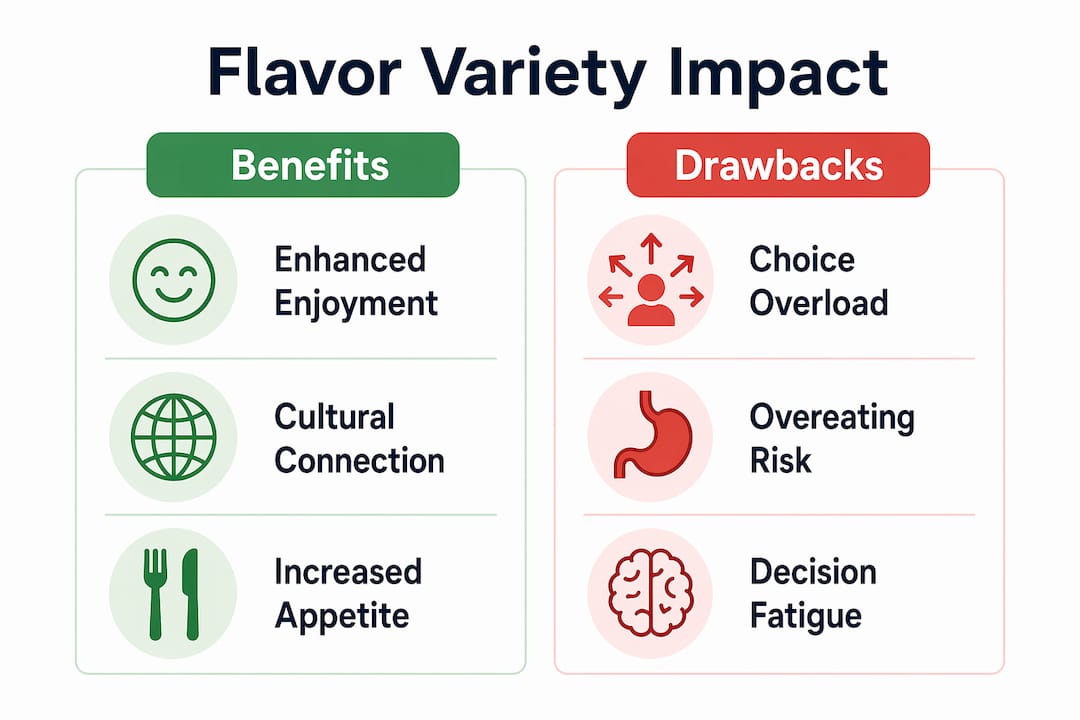
The emotional dimension is equally strong. According to Innova Market Insights, 56% of consumers identify happiness as the primary emotional driver behind their flavor choices. Mood shapes what you crave, and what you eat shapes your mood right back. Comfort foods, nostalgic recipes, and celebratory dishes all rely on flavor variety to carry emotional weight.
The benefits of flavor variety in cultural cuisine include:
- Cultural memory: Dishes like Jamaican jerk chicken or Louisiana gumbo carry centuries of history in their spice profiles.
- Emotional comfort: Familiar flavors from childhood or heritage cuisines reduce stress and increase feelings of belonging.
- Culinary creativity: Fusion dishes that blend Caribbean and American ingredients, like mango habanero wings or coconut-spiced cornbread, create new emotional associations.
- Social bonding: Sharing a meal built around unfamiliar flavors creates shared experiences that strengthen relationships.
- Agricultural heritage: Biodiversity in farming preserves heritage crop varieties that carry flavor depth industrial agriculture has largely erased.
Successful flavor fusion, however, requires more than mixing ingredients. Symrise research confirms that culturally authentic pairings depend on local partnerships and transparent storytelling, not surface-level blending. Exploring food fusion authentically means understanding the origin of a flavor before you remix it.
What are the drawbacks of too much flavor variety?
More is not always better when it comes to flavor options. The concept of choice overload describes what happens when too many options paralyze decision-making rather than enhance it. One analysis found that offering 46 flavors causes what researchers call a “metabolic stall,” where consumers become so overwhelmed they either choose randomly or walk away unsatisfied. Curated selections of fewer, well-chosen options consistently outperform massive menus in consumer satisfaction.
“Scarcity and curation in flavor selections can enhance consumer satisfaction by avoiding choice paralysis in an oversaturated market.” — Jaimie Bowman, The Neon Paralysis
Research also shows that choice overload effects vary by complexity. Simple variety, like choosing between five hot sauce heat levels, tends to increase satisfaction. Complex variety, like choosing between 40 multi-ingredient spice blends with overlapping flavor profiles, reduces it. The difference is cognitive load. When options are easy to compare, variety feels like freedom. When they are hard to compare, it feels like a burden.
Social dynamics add another layer. Scientific Reports data shows that group variety-seeking is moderated by how well individual preferences align. When friends have similar tastes, groups explore more freely. When preferences diverge sharply, the decision process stalls. Understanding this can help you navigate group dining more smoothly.
Pro Tip: When shopping for new flavors, pick one unfamiliar product per trip rather than buying five at once. You give each flavor proper attention and avoid the regret that comes from a pantry full of things you never finish.
How does socioeconomic status shape access to flavor diversity?
Access to flavor variety is not equal. Research published in Frontiers in Nutrition confirms that socioeconomic factors directly limit flavor diversity for lower-income consumers, who prioritize affordability and caloric density over culinary exploration. This is not a matter of preference. It is a structural barrier that shapes dietary quality and food enjoyment across entire communities.
Here is how socioeconomic status shapes the flavor variety experience in practice:
- Affordability constraints push consumers toward staple foods with limited flavor range, reducing exposure to spices, specialty ingredients, and international products.
- Geographic access determines which stores are nearby. Food deserts often lack multicultural grocery options, limiting the physical availability of diverse flavors.
- Cultural representation in mainstream grocery stores is uneven. Caribbean, West African, and Southeast Asian ingredients are often absent from standard supermarket shelves.
- Time and cooking knowledge affect whether people can prepare diverse meals at home, even when ingredients are available.
- Multicultural stores and community markets fill critical gaps. Cities like Atlanta demonstrate how food diversity in urban areas creates economic and cultural benefits that extend well beyond the dinner table.
Stores like Tojexpress exist precisely to close this gap. Stocking both American staples and Caribbean specialty products in one location removes the barrier of having to visit multiple stores to build a flavorful, culturally rich pantry. Food accessibility in communities is a direct measure of how much flavor variety residents can realistically enjoy.
What practical tips help you embrace flavor variety thoughtfully?
Exploring flavor diversity does not require a culinary degree or an expensive restaurant reservation. The most effective approach is structured curiosity: try one new flavor profile per week, build on what you enjoy, and learn the cultural context behind what you eat.
The table below compares two approaches to exploring flavor variety, showing which habits produce lasting enjoyment versus short-term novelty.
| Approach | What It Looks Like | Long-Term Result |
|---|---|---|
| Random exploration | Buying unfamiliar products without context | Inconsistent satisfaction, wasted food |
| Curated discovery | Choosing one new cuisine or ingredient per week | Builds genuine flavor literacy over time |
| Cultural immersion | Learning the story behind a dish before cooking it | Deeper appreciation and more authentic results |
| Fusion with intention | Combining familiar and new flavors deliberately | Creates personal signature dishes |
| Seasonal variety | Rotating flavors based on what is fresh and available | Connects eating to natural food cycles |
The snack innovation space in 2026 offers a low-stakes entry point for flavor exploration. Caribbean-inspired snacks like plantain chips, tamarind candies, and coconut-dusted crackers introduce bold flavor profiles without requiring a full cooking commitment. They are also an easy way to share new flavors with friends and family, which research confirms increases variety-seeking behavior in a positive direction.
Pro Tip: When trying a new cuisine, start with its most iconic condiment or seasoning rather than a full dish. A bottle of Scotch bonnet pepper sauce or a jar of sofrito teaches you the flavor foundation of an entire culinary tradition.
For home cooks looking to push further, a popcorn flavor innovation guide is a surprisingly useful starting point. Popcorn is a blank canvas that accepts almost any seasoning, making it one of the most accessible tools for experimenting with global flavor profiles at home.
Key takeaways
Flavor variety is the core mechanism through which food delivers sensory pleasure, cultural connection, and emotional well-being, and managing it thoughtfully produces better outcomes than chasing maximum options.
| Point | Details |
|---|---|
| Variety drives intake | High-variety conditions increase caloric selection by 649 kcal, so portion awareness matters. |
| Emotion shapes flavor choice | 56% of consumers cite happiness as their primary flavor driver, linking food to mood. |
| Curation beats excess | Offering too many options causes choice paralysis; smaller, focused selections satisfy more. |
| Access is unequal | Socioeconomic barriers limit flavor diversity for many consumers, making multicultural stores critical. |
| Cultural context deepens enjoyment | Authentic flavor exploration requires understanding the origin and story behind a dish. |
Why flavor variety is about more than just taste
I have spent years watching how people interact with food from different cultures, and the pattern is always the same. The first reaction to an unfamiliar flavor is hesitation. The second is curiosity. The third, when the flavor is good, is something close to wonder. That sequence is the entire argument for why flavor variety matters.
What most food writing gets wrong is treating variety as a numbers game. More flavors, more options, more novelty. But the research tells a different story. The Penn State data on caloric intake and the Jaimie Bowman analysis on choice paralysis both point to the same conclusion: quality of variety beats quantity every time. A well-curated selection of five bold, culturally grounded flavors will always outperform a wall of 40 indistinguishable options.
The accessibility angle is the one I feel most strongly about. Flavor diversity should not be a luxury available only to people who live near specialty grocery stores or can afford restaurant menus. When a store like Tojexpress puts Caribbean hot sauce next to American barbecue sauce on the same shelf at an accessible price point, that is not just retail strategy. That is a genuine act of culinary democratization. The goal is not to make exotic food mainstream. The goal is to make good food available to everyone.
— ANTONIO
Explore authentic flavors at Tojexpress
Tojexpress carries American classics and Caribbean specialty products under one roof, giving you real access to the flavor diversity this article describes.

Whether you are looking for Scotch bonnet sauces, plantain snacks, or Caribbean seasonings you cannot find at a standard grocery store, Tojexpress stocks the products that make genuine flavor exploration possible. The store is built around the belief that great food from multiple cultures should be easy to find and affordable to buy. Visit Tojexpress to browse the full selection and start building a pantry that reflects the full range of what food can be.
FAQ
What is the role of flavor variety in food enjoyment?
Flavor variety is the primary driver of sensory satisfaction in eating. It stimulates appetite, prevents taste fatigue, and creates emotional connections to food through cultural and personal associations.
How does flavor variety influence caloric intake?
A Penn State study found that high-variety conditions caused participants to select 649 kcal more than low-variety conditions. More flavor options directly increase how much food people choose to eat.
Can too much flavor variety be a bad thing?
Yes. Offering too many options causes choice overload, which reduces satisfaction and leads to poor decision-making. Curated selections of well-chosen flavors consistently outperform oversized menus.
Why does socioeconomic status affect access to flavor diversity?
Research in Frontiers in Nutrition confirms that lower-income consumers prioritize affordability over variety, and geographic barriers limit access to multicultural ingredients. Specialty stores help close that gap.
How does mood affect flavor preferences?
Innova Market Insights data shows that 56% of global consumers cite happiness as their main emotional driver for flavor choices. Emotional state directly shapes what flavors people seek out at any given moment.