

Food diversity in Atlanta: Benefits every food lover needs
TOJEXPRESS.COM-Antonio HenryTL;DR:
- Eating a diverse range of foods can improve metabolic and age-related health outcomes, but only when the choices are nutritionally rich.
- In Atlanta, food diversity reflects a vibrant mix of cultures, from Caribbean to West African, shaping unique culinary traditions and communities.
Atlanta’s food scene is alive with flavors from across the globe, and many people assume that simply eating a wider variety of foods guarantees better health. That idea feels intuitive, but recent research tells a more complicated story. Metabolic health improvements from dietary diversity depend heavily on what you’re diversifying, not just how many different things land on your plate. This guide breaks down what food diversity truly means, how it shapes both your health and your cultural experience, and how Atlanta residents can make the most of this incredible, layered food landscape.
Table of Contents
- What does food diversity mean?
- Health impacts of dietary diversity: What does the evidence show?
- Culture on a plate: The significance of diverse foods in Atlanta
- Practical tips: How to embrace healthy food diversity in your Atlanta life
- The overlooked truth: Not all food diversity is created equal
- Discover more diverse foods with TOJ Express
- Frequently asked questions
Key Takeaways
| Point | Details |
|---|---|
| Food diversity is complex | Scientists use several methods to measure diet diversity, so conclusions can vary. |
| Diversity supports health | Higher dietary diversity is linked with better biomarkers and healthy aging, though not all studies prove cause and effect. |
| Culture shapes diversity | Atlanta’s meals reflect immigrant histories and local adaptation, creating unique blends of tradition and innovation. |
| Quality matters most | The health impact of diverse eating depends on including nutrient-rich foods, not just more types. |
| Actionable diversity | Sample new cuisines, shop local markets, and learn the story behind your meals for a richer, healthier Atlanta food experience. |
What does food diversity mean?
Let’s start with the basics. What do experts really mean by food diversity, and how is it measured? The term sounds simple enough, but the science behind it is surprisingly tricky.
At its core, food diversity refers to the number and balance of different foods or food groups a person consumes over a given period. It sounds straightforward, but researchers have identified at least three distinct ways to measure it:
- Richness: The total count of distinct food items a person eats. If you eat 20 different foods in a week, you score high on richness.
- Evenness: How balanced the distribution is across those food types. Eating 20 foods where 80% of your calories come from one item still scores poorly on evenness.
- Guideline-based diversity: Whether the foods consumed align with established nutritional recommendations, like including adequate fruits, vegetables, proteins, and whole grains.
The problem? No universally accepted metric exists to measure dietary diversity. Different survey instruments and research methods can produce very different conclusions, even when studying the same population. A study using richness alone might report that someone eating chips, candy, and soda alongside a vegetable or two has a “diverse” diet. That’s clearly misleading.
| Measurement type | What it captures | Potential weakness |
|---|---|---|
| Richness | Number of distinct foods | Ignores healthfulness of choices |
| Evenness | Balance across food types | Can still include poor-quality foods |
| Guideline-based | Alignment with nutrition standards | Varies by national guidelines |
This matters for Atlanta food lovers because the city’s markets, restaurants, and convenience stores carry everything from deeply nutritious West Indian staples to highly processed comfort foods. When someone talks about snack diversity in Atlanta, they might mean something very different from what a nutritionist means. Knowing how diversity is defined helps you make smarter choices rather than just more varied ones.
Pro Tip: When reading articles about dietary diversity and health, check whether the study measured richness, evenness, or guideline-based diversity. The method used can completely change what the findings mean for you.
Health impacts of dietary diversity: What does the evidence show?
Now that we’ve defined food diversity, how does it relate to your health? Let’s look at what the science actually says, because the findings are encouraging but come with important caveats.
The good news first. A large population study found that higher dietary diversity is associated with improved metabolic biomarkers, including lower cholesterol levels, better blood sugar regulation, and healthier body weight indicators. These are real, measurable benefits tied to eating a wide range of foods. For communities in Atlanta where diet-related conditions like diabetes and heart disease remain pressing public health concerns, that finding is genuinely meaningful.
The benefits don’t stop at metabolic health. A systematic review examining older adults found that better healthy-aging outcomes are consistently reported among those with higher dietary diversity. We’re talking about sharper cognitive function, stronger physical performance, and reduced frailty. For Atlanta’s growing senior population, diverse eating patterns appear to support not just length of life but quality of life.
Here’s where the science gets more nuanced. Almost all of these studies are observational, meaning researchers tracked what people ate and compared it to health outcomes over time. They did not randomly assign people to “diverse” or “non-diverse” diets and measure the difference. That means we can say diversity and health are associated, but we cannot say with certainty that diversity directly causes those better outcomes. People who eat diverse diets may also exercise more, have better access to fresh food, or have higher incomes. All of those factors muddy the picture.
| Health outcome | Associated benefit | Type of evidence |
|---|---|---|
| Cholesterol levels | Lower with higher diversity | Large population study |
| Blood sugar regulation | Improved with diverse intake | Observational data |
| Cognitive function in older adults | Better with diverse diet | Systematic review |
| Physical performance in seniors | Stronger with varied eating | Systematic review |
The second major caveat is perhaps the most important one for everyday food decisions. The healthfulness of the foods you’re diversifying matters enormously. Eating 25 different processed snack foods does technically increase your dietary variety. But it doesn’t give you the benefits researchers observed in studies where diversity meant including vegetables, legumes, whole grains, lean proteins, and healthy fats across multiple food cultures.
Looking at snack diversity and health through this lens reframes how you should shop and snack. Variety is a tool, not a guarantee. It only works for you when the foods you’re adding to your routine bring genuine nutritional value.
Pro Tip: Think of food diversity like a portfolio. Spreading your investments across many low-quality stocks doesn’t build wealth. Spreading your meals across many nutrient-rich cuisines and food groups does build health.
Culture on a plate: The significance of diverse foods in Atlanta
Understanding food diversity isn’t just about health. It’s also about the stories our meals tell. Atlanta is a prime example of how food reflects migration, memory, and community identity.

Atlanta’s dining scene has been shaped profoundly by waves of immigration, from Caribbean and West African communities to Latin American, East Asian, and South Asian populations. Each wave brought not just people but flavors, techniques, and food traditions that took root and evolved in the Georgia heat. The result is a food landscape unlike almost anywhere else in the American South.
Caribbean cuisine occupies a special place in that story. Caribbean food traditions reflect a blend of Indigenous, African, and European influences, with significant variation between islands and between Caribbean diaspora communities in cities like Atlanta. Jerk seasoning, rice and peas, plantains, roti, and oxtail are more than menu items. They carry histories of resilience, trade routes, and family recipes passed across generations.
What makes Atlanta’s Caribbean cuisine scene particularly vibrant is how those traditions adapt without disappearing. A Jamaican restaurant in Decatur might serve jerk chicken with locally grown collard greens as a side. A Trinidadian bakery in Stone Mountain might use Georgia peaches in a twist on a classic pastry. The cuisine stays alive because it keeps evolving, which is exactly what food cultures have always done.
“Food is the most direct expression of cultural memory. When a community cooks, it preserves what no museum can fully capture.”
Restaurants and food stores run by immigrant communities also function as cultural bridges. They introduce unfamiliar flavors to Atlanta neighbors who might never have ventured into that culinary tradition on their own. And they give diaspora communities a place to feel genuinely at home.
Here’s why that matters beyond sentiment:
- Culturally familiar foods support mental and emotional wellbeing for immigrant communities
- Exposure to diverse cuisines builds empathy and reduces cultural bias in host communities
- Traditional recipes often carry nutritional wisdom developed over centuries
- Multicultural foods in Atlanta support small businesses and local economic health
Eating Caribbean or other international foods in Atlanta isn’t just a culinary adventure. It’s an act of cultural engagement. When you try a dish from a cuisine unfamiliar to you, you participate in something bigger than lunch. The Caribbean diaspora food traditions that have taken root here represent community pride and perseverance, and they deserve to be understood and respected on those terms.
Practical tips: How to embrace healthy food diversity in your Atlanta life
So how do you make the most out of Atlanta’s incredible food diversity at home and when dining out? The goal is to enjoy variety in a way that serves both your health and your cultural curiosity.
Here’s a practical approach that works for most Atlanta food lovers, whether you’re new to international cuisines or already a seasoned explorer:
-
Start with small portions from unfamiliar cuisines. You don’t need to order a full plate of something you’ve never tried. Ask for a side or share a dish with someone. Give your palate time to adjust to new spices, textures, and flavor profiles before committing to a whole meal.
-
Balance traditional recipes with nutrient-dense sides. A rich curry or a fried festival bread is worth enjoying. But pairing it with a fresh green salad, steamed vegetables, or a legume-based side adds nutritional depth without erasing the cultural experience.
-
Ask restaurant staff how dishes are prepared. Understanding whether something is fried, stewed, or roasted, and what goes into a sauce or marinade, helps you make informed choices. Most restaurant workers are happy to explain their food when you show genuine curiosity.
-
Explore Atlanta’s multicultural grocery stores. Shopping at diverse stores in Atlanta connects you directly with authentic ingredients. You’ll find produce, spices, and packaged goods that don’t appear in mainstream supermarkets, and the prices are often very reasonable.
-
Learn a little about what you’re eating. Understanding why international foods enhance Atlanta’s culinary scene deepens your appreciation and helps you choose dishes that are both culturally meaningful and nutritionally solid.
-
Support local stores that carry heritage products. Local stores supporting food heritage do more than sell groceries. They anchor communities and keep cultural traditions accessible for everyone.
The most important thing to remember is that food diversity and healthfulness are not the same thing. A dinner table covered in food from ten different countries still needs to include vegetables, fiber, and quality protein to give you real health benefits. Diversity is a feature of a good diet, not a substitute for one.
Pro Tip: Try picking one new ingredient per week from a multicultural grocery store in Atlanta. Look up one traditional recipe using that ingredient. Over time, you’ll build a genuinely diverse and nutritious home kitchen without feeling overwhelmed.
The overlooked truth: Not all food diversity is created equal
Here’s something most food writers won’t say clearly: eating a wide variety of foods can lull you into a false sense of nutritional security. And in Atlanta’s rich, abundant food scene, that trap is easy to fall into.
We’ve all heard the message. Eat a rainbow. Try new things. Explore different cuisines. All of that is genuinely good advice. But there’s an assumption baked into it that doesn’t always hold. The assumption is that more variety automatically means better nutrition. Research now cautions that diversity indices can be misleading if they don’t factor in the actual healthfulness of the foods being counted.
Think about what that means in real life. Someone who eats five types of chips, three flavors of sugary beverages, and two fast food sandwiches in a day has dietary variety. But they’re not getting the benefits researchers associate with true food diversity. The number of items is high. The nutritional quality is low. Those two things are not the same.
Atlanta is a city where both ends of that spectrum are readily available. You can find extraordinary, nutrient-packed dishes rooted in Caribbean, West African, and Southern food traditions right alongside heavily processed, calorie-dense convenience foods. Both exist here. Both are part of the cultural fabric. The difference is knowing which is which, and making intentional choices rather than just reaching for variety.
That’s why understanding the influences shaping Caribbean flavors matters practically. When you know that a dish was developed using fresh produce, legumes, and whole spices over generations, you can recognize it as nutritionally valuable in ways that go beyond what any calorie label shows. Context builds judgment. And judgment helps you make food diversity actually work for your health and your cultural appreciation.
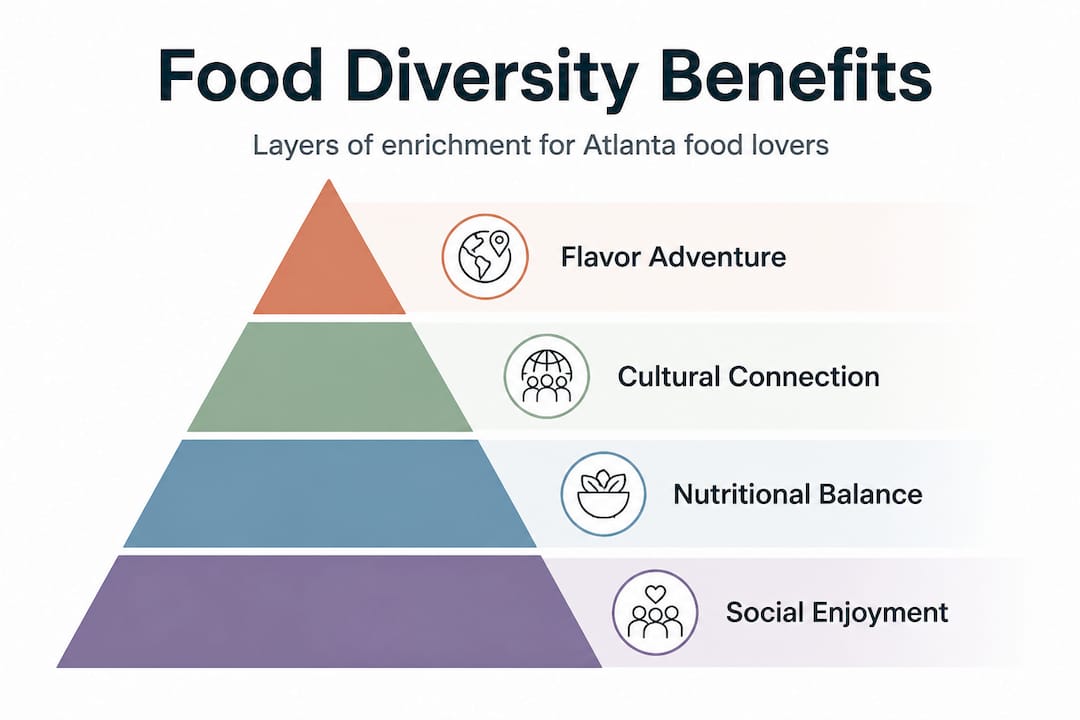
The bottom line is this: diverse eating should enrich your life on every level. Cultural, nutritional, social, and sensory. But that only happens when you bring some awareness to the table alongside your appetite.
Discover more diverse foods with TOJ Express
Ready to put these ideas into action?
At TOJ Express, we bring Atlanta’s remarkable food diversity right to your hands. Our store carries curated selections of authentic American and Caribbean products, from pantry staples rooted in island cooking traditions to snacks and specialty items you won’t find in a mainstream supermarket.

Whether you’re building a more nutritious kitchen, exploring Caribbean food traditions for the first time, or searching for a specific ingredient from home, TOJ Express is here for that. We believe food is culture, and culture deserves to be celebrated with quality products and real selection. Visit TOJ Express to browse our full catalog and start making your food journey richer, one authentic ingredient at a time.
Frequently asked questions
Does eating a greater variety of foods always improve your health?
Not necessarily. Research shows that the overall healthfulness of food choices matters just as much as variety itself, since diverse but low-quality diets don’t deliver the same metabolic and health benefits as diverse, nutrient-rich ones.
How is dietary diversity measured in research?
Researchers use multiple approaches, including counting distinct foods consumed and assessing balance across food groups. However, no universal measurement standard exists, which means different studies can reach different conclusions even with similar populations.
What are examples of culturally diverse foods in Atlanta?
Atlanta’s immigrant communities have introduced Caribbean, East Asian, West African, and Latin American cuisines to the city, giving local food lovers access to an extraordinary range of authentic flavors and traditions.
Are all traditional dishes in multicultural cuisines healthy?
Not automatically. While many traditional recipes are built around whole ingredients and time-tested preparation methods, the healthfulness of any dish still depends on its specific ingredients, cooking method, and portion size, so balance and informed choices always matter.