

Why Food Heritage Is Preserved: Culture, Sustainability, and Identity
TOJEXPRESS.COM-Antonio HenryFood heritage is preserved because it does far more than keep old recipes alive. It anchors cultural identity, holds communities together, supports biodiversity, and drives real economic opportunity. UNESCO recognizes over 50 culinary practices as Intangible Cultural Heritage, and the emphasis is always on living practices passed between generations, not dishes frozen in time. Here is why that matters, and why the effort is accelerating in 2026.
Core reasons food heritage is preserved:
- Cultural identity: traditional foodways tell people who they are and where they come from
- Social cohesion: shared meals and cooking rituals bind families and communities
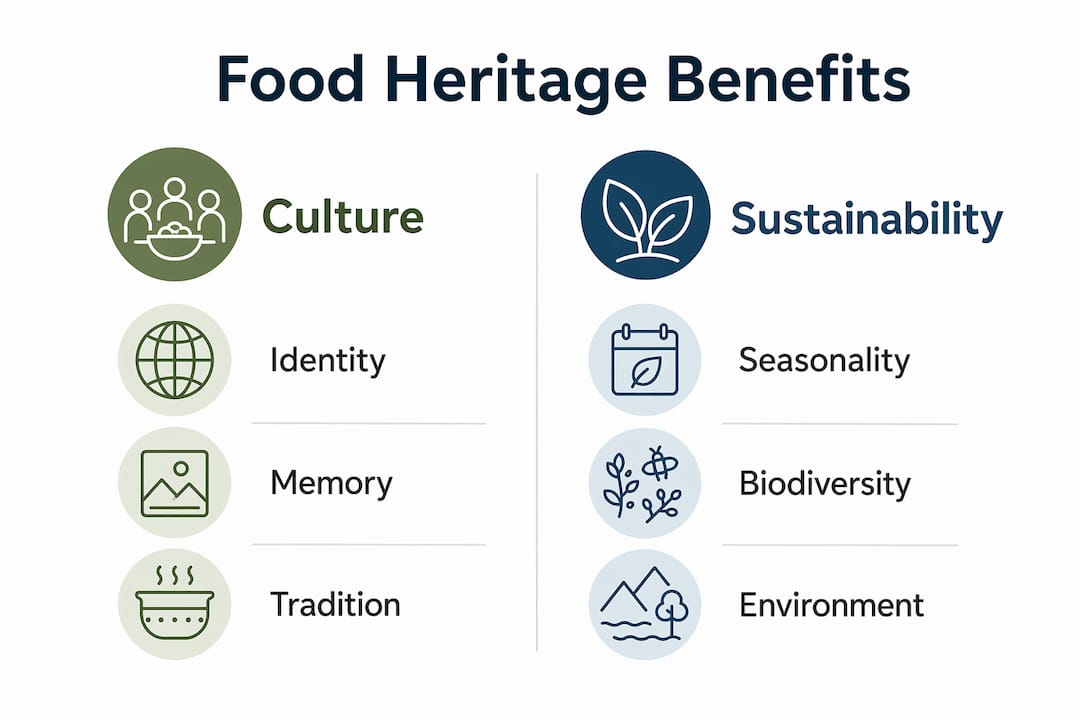
- Environmental sustainability: heritage practices rely on seasonal, local, and low-waste methods
- Food security: traditional knowledge preserves genetic diversity in crops and livestock
- Economic growth: gastronomic tourism and culinary festivals generate income for local communities
- Innovation: digital tools and AI are now helping archive and adapt heritage practices for new generations
Why food heritage is the foundation of cultural identity
Food is one of the most direct ways a culture expresses itself. Anthropological research shows that what people eat, how they prepare it, and who they share it with reflects social hierarchies, ancestral respect, and a deep sense of belonging. A bowl of Haitian soupe joumou or a plate of traditional Mexican cuisine carries centuries of history in every ingredient.
Heritage dishes hold memory in a way that written records rarely can. When a grandmother teaches her granddaughter to make tamales, she is transmitting not just a recipe but a worldview, a set of values, and a connection to ancestors who never met. Culinary traditions function as markers of cultural identity that define and distinguish communities from one another, and they tend to change slowly precisely because they are so tightly bound to identity.
Globalization puts real pressure on this. As fast food chains spread and processed foods dominate supermarket shelves, distinctive local foodways get crowded out. The result is a kind of culinary homogenization that strips communities of one of their most expressive cultural tools. UNESCO’s Intangible Cultural Heritage lists exist partly as a counterweight, giving formal recognition to practices like the art of the Neapolitan Pizzaiuolo, the Mediterranean diet, and the traditions around Peruvian ceviche.
Heritage practices that strengthen social bonds:
- Communal cooking events and harvest festivals
- Intergenerational recipe transmission within families
- Religious and ceremonial food rituals
- Market traditions tied to local agricultural calendars
- Diaspora food communities recreating home cuisines abroad
Pro Tip: If you want to understand a culture quickly, skip the tourist restaurants and find the neighborhood markets. The ingredients people buy for home cooking reveal far more about identity than any curated dining experience.
How traditional foodways support sustainability and the environment
Heritage cuisine was sustainable long before the word became fashionable. Traditional diets evolved around what was locally available and seasonally appropriate, which meant low food miles, minimal waste, and deep knowledge of local ecosystems. That is not nostalgia. It is a practical model that modern food systems are struggling to replicate.
“Many culinary practices are based on respect for seasonality, the use of local products and the recycling of food leftovers. They are also opportunities for exchange, conversation and dialogue, thus reinforcing social cohesion.” — Pier Luigi Petrillo, director of the UNESCO Chair in Intangible Cultural Heritage, Unitelma Sapienza University of Rome
Research identifies five pathways through which food heritage directly supports food security: preserving genetic resources, valorization of traditional varieties, traditional food processing techniques, preference matching for local crops, and agritourism. Each one addresses a gap that industrial food systems have created.
| Heritage practice | Sustainability benefit |
|---|---|
| Seasonal ingredient use | Reduces energy costs and supports local biodiversity |
| Traditional seed saving | Preserves genetic diversity in crops |
| Nose-to-tail and whole-plant cooking | Minimizes food waste |
| Local sourcing and agritourism | Strengthens regional food economies |
| Fermentation and preservation methods | Extends food life without industrial additives |

The BigPicnic project formally added “heritage” to food security definitions, recognizing that cultural knowledge shapes sustainable food choices in ways that policy frameworks had long overlooked. Policymakers are still catching up, but the academic case is solid: food heritage preservation is a climate adaptation strategy, not just a cultural one.
Economic benefits that come from preserving culinary traditions
Gastronomic tourism has become one of the most reliable drivers of rural economic development worldwide. When travelers seek out authentic local food experiences, they spend money at family farms, small restaurants, local markets, and artisan producers. That spending stays in the community in ways that generic hotel tourism rarely does.
The UNESCO Creative Cities of Gastronomy network includes 56 cities across 34 countries, from Popayan in Colombia (the first to join in 2005) to Bergen in Norway and Kuching in Malaysia. Each city commits to preserving traditional practices, promoting local ingredients, and embedding biodiversity conservation into culinary education. The network turns food heritage into a development engine.
The economic case extends beyond tourism. In Asturias, Spain, the recognition of cider culture on UNESCO’s Representative List is expected to drive apple orchard planting, retain young people in rural areas, and protect a family-scale artisan industry. One inscription, multiple economic ripple effects.
Ways food heritage generates economic value:
- Culinary festivals and heritage food markets attract domestic and international visitors
- Agritourism connects travelers directly to traditional farming and food production
- Heritage food certification (like PDO and PGI labels in Europe) commands premium prices
- Cooking schools and culinary tourism programs create local employment
- Traditional food businesses anchor rural economies and keep young people from migrating to cities
Pro Tip: Local food entrepreneurs who document and market the story behind their products, not just the product itself, consistently command higher prices and build more loyal customer bases. The heritage narrative is the differentiator.
How innovation and technology are reshaping food heritage preservation
Technology is not the enemy of tradition. Used carefully, it is one of the most powerful tools for keeping heritage foodways alive and accessible. UNESCO is currently developing an International Food Atlas and digital platform to safeguard and promote foodways globally, with a target launch by the end of 2026. The platform will share community-led preservation examples from around the world.

AI is already being used to preserve oral culinary knowledge, match lost or unavailable ingredients with modern alternatives, and make historical recipes accessible to chefs and home cooks. Chef Jay Reifel, author of History of the World in Ten Dinners, used online databases and expert translators to reconstruct dishes from ancient Rome and Baghdad. That kind of work used to require years in physical archives.
Innovation approaches currently advancing food heritage:
- Digital recipe archives and oral history recordings
- AI-assisted ingredient substitution for lost or endangered crops
- Culinary competitions like the Worldchefs Global Chefs Challenge, which encourage chefs to present heritage dishes on an international stage
- Community-led documentation projects supported by UNESCO field research in 16 pilot countries
- Online platforms connecting diaspora communities with their home food traditions
The key tension is real: technology can spread heritage knowledge faster than ever, but it can also strip away the cultural context that gives a dish its meaning. A recipe without its story is just instructions. Preservation efforts that work best keep both together.
Pro Tip: When digitizing a family or community recipe, record the story alongside the method. Who made it, when, and why matters as much as the ingredients. That context is what future generations will actually want.
How Tojexpress supports food heritage in the American community
Food heritage preservation is not only a global policy conversation. It happens at the neighborhood level, in stores that stock the ingredients people need to cook the food they grew up with. Tojexpress, a convenience store specializing in American and Caribbean products, serves over 5,500 community members in the Atlanta area, providing access to the specific ingredients that make cultural cooking possible.
For Caribbean diaspora communities in the United States, finding the right scotch bonnet pepper, green banana, or ackee is not a luxury. It is the difference between cooking a dish that tastes like home and settling for something that does not. Tojexpress fills that gap. The store’s product range reflects the role of food in Caribbean diaspora identity, where cooking traditional meals is one of the most direct ways people maintain connection to their roots while building new lives in America.
Globalization and the dominance of mainstream grocery chains make it harder for immigrant and diaspora communities to find culturally specific ingredients. Local stores that specialize in these products do something that no food policy document can fully capture: they make heritage cooking practical on a Tuesday night.
Ways Tojexpress supports local food heritage:
- Stocking Caribbean and American specialty ingredients unavailable in mainstream supermarkets
- Serving as a community gathering point where food knowledge is shared informally
- Supporting cultural continuity for diaspora families who cook traditional dishes at home
- Providing access to products that connect second-generation Americans to their family food traditions
Pro Tip: If you want to explore locally rooted cuisine from a culture different from your own, start with a specialty grocery store rather than a restaurant. Buying and cooking the ingredients yourself gives you a far deeper understanding of the food culture than eating a finished dish.
Education and community involvement in preserving food heritage
Preservation does not happen through institutions alone. The most durable food heritage work is community-led, passed between people who cook together, teach together, and eat together. Schools, community centers, and local organizations all play a role, but the kitchen table remains the most effective classroom.
Community-led safeguarding keeps heritage food practices authentic in a way that top-down institutional programs often cannot. When communities document their own foodways, they control the narrative. They decide what counts as authentic, what adaptations are acceptable, and how knowledge gets transmitted. UNESCO’s field research in 16 pilot countries found that capacity-building activities involving communities, state actors, and other stakeholders produce the most durable preservation outcomes.
Education programs that embed food heritage into school curricula create the next generation of practitioners. Cooking classes that teach traditional techniques alongside the history and cultural context of a dish do more than produce competent cooks. They produce people who understand why the food matters. That understanding is what taste diversity and cultural health depend on for long-term survival.
Key Takeaways
Food heritage is preserved because it simultaneously protects cultural identity, supports environmental sustainability, drives economic development, and secures food systems against climate disruption.
| Point | Details |
|---|---|
| UNESCO recognition | Over 50 culinary practices are inscribed as Intangible Cultural Heritage, covering living traditions, not individual dishes. |
| Sustainability link | Heritage foodways use seasonal, local, and low-waste methods that directly support biodiversity and food security. |
| Economic impact | The UNESCO Creative Cities of Gastronomy network spans 56 cities in 34 countries, turning culinary traditions into development tools. |
| Technology’s role | UNESCO’s International Food Atlas digital platform, due by end of 2026, will archive and promote foodways globally. |
| Community action | Local stores like Tojexpress, serving over 5,500 members, make heritage cooking practical for diaspora communities in the U.S. |