

10 essential tips for buying fresh produce in Atlanta
TOJEXPRESS.COM-Antonio HenryTL;DR:
- Knowing how to identify and handle fresh produce can significantly reduce waste and improve meal quality.
- Buying produce based on your weekly cooking plan and storing it properly extends freshness and flavor while preventing spoilage.
Atlanta’s grocery options have exploded in recent years, giving shoppers access to everything from Georgia-grown sweet corn to ripe Caribbean plantains and fresh scotch bonnet peppers. That variety is exciting, but it also makes the process of buying fresh produce more confusing than it used to be. Knowing what to look for in fresh produce, how to clean it safely, and how to get it home without losing quality can mean the difference between a great meal and a bag of wasted food. These 10 practical tips will help you shop smarter, eat better, and waste less every week.
Table of Contents
- Understand produce freshness criteria and quality indicators
- Clean your produce properly to ensure safety without degrading quality
- Shop and transport produce to preserve freshness in Atlanta’s climate
- Store fruits and vegetables correctly to maximize shelf life and safety
- Compare common American and Caribbean produce options for everyday cooking
- Our take: stop treating produce shopping like a routine and start treating it like a skill
- Find fresh American and Caribbean produce at TOJ Express
- Frequently asked questions
Key Takeaways
| Point | Details |
|---|---|
| Check produce quality | Select fresh fruits and vegetables free of cuts, bruises, and mold for best flavor and safety. |
| Wash produce properly | Rinse produce under running water just before use, adjusting time depending on texture. |
| Shop smart timing | Make produce the last stop on errands and use insulated bags during hot weather to keep it fresh. |
| Store by type | Separate climacteric and ethylene-sensitive produce to maximize shelf life and prevent spoilage. |
| Use local resources | Atlanta markets like Peachtree Road Farmers Market offer SNAP benefits and diverse fresh American and Caribbean produce. |
Understand produce freshness criteria and quality indicators
The single most important skill for any produce shopper is knowing what good looks like before it goes into your cart. Identifying fresh produce means reading the item itself, not just the label or the price.
Here is what to check at the store or market:
- Color and firmness: Look for vibrant, consistent color and produce that holds its shape when gently pressed. Dullness or soft spots usually signal aging or damage underneath.
- Skin integrity: Choose items free of cuts, bruises, and decay signs. A small cut on a mango or yam is an entry point for bacteria and mold.
- Berries and soft fruits: These spoil the fastest. Select berries that are firm and dry with no mushiness or juice leaking at the bottom of the container.
- Citrus and melons: Buy whole whenever possible. Pre-cut citrus loses moisture and vitamin content faster than a whole orange or lime sitting on your counter.
- Smell: Ripe produce has a scent. A ripe cantaloupe smells sweet and slightly musky at the stem end. No smell often means no flavor and frequently means it was picked too early.
For Atlanta shoppers, checking what is in season locally pays off on both fronts, quality and price. The Peachtree Road Farmers Market is one of the best places in the city to apply these seasonal produce buying tips in person, where you can actually smell and handle produce before buying.
Clean your produce properly to ensure safety without degrading quality
Most people either overwash their produce or skip it entirely. Both approaches create problems. The goal is removing surface bacteria, pesticide residue, and dirt without turning your berries into mush or stripping flavor from your herbs.
Follow these produce washing tips at home:
- Timing matters: Rinse produce just before you eat or cook it, not when you get home. Washing too early introduces moisture that accelerates spoilage, especially for berries and leafy greens.
- Running water is enough: Wash porous produce like strawberries and cantaloupe under cool running water for 10 to 20 seconds. Smoother items like apples need about 10 seconds only.
- Skip the soap: Avoid using soap or commercial produce washes. They can leave residues that your body was not designed to process, and plain water does the job effectively.
- Use a scrub brush: Firm-skinned items like potatoes, plantains, and whole melons benefit from a clean produce brush to dislodge dirt from textured surfaces.
- Gentle handling for delicates: For strawberries, grapes, or callaloo leaves, rinse gently in a colander. Do not soak them; soaking makes them waterlogged and breaks down texture fast.
Pro Tip: Keep a dedicated produce brush near your sink. Brush firm items like ginger root, cassava, and sweet potatoes before peeling them. You would be surprised how much surface bacteria gets transferred from the skin to the flesh during peeling.
Shop and transport produce to preserve freshness in Atlanta’s climate
Atlanta summers are brutal, and produce sitting in a hot car for 45 minutes can lose more freshness than it gained from careful selection. Your shopping order and transport choices matter more than most people realize.
- Shop produce last: Make the produce stop your final errand to avoid prolonged warmth and quality loss. Running other errands first and ending at the grocery store or market keeps your produce in the coolest possible conditions before the drive home.
- Insulated bags are worth it: If your drive home regularly exceeds 30 minutes in summer, a reusable insulated bag is a small investment that pays off in preserved produce. This is especially critical for berries, fresh herbs, and leafy greens.
- Protect from crushing: Do not stack heavy items like watermelon or plantain bunches on top of soft fruits. Bruising starts at the cellular level during transport and shows up as brown spots within hours.
- Park strategically: If you are doing multiple stops in summer, keep a small cooler in your trunk. This is not overkill; this is practical local shopping in Atlanta that the heat makes genuinely necessary.
For shoppers using SNAP or EBT, the Peachtree Road Farmers Market doubles benefits on fresh produce purchases up to $50 weekly. That is a real financial incentive to buy local and seasonal while also getting better quality.
Pro Tip: Lay leafy greens flat in your reusable bag rather than stuffing them vertically. Vertical storage in transit bends and bruises the leaves before you even get them home.
Store fruits and vegetables correctly to maximize shelf life and safety
How you store produce at home is where most of the waste happens. The two most important concepts to understand are ethylene gas and the difference between climacteric and non-climacteric fruits.
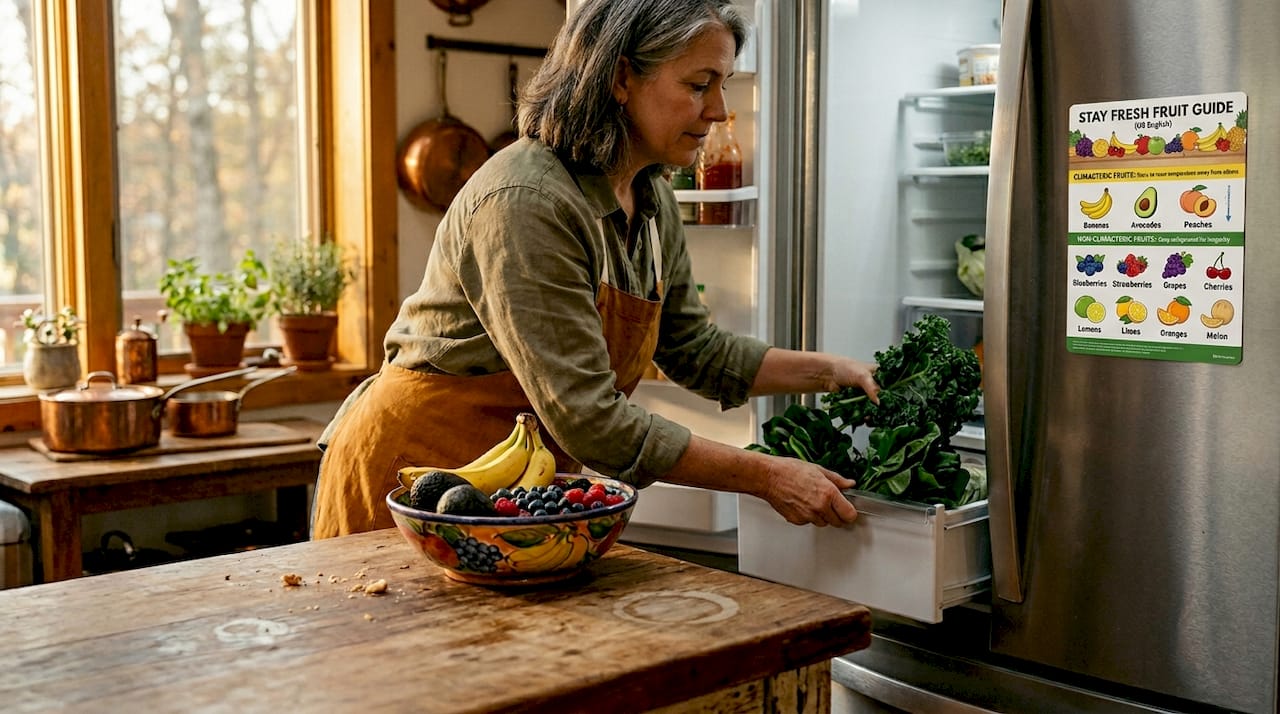
Climacteric fruits (avocado, mango, banana, plantain, papaya) continue ripening after harvest because they release ethylene gas. Store these at room temperature until ripe, then refrigerate them separately from produce that is sensitive to ethylene, like leafy greens, broccoli, and berries.
Non-climacteric fruits (berries, citrus, grapes, pineapple) stop ripening the moment they are picked. What you buy is what you get. Refrigerate these immediately.
Here is a quick storage guide:
| Produce | Storage method | Typical shelf life |
|---|---|---|
| Avocado (unripe) | Room temperature | 3 to 5 days to ripen |
| Ripe mango | Refrigerator | 5 to 7 days |
| Strawberries | Fridge, dry container | 3 to 5 days |
| Plantains | Room temperature | Until preferred ripeness |
| Leafy greens | Fridge, moisture-proof bag | 5 to 7 days |
| Sweet potatoes | Cool, dark pantry | 3 to 5 weeks |
| Citrus | Fridge or counter | 1 to 2 weeks |
Safe storage by produce type reduces foodborne illness risk and preserves quality, which directly cuts down on the money you throw away each week. Refer to our Caribbean produce storage tips for more on handling tropical items like dasheen, breadfruit, and ackee at home.
Compare common American and Caribbean produce options for everyday cooking
Atlanta shoppers have a real advantage: access to both American staple produce and Caribbean options that most of the country cannot find easily. Knowing the differences in ripening behavior, typical price, and storage helps you plan meals that are both fresh and affordable.
| Produce | Origin | Avg. price | Ripening type | Best used |
|---|---|---|---|---|
| Gala apple | American | Mid-range | Non-climacteric | Ready to eat at purchase |
| Sweet potato | American | Budget | Non-climacteric | Store in cool pantry |
| Watermelon | American | Lowest-priced fruit | Non-climacteric | Buy whole for best value |
| Plantain | Caribbean | Budget to mid | Climacteric | Ripen at room temp |
| Mango | Caribbean | Mid-range | Climacteric | Buy firm, ripen at home |
| Scotch bonnet pepper | Caribbean | Mid-range | Non-climacteric | Use fresh or freeze |
A few practical notes on how to select fresh fruits and vegetables from each category:
- Plantains: Green means starchy and savory, ideal for tostones. Yellow to black means sweet and soft, perfect for maduros. Buy them green if you are not cooking for several days.
- Mangoes: Smell the stem end. Fragrant means ready. A firm, unscented mango will ripen on your counter in two to four days.
- Sweet potatoes: Avoid any with soft spots or visible sprouts. These store well but degrade fast once compromised.
- Watermelon: Tap it. A deep, hollow thud means ripe. A higher, tight sound means it needs more time. Check for a yellow field spot on the bottom where it rested on the ground.
Pro Tip: Buy mangoes and plantains at different stages of ripeness on the same shopping trip. This staggers your ripening timeline and gives you produce ready to cook across multiple days rather than all at once.
Reviewing our American and Caribbean produce cost comparison can help you plan a weekly shopping list that balances flavor, nutrition, and budget across both cuisines.
Our take: stop treating produce shopping like a routine and start treating it like a skill
Here is something most food content will not say plainly: the biggest reason people waste produce is not poor storage. It is buying without a plan and selecting without knowledge.
We see this constantly. Shoppers pick up plantains because they look good, then cook them three days later when they have turned past the stage they wanted. They buy berries in bulk because of a sale, wash them all at once, and lose half of them to moisture within 48 hours. None of this is about willpower or being a good cook. It is about knowing what you are buying and why.
The best time to buy produce is tied directly to your cooking schedule for the week, not to what looks prettiest on the shelf that day. If you are cooking Caribbean food on Friday, buy your green plantains Monday. If your smoothie goes in the blender Wednesday morning, buy your mangoes on Saturday and let them ripen on the counter. This kind of intentional buying reduces waste dramatically and actually makes your food taste better because everything is at peak ripeness when you use it.
Atlanta shoppers also have something genuinely worth using: access to Caribbean produce that most American cities cannot source easily. Do not let that go to waste by treating scotch bonnets, breadfruit, or callaloo like novelty items. Learn how they ripen, how they store, and how they behave in your kitchen. That knowledge turns a convenience store run into a genuinely satisfying cooking experience.
Find fresh American and Caribbean produce at TOJ Express
At TOJ Express, we stock both American staple produce and Caribbean favorites because we know Atlanta’s kitchens reflect both. Whether you are picking up plantains at different ripeness stages, grabbing seasonal peppers, or restocking your everyday fruit bowl, we carry what you need in one stop.

Visit our store for fresh produce sourced to reflect the full range of Atlanta’s culinary culture, from Georgia sweet potatoes to ripe Caribbean mangoes. We also stock the pantry staples, seasonings, and specialty ingredients that go alongside your fresh produce in the recipes you actually cook. Browse what we carry at tojexpress.com or stop in and see what is fresh today.
Frequently asked questions
How long should I wash different types of produce before eating?
Porous produce like strawberries should be rinsed under cool running water for 10 to 20 seconds, while smoother items like apples need about 10 seconds. The texture of the skin determines how long and how vigorously you rinse.
Is it safe to use soap or commercial washes on fruits and vegetables?
No. Soap and commercial washes can leave harmful residues on produce surfaces, and plain running water is just as effective for removing dirt and most surface bacteria. Skip the specialty products.
What is the best way to store fruits to extend freshness at home?
Climacteric fruits like mangoes and avocados should ripen at room temperature first, then move to the refrigerator separately from ethylene-sensitive items like berries and leafy greens. Mixing them speeds up spoilage.
How can I keep my produce fresh during transport in hot Atlanta weather?
Make produce your last stop before heading home, and use an insulated bag if your drive is longer than 30 to 60 minutes. Atlanta’s summer heat degrades quality fast, and even short trips in a hot car matter.
Where can I buy fresh American and Caribbean produce with SNAP benefits in Atlanta?
The Peachtree Road Farmers Market doubles SNAP/EBT benefits for produce purchases up to $50 weekly, making it one of the most affordable places to buy fresh, local fruits and vegetables in Atlanta.