

Top Caribbean seasonings to transform your Atlanta cooking
TOJEXPRESS.COM-Antonio HenryTL;DR:
- Authentic Caribbean seasonings use whole spices and regional ingredients for depth and complexity.
- Key spices include allspice, Scotch bonnet peppers, green seasoning, nutmeg, cinnamon, and ginger.
- Atlanta offers stores like Caribbean Farmers Market and Choice Caribbean Market for genuine spices.
If you’ve ever tried to recreate a Jamaican jerk chicken or a Trinidadian curry at home in Atlanta and felt like something was missing, you already know the problem. The flavor just isn’t there. Authentic Caribbean cooking doesn’t just depend on technique. It depends on the right seasonings, and not every blend on a grocery store shelf delivers the real thing. Atlanta has a growing Caribbean food scene, but knowing which spices to buy, where to find them, and how to use them can feel overwhelming. This guide breaks it all down so you can cook with confidence and real Caribbean flavor.
Table of Contents
- How to identify authentic Caribbean seasonings
- The top must-have Caribbean seasonings for your kitchen
- Where to buy authentic Caribbean seasonings in Atlanta
- Comparing Caribbean seasoning blends: flavor, uses, and regions
- Tips for storing, blending, and using Caribbean seasonings at home
- Our perspective: Why exploring Caribbean seasonings matters for Atlanta cooks
- Bring home Caribbean flavor — shop with TOJ EXPRESS
- Frequently asked questions
Key Takeaways
| Point | Details |
|---|---|
| Essential spices | Allspice, Scotch bonnet, green seasoning, nutmeg, cinnamon, and ginger are foundational to Caribbean cooking. |
| Sourcing tips | Atlanta offers diverse markets like Caribbean Farmers Market and online shops for genuine Caribbean flavors. |
| Blend and store | Mix your own blends, buy in small batches, and store in airtight, dark containers for peak freshness. |
| Flavor diversity | Each Caribbean nation has a unique seasoning style—experiment to discover your favorite combinations. |
How to identify authentic Caribbean seasonings
Not all Caribbean spice blends are created equal. Walk into any mainstream grocery store and you’ll find shelves of generic “island” or “tropical” blends that taste like little more than garlic powder and paprika. Authentic Caribbean seasonings have a depth and complexity that comes from specific regional ingredients and traditional preparation methods.
The first thing to check is the ingredient list. Genuine blends use whole spices and fresh herb derivatives, not fillers like maltodextrin or artificial flavor. You want to see ingredients like allspice, Scotch bonnet pepper, thyme, and nutmeg near the top of the list. If “natural flavors” is the third ingredient, put it back.
Understanding the difference between wet and dry blends also helps. Dry blends like jerk seasoning or adobo are shelf-stable and great for rubs and marinades. Wet blends like Haitian Epis or Caribbean green seasoning are herb-based pastes that form the flavor foundation for stews, rice, and braised meats. Both have their place, and selecting Caribbean spices correctly means knowing which type fits your dish.
Regional identity is another key marker. Regional variations in blends are significant: Jamaica emphasizes allspice and Scotch bonnet, Trinidad uses curry and turmeric, Haiti prefers Epis, and Puerto Rico values adobo and oregano. When you know the island cuisine you’re cooking, you can match the right blend to it. Check the essential Caribbean spices list to get familiar with each region’s signature flavors.
Here’s a quick checklist for spotting authentic blends:
- Real whole spice derivatives near the top of the ingredient list
- No artificial flavors or excessive fillers
- Regional labeling (Jamaican, Trinidadian, Haitian, etc.)
- Recognizable herbs like thyme, scallion, and parsley in wet blends
- A strong, complex aroma when you open the jar
Pro Tip: Buy small quantities when you’re trying a new seasoning for the first time. Freshness fades fast, and a small jar lets you evaluate the flavor before committing to bulk.
The top must-have Caribbean seasonings for your kitchen
Once you know what to look for, it’s time to stock your spice cabinet. Here are the six seasonings that belong in every Atlanta kitchen serious about Caribbean cooking.
-
Allspice (pimento): Allspice is the backbone of jerk seasoning and foundational in Caribbean blends. It tastes like a combination of cloves, cinnamon, and black pepper. Use it in jerk marinades, oxtail stew, and rice dishes.
-
Scotch bonnet peppers: These small, wrinkled peppers pack serious heat. Scotch bonnet peppers deliver a fruity heat between 100,000 and 350,000 Scoville units, making them essential for jerk, hot sauces, and marinades. The fruity undertone is what separates them from plain hot peppers.
-
Green seasoning (Epis): This is the secret weapon of Caribbean cooking. Green seasoning is a wet blend of herbs, garlic, and onions that forms the flavor base for many stews and rice dishes. Try green seasoning recipes to see how versatile it really is.
-
Nutmeg: Grenada is actually called the “Isle of Spice” because of its nutmeg production. Use it in savory stews, baked goods, and even warm drinks like sorrel.
-
Cinnamon: Used in both sweet and savory Caribbean dishes, cinnamon shows up in rice and peas, stewed chicken, and holiday drinks. It adds warmth without overwhelming.
-
Ginger: Fresh or ground, ginger adds brightness and a mild heat. It works beautifully in marinades, soups, and ginger beer.
“Allspice is the heart of Caribbean flavor. Without it, you’re cooking adjacent to the cuisine, not inside it.” This is something any experienced Caribbean cook will tell you without hesitation.
For a broader look at what each spice brings to the table, the authentic Caribbean spice overview is a great starting point. You can also explore Caribbean seasonal products to find what’s available at different times of year.
Where to buy authentic Caribbean seasonings in Atlanta
Knowing which seasonings to buy is only half the battle. Finding them in Atlanta is the other half, and the good news is that the city has solid options.
Caribbean Farmers Market in Decatur and Choice Caribbean Market in Dacula are two of the best local sources for authentic spices, fresh produce, and specialty blends. Choice Caribbean Market in Dacula is especially well-stocked with hard-to-find items. Both stores have staff who actually cook Caribbean food and can point you toward the right product.
Here’s a quick reference for where to shop:
| Store | Location | What to expect |
|---|---|---|
| Caribbean Farmers Market | Decatur, GA | Fresh produce, dry spices, regional blends |
| Choice Caribbean Market | Dacula, GA | Specialty imports, wet blends, sauces |
| Savory Spice Shop | Multiple/online | Quality single spices and custom blends |
| TOJ EXPRESS | Online, ships to Atlanta | Caribbean groceries and seasonings delivered |
For more detail on navigating Atlanta’s Caribbean grocery landscape, check out these Atlanta Caribbean grocery tips and this guide to shopping Caribbean groceries in Atlanta.
A few practical tips for in-store shopping:
- Ask staff about product turnover. Fresh stock matters more than price.
- Look for a dedicated Caribbean or international foods section.
- Check expiration dates, especially on wet blends and pastes.
- Smell before you buy if possible. Dull aroma means dull flavor.
Pro Tip: Making your own blends at home using single spices from a trusted source is often fresher and cheaper than buying pre-mixed blends. Start with allspice, thyme, and Scotch bonnet for a simple jerk base.
Comparing Caribbean seasoning blends: flavor, uses, and regions
Not every Caribbean blend works for every dish. Understanding the differences helps you cook smarter and waste less.
| Seasoning | Flavor profile | Best dishes | Regional origin |
|---|---|---|---|
| Jerk seasoning | Smoky, spicy, earthy | Chicken, pork, fish | Jamaica |
| Epis (green seasoning) | Herby, garlicky, bright | Stews, rice, beans | Haiti |
| Trinidadian curry | Warm, turmeric-forward | Goat curry, roti, dhal | Trinidad |
| Adobo | Savory, garlicky, mild | Pork, chicken, rice | Puerto Rico |
| Sofrito | Bright, onion-forward | Beans, rice, soups | Puerto Rico/Cuba |
Regional variation is real: Jamaica leans on allspice and Scotch bonnet, Trinidad uses curry and turmeric, Haiti prefers Epis, and Puerto Rico values adobo and oregano. Each blend reflects the history, trade routes, and cultural influences of its island. Understanding this makes cooking feel like more than just following a recipe.
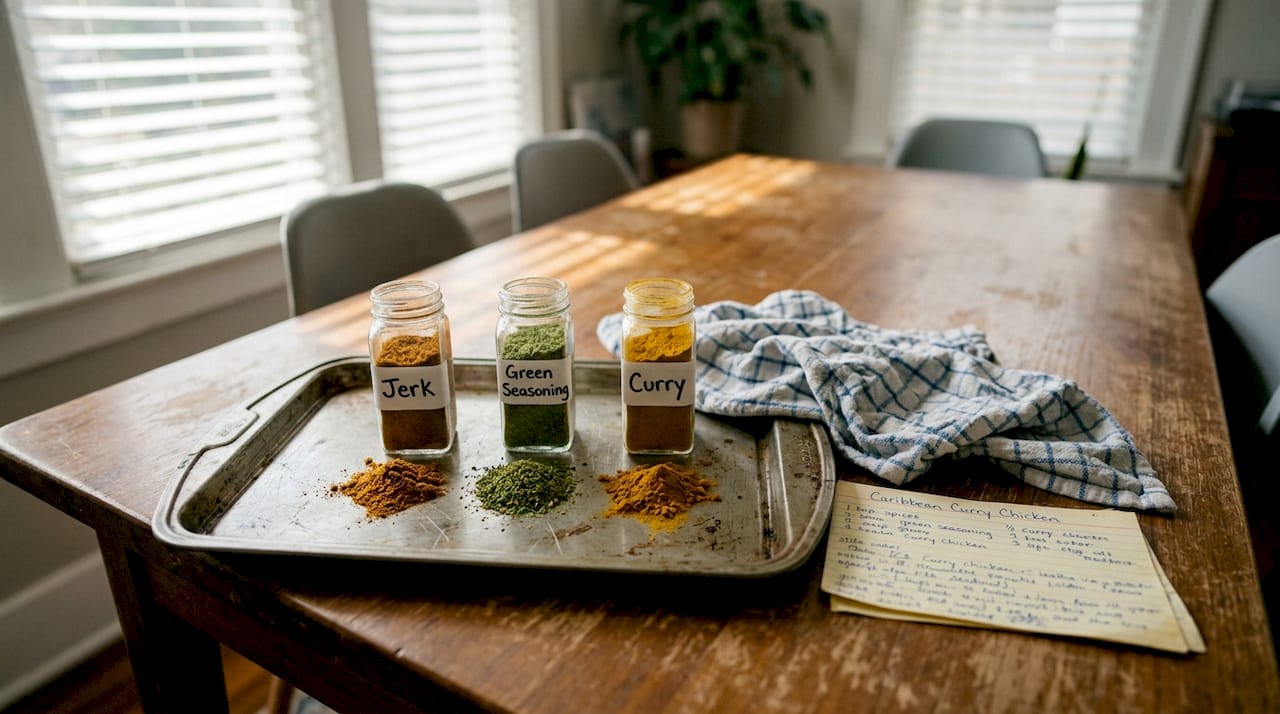
To understand the cultural weight behind these flavors, read more about Caribbean spices and culture. For Atlanta-specific inspiration, explore imported Caribbean items in Atlanta to see what’s available locally right now.
When to use a blend versus a single spice:
- Use blends for convenience and consistency in everyday cooking.
- Use single spices when you want to control the flavor balance precisely.
- Combine both when adapting a recipe to your own taste.
Tips for storing, blending, and using Caribbean seasonings at home
Even the best spices lose their punch if you store them wrong. Here’s how to keep your seasonings at peak flavor.
Buying in small quantities is smart when you’re experimenting. But once you know you love a spice, buying in bulk saves money. Making your own blends for freshness, storing them airtight in a cool and dark location, and buying bulk for cost-effectiveness are all strategies that experienced Caribbean cooks swear by.
Storage tips that actually work:
- Use glass jars with tight-fitting lids rather than plastic bags.
- Keep spices away from the stove. Heat and steam degrade them fast.
- Label everything with the purchase date. Most ground spices peak within 12 months.
- Store wet blends like Epis in the fridge and use within two weeks, or freeze in ice cube trays for longer storage.
- Keep whole spices separate from ground spices. Whole ones last longer.
For building your own jerk blend, combine allspice, thyme, Scotch bonnet powder, garlic, cinnamon, and a touch of nutmeg. For a quick curry blend, start with turmeric, cumin, coriander, and fenugreek. Adjust ratios until it fits your taste.
Pro Tip: If your ground spices smell faint, toss them in a dry pan over low heat for 30 to 60 seconds before using. This quick toast wakes up the essential oils and brings the flavor back to life.
For more on maximizing your spice shelf, the Caribbean spices storage tips guide covers everything from shelf life to grinding techniques.
Our perspective: Why exploring Caribbean seasonings matters for Atlanta cooks
Here’s what most cooking guides won’t tell you: the real value of Caribbean seasonings isn’t just flavor. It’s what they represent. Every blend carries a story about migration, trade, colonial history, and resilience. When you cook with Haitian Epis or Grenadian nutmeg, you’re connecting to something much bigger than dinner.
Atlanta’s food scene is genuinely diverse, and the city’s Caribbean grocery options make it easier than ever to go beyond the basics. But most home cooks stop at jerk seasoning and never explore the wider world of Trinidadian curry, Bajan seasoning, or Grenadian spice blends.
We think that’s a missed opportunity. A small swap, like replacing your usual garlic powder with a proper Caribbean green seasoning, can completely change a weeknight meal. It’s not about making cooking complicated. It’s about making it more interesting and more connected to real culinary traditions.
Atlanta’s Caribbean community has built something worth exploring. Start with one new seasoning, cook one new dish, and see where it takes you. Discover more through Caribbean street foods in Atlanta for ideas on what to cook next.
Bring home Caribbean flavor — shop with TOJ EXPRESS
You’ve done the research. Now it’s time to cook. At TOJ EXPRESS, we stock a wide range of authentic Caribbean seasonings, spice blends, and grocery staples so Atlanta food lovers don’t have to hunt across the city to find what they need.

From Scotch bonnet sauces to Epis bases and jerk rubs, our online store makes it easy to get the real thing delivered to your door. We carry both American and Caribbean products, so you can stock your whole kitchen in one place. Browse our full selection at TOJ EXPRESS and explore our recipe guides for inspiration on how to use everything you order. Authentic flavor is closer than you think.
Frequently asked questions
What is the most essential Caribbean seasoning?
Allspice (pimento) is the most essential Caribbean spice and the foundation of jerk recipes. No other single spice captures the core of Caribbean flavor as completely.
Where can I buy real Caribbean spices in Atlanta?
You can find authentic Caribbean spices at Caribbean Farmers Market in Decatur and Choice Caribbean Market in Dacula, as well as specialty online stores that ship to Atlanta.
How do I make my own Caribbean green seasoning?
Blend fresh parsley, thyme, scallions, garlic, onions, and peppers for a classic base. Green seasoning is a wet blend of herbs, garlic, onions, and peppers that you can customize to your taste.
How should I store Caribbean spices for freshness?
Store spices airtight in a cool, dark location to preserve their flavor. Avoid storing near the stove where heat and steam speed up degradation.