

One Ingredient U.S. Home Cooks Use to Spot Festival vs Fried Dumplings
TOJEXPRESS.COM-Antonio HenryFestival is the slightly sweet, cornmeal fried bread. Jamaican fried dumplings are plain flour dough fried until golden. Cornmeal and sugar give festival its crisp shell and dense, tender crumb, while fried dumplings stay soft, neutral, and closer to a savory biscuit. That one ingredient swap changes how each one fries, tastes, and pairs at the table.
TL;DR:
- Festival uses cornmeal and sugar, giving it a crisp exterior and grainy interior, while fried dumplings are made with plain flour and water for a softer texture.
- The ideal festival dough contains fine yellow cornmeal, milk, and sugar, rolled into long ovals before frying at 325 to 350°F for 6 to 8 minutes.
- Fried dumplings are shaped into round balls and fried at 300 to 325°F for 8 to 10 minutes, requiring careful timing to avoid a raw center.
- Festival browns evenly with a deeper golden color due to caramelization, whereas fried dumplings stay lighter and have a more bread-like inside.
- Using coarse cornmeal or skipping the resting period affects the texture, making authenticity heavily reliant on the right grind and proper technique.
Table of Contents
- Festival vs Fried Dumplings: A Side-by-Side Comparison
- How to Make Jamaican Festival: Recipe and Technique
- How to Make Jamaican Fried Dumplings: Recipe and Technique
- How Can You Tell Festival and Fried Dumplings Apart?
- Serving Festival and Fried Dumplings the Traditional Way
- Variations, Substitutions, and Dietary Swaps
- A Note From Antonio on Sourcing Authentic Ingredients
- Why These Two Breads Matter Beyond the Recipe
- Stock Your Kitchen for Both Recipes
- Sources
Festival vs Fried Dumplings: A Side-by-Side Comparison
The confusion between these two makes sense. Both are fried, both show up next to fried fish or ackee and saltfish, and both get lumped together by people who’ve only had one or the other. But once you break down what actually goes into each dough, the differences stop being subtle.
Festival gets its identity from fine yellow cornmeal), mixed with flour, sugar, baking powder, and usually milk. That combination is what separates it from a plain Johnny cake or a basic fried dumpling, according to Serious Eats’ breakdown of the recipe. Fried dumplings skip the cornmeal and sugar entirely. It’s just flour, salt, a little baking powder if you want extra lift, and water.
Here’s how the two stack up feature by feature:
- Primary ingredients: Festival uses flour plus fine yellow cornmeal; fried dumplings use flour alone.
- Liquid: Festival typically uses milk for a softer crumb; fried dumplings use water, per recipe guides comparing the two.
- Sweetener: Festival includes sugar; fried dumplings stay savory with no sugar added.
- Shape: Festival is rolled into long, cigar-shaped ovals; fried dumplings are shaped into round balls or flattened discs.
- Texture: Festival fries up crisp on the outside with a slightly dense, grainy interior; fried dumplings come out softer and more bread-like all the way through.
- Typical serving context: Festival shows up with fried fish, escovitch, or jerk chicken as street food and party fare; fried dumplings are more of an everyday breakfast side, often next to callaloo or saltfish.
The sugar in festival does more than sweeten it. It caramelizes slightly during frying, which is part of why the outside gets that deeper golden color and extra snap. Fried dumplings, with no sugar to caramelize, stay pale and matte even when fully cooked.
How to Make Jamaican Festival: Recipe and Technique
This version leans on the cornmeal ratio and milk that give festival its signature bite. Fine grind matters here. Coarse cornmeal turns the interior gritty instead of tender, so skip anything labeled “coarse” or “polenta grind” if you can.
Ingredients:
- 1 cup all-purpose flour
- 1 cup fine yellow cornmeal
- 2 to 3 tablespoons sugar
- 1 teaspoon baking powder
- ½ teaspoon salt
- ¾ cup milk (or water, if you want a firmer bite)
- 1 tablespoon melted butter or oil
- Vegetable oil, for frying
Instructions:
- Whisk the flour, cornmeal, sugar, baking powder, and salt together in a large bowl.
- Pour in the milk and melted butter, then stir until a soft, slightly sticky dough forms. Don’t overwork it; a few lumps are fine.
- Cover and let the dough rest for 10 to 15 minutes. This gives the cornmeal time to hydrate, which keeps the interior from turning gritty.
- Divide the dough into 8 to 10 pieces. Roll each into a long oval, about 3 to 4 inches, tapering slightly at the ends like a small cigar.
- Heat about 2 inches of oil in a deep skillet or pot to 325 to 350°F. Test readiness by dropping in a small piece of dough. It should sizzle and rise steadily, not shoot to the surface in a burst of bubbles.
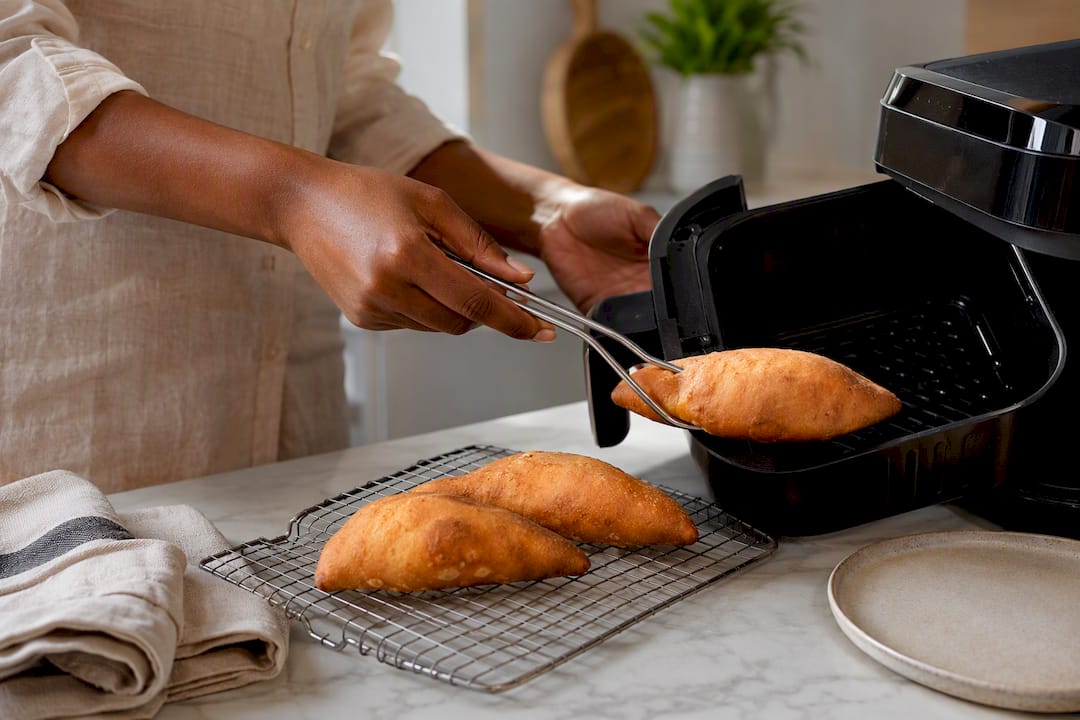
- Fry the festivals in batches, turning occasionally, for 6 to 8 minutes until deep golden brown and firm to the touch.
- Drain on a wire rack or paper towels. A rack keeps the bottom from steaming and going soft.
Pro Tip: If your festivals are browning too fast on the outside while staying raw in the middle, your oil is too hot. Drop the temperature by about 25 degrees and give them another minute or two.
Cooked festival keeps well in an airtight container in the fridge for a few days. Reheat in a moderately hot oven or air fryer for a few minutes to bring back the crisp exterior. Skip the microwave. It turns the crust rubbery.
How to Make Jamaican Fried Dumplings: Recipe and Technique
Fried dumplings run simpler than festival, but that simplicity is exactly why the technique matters more. There’s no sugar or cornmeal to mask uneven frying, so timing and dough hydration carry the whole result.
Ingredients:
- 2 cups all-purpose flour
- 1 teaspoon baking powder (optional, for extra lift)
- ½ teaspoon salt
- ¾ to 1 cup water
- Vegetable oil, for frying
Instructions:
- Mix the flour, baking powder, and salt in a bowl.
- Add water gradually, stirring until the dough comes together into a firm but pliable ball. It should feel slightly tacky, not wet.
- Knead the dough on a lightly floured surface for 3 to 4 minutes until smooth.
- Cover and rest for at least 15 minutes. Resting relaxes the gluten, which is what keeps the finished dumpling tender instead of tough.
- Divide into 6 to 8 pieces and shape into smooth round balls, then flatten slightly with your palm.
- Heat oil to 300 to 325°F, a bit cooler than for festival, since fried dumplings are thicker and need more time to cook through without scorching outside.
- Fry for 8 to 10 minutes per batch, turning every couple of minutes for even color, per the method Africanbites.
- Drain on paper towels and let rest a minute before serving.
Pro Tip: Press a thumb into the center of each dumpling before frying. That small dent helps the middle cook through at the same rate as the edges, so you avoid the raw, doughy center that ruins most home attempts.
Fried dumplings taste best fresh, within an hour of frying. If you’re making them ahead, reheat in a covered skillet over low heat rather than the oven. It keeps the outside from drying out while the center warms back up.
How Can You Tell Festival and Fried Dumplings Apart?
If someone hands you a piece of fried dough and you’re not sure which one you’re holding, a few quick checks settle it fast.
- Look at the shape. Festival is long and oval, tapered at both ends. Fried dumplings are round or slightly flattened.
- Check the color. Festival browns deeper and more evenly because of the sugar. Fried dumplings stay lighter, closer to golden tan.
- Break one open. Festival’s crumb shows a faint yellow tint and a slightly gritty, grainy texture from the cornmeal. Fried dumplings are uniformly white and smooth inside, more like a biscuit.
- Taste it. Festival carries a mild sweetness up front, sometimes with a faint milk note. Fried dumplings taste plain and a little salty, built to soak up whatever sauce or gravy sits next to them.
- Listen for the crust. A well-fried festival makes an audible light crunch when you bite into it. Fried dumplings give a softer, quieter bite all the way through.
The cornmeal itself is the giveaway most people miss. Run a finger across a cut piece of festival and you’ll feel tiny grains. There’s nothing textured about fried dumpling dough. It’s smooth flour and water, nothing more.
Serving Festival and Fried Dumplings the Traditional Way
Festival’s sweetness makes it a natural partner for salty, fried, or spicy dishes. It shows up constantly beside fried fish, escovitch, and jerk chicken, where the contrast between sweet dough and heat or vinegar tang does most of the work. Fried dumplings lean into breakfast territory, sitting next to callaloo, saltfish, or ackee more often than dinner plates.
A few serving ideas worth trying:
- Build a party platter with both: festival for the sweet contrast, fried dumplings for the neutral base that holds sauces well.
- Pair festival with a cold ginger beer or sorrel drink to play up the sweetness.
- Serve fried dumplings alongside a hearty breakfast spread, similar to the ideas in these Caribbean breakfast pairings.
- Cut festival into smaller pieces for appetizer trays at gatherings; it holds its texture better than fried dumpling under a heat lamp.
Variations, Substitutions, and Dietary Swaps
Swapping milk for water in festival dough softens the crumb less and produces a firmer, slightly drier result, according to comparisons across recipe sites. Oat or cashew milk works fine as a plant-based substitute and keeps the tenderness closer to the dairy version.
- Gluten-free festival needs a 1:1 gluten-free flour blend alongside the fine cornmeal; skip coarse cornmeal, which throws off the texture regardless of the flour used.
- Lower-sugar festival still needs a small amount of sugar to keep the browning and flavor recognizable; dropping it entirely edges the recipe closer to a plain fried dumpling.
- Savory festival variations exist, using herbs instead of sugar, but purists will say that’s a different bread once the sweetness disappears.
Pro Tip: Cornmeal is the one ingredient you can’t remove and still call it festival. Take it out, and you’ve made a plain fried dumpling by definition, not a variation.
A Note From Antonio on Sourcing Authentic Ingredients
I’ve spent enough time stocking Caribbean pantry staples at Tojexpress to know that most festival failures trace back to one thing: the wrong cornmeal grind. Fine yellow cornmeal, not the coarse grind sold for polenta, is what gives festival its proper tender crumb. When you’re shopping, read the bag label carefully; “fine” and “yellow” both matter.
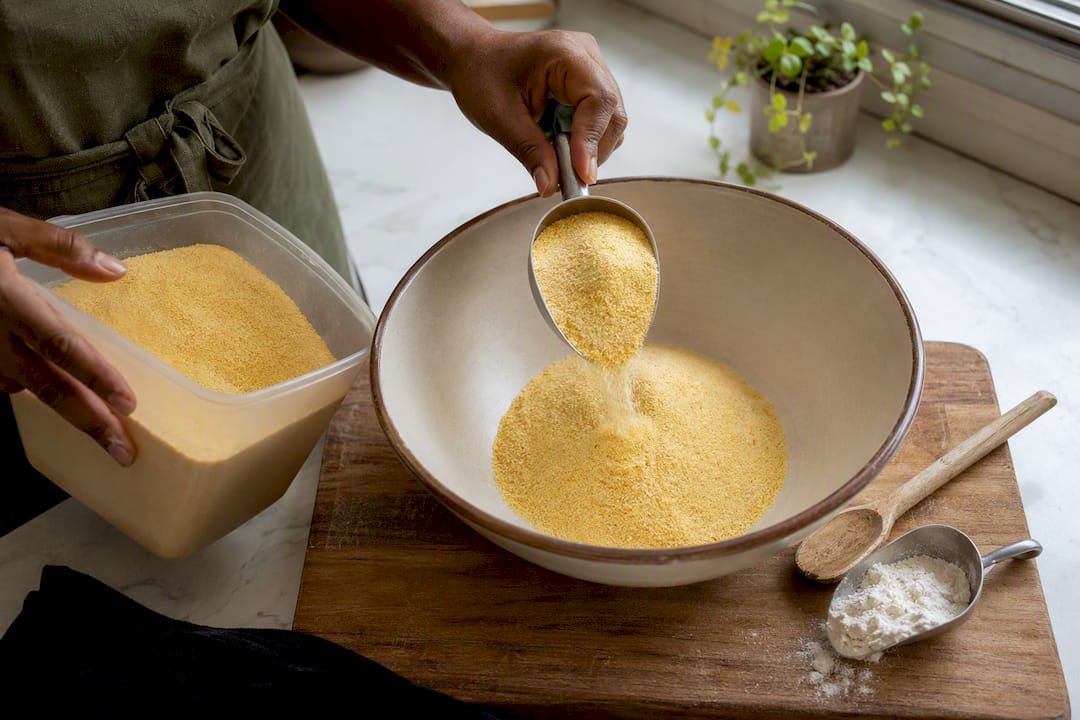
I’ve written before about Caribbean holiday foods and the pantry staples that make them work, and festival follows the same rule as most Caribbean fried breads: quality cornmeal and fresh baking powder make or break the texture.
Why These Two Breads Matter Beyond the Recipe
Festival and fried dumplings both carry a kind of comfort that outlasts trends. They’re what shows up at a Sunday breakfast table or a beach cookout, made in batches big enough for whoever wanders in. I’d encourage you to try both recipes side by side once, even if you only came here for one. The comparison teaches you more about technique than either recipe alone ever could.
— ANTONIO
Stock Your Kitchen for Both Recipes
Getting festival and fried dumplings right at home starts with having the right pantry basics on hand, which can be difficult to find at a regular grocery store.

Stock up on fine yellow cornmeal, plant-based milk alternatives, and Jamaican seasoning blends through the Tojexpress snacks collection, or grab a ginger beer or sorrel drink from the drinks collection to serve alongside your festival. Everything you need for an authentic batch, from cornmeal to condiments, is one order away if you’re in Stone Mountain, Decatur, Lithonia, Conyers, Tucker, Snellville, or anywhere else around Rockdale County. Place an order today and have your pantry ready before the oil even heats up.
Sources
- Festival (Jamaican fried cornmeal dumplings) — Serious Eats
- Jamaican Festival Recipe — That Girl Cooks Healthy
- Africanbites