

How food culture shapes Atlanta: American and Caribbean roots
TOJEXPRESS.COM-Antonio HenryTL;DR:
- Atlanta’s food culture originated from African American survival dishes post-Civil War.
- Multicultural influences, especially Caribbean cuisines, continue to shape Atlanta’s dynamic food scene.
- Food is a vital mechanism for community bonding, memory preservation, and cultural identity in Atlanta.
Atlanta’s food scene is one of the most misunderstood in America. Most people reduce it to fried chicken and sweet tea, but that barely scratches the surface. What actually drives Atlanta’s culinary identity is a layered story built on survival after the Civil War, waves of Caribbean migration, immigrant innovation, and community bonds that run deeper than any restaurant menu. For food enthusiasts who want to understand why certain dishes matter here, and why Atlanta keeps producing bold, original food movements, this breakdown covers the historical roots, multicultural evolution, Caribbean influence, and the community mechanics that hold it all together.
Table of Contents
- Historical roots of Atlanta’s food culture
- The evolving landscape: multicultural influences
- Caribbean cuisine’s growing role in Atlanta
- Memory, community, and the mechanics of food culture
- Why Atlanta’s food culture is more than tradition and trend
- Discover authentic flavors with TOJ EXPRESS
- Frequently asked questions
Key Takeaways
| Point | Details |
|---|---|
| Soul food origins | Soul food in Atlanta grew from African American survival cooking and became central to community identity. |
| Multicultural evolution | Atlanta’s food scene thrives by integrating global and immigrant influences, including vegan and fusion trends. |
| Caribbean impact | Caribbean migration and cuisine, especially Cuban, have expanded Atlanta’s food diversity since the 1960s. |
| Memory and community | Food culture in Atlanta fosters memory, migration, and community through collective events and tradition. |
| Tradition meets innovation | Balancing authenticity with creativity is key to keeping Atlanta’s food culture vibrant and true to its roots. |
Historical roots of Atlanta’s food culture
Having set the stage with Atlanta’s cultural complexity, let’s explore the deep historical roots that anchor its food traditions.
To really understand Atlanta’s food culture, you have to start where it began: in scarcity. Soul food originated from African American survival cooking post-Civil War, built from inexpensive ingredients that were often the only things available to formerly enslaved families and their descendants. This wasn’t comfort food invented for nostalgia. It was practical, creative cooking born from necessity.
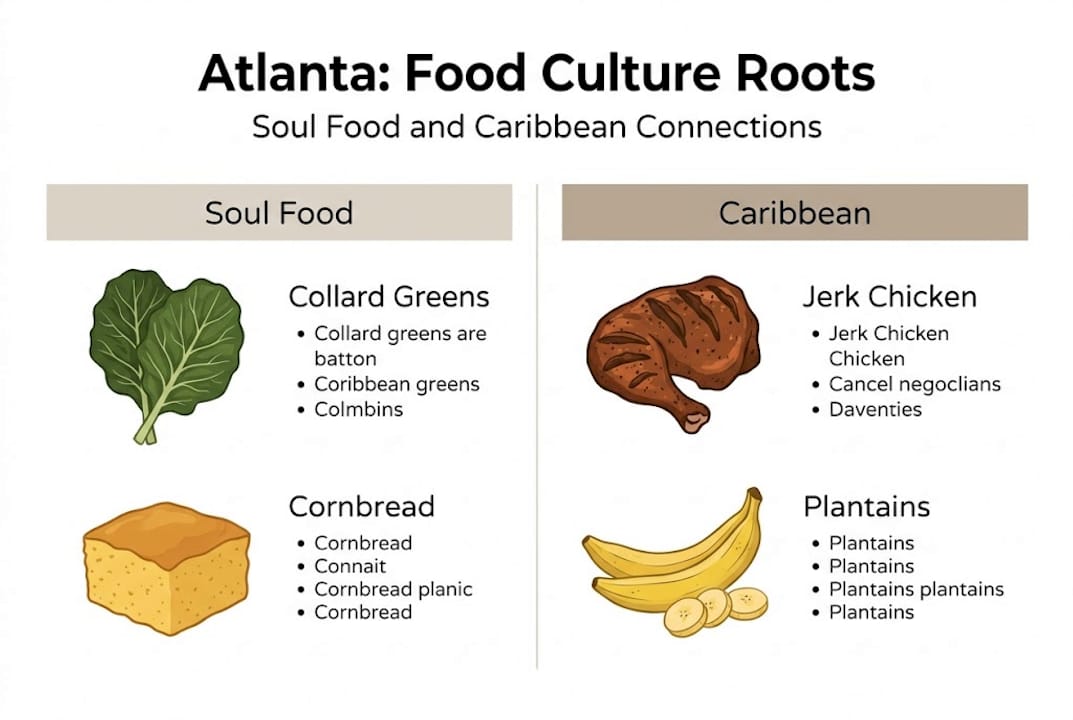
The ingredients that defined this era tell the whole story. Collard greens, black-eyed peas, yams, cornmeal, neckbones, and oxtail became staples not because they were luxurious but because they were accessible and could feed large families. Cooks learned to extract maximum flavor and nutrition from parts of the animal most people discarded. The result was a cuisine packed with depth, technique, and cultural memory baked into every recipe. Understanding this culinary history helps food enthusiasts see Atlanta’s dishes not as simple comfort food but as sophisticated responses to difficult circumstances.
Churches and family-run restaurants became the physical spaces where this cuisine grew into something larger than food. Weekly church gatherings meant potluck spreads that reinforced community bonds and kept recipes alive across generations. Family restaurants became neighborhood anchors, places where people gathered for birthdays, funerals, meetings, and everyday meals.
Landmark restaurants that shaped Atlanta’s story
Two restaurants stand out as essential pillars of Atlanta’s food heritage: Paschal’s and Busy Bee Cafe. These legendary spots anchored neighborhoods and civil rights history in ways that went far beyond serving good food.
Paschal’s, opened in 1947, was more than a restaurant. Civil rights leaders including Martin Luther King Jr. held strategy meetings in its dining room. It was a safe space, a fundraising hub, and a symbol of Black economic power during a period when segregation defined most of Atlanta’s public life. The food was the reason people came through the door, but the conversations that happened over those plates changed history.
Here is a quick comparison of Atlanta’s foundational soul food restaurants:
| Restaurant | Opened | Known for | Cultural significance |
|---|---|---|---|
| Paschal’s | 1947 | Fried chicken, soul food classics | Civil rights movement meeting place |
| Busy Bee Cafe | 1947 | Smothered chicken, Southern sides | Neighborhood anchor, community institution |
Key ingredients that built Atlanta’s soul food tradition:
- Collard greens: Slow-cooked with smoked meat for depth of flavor
- Cornbread: Made from scratch, often in cast iron, served with every meal
- Oxtail: A cut that required patience and skill to cook well
- Black-eyed peas: Symbolic and nutritious, tied to New Year’s traditions
- Yams: Sweet, filling, and deeply rooted in West African culinary tradition
Communal eating events, from church fish frys to neighborhood cookouts, reinforced this culture every week. Food was never just sustenance in Atlanta. It was a language that said: we are here, we belong here, and we will feed each other through whatever comes next.
The evolving landscape: multicultural influences
With tradition established, it’s vital to see how Atlanta’s food culture continues to evolve through multicultural influences and culinary creativity.
Atlanta did not stay still. Starting in the late 20th century, the city began drawing immigrants from across the globe, and those arrivals reshaped the food landscape in significant ways. Black chefs in Atlanta began experimenting with global flavors, vegan adaptations, and elevated dishes, pushing soul food forward rather than treating it as frozen in time.
The result has been an extraordinary wave of culinary creativity. Here is a breakdown of the major influences shaping Atlanta’s current food scene:
| Influence | Key contributions | Example dishes or areas |
|---|---|---|
| Caribbean | Jerk seasoning, oxtail stews, plantains | Caribbean restaurants across metro Atlanta |
| Latin American | Tamales, ceviche, bold spicing | Buford Highway corridor |
| Vietnamese | Pho, banh mi, fresh herb profiles | Buford Highway’s Doraville section |
| Korean | Kimchi, barbecue techniques, fermentation | Koreatown sections of Doraville |
| West African | Suya, jollof rice, palm oil cooking | Growing restaurant presence citywide |
Steps that show how multicultural fusion has developed in Atlanta:
- Immigrant communities establish ethnic grocery stores and family restaurants
- Local chefs, many of them Black Atlantans with deep soul food roots, begin incorporating new ingredients
- Diners and food media take notice, generating coverage and expanding audiences
- The techniques and flavors get absorbed into Atlanta’s wider culinary vocabulary
- New hybrid dishes emerge that carry both the original tradition and the new influence
Buford Highway deserves special recognition here. This corridor northeast of downtown Atlanta is one of the most important food streets in America, with dozens of restaurants representing cuisines from across Southeast Asia, Latin America, and Eastern Europe. For food enthusiasts, a single afternoon on Buford Highway can feel like traveling across three continents.
The vegan soul food movement is another remarkable development. Places like New Soul Veg reimagined dishes like collard greens, mac and cheese, and BBQ without animal products, proving that the essence of soul food is in the flavor and technique, not just the meat. This movement speaks to Caribbean cuisine in Atlanta as well, since many Caribbean food traditions already rely heavily on plant-based cooking.
Pro Tip: When trying fusion dishes in Atlanta, look for spots where the chef has a personal connection to both cuisines being blended. That personal stake is usually the difference between authentic creativity and gimmick cooking. The best breaking cultural barriers happens when chefs bring genuine knowledge to the table.
The risk in all this innovation is real, though. Fusion done poorly strips a dish of its meaning and leaves only the aesthetics. Upscale plating and trendy ingredients can make a dish look exciting while gutting the cultural story that made it worth eating in the first place. Atlanta’s best chefs understand this tension and navigate it carefully. The international culinary diversity that enriches Atlanta works best when it adds to the existing story rather than replacing it.
Caribbean cuisine’s growing role in Atlanta
Atlanta’s food evolution wouldn’t be complete without the story of Caribbean influences and the profound effects of migration.
Caribbean food culture has been building quietly in Atlanta for decades, and its impact on the city’s culinary identity is now impossible to ignore. Migration from Caribbean islands to Atlanta increased significantly after the 1960s, with communities from Jamaica, Trinidad, Cuba, Haiti, and other islands establishing themselves across metro Atlanta and bringing their food traditions with them.
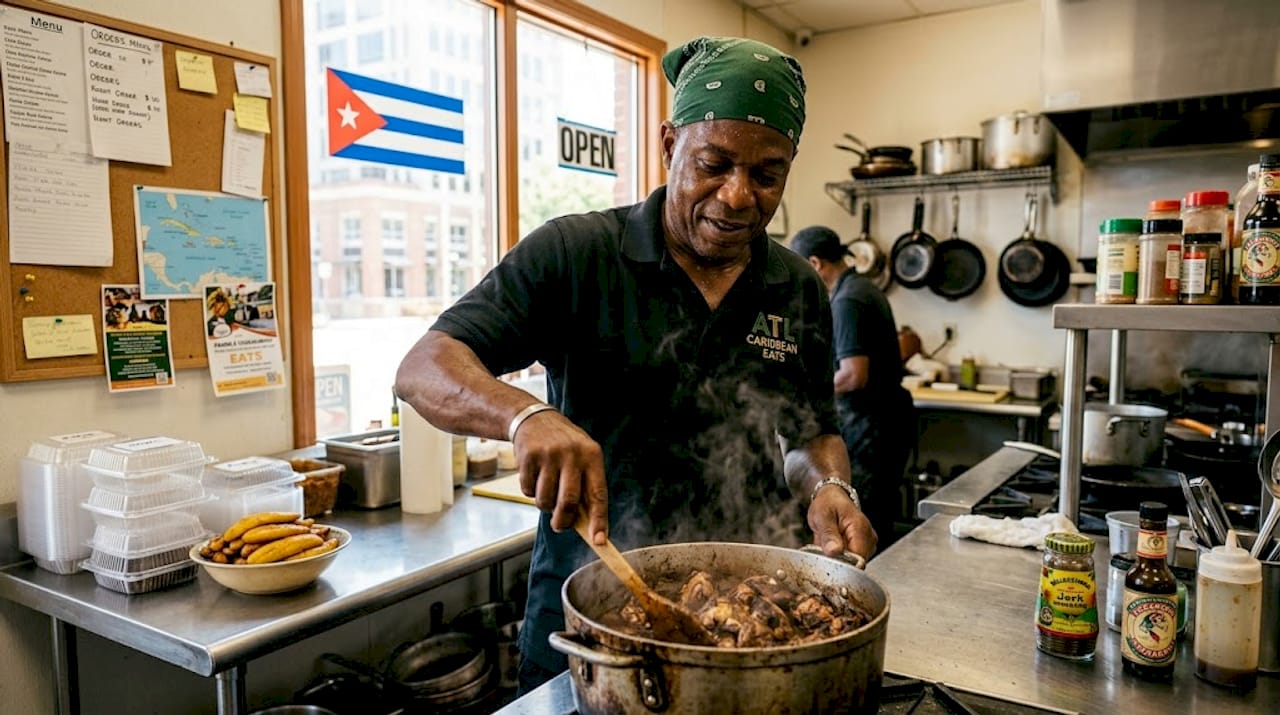
Cuban cuisine in Atlanta reflects Spanish, African, and Caribbean roots, growing with migration since the 1960s, with restaurants like Havana Sandwich Shop educating diners on the cuisine while reflecting community growth. This is an important point: Cuban food is not a single tradition. It is a fusion of indigenous Taino influences, Spanish colonial cooking, West African culinary practices brought by enslaved people, and Caribbean island resourcefulness. Understanding that layering makes tasting Cuban food in Atlanta a richer experience.
Key characteristics of Cuban cuisine that set it apart:
- Olive oil and garlic as base flavors: Unlike many Caribbean traditions that use coconut oil, Cuban cooking leans heavily on olive oil and sofrito (a blend of garlic, onion, peppers, and tomatoes)
- Slow-braised meats: Ropa vieja (shredded beef), lechon asado (roast pork), and picadillo (spiced ground beef) are signatures
- Rice and beans: Always present, often cooked together as congri or moros y cristianos
- Plantains: Served sweet (maduros) or savory and crispy (tostones)
- Citrus marinades: Mojo sauce, made from sour orange, garlic, and cumin, defines Cuban meat preparation
The Caribbean diaspora foods that matter in Atlanta go well beyond Cuban food, though. Jamaican jerk chicken has become familiar to Atlantans across all neighborhoods. Trinidadian doubles (a chickpea-filled sandwich with tamarind sauce) are gaining recognition. Haitian griot (fried pork with pickled vegetables) has devoted fans who seek it out specifically.
Statistic callout: Cubans represent one of the four largest Caribbean communities in Atlanta, and their restaurants, grocery stores, and cultural events have created lasting infrastructure that supports the broader Caribbean culinary presence in the city.
The culinary heritage of the Caribbean is especially meaningful in Atlanta because it intersects so naturally with the city’s existing African American food traditions. Both draw heavily on West African cooking techniques and ingredients. Both use communal eating as a form of cultural reinforcement. When a Jamaican grandmother and an Atlanta soul food cook compare notes, they often find more common ground than differences.
Memory, community, and the mechanics of food culture
The story isn’t just about dishes. It’s about memory and what binds communities together through food.
Food does something that language alone cannot do. It stores memory in ways that bypass rational thought and go straight to emotion and identity. For Atlanta’s communities, both African American and Caribbean, food is one of the primary ways that cultural knowledge survives migration, economic hardship, and generational change.
“Soul food’s role fosters memory, migration, and survival; creativity keeps it alive amid growth, but the cultural roots must be protected to preserve meaning.”
The mechanics of how food culture actually transmits from one generation to the next are worth understanding in detail:
- Intergenerational cooking: Grandmothers teach grandchildren, often without written recipes. The knowledge lives in hand movements, smell recognition, and tasting instinct.
- Communal events: Church potlucks, family reunions, block parties, and festivals create regular moments where food is shared, discussed, and refined collectively.
- Ingredient adaptation: When families migrate, they adapt recipes to available ingredients. Atlanta’s Caribbean cooks have learned to substitute local produce while maintaining flavor profiles.
- Restaurant as archive: Family-owned restaurants preserve specific regional or family recipes that might otherwise disappear. Every menu item is a small act of cultural preservation.
- Food storytelling: The act of explaining a dish’s origins, whether at a dinner table or on a restaurant menu, keeps the narrative alive.
The tension between tradition and innovation runs through every level of this. Younger chefs want to experiment and express their own creative vision. Older community members sometimes see changes as disrespect for what their parents and grandparents built. Neither side is wrong. The snack culture in Atlanta reflects this tension too: newer snack products from Caribbean and American traditions sit side by side in stores, each representing a different moment in the cultural timeline.
Pro Tip: Seek out food experiences that connect past and present in real, unpolished settings. Church potlucks, family-run neighborhood restaurants, and Caribbean community festivals often provide more authentic insight into Atlanta’s food culture than high-profile spots that charge for the experience. The importance of culinary traditions is clearest when you see them practiced without performance.
Community-building through food sharing in Atlanta is not metaphorical. It is structural. The church that feeds 200 people after Sunday service is maintaining a network of mutual support. The Caribbean restaurant that hosts a cultural night is creating space for community members to reconnect with home. Food is the mechanism, and Atlanta’s various communities have used it with remarkable skill.
Why Atlanta’s food culture is more than tradition and trend
Most food guides treat Atlanta’s cuisine as a collection of restaurants and dishes to check off a list. That misses the point almost entirely. What makes Atlanta’s food scene genuinely exceptional is the way it holds tradition and evolution in productive tension, rather than letting one destroy the other.
The contrarian view worth stating plainly: innovation is not the enemy of food culture. Neither is tradition. The real danger is losing the story. When a restaurant modernizes soul food plating and charges premium prices without acknowledging where those recipes came from, it hollows out the dish. When a community refuses any adaptation and insists recipes cannot change, the food loses its ability to stay alive through migration and circumstance. Atlanta’s tension between tradition and innovation shows that modern plating is acceptable, but the core story and intention must remain. Fusion risks dilution when heritage is stripped away.
The spots that get it right, Paschal’s on the heritage end, New Soul Veg on the innovation end, share one thing: intention. They know why they cook what they cook and who they are cooking for. That clarity is what food enthusiasts should look for when they shop diverse stores for flavors and explore Atlanta’s culinary landscape. Find the places and products where the people behind the food can tell you the story without hesitation. That story is the ingredient that cannot be replicated.
Discover authentic flavors with TOJ EXPRESS
Now that you’re equipped with insights on Atlanta’s food culture, here’s how to experience it for yourself.
At TOJ EXPRESS, we bring the same spirit of culinary authenticity directly to you. Our shelves carry a carefully selected range of American and Caribbean grocery products that reflect the food traditions explored in this article. Whether you are looking for ingredients to recreate a Cuban mojo marinade, authentic Caribbean spices for jerk chicken, or classic American pantry staples rooted in soul food tradition, we have what you need.

Explore our general grocery collection to find products that connect you to Atlanta’s real food story. We stock what the community actually uses, not just what looks good on a shelf. Your next great meal starts with the right ingredients, and we are here to help you find them.
Frequently asked questions
What defines Atlanta’s food culture today?
Atlanta’s food culture is defined by a blend of deep-rooted soul food traditions and diverse global influences, especially Caribbean and immigrant cuisines that have evolved alongside Atlanta’s soul food scene for decades.
How did soul food restaurants influence Atlanta’s history?
Iconic restaurants like Paschal’s and Busy Bee Cafe served as cultural and political centers, with historic soul food restaurants anchoring neighborhoods and supporting civil rights leaders during Atlanta’s most pivotal social movements.
How does Caribbean cuisine impact Atlanta’s food scene?
Caribbean cuisine enriches Atlanta’s food landscape through migration, community growth, and restaurants like Havana Sandwich Shop, which grows with migration since the 1960s and educates diners on Caribbean culinary traditions.
What are the risks of food innovation in Atlanta?
While innovation keeps the cuisine vibrant and relevant, it risks diluting cultural roots if done without intention, since experts warn against stripping cultural roots when chasing modern trends or broader market appeal.