

Keep Pimento Flavor in Mild Jerk for Atlanta Cooks
TOJEXPRESS.COM-Antonio HenryYou can get authentic Jamaican jerk flavor at low heat two ways: grab a mild preblended seasoning or paste from brands like Walkerswood, Cool Runnings, or Spice Yaad, or build your own blend at home using pimento and allspice as the backbone instead of scotch bonnet. Use paste when you need a marinade fast, dry rub when you want a longer shelf life, and homemade when you want full control over the heat.
TL;DR:
- Most mild jerk seasonings turn down the heat by reducing or removing scotch bonnet peppers, while maintaining allspice, thyme, and flavorful aromatics.
- Bottled mild jerk sauces typically contain preservatives like sodium benzoate or vinegar, and paste needs refrigeration, so storage considerations vary by format.
- Homemade mild jerk seasoning allows control over ingredients and heat level, with options to add or omit scotch bonnet, cayenne, or smoked paprika for customization.
- When selecting a product, check the ingredient list for the presence and position of scotch bonnet, and choose dry rub or paste based on cooking time and application.
- Mild jerk still delivers authentic Jamaican flavors through pimento, thyme, and smoke, without relying on high chili content, making it suitable for sensitive household members.
Table of Contents
- Mild Jerk Seasoning Options Worth Stocking in Your Kitchen
- How to Make Mild Jamaican Jerk Seasoning at Home
- How to Lower the Heat Without Losing the Jerk Backbone
- Marinades, Rubs, and Where Mild Jerk Actually Shines
- What to Check on the Label Before You Buy
- Where TOJ EXPRESS Fits Into Getting This Right
- Store-Bought Mild Jerk vs. Hot Jerk: What Actually Changes
- Reading a Jerk Label Like Someone Who Cooks With It Often
- Why Mild Doesn’t Have to Mean Watered Down
- Buy Mild Jerk Seasoning Without the Guesswork
- Sources
Mild Jerk Seasoning Options Worth Stocking in Your Kitchen
Jerk seasoning comes in three basic forms, and picking the right one depends on how much time you have and how you plan to cook. Paste is wet, concentrated, and built for marinating. Dry rub is shelf-stable and works best when you want a crust on the outside of the meat. Bottled sauce sits somewhere in between, often thinner and meant for basting or finishing rather than a long soak. TOJ EXPRESS’s breakdown of jerk seasoning types covers the differences in more detail if you’re still sorting out which format fits your cooking style.
Here’s where the mild category actually delivers:
- Walkerswood Mild Jerk Seasoning (10 oz jar): Lists pimento, scotch bonnet, scallion, and thyme right on the label, but the scotch bonnet ratio is scaled back so the pimento and thyme carry more of the flavor. Good for a first-timer who wants the real Walkerswood profile without the sting.
- Cool Runnings Mild Jerk Seasoning (235 mL): Marketed as “all the flavor, none of the heat,” and the brand recommends marinating for about an hour for a quick weeknight dinner. This is the one to reach for when you forgot to plan ahead.
- Spice Yaad Mild Jerk Seasoning (12 oz): Built around pimento, scallion, and thyme with a lower-heat formula the brand pitches as versatile enough for grilled meat, vegetables, or plant-based dishes.
- Pinch Spice Market Mild Jamaican Jerk: A specialty blend sold as “real jerk flavor without the spice,” suggested for tofu, tacos, and barbecue when you want the aromatics without the burn.
If someone in the house deals with digestive sensitivities, there’s a Low FODMAP certified jerk seasoning on the market too, which also happens to be gluten-free. That’s a useful data point if you’re shopping for a mixed household where one person needs mild heat and another needs to avoid certain ingredients entirely.
The pattern across all of these: none of them strip out the allspice, thyme, or scallion that make jerk taste like jerk. They just turn down the chili dial. That’s the whole trick, and it’s why a “mild” jerk seasoning still tastes distinctly Jamaican instead of like a generic barbecue rub with a Caribbean label slapped on.
How to Make Mild Jamaican Jerk Seasoning at Home
Building your own mild jerk seasoning gives you more control than any jar on the shelf, and it takes about 10 minutes once you have the spices lined up. This recipe makes both a dry rub and a wet marinade paste, since you’ll want one or the other depending on the cut of meat and how much time you have.
Mild dry rub (makes about 1/2 cup):
- 2 tablespoons ground allspice (pimento)
- 1 tablespoon dried thyme
- 1 tablespoon brown sugar
- 2 teaspoons garlic powder
- 2 teaspoons onion powder
- 1 teaspoon ground nutmeg
- 1 teaspoon ground cinnamon
- 1/2 teaspoon smoked paprika (in place of cayenne or scotch bonnet powder)
- 1/2 teaspoon salt
- 1/4 teaspoon black pepper
Mix everything in a small bowl, then store in an airtight jar. It keeps for about six months in a cool, dark cupboard.
Mild wet marinade paste (makes about 1 cup, enough for 2 pounds of protein):
- 3 scallions, roughly chopped
- 3 cloves garlic
- 1 tablespoon fresh ginger, grated
- 2 tablespoons the dry rub above
- 2 tablespoons soy sauce
- 2 tablespoons brown sugar
- 2 tablespoons vegetable oil
- Juice of 1 lime
- 1/4 cup coconut milk
- Optional: a few thin slices of scotch bonnet with seeds and veins removed, for background warmth without real heat
Blend everything in a food processor until it forms a loose paste. Taste it before it touches any meat. If it’s still too sharp, add another splash of coconut milk and blend again.
Marinating time depends on what you’re cooking. Chicken thighs need at least 2 hours and do best overnight. A whole chicken can go up to 24 hours. Pork shoulder benefits from a full day, sometimes two, since the paste needs time to penetrate a bigger cut. Fish and shrimp only need 20 to 30 minutes, since the acid in the marinade starts breaking down delicate flesh fast. Tofu can sit for an hour or two, pressed first so it actually absorbs the paste instead of sweating it back out.
To dial the heat up, add a small amount of minced scotch bonnet with seeds intact, or a dash of cayenne. To go even milder, skip the scotch bonnet entirely and lean harder on smoked paprika for color and a whisper of smoke.
How to Lower the Heat Without Losing the Jerk Backbone
The biggest myth about mild jerk is that turning down the heat means turning down the flavor. It doesn’t, if you know which levers to pull. Pimento (allspice) and thyme are doing most of the heavy lifting in a jerk profile. Scotch bonnet adds sharpness and fruitiness on top, but it’s not the foundation.
A few techniques actually work:
- Add dairy or coconut milk. Both mute capsaicin and add body, which is why so many mild recipes lean on coconut milk instead of water to loosen a paste.
- Pull the seeds and veins. That’s where most of a pepper’s heat concentrates, so removing them before blending cuts the burn while keeping some of the fruity pepper flavor.
- Swap in smoked paprika. It brings color and a mild smokiness that mimics part of what scotch bonnet and pimento do together, without any real heat.
- Balance with sugar and acid. Brown sugar and lime juice round out sharp edges and make a marinade taste finished instead of thin.
- Taste as you go. Add heat in small increments rather than guessing. You can always add more; you can’t take it back out once it’s blended in.
TOJ EXPRESS’s guide to Jamaican spice substitutes walks through more swaps if you’re missing an ingredient or trying to build a milder version of a specific brand’s blend.
Pro Tip: Make a double batch of the dry rub without any scotch bonnet or cayenne at all, then let each person at the table add their own heat with hot sauce on the side. It solves the “one person wants it hot, one wants it mild” problem in about ten seconds.
Marinades, Rubs, and Where Mild Jerk Actually Shines
Jerk seasoning isn’t just for chicken on a grill, though that’s where most people start. Here’s how to match the form to the protein and the cooking method:
- Chicken: Use the wet marinade for at least 2 hours, then grill, bake at 400°F for 35 to 40 minutes, or air-fry at 380°F for about 25 minutes until the internal temperature hits 165°F.
- Pork: Marinate overnight for chops, or up to two days for shoulder. Low and slow works best, either in a 300°F oven for a few hours or on a smoker if you have one.
- Fish and shrimp: Keep the marinade short, 20 to 30 minutes max, and cook hot and fast on a grill or in a stovetop pan to avoid overcooking delicate flesh.
- Tofu: Press first, marinate for an hour or two, then pan-sear or air-fry until the edges crisp up. The dry rub also works well pressed directly onto tofu slabs before searing.
- Vegetables: Toss cauliflower, sweet potato, or plantain in a thinned version of the paste and roast at 425°F until charred at the edges.
For finishing, a light drizzle of the marinade (heated separately, never the raw batch that touched meat) works as a glaze in the last few minutes of grilling. Serve mild jerk chicken with rice and peas, grilled pineapple, or a cool cucumber slaw to round out the plate and stretch the flavor further without adding more heat.
What to Check on the Label Before You Buy
Not every bottle marked “mild” delivers the same experience, so a quick label check saves you from a marinade that’s either bland or hotter than advertised.
- Ingredient order matters. Pimento, allspice, or scotch bonnet listed near the top means that ingredient dominates the flavor. If scotch bonnet is buried near the bottom or absent entirely, expect a genuinely gentle heat level.
- Look for scotch bonnet placement, not just presence. Some mild blends still include it in small amounts for authenticity, positioned low on the ingredient list rather than left out completely.
- Paste vs. dry rub for storage. Paste needs refrigeration after opening and typically lasts a few weeks. Dry rub keeps for months in a sealed jar, which matters if you cook jerk occasionally rather than weekly.
- Check allergen and preservative info. Some bottled sauces include soy, gluten from thickeners, or sulfites as preservatives. If gluten is a concern, look for a label that states gluten-free directly, since jerk seasoning isn’t automatically gluten-free by default.
- Dietary certifications. Products marked Low FODMAP or allergen-free cater to sensitive eaters and are worth the small price premium if that applies to your household.
Where TOJ EXPRESS Fits Into Getting This Right
Sourcing Caribbean groceries for shoppers around Atlanta and nearby communities like Stone Mountain and Decatur means stocking the brands that actually deliver on their mild claims, not just the ones with the loudest label. TOJ EXPRESS carries Walkerswood’s mild jerk seasoning because it’s one of the more consistent mild pastes on the market, and pairs it with educational content built for people who are new to Jamaican cooking.
Getting mild jerk right isn’t about finding the blandest jar on the shelf. It’s about finding the one that still tastes like pimento, thyme, and scallion first, with the heat turned down rather than the flavor stripped out.
Beyond the product page, the blog on Walkerswood’s specific spice profile explains what makes that brand’s blend distinct from other Jamaican jerk producers, and the Caribbean spices reference guide breaks down the core ingredients that show up in nearly every authentic jerk recipe, mild or hot.
Store-Bought Mild Jerk vs. Hot Jerk: What Actually Changes
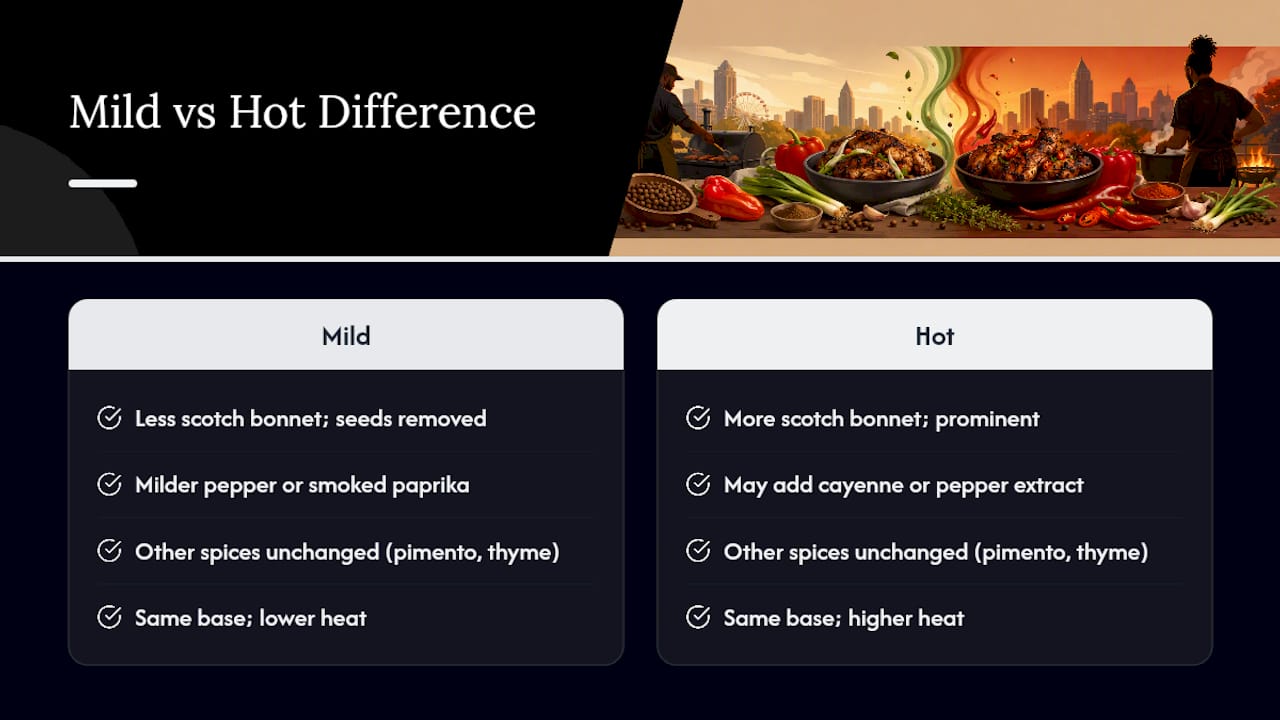
The difference between a mild and a hot jerk seasoning usually isn’t a different recipe. It’s the same base recipe with one variable adjusted: the amount and form of scotch bonnet pepper. Hot versions often list scotch bonnet near the top of the ingredients or add cayenne and pepper extract on top of it. Mild versions either reduce the scotch bonnet quantity, remove the seeds before processing, or swap in a lower-heat pepper like a mild chili or smoked paprika to hold onto color and a hint of smoke.
Everything else, pimento, thyme, scallion, garlic, ginger, and brown sugar, stays largely the same across both versions. That’s why a mild Walkerswood paste and a regular Walkerswood paste taste recognizably related. You’re not getting a different product family. You’re getting the same family with the volume turned down on one ingredient.
This matters when you’re substituting between brands. If a recipe calls for a hot jerk paste and you only have mild on hand, you can usually add it in the same quantity and just supplement with a small pinch of cayenne or a few drops of hot sauce if you want to bump the heat back up. Going the other direction, thinning a hot paste with coconut milk or yogurt gets you most of the way to a mild result without buying a second jar. Once you understand which single ingredient is doing the heat work, swapping between mild and hot stops feeling like guesswork.
Reading a Jerk Label Like Someone Who Cooks With It Often
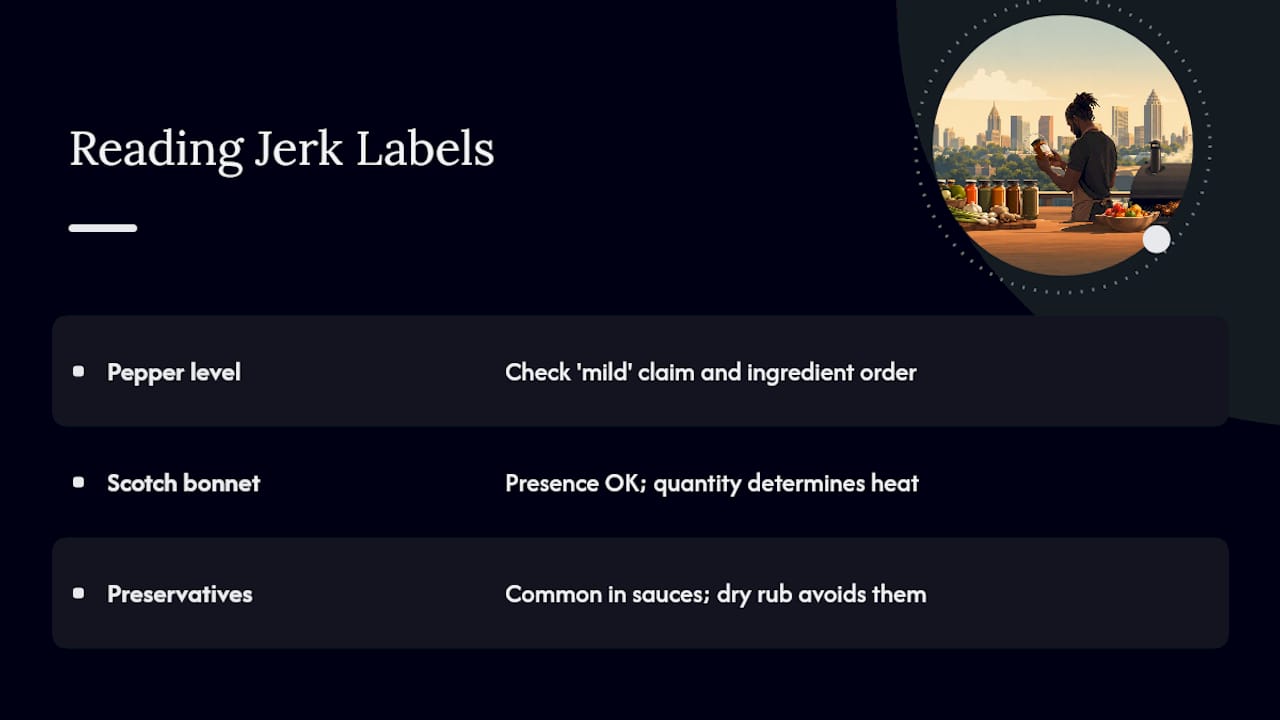
Three things separate a trustworthy mild jerk label from a vague one: the pepper level, whether scotch bonnet appears at all, and what’s used to preserve the product.
Pepper level often isn’t stated as a number, so you’re relying on ingredient position and marketing language like “mild” or “family-friendly” as your signal. Brands that are serious about the mild category, like the ones covered earlier, will usually say so plainly rather than hiding behind a vague “medium” label that could mean almost anything.
Scotch bonnet presence isn’t automatically a red flag on a mild product. Many mild blends still include a small amount for the fruity, slightly tart quality that peppers like habanero and scotch bonnet contribute beyond pure heat. The issue is quantity, not presence, so don’t assume “contains scotch bonnet” means “will be spicy.”
Preservatives show up more often in bottled sauces than in dry rubs, since liquid products need a longer shelf life once opened. Sodium benzoate, potassium sorbate, and vinegar are common and generally not a concern for most shoppers, but if you’re avoiding specific additives for health reasons, a dry rub you mix yourself sidesteps the issue completely since you control every ingredient that goes in.
Why Mild Doesn’t Have to Mean Watered Down
The conventional wisdom treats “mild” as a compromise, a lesser version of the real thing for people who can’t handle the heat. That framing gets it backward. Jerk’s identity comes from pimento, thyme, and the char of the pimento wood it’s traditionally smoked over, not from how many scotch bonnets went into the paste. Dial the pepper down and you’re not losing the dish. You’re isolating what actually makes it Jamaican.
Where most guides fall short is treating heat reduction as an afterthought, a quick tip tacked onto a hot recipe. It deserves its own approach, starting with the pepper and building everything else around it. If you’re new to this, start with a trusted mild paste like Walkerswood’s, taste it plain, then decide whether you want more heat before you add anything. Most people find they don’t miss it at all.
— ANTONIO
Buy Mild Jerk Seasoning Without the Guesswork
Finding a mild jerk seasoning that still tastes authentic usually means sorting through bottles that either water down the flavor or barely touch the heat level they promise. TOJ EXPRESS stocks the brands covered in this guide, including Walkerswood’s mild paste, so you can skip the label-reading gamble and pick up something already vetted for flavor and heat balance.

Local shoppers in Atlanta, Stone Mountain, Decatur, Lithonia, Conyers, Tucker, Snellville, and Rockdale can order online or stop by in person, whichever fits your week better. Browse the current mild jerk seasoning selection and add it to your next grocery run alongside the rest of your Caribbean pantry staples.