
The Real Role of Atlanta Convenience Stores Today
TOJEXPRESS.COM-Antonio HenryTL;DR:
- Atlanta convenience stores have expanded beyond snacks to provide essential services like fresh food, bill payments, and ATM access, especially in underserved neighborhoods. They now serve as crucial community infrastructure that improves food access, public health, and daily life in Atlanta’s diverse regions. Understanding their evolving role helps residents leverage these stores for healthier, more convenient living while navigating zoning challenges and supporting local economies.
Most people walk into a convenience store, grab a drink, and leave without a second thought. That framing sells these stores short by a wide margin. The role of Atlanta convenience stores has expanded far beyond fuel and snacks into something that genuinely shapes how neighborhoods function, how residents eat, and how communities access daily services. From food-insecure neighborhoods on the south side to rapidly growing suburbs in Cobb County, convenience stores are filling gaps that larger retailers simply cannot reach. This article breaks down what these stores actually do, and why that matters to you.
Table of Contents
- Key takeaways
- The role of Atlanta convenience stores in daily life
- Food access and the impact on urban neighborhoods
- Atlanta convenience stores as food destinations
- Challenges shaping convenience store development
- Getting more out of your local convenience store
- My take on where all of this is heading
- Tojexpress: your community convenience store in Atlanta
- FAQ
Key takeaways
| Point | Details |
|---|---|
| More than a snack stop | Atlanta convenience stores now offer fresh food, bill payment, ATM access, and ready-to-eat meals. |
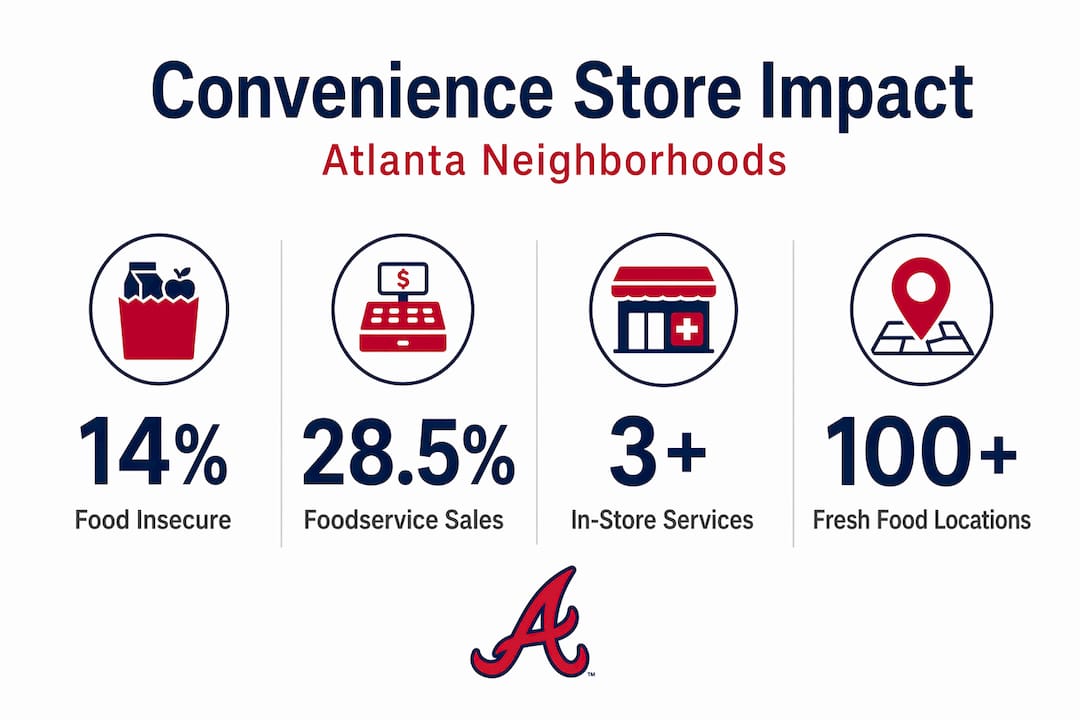
| Food access role | These stores serve as critical food sources in areas where nearly 14% of Fulton County residents face food insecurity. |
| Food is now the top revenue driver | Foodservice accounts for 28.5% of in-store sales and 38.9% of gross profit at convenience stores nationally. |
| Zoning shapes your options | Community opposition and planning commission decisions directly affect which stores open near you. |
| You can shop smarter | Knowing what services and healthy options your local store offers helps you get more value from every visit. |
The role of Atlanta convenience stores in daily life
Think about what a typical Atlanta convenience store actually stocks today. You will find fresh fruit cups, hot prepared foods, personal care products, basic over-the-counter medicine, household staples, and sometimes even Caribbean and international specialty items. The old image of dusty shelves and stale chips does not hold up anymore.
Atlanta convenience store functions now cover a wider territory than most residents realize. Many locations offer:
- ATM access in neighborhoods where bank branches are scarce
- Bill payment services for utilities and prepaid accounts
- Parcel pick-up for online orders
- Ready-to-eat hot meals and fresh grab-and-go options
- Basic grocery items including dairy, bread, and produce
The community services these stores offer go well beyond retail, functioning more like daily infrastructure. That shift is not accidental. Operators have responded to what residents actually need, especially in urban areas where a car trip to a big-box grocery store is not always practical or affordable.
Pro Tip: Next time you visit your local convenience store, check for a services kiosk or bill payment terminal near the register. Many Atlanta stores offer these quietly, and most customers never use them.
The significance of convenience stores becomes clearest when you map their locations against neighborhood demographics. In many parts of Atlanta, the corner store is the closest retail option within walking distance. That makes its product mix and services a direct reflection of community priorities.
Food access and the impact on urban neighborhoods
Atlanta has a documented food access problem. Nearly 14% of residents in Fulton County are classified as food insecure, meaning they lack consistent access to enough affordable, nutritious food. That number is not abstract. It shows up in the way certain neighborhoods function, in public health outcomes, and in how far some families have to travel just to buy fresh vegetables.
The city has responded with targeted programs. The Azalea Fresh Market initiative, backed by Mayor Andre Dickens, aims to place fresh, affordable food within a half mile of every resident by 2030. Mayor Dickens has linked food access directly to public health priorities, citing conditions like obesity and diabetes as outcomes tied to what people can realistically buy near their homes.
| Neighborhood factor | Impact on residents |
|---|---|
| Limited grocery stores within walking distance | Residents rely on convenience stores for daily staples |
| High food insecurity rates | Fresh options at c-stores become a health resource |
| Public transit dependency | Store proximity determines realistic food choices |
| City food access initiatives | Push convenience stores toward stocking fresh options |
Convenience stores that stock fresh produce, whole grain options, and affordable ready-to-eat meals are not just responding to market demand. They are filling a public health role. That is exactly the kind of work that boosts food access in Atlanta’s most underserved neighborhoods.
“Food access is about more than groceries. It is about the quality of life, the health of our children, and the future of our city.” — Mayor Andre Dickens, City of Atlanta
How convenience stores support locals in these contexts is not just about stocking the right products. It is about being physically accessible when other options are not. That proximity advantage is something no delivery app fully replaces for someone without a smartphone plan or a stable address.
Atlanta convenience stores as food destinations
Here is something that surprises most people: foodservice is now the top growth driver for convenience stores, accounting for 28.5% of in-store sales and 38.9% of gross profit dollars. In 2026, 60% of operators reported increased foodservice revenue. That is not a rounding error. That is a structural shift in what these stores are.
Atlanta convenience store trends in food closely mirror what is happening nationally, with local twists. The transformation looks like this:
- Upgraded hot food programs. Stores now offer freshly prepared breakfast burritos, chicken tenders, and rotating daily specials that rival fast-food quality.
- Build-your-own options. Customizable sandwiches, bowls, and wraps give customers control over ingredients, which matters for people managing dietary restrictions.
- Better coffee programs. Bean-to-cup machines and specialty espresso options have replaced the burnt drip coffee of the past.
- Fresh grab-and-go sections. Pre-made salads, wraps, and fruit cups that are actually restocked regularly.
- Diverse menu inspiration. Stores with Caribbean, Latin, or international product lines bring flavors that local communities actually want.
The quality stigma around c-store food is fading fast. Convenience store food now competes head-to-head with quick-service restaurants on speed, price, and increasingly on taste. That competition benefits you directly because it forces quality up.
Pro Tip: If your nearest convenience store has a hot food counter, visit between 11 a.m. and 1 p.m. That is typically when fresh batches are prepared and turnover is highest, meaning you get the best quality.
Understanding how grab-and-go shapes meals in Atlanta reveals just how much consumer behavior has shifted. People are choosing c-stores for lunch not out of desperation but out of genuine preference. That is a significant change from even five years ago.
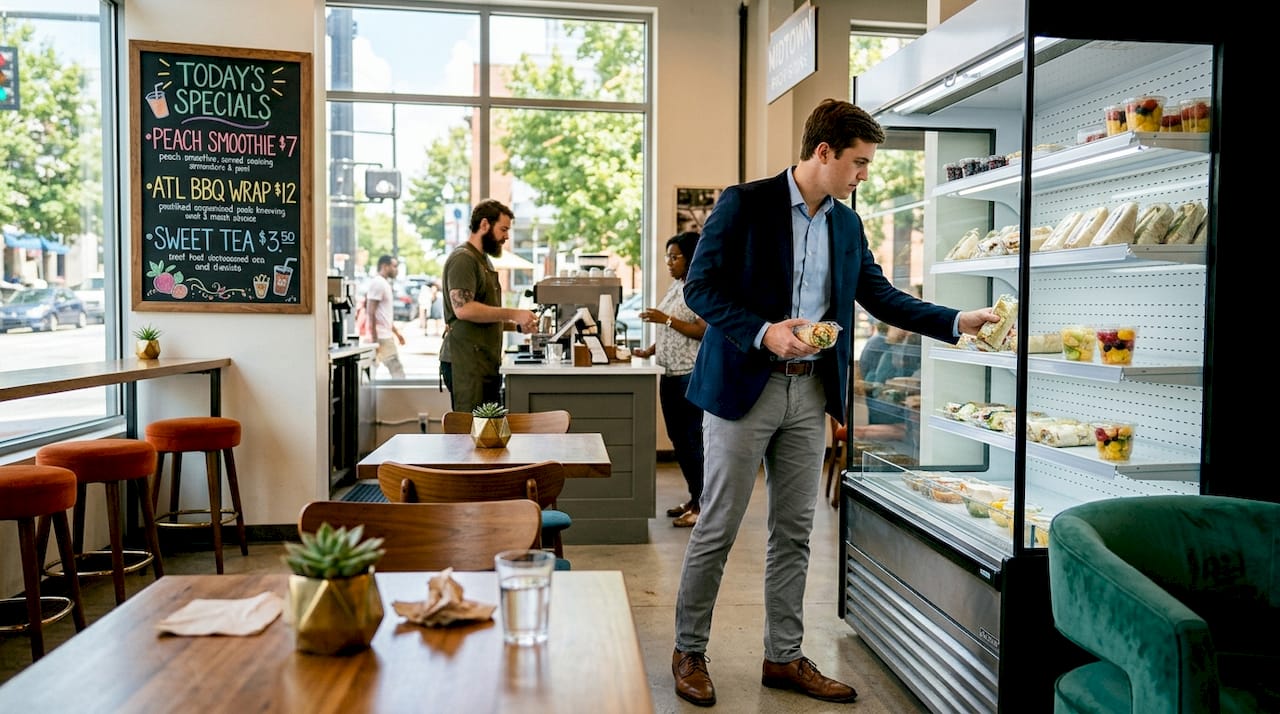
The technology side matters too. Mobile ordering, loyalty apps, and self-checkout kiosks are showing up in Atlanta stores, reducing wait times and giving customers more control over the experience. Operators who invest in these tools are seeing repeat business from customers who once drove past them to reach a fast-food chain.
Challenges shaping convenience store development
Growth is not frictionless. The Atlanta metro area, and especially its suburbs, have seen real friction between convenience store expansion and community concerns. Zoning battles are common, and they reveal genuine tension between economic development and neighborhood quality of life.
The pattern is fairly consistent. A developer proposes a new store, often with fuel sales, near a residential area or school. Residents raise concerns about traffic volume, environmental impact from fuel storage, and perceived safety risks. Planning commissions then have to weigh those objections against the economic benefits and the legitimate retail demand.
Recent cases make this concrete. RaceTrac proposals faced repeated denial from the planning commission in northeast Cobb County, specifically over traffic, safety, and health concerns raised by nearby residents. Separately, data shows there are already 66 fuel-cell convenience stores within 500 feet of schools in Cobb County, a figure that has intensified community scrutiny of new applications.
Developers often underestimate how quickly organized neighborhood opposition can derail approval timelines. What looks like a routine permit process can turn into a multi-year delay. For residents, this means the location and availability of stores near you is partly shaped by which neighbors show up to planning commission meetings.
The balance between growth and neighborhood fit is not simple. Convenience stores do provide jobs, generate tax revenue, and serve real demand. But location decisions matter, and communities that engage early in the zoning process tend to get better outcomes than those that react after the fact.
Getting more out of your local convenience store
Once you understand the full scope of what Atlanta convenience store services include, you can use them more intentionally. Most people use maybe 20% of what their neighborhood store actually offers.
Here is how to get more from every visit:
- Look for the fresh food section first. Most stores refresh hot and grab-and-go items multiple times daily. Checking early morning or midday improves your odds of finding quality options.
- Use the ATM or bill pay terminal. If you need cash or need to pay a utility bill without a fee-heavy service, the store kiosk is often cheaper and faster than alternatives.
- Ask about specialty products. Stores with Caribbean or international product lines, like Tojexpress, often stock items you cannot find at a standard grocery chain.
- Download the loyalty app if one exists. Many Atlanta convenience store chains offer points programs that add up quickly for daily shoppers.
- Visit during off-peak hours. Midmorning or mid-afternoon visits mean shorter lines, fresher food, and more attentive service.
Pro Tip: If you are looking for healthy options at your local store, scan the perimeter of the floor plan first. Fresh items, dairy, and produce are typically stocked along the walls or near the front, not in the center aisles.
Supporting community-oriented stores matters beyond personal convenience. When you shop local stores that are embedded in your neighborhood, you are contributing to a retail ecosystem that funds jobs and services within your own community.
My take on where all of this is heading
I have spent a lot of time thinking about what convenience stores actually represent in urban communities, and the honest answer is that most public discourse is still about five years behind reality. People still treat these stores as a fallback option. They are becoming a first choice.
What I find most interesting is not the food innovation story. It is the social infrastructure angle. In neighborhoods where banks have closed branches and grocery chains have pulled out, the corner convenience store is sometimes the only physical retail institution left. That gives it a community function that nobody planned for and that rarely gets acknowledged in policy conversations.
I also think the zoning debates reveal something important about how we value different kinds of businesses. The same communities that resist a new convenience store often have no problem approving a fast-food chain in the same location. The bias against c-stores is partly aesthetic and partly historical, rooted in outdated assumptions about who shops there and why.
What I believe is coming in the next few years is a clearer recognition that stores embedded in daily life routines, the ones that offer services beyond retail, are going to become harder to replace. They are not just convenient. They are necessary. Atlanta is already seeing this play out in real time, and consumers who pay attention will be better positioned to use these resources well.
— ANTONIO
Tojexpress: your community convenience store in Atlanta
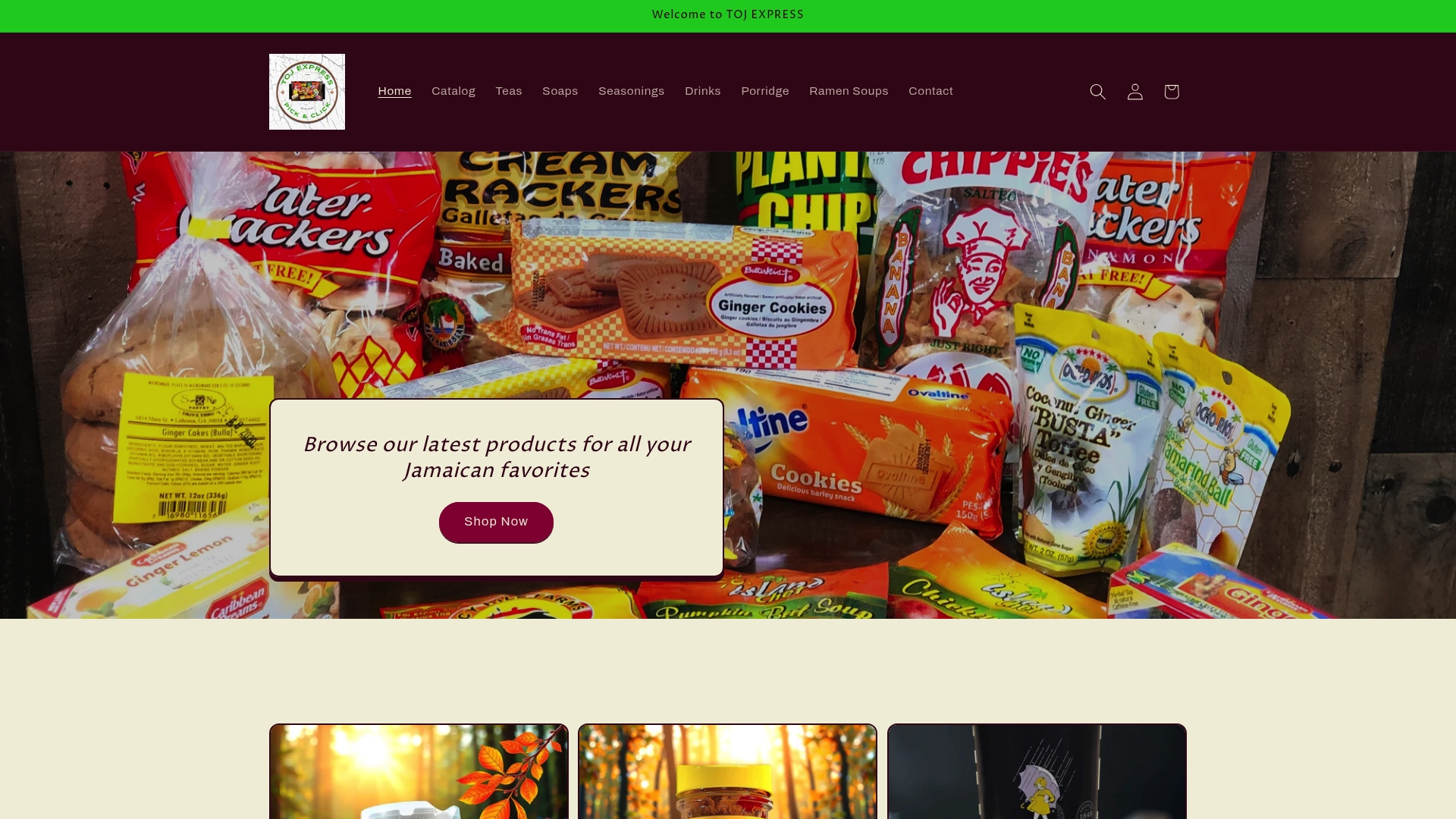
Tojexpress is built around exactly the kind of shopping experience this article describes. We carry both American staples and Caribbean specialty products, giving Atlanta-area shoppers access to items they cannot easily find at a standard chain. Whether you need a quick meal, a familiar ingredient from back home, or a basic household staple without the big-box trip, Tojexpress is stocked with your daily needs in mind.
We believe convenience shopping in Atlanta should feel local, personal, and genuinely useful. That means keeping our shelves fresh, our services accessible, and our product selection grounded in what the Atlanta community actually wants. Stop in or browse what we offer at Tojexpress to see how we support your neighborhood every day.
FAQ
What services do Atlanta convenience stores typically offer?
Beyond food and beverages, many Atlanta convenience stores provide ATM access, bill payment services, parcel pick-up, and hot prepared meals. These services make them practical daily stops for a range of needs, not just quick purchases.
How do convenience stores address food insecurity in Atlanta?
Convenience stores in areas with limited grocery access serve as critical food sources, stocking fresh produce, dairy, and affordable ready-to-eat options. With nearly 14% of Fulton County residents facing food insecurity, walkable store access has direct public health implications.
Why is convenience store food quality improving?
Foodservice now drives 28.5% of in-store sales at convenience stores, which has pushed operators to invest in menu quality, customization, and fresher ingredients to compete with fast-food alternatives.
What causes zoning conflicts around Atlanta convenience stores?
Community concerns about traffic, proximity to schools, and environmental impact from fuel storage frequently lead to planning commission objections. Recent cases in Cobb County show how organized neighborhood opposition can delay or block new store approvals.
What makes Atlanta convenience store trends different from national trends?
Atlanta’s stores reflect the city’s demographic diversity, with many locations carrying Caribbean, Latin, and international products alongside standard American staples. This localized product mix, combined with the city’s food access challenges, gives Atlanta stores a community role that goes beyond what national chains typically fill.