
Why convenience shopping is essential in Atlanta metro
TOJEXPRESS.COM-Antonio HenryTL;DR:
- Convenience shopping in Atlanta is driven by time savings, proximity, and cultural product availability.
- These stores play a crucial role in food access, especially in underserved neighborhoods and food deserts.
- Shopping locally at convenience stores supports communities, offers diverse options, and reflects local culture.
Atlanta shoppers know the drill: you are between meetings, the kids need dinner in 20 minutes, and the nearest big-box grocery is three miles away with a parking lot that tests your patience daily. What most people do not realize is that 67% of U.S. shoppers visit a convenience store every single week. That number is not just a statistic about snack runs. It reflects a real shift in how people in the Atlanta metro area feed their families, manage their time, and connect with products that match their culture and lifestyle. This article breaks down exactly why convenience shopping is growing, what it truly offers, and how you can make every trip count.
Table of Contents
- The growing demand for convenience shopping in Atlanta
- What does convenience shopping actually offer?
- Convenience stores and food access: The Atlanta perspective
- Making the most of convenience: Smart shopping strategies
- Why convenience shopping is more than just a trend: A local perspective
- Discover local convenience with TOJ EXPRESS
- Frequently asked questions
Key Takeaways
| Point | Details |
|---|---|
| Time-saving essential | Convenience shopping is a necessity for Atlanta’s busy metro lifestyles, not a luxury. |
| Boosts food access | Convenience stores often fill food access gaps, especially in underserved neighborhoods. |
| Smart meal solutions | Shoppers can find healthy, affordable, and quick meal options when using smart convenience shopping strategies. |
| Community impact | Local stores support Atlanta’s diverse cultures and promote community well-being. |
The growing demand for convenience shopping in Atlanta
Atlanta is one of the fastest-growing metro areas in the country, and with that growth comes pressure. Longer commutes, more packed schedules, and rising household responsibilities push people toward shopping solutions that save time without sacrificing quality. That is not a lazy habit. It is a practical response to real life.
So what is driving people through those doors so consistently? Here are the most common motivations:
- Time savings: A quick stop beats a full grocery run when you need just a few items
- Proximity: Many Atlanta neighborhoods have a convenience store closer than any supermarket
- Quick meal solutions: Grab-and-go foods and packaged meals help families get dinner done fast
- Reduced decision fatigue: A curated, smaller store format means less time staring at overwhelming choices
- Cultural products: Many stores carry American and Caribbean goods that reflect the community they serve
Research from Mintel consumer research confirms that consumers prioritize convenience shopping for time savings, proximity, and reduced decision fatigue. This is especially true in diverse urban markets like Atlanta, where families are juggling multiple responsibilities across different cultural contexts.
“Convenience is no longer a luxury add-on. For millions of Americans, it is the baseline expectation for everyday shopping.”
Think about what meeting daily needs actually looks like for a working parent in Decatur or East Atlanta. It is not always a planned grocery list. It is a stop on the way home, a snack for the commute, or a last-minute ingredient that saves dinner.
For Atlanta’s Caribbean and immigrant communities, convenience shopping also plays a cultural role. Finding familiar products from home, whether that means a specific hot sauce, a beloved snack, or a staple beverage, carries real emotional value. The benefits of American groceries mixed with Caribbean staples in one place is a genuine draw for many Atlanta households.
Key stat: With an average of 1,100 daily shoppers per store, convenience retail is not a niche market. It is a daily ritual for a massive portion of the population.
What does convenience shopping actually offer?
Now that we know why demand is up, let’s see exactly what convenience shopping delivers to shoppers beyond just speed.
The word “convenience” undersells what these stores actually provide. Modern convenience shopping is about access, variety, and value layered together in a format you can navigate in under ten minutes.
Here is how convenience stores stack up against traditional grocery options:
| Feature | Convenience store | Traditional grocery |
|---|---|---|
| Trip time | Under 10 minutes | 30 to 60 minutes |
| Parking | Easy, close | Often crowded |
| Meal solutions | Ready now | Requires preparation |
| Impulse deals | BOGO, quick grabs | Weekly circular specials |
| Cultural products | Curated selections | Varies widely |
| Decision load | Low, focused | High, overwhelming |
Acosta research shows that impulse buys occur in 55% of convenience store visits, with candy and snacks leading the way and BOGO deals being a top driver. For many shoppers, proximity matters more than price when choosing where to stop.
Here is a quick breakdown of what a single convenience store trip can realistically accomplish:
- Pick up a hot or ready-to-eat meal
- Grab snacks for the whole family
- Stock up on household basics like drinks and condiments
- Find a cultural product you cannot easily source elsewhere
- Score a deal on a BOGO item you use regularly
Pro Tip: If you are trying to save money at a convenience store, go in with a short list and shop the deals section first. Many stores rotate BOGO offers weekly, and you can stack those savings with your regular picks.
For shoppers thinking about healthy convenience picks, the options have grown significantly. Many stores now stock fresh fruit, protein bars, and better-for-you snack options alongside the traditional American snacks guide favorites. The landscape is changing fast.
Convenience stores and food access: The Atlanta perspective
Convenience shopping is not just about comfort. Sometimes, it is a lifeline for communities struggling with food access.
Atlanta has some of the most documented food desert challenges in the Southeast. A food desert is a neighborhood where residents live more than a mile from the nearest full-service grocery store. In those areas, convenience stores are not optional. They are essential.
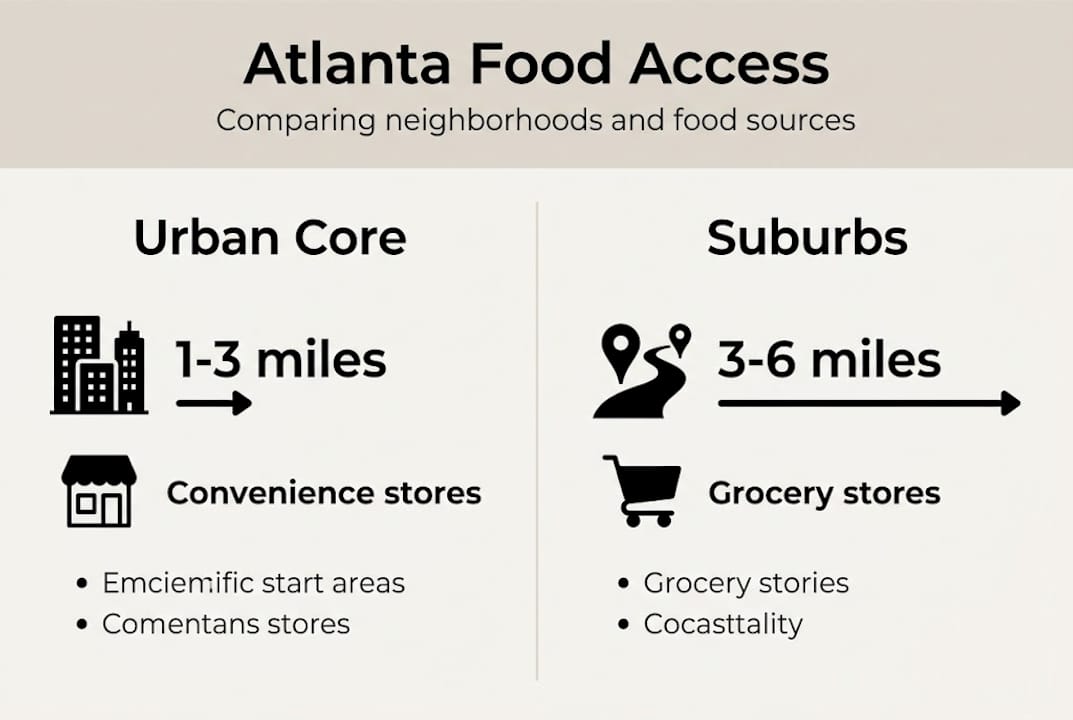
Here is a look at how food access plays out across different parts of the Atlanta metro:
| Neighborhood type | Nearest grocery distance | Primary food source |
|---|---|---|
| Urban core | 1 to 3 miles | Convenience stores |
| Suburbs | Under 1 mile | Mixed |
| Rural fringe | 5 or more miles | Convenience stores |
| Transit-dependent areas | Varies | Walking-distance stores |
The city of Atlanta has attempted to address this through a city-run grocery debate around a publicly operated grocery store, which has seen early success but also sparked questions about the role government should play in food access. The debate is real and ongoing.
For many residents, the food deserts in Atlanta drive a daily reliance on convenience stores that goes far beyond picking up a soda. These stores provide:
- Canned and packaged staples for full meals
- Dairy products and basic proteins
- Beverages and household goods
- Culturally relevant products for diverse communities
“In some Atlanta zip codes, a convenience store is not just the easiest option. It is the only option within walking distance.”
This reality puts a lot of responsibility on local stores. When you understand neighborhood food access, it becomes clear that c-stores are doing more than selling snacks. They are filling a gap that larger retail chains have left open. And understanding how food accessibility shapes communities shows that what is stocked on those shelves matters enormously.
Making the most of convenience: Smart shopping strategies
Understanding the challenges, let’s shift to practical tools for making every convenience trip count.
Whether you stop in once a week or every day, a little strategy goes a long way. The PDI Pulse of Convenience found that c-store foodservice grew 16.3% in 2024, which means more stores are investing in better prepared foods and fresh options. Use that to your advantage.
Here is how to shop smarter:
- Plan one meal around convenience: Choose a ready-to-eat item or easy prep product for your busiest night of the week
- Track weekly deals: Visit the same store regularly enough to know when new BOGO deals rotate in
- Shop the perimeter first: Even in a small store, fresh and refrigerated items tend to be higher quality than shelf-stable alternatives
- Buy culturally relevant staples: If your store stocks Caribbean or international products, those items are often harder to find elsewhere and worth stocking up on
- Spend locally: Every dollar at a neighborhood store supports jobs and services in your community
Pro Tip: Build a short mental checklist before every convenience stop. Knowing your top three items going in keeps you focused and cuts down on unplanned spending.
For those who care about community impact, the act of shopping locally in Atlanta carries real weight. Local stores reinvest in neighborhoods, source products that reflect their customers, and stay accountable to the people they serve.
Beyond the standard c-store, exploring specialty stores in Atlanta can open up a world of products you did not know you needed. Think of specialty Caribbean snacks, unique American regional products, or imported sauces that turn a simple meal into something memorable.
- Look for stores with a curated product mix that reflects your tastes
- Ask about new arrivals, especially for limited-run or seasonal items
- Connect with store staff who understand the community’s needs
Why convenience shopping is more than just a trend: A local perspective
Here is what we believe that most convenience store conversations miss entirely: this is not really about shopping. It is about how Atlanta lives.
The rise of convenience shopping reflects a city that is growing faster than its infrastructure, serving communities that have been underserved by big-box retail for decades, and welcoming families from dozens of different cultural backgrounds who want products that feel like home. A convenience store that stocks both American classics and Caribbean staples is not just filling shelf space. It is acknowledging who actually lives in the neighborhood.
We think convenience stores that take their communities seriously are modern cornerstones. They are places where culture, access, and daily life intersect. That is a role worth owning. For anyone interested in how retail shapes identity, looking at how local stores protect Atlanta food heritage tells a powerful story that goes far beyond price per unit.
Discover local convenience with TOJ EXPRESS
If you are ready to experience what thoughtful, community-centered convenience shopping looks like, TOJ EXPRESS is here for you.
At TOJ EXPRESS, we carry American and Caribbean products selected specifically for Atlanta metro shoppers who want quality, variety, and real convenience in one place. Whether you are grabbing a quick meal, stocking up on snacks, or searching for a Caribbean staple that reminds you of home, we have you covered. Shop in-store or explore our online selection. We are committed to meeting your daily needs as a trusted neighborhood resource. Come see why Atlanta shoppers keep coming back.
Frequently asked questions
What are the main reasons people prefer convenience shopping in Atlanta?
Top reasons are time savings, store proximity, and quick access to essentials, especially for busy families and professionals. Mintel research confirms that reduced decision fatigue also plays a major role in the preference.
How do convenience stores help with food access in Atlanta?
They offer vital access to groceries in underserved areas, helping to fill gaps where larger supermarkets are scarce. In documented Atlanta food deserts, c-stores are often the primary source for daily food essentials.
Are there healthy options in Atlanta convenience stores?
Yes, more stores now offer healthy snacks, meal kits, and fresh produce, and those options are steadily growing as consumer demand shifts toward better-for-you choices.
Do impulse buys drive most convenience store trips?
More than half of visits include an impulse buy, with snacks and grocery deals like BOGO being top attractions for Atlanta shoppers.
Recommended
- How convenience stores meet metro Atlanta’s daily needs – TOJ EXPRESS
- Top benefits of American groceries for Atlanta shoppers – TOJ EXPRESS
- Healthy convenience store choices in Atlanta: 5 smart picks – TOJ EXPRESS
- How specialty stores enhance Atlanta’s food scene – TOJ EXPRESS
- Master Grocery Shopping on a Budget: Save Money in 2025 - Dietium