
The Role of Ethnic Grocery Stores in Suburban Areas
TOJEXPRESS.COM-Antonio HenryTL;DR:
- Ethnic grocery stores are vital community hubs that serve diverse suburban populations by providing authentic products and cultural continuity. They reshape local retail economies with conversions of vacant spaces into active markets that attract non-immigrant shoppers. Their social role fosters community bonds and supports food diversity that mainstream supermarkets often lack.
Ethnic grocery stores are defined as retail food outlets that specialize in products tied to specific cultural, national, or regional traditions, and their role in suburban areas has grown from niche convenience to genuine community infrastructure. The USDA Economic Research Service reports that households spend 3–5% of their food budgets at small, ethnic, and specialty food stores across income levels. That consistency across income groups signals something deeper than price shopping. These stores anchor neighborhoods culturally and economically, filling gaps that mainstream supermarkets were never designed to address.
What is the role of ethnic grocery stores in suburban areas?
Ethnic grocery stores serve suburban neighborhoods as cultural anchors, economic engines, and social meeting points. The industry term for this retail category is “specialty food retail,” though the phrase “ethnic grocery” remains the most widely used descriptor among shoppers, planners, and researchers alike. Both terms apply throughout this article.
Suburban demographics have shifted dramatically over the past two decades. Over 30 Chicago suburbs moved from majority-white to majority-nonwhite populations between 2005 and 2024. That shift is not a Chicago story alone. It reflects a national pattern where immigrant and second-generation families are settling in suburbs rather than urban cores, bringing with them distinct food traditions and purchasing habits.
The demand these residents create is real and measurable. Retailers, commercial real estate developers, and food industry analysts all track it. Ethnic grocery stores are the direct response to that demand, and they are growing faster than the mainstream grocery sector.
How do demographic shifts drive demand for ethnic markets in suburbs?
Population change is the single biggest driver of ethnic grocery expansion in suburban America. When a suburb’s racial and ethnic composition changes, its retail mix eventually follows.
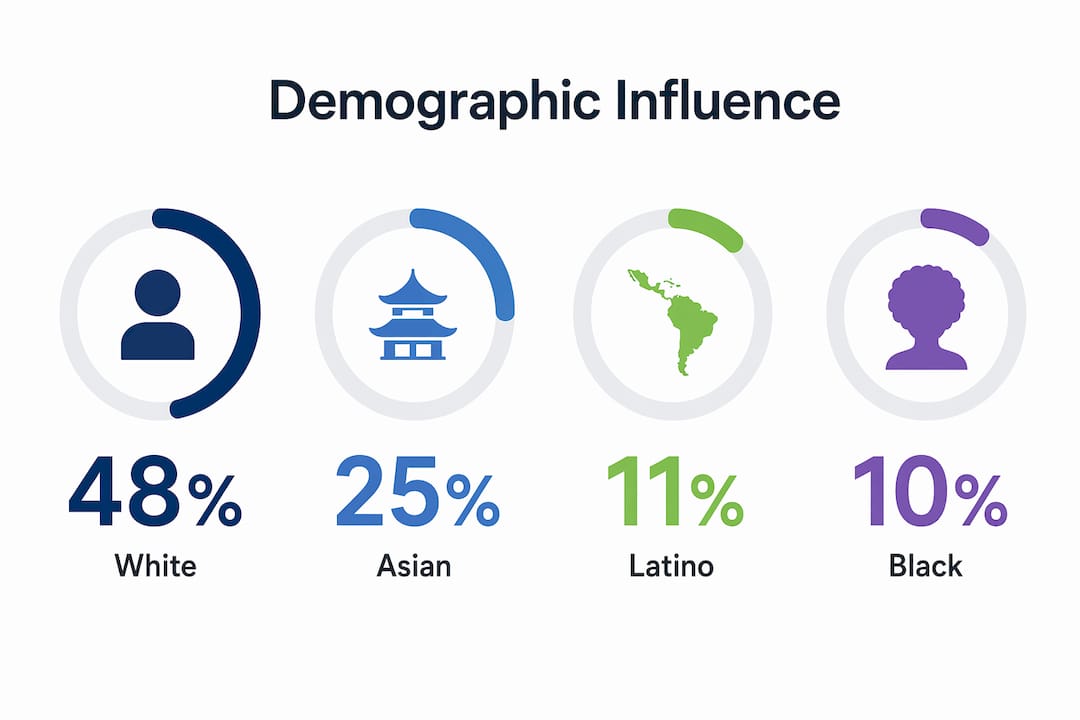
Skokie, Illinois, illustrates this clearly. Its current population is 48% white, 25% Asian, 11% Latino, and 10% Black. A suburb that was once predominantly white now requires a retail infrastructure that reflects four distinct cultural food traditions. Mainstream supermarkets rarely stock the specialty ingredients those communities need. Ethnic grocery stores fill that gap directly.
The Indian American community shows the same pattern at a national scale. More than 700,000 Indian Americans live in the New York metro area alone. That concentration creates enough purchasing power to support large-format specialty grocery chains, not just small corner shops.
Key demographic factors driving suburban ethnic grocery growth include:
- Rapid growth of Asian, Latino, and South Asian populations in outer-ring suburbs
- Second-generation consumers who want both heritage foods and mainstream American products
- Non-immigrant shoppers drawn to authentic flavors and unique prepared foods
- Suburban municipalities actively recruiting diverse retail to serve changing populations
The table below shows how demographic composition connects to retail demand:
| Suburban demographic group | Primary grocery need |
|---|---|
| South Asian households | Specialty spices, lentils, fresh produce, halal meat |
| East Asian households | Fresh seafood, fermented foods, Asian produce varieties |
| Latino households | Fresh tortillas, specialty cuts of meat, tropical produce |
| Caribbean households | Plantains, scotch bonnet peppers, salt fish, jerk seasoning |
These needs are not met by standard supermarket chains. Ethnic grocery stores exist precisely because the mainstream retail model was built for a different demographic era.
How do ethnic grocery stores reshape suburban retail economics?
Ethnic grocery stores are not just filling cultural gaps. They are reshaping suburban commercial real estate and generating measurable economic activity.
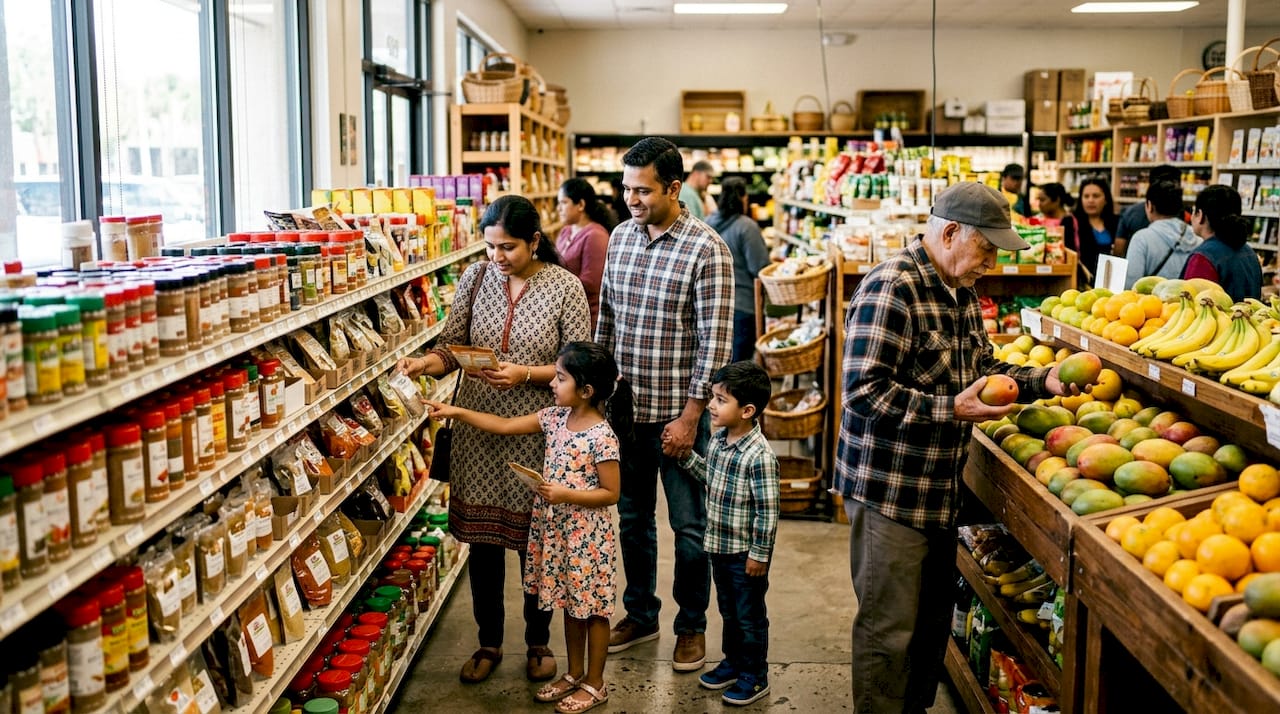
Large chains like Patel Brothers and H Mart have moved aggressively into affluent suburban markets. H Mart repurposes 70,000-square-foot retail spaces for its suburban locations, often converting former big-box stores or anchor retail spaces that sat vacant for years. That conversion brings foot traffic, sales tax revenue, and jobs back to corridors that had gone quiet.
The location strategy is equally deliberate. Ethnic grocery stores frequently repurpose former drugstore buildings, which sit within a 1–3 mile radius of dense residential neighborhoods. That proximity makes them far more accessible than large-format supermarkets, which require shoppers to travel further. The neighborhood-scale footprint is a competitive advantage, not a limitation.
Pro Tip: If you live near a recently closed pharmacy or small-format retail space, watch for an ethnic grocery opening there. These locations are purpose-built for neighborhood trade and often signal a growing local community.
Ethnic grocery stores also outperform traditional supermarkets in authenticity, food discovery, and made-to-order services. Demand for ethnic grocers is growing faster than demand for conventional chains. That growth is driven by service differentiation: made-to-order butcher counters, fresh prepared foods, and staff who understand the products they sell.
Latin-focused supermarkets add another layer. Freshly cut-to-order meats and a service-first model attract non-Hispanic customers who cannot find that level of customization at mainstream chains. The economic benefit extends beyond the immigrant community to the broader suburb. Smart retail merchandising strategies help these stores maximize their floor space and keep diverse product lines organized and accessible.
Why are ethnic grocery stores vital community hubs?
The economic case for ethnic grocery stores is strong. The cultural and social case is stronger.
Ethnic grocery stores function as community infrastructure that upholds immigrant identity and social safety in ways that go well beyond retail. Framing them purely as economic assets misses the point. They are places where people feel recognized, where language barriers drop, and where cultural continuity is maintained through something as fundamental as food.
Sociologists use the term “third place” to describe social environments outside home and work where community bonds form. Libraries, barbershops, and coffee shops are classic examples. Ethnic grocery stores fill that role for many immigrant and first-generation suburban families.
“Store owners often introduce families from the same region to each other, creating lifelong friendships and support networks that extend far beyond the checkout line. The store becomes the connective tissue of a community that might otherwise feel isolated in a new suburb.” Wisconsin Muslim Journal, on Raja Bazaar
The social function of these stores plays out in specific, concrete ways:
- Owners and staff greet regular customers by name and remember their preferences.
- Bulletin boards and informal conversations connect newcomers with housing, jobs, and services.
- Seasonal and religious food preparations bring shoppers together around shared traditions.
- Non-immigrant neighbors discover new cuisines and form cross-cultural connections through shared shopping experiences.
Tojexpress recognizes this dynamic directly. As a store that carries both American and Caribbean products, the food heritage connection that ethnic and specialty stores provide is central to how communities stay rooted while adapting to new surroundings.
How do ethnic grocery stores improve food diversity and access in suburbs?
Ethnic grocery stores bring products to suburban shelves that mainstream supermarkets simply do not carry. That availability matters for cultural cooking, dietary practice, and food discovery.
A South Asian household needs hing (asafoetida), curry leaves, and specific varieties of basmati rice. A Caribbean household needs scotch bonnet peppers, green bananas, and salt fish. A Korean household needs gochujang, perilla leaves, and fresh kimchi. None of these items appear reliably in a standard suburban supermarket. Ethnic grocery stores stock them as core inventory, not as specialty imports.
Pro Tip: If you are new to cooking with ethnic ingredients, ask the store staff for preparation tips. Most ethnic grocery employees have deep product knowledge and are genuinely happy to guide first-time buyers.
The table below compares what shoppers typically find at mainstream supermarkets versus ethnic grocery stores:
| Product category | Mainstream supermarket | Ethnic grocery store |
|---|---|---|
| Spices and seasonings | 20–30 standard varieties | 100+ regional and specialty varieties |
| Fresh produce | Common Western vegetables | Regional varieties including bitter melon, taro, and plantains |
| Meat and seafood | Standard cuts, limited variety | Specialty cuts, whole fish, made-to-order options |
| Prepared foods | Deli counter basics | Fresh ethnic dishes, house-made sauces, and regional specialties |
Successful ethnic grocery chains integrate mainstream American products alongside specialty goods. That combination serves second-generation shoppers who want heritage foods and familiar brands in one trip. It also draws non-immigrant neighbors who are curious about new flavors. The result is a store that serves the whole suburb, not just one community within it. Stores like Tojexpress apply this same principle, stocking authentic Caribbean and American products side by side to serve a broad and diverse customer base.
Key Takeaways
Ethnic grocery stores in suburban areas are cultural, economic, and social institutions that serve entire communities, not just the immigrant populations that first created demand for them.
| Point | Details |
|---|---|
| Cultural anchors in suburbs | Ethnic grocery stores preserve food traditions and cultural identity for immigrant and first-generation families. |
| Demographic demand is real | Over 30 Chicago suburbs shifted to majority-nonwhite populations between 2005 and 2024, driving retail diversification. |
| Economic revitalization | Chains like H Mart convert vacant big-box spaces into active retail, generating foot traffic and tax revenue. |
| Social infrastructure | These stores function as third places, building community bonds through personal service and shared cultural space. |
| Broader suburban appeal | Integrating mainstream and specialty products attracts non-immigrant shoppers and expands market reach. |
What I’ve learned from watching ethnic grocery stores change suburbs
I have watched ethnic grocery stores go from being treated as curiosities to becoming the most visited retail destinations in their zip codes. The conventional wisdom used to be that these stores served a niche. That framing was always wrong.
What strikes me most is how quickly non-immigrant neighbors become regulars. A family that moved to a suburb for the school district discovers an H Mart or a Caribbean specialty store and starts shopping there weekly. Not because they need culturally specific products, but because the quality, freshness, and service are simply better than what the standard chain offers. The store earns loyalty on merit.
The demographic data confirms what you can see with your own eyes in any diversifying suburb. When the population changes, the retail that serves it changes too. Ethnic grocery stores are usually ahead of that curve, not behind it. They open before the mainstream chains notice the shift. That early-mover instinct is a form of community intelligence that deserves more credit than it gets.
My practical advice for suburban residents: treat your local ethnic grocery store as a resource, not just a shopping destination. Talk to the staff. Ask about unfamiliar products. You will eat better, spend less, and understand your neighbors more deeply. That combination is rare and worth protecting.
— ANTONIO
Tojexpress and the multicultural grocery experience
Tojexpress carries American and Caribbean products because both communities deserve access to the foods that define their tables.

Whether you are looking for familiar Caribbean staples or American pantry essentials, Tojexpress stocks both under one roof. The store reflects the same principle that drives the best ethnic grocery stores: authentic products, knowledgeable staff, and a genuine connection to the communities being served. Visit Tojexpress online to explore the full product range and find the items your kitchen needs. You can also read more about food access in Atlanta and how neighborhood stores serve diverse suburban communities every day.
FAQ
What is an ethnic grocery store?
An ethnic grocery store is a retail food outlet specializing in products tied to specific cultural, national, or regional food traditions. These stores stock ingredients, prepared foods, and specialty items that mainstream supermarkets typically do not carry.
How do ethnic grocery stores affect suburban communities?
Ethnic grocery stores generate sales tax revenue, revitalize vacant retail spaces, and serve as social hubs where community bonds form. They serve both immigrant populations and non-immigrant neighbors drawn to authentic products and service.
Why are ethnic grocery stores growing in suburbs?
Suburban demographics have shifted significantly, with over 30 Chicago suburbs becoming majority-nonwhite between 2005 and 2024. That population change creates direct demand for specialty food retail that reflects the communities now living there.
Do ethnic grocery stores only serve immigrant shoppers?
No. Successful ethnic grocery chains integrate mainstream American products alongside specialty goods, attracting second-generation consumers and non-immigrant shoppers who value authenticity, fresh prepared foods, and unique product selections.
What products can I find at an ethnic grocery store that I cannot find elsewhere?
Ethnic grocery stores stock regional spices, specialty produce varieties like bitter melon and plantains, made-to-order meat cuts, and fresh prepared dishes that standard supermarkets rarely carry. The selection varies by the store’s cultural focus.