
The Role of Imported Products in Markets and Culture
TOJEXPRESS.COM-Antonio HenryTL;DR:
- Imported products expand choices, introduce competitive prices, and carry cultural identities that resonate with immigrant communities.
- Trade policies, tariffs, and supply chain complexities significantly influence their prices, availability, and market dependence risks.
- Understanding these dynamics helps consumers make informed, intentional purchasing decisions that support cultural diversity and economic resilience.
Imported products are goods produced in one country and purchased by consumers in another, and their role in modern economies extends far beyond simple convenience. They expand consumer choice, introduce competitive pricing pressure, and carry cultural identity that domestic production alone cannot replicate. A 2026 CEPR study found that immigrant households in the U.S. show preferences for imported goods over six times stronger than the variation seen across native households. That single data point reveals how deeply imports are woven into daily life for millions of Americans. At Tojexpress, we see this reality every day through the American and Caribbean products we stock for our community.
What is the role of imported products in consumer markets?
The role of imported products is to give consumers access to goods that either do not exist domestically or exist at lower quality and higher cost without foreign competition. This is not a theoretical claim. Walk into any grocery store in Atlanta and you will find Jamaican scotch bonnet peppers, Trinidadian pepper sauce, and American-style snack foods that reflect the preferences of a genuinely diverse population.
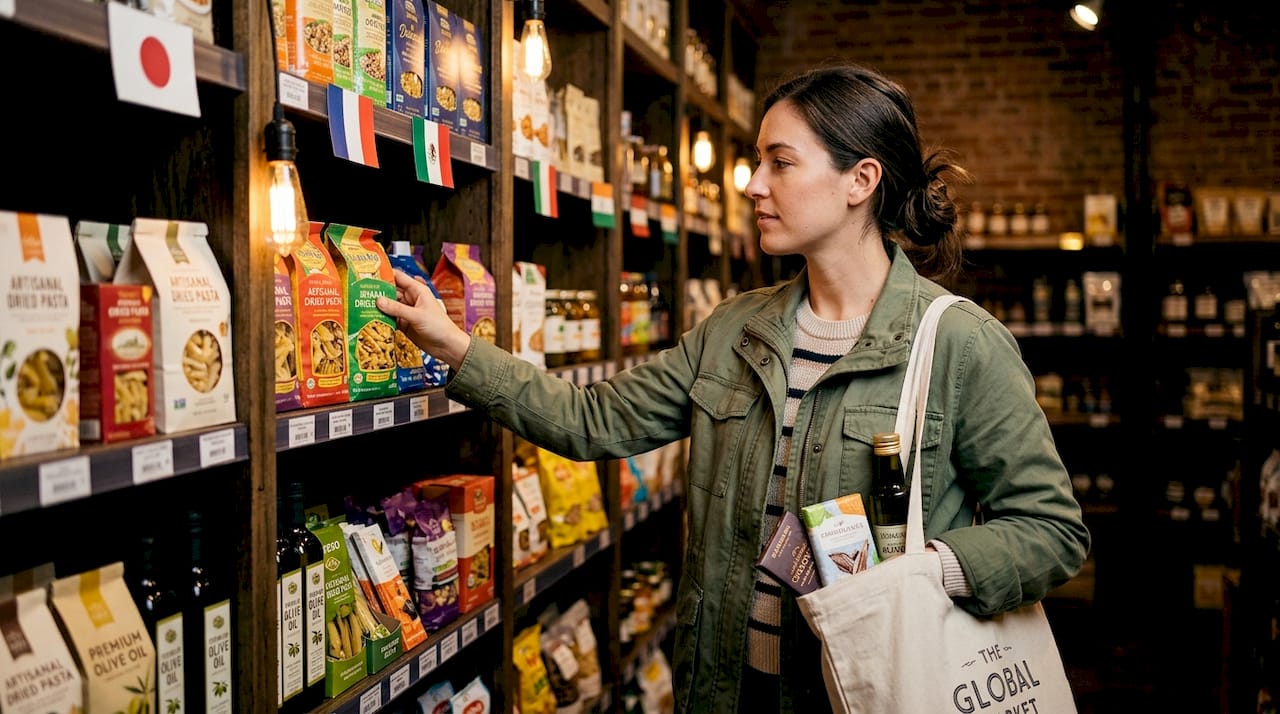
Imports increase product variety in measurable ways. Between 1990 and 2023, ultra-processed food imports in New Zealand rose from 15.7 kg per capita to 103.8 kg per capita, a shift directly tied to tariff reductions. That trajectory shows how trade liberalization unlocks product categories that consumers had little or no access to before. The same pattern plays out across markets worldwide.
Imported goods also create pricing discipline. When a domestic producer faces no foreign competition, prices tend to rise and quality tends to stagnate. Foreign products force local manufacturers to compete, which benefits consumers regardless of which product they ultimately choose.
How immigrant communities shape local import demand
Immigrant communities are one of the most consistent drivers of import demand in the U.S. Research from CEPR confirms that immigrant consumer preferences substantially increase local import supply and affect household welfare differently than native preferences do. This means that cities with large Caribbean, Latin American, or Asian populations will naturally develop retail ecosystems that stock the specific imported goods those communities grew up with. Tojexpress exists precisely because that demand is real, consistent, and underserved by generic grocery chains.
Pro Tip: Check the country-of-origin label on packaged foods. Products from specific Caribbean islands or American regional producers often carry flavor profiles and ingredient standards that differ meaningfully from generic alternatives. That label is a quality signal, not just a compliance requirement.
How do tariffs and supply chains affect the price of imports?
Import tariffs raise retail prices, reduce product variety, and create trade uncertainty that ripples through investment and employment in trade-dependent sectors. De Nederlandsche Bank’s 2026 analysis makes this transmission clear: costs rise for importing companies and are passed directly to consumers. The effect is not always immediate, which is where the complexity begins.
Companies often build inventory before tariffs take effect, which delays the price increase consumers feel at the register. Trade diversion also occurs, where importers switch to suppliers in countries not subject to the tariff, sometimes maintaining price stability temporarily. But these are short-term buffers. Over time, tariff costs propagate through the supply chain and consumers absorb them.
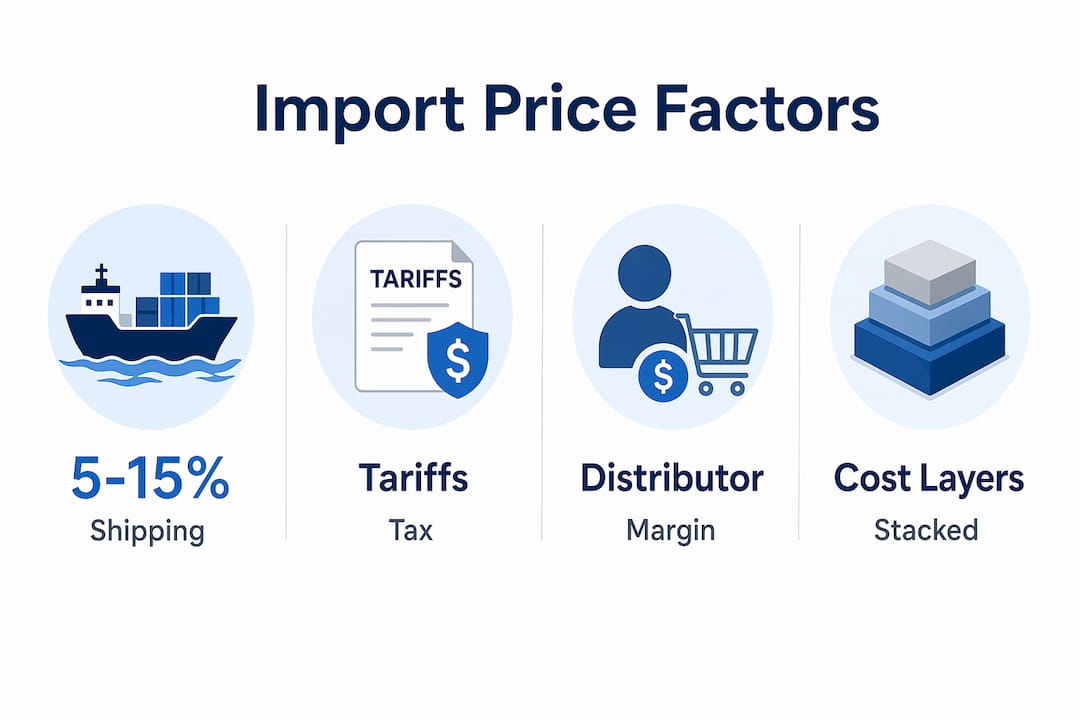
The cost structure behind imported goods is layered. Consider the breakdown below.
| Cost component | Effect on final consumer price |
|---|---|
| International shipping and freight | Adds 5% to 15% above factory price depending on distance and fuel costs |
| Import tariffs and customs duties | Can add 10% to 30% or more, passed directly to retail price |
| VAT and local taxes | Applied on top of tariff-inclusive price, compounding the markup |
| Distributor and retailer margins | Final layer adding 20% to 40% before the product reaches the shelf |
In import-dependent economies, these layers stack aggressively. A vehicle with a $27,000 factory price can retail for $65,000 to $90,000 in Tanzania after import chain premiums. That is an extreme example, but the principle applies to every imported grocery item, beverage, or snack that crosses a border.
One nuance worth understanding: even locally branded products carry import exposure. Imported intermediate inputs embedded in domestically assembled goods mean that tariff increases affect prices well beyond the products labeled “imported” on the shelf. Understanding grocery supply chain costs helps explain why price changes sometimes appear in unexpected product categories.
Pro Tip: When you notice a price increase on an imported product, it rarely reflects a single cause. Tariff changes, shipping disruptions, and currency shifts often hit simultaneously. Buying from retailers who source directly and maintain supplier relationships tends to buffer these swings better than large general retailers.
What are the risks of depending too heavily on imported goods?
Import dependence becomes a strategic vulnerability when supply concentrates in too few countries or sectors. The EU identified 835 foreign-dependent products in 2023, representing 16% of its imports and 17% of import value. China alone supplies 47% of those dependent products. That concentration creates leverage that trading partners can and do use during geopolitical disputes.
The risks are not abstract. They fall into recognizable categories:
- Supply disruption: A single political event, natural disaster, or shipping bottleneck in a supplier country can empty shelves for weeks.
- Price volatility: When a country controls the majority supply of a product, it holds pricing power that importing nations cannot easily counter.
- Reduced bargaining power: High dependency on one supplier weakens a buyer’s ability to negotiate terms, quality standards, or delivery schedules.
- Trade weaponization: As CEPR research notes, geopolitical exposure turns trade dependencies into political tools, where access to essential goods becomes a negotiating chip.
The comparison below shows how dependency risk differs across product categories.
| Product category | Dependency level | Primary risk |
|---|---|---|
| Renewable energy components | High, concentrated in China | Supply disruption and price control |
| Specialty food and beverages | Moderate, spread across regions | Tariff increases and shipping costs |
| Pharmaceuticals and medical inputs | High, multiple concentrated suppliers | Geopolitical restriction and shortage |
| Consumer electronics | Very high, Asia-concentrated | Trade policy shifts and component shortages |
For everyday consumers, this translates into practical awareness. Diversifying where you source imported goods, whether by shopping at retailers with varied supplier networks or choosing products from multiple countries of origin, reduces your personal exposure to these supply shocks.
How do imported goods shape cultural identity and consumer preferences?
The country-of-origin effect is a well-documented phenomenon where consumers assign quality, prestige, and identity to products based on where they were made. French wine, Japanese electronics, and Caribbean hot sauce all carry reputational weight that shapes purchasing decisions before a consumer reads a single ingredient label. This effect is strongest in food and beverage categories, where cultural authenticity is part of the product’s value.
Imported foods do more than fill a shelf. They carry the culinary traditions of entire communities into new geographies. Atlanta’s food scene in 2026 reflects this directly. Caribbean culinary imports have introduced ingredients and flavor profiles that have reshaped what local restaurants and home cooks consider standard pantry items. Scotch bonnet peppers, jerk seasoning, and sorrel drinks are no longer niche specialty items in many Atlanta neighborhoods. They are staples.
Consumer education level also shapes how people engage with imported goods. Research on the country-of-origin effect confirms that educated consumers are more likely to use origin as a quality signal, while less informed buyers may default to price or packaging. This creates a segmented market where the same imported product carries different perceived value to different buyers.
Three patterns consistently define how cultural imports influence local markets:
- Immigrant communities anchor demand for specific imported products, creating reliable retail categories that attract broader consumer interest over time.
- Imported foods expand the definition of local cuisine, as seen in how international foods have become central to Atlanta’s culinary identity.
- Prestige imports create aspirational purchasing behavior, where the origin story of a product becomes part of its appeal to consumers who have never visited the source country.
Key takeaways
Imported products shape consumer choice, pricing, cultural identity, and economic resilience in ways that reach every household regardless of shopping habits.
| Point | Details |
|---|---|
| Imports expand consumer choice | Foreign goods introduce variety and quality benchmarks that domestic production alone cannot provide. |
| Tariffs compound costs across supply chains | Each layer from shipping to retail margin stacks on top of the last, raising final consumer prices significantly. |
| Import dependence creates strategic risk | Concentration in few supplier countries exposes consumers and economies to supply disruptions and price volatility. |
| Cultural origin shapes perceived value | Country-of-origin effects influence purchasing decisions, especially in food and beverage categories. |
| Immigrant communities drive import demand | Households with strong ties to foreign cultures consistently increase local import supply and market diversity. |
Why the full picture of imports matters more than the headline
Most conversations about imports focus on either the economic threat or the consumer benefit, rarely both at once. After years of watching how American and Caribbean products move through retail markets, I find that framing too narrow.
The economic effects of imports are real and layered. Tariffs do raise prices. Supply concentration does create vulnerability. But the cultural and social value of imported goods is not a soft counterargument. It is a hard economic reality. When a Caribbean immigrant family in Atlanta can find the exact pepper sauce or coconut water they grew up with, that is not nostalgia. It is welfare. CEPR’s research quantifies it: the welfare difference between immigrant and native households from import access is substantial and measurable.
What I have observed is that consumers who understand where their products come from, and why they cost what they cost, make better purchasing decisions. They are less likely to be surprised by price swings, more likely to support retailers who maintain diverse supplier networks, and more willing to pay a fair price for genuine imported quality. The informed shopper is the resilient shopper.
The uncomfortable truth is that cheap imports are not always a win and expensive imports are not always a rip-off. The price you pay reflects a chain of decisions made by governments, logistics companies, and distributors long before the product reached the shelf. Understanding that chain does not make shopping more complicated. It makes it more intentional.
— ANTONIO
Discover imported American and Caribbean products at Tojexpress
Tojexpress stocks a curated selection of American and Caribbean grocery products chosen specifically for the Atlanta community and beyond.
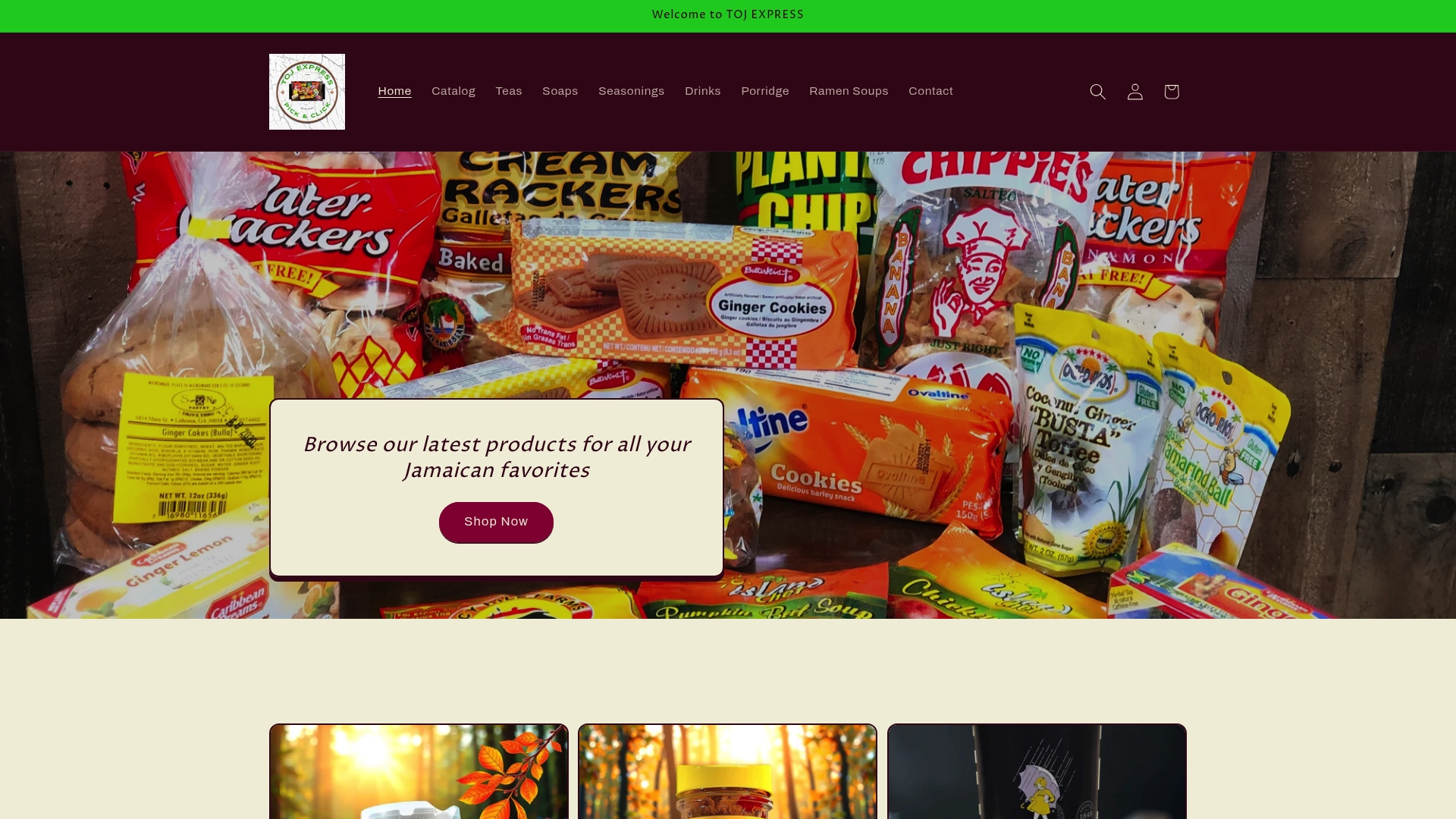
Whether you are looking for authentic Caribbean staples or American regional favorites, the General Grocery collection at Tojexpress brings together products sourced with real attention to origin and quality. Shopping imported goods from a retailer who understands the supply chain means fewer surprises on price and more confidence in what you are buying. Explore the full range and find the products your household actually wants, not just what a generic chain decides to stock.
FAQ
What are imported products?
Imported products are goods manufactured or produced in one country and purchased by consumers in another. They enter local markets through trade agreements, tariffs, and distribution networks that determine their final price and availability.
How do imports benefit consumers?
Imports increase product variety, introduce competitive pricing, and give consumers access to goods not available domestically. Research shows that trade liberalization directly expands the range of products available in local markets.
Why do imported products sometimes cost more than local ones?
Imported goods carry layered costs including shipping, tariffs, taxes, and distributor margins that stack on top of the factory price. In highly import-dependent markets, these premiums can double or triple the original production cost before the product reaches a consumer.
How do tariffs affect the price of imported goods?
Tariffs raise retail prices by adding a tax at the border that companies pass on to customers. De Nederlandsche Bank’s analysis confirms that tariff costs propagate through supply chains and can reduce product variety as well as raise prices.
Why do immigrant communities buy more imported products?
Immigrant households have stronger preferences for goods from their countries of origin, which drives local import supply and shapes retail markets. CEPR research found that the welfare impact difference between immigrant and native households from import access is more than six times the standard variation seen across native households in different counties.