

Why Atlanta Accepts Global Foods: a Cultural Guide
TOJEXPRESS.COM-Antonio HenryTL;DR:
- Atlanta’s rich immigrant history and its busy international airport foster a diverse food scene that blends local traditions with global influences.
- Community-oriented immigrant-run restaurants along Buford Highway and beyond support cultural preservation, social integration, and economic mobility.
- Modern culinary trends in Atlanta reflect this heritage through innovative fusion, driven by Black chefs and pop-up cultures that honor authenticity and community.
Atlanta is one of the few American cities where you can eat authentic pho at a strip mall, pick up jerk chicken from a family-run Caribbean spot, and finish with Ethiopian injera, all within a five-mile stretch. Understanding why atlanta accepts global foods means looking past the obvious and digging into the forces that shaped this city long before food tourism was a thing. Immigration history, a massive airport, Black culinary heritage, and tight-knit community networks all converge here in ways that no other Southern city has quite replicated.
Table of Contents
- Key takeaways
- Why Atlanta accepts global foods: the immigrant foundation
- How ATL airport shaped Atlanta’s food culture
- Modern culinary trends blending global with Southern
- Community and social impact of global food in Atlanta
- Southern roots vs. global branches: Atlanta’s food identity
- My take on Atlanta’s food culture
- Explore Atlanta’s flavors at Tojexpress
- FAQ
Key takeaways
| Point | Details |
|---|---|
| Immigration built Atlanta’s food scene | Waves of immigrants since the 1960s created authentic food corridors like Buford Highway that still thrive today. |
| ATL airport accelerates cultural exchange | As the world’s busiest airport, ATL drives constant cultural flow that shapes local food trends. |
| Soul food and global flavors coexist | Black chefs are merging West African, Caribbean, and global techniques with traditional Southern cooking. |
| Community and cuisine are inseparable | Food venues in Atlanta double as immigrant support hubs, making culinary diversity a social necessity, not just a trend. |
| Fusion is backed by real infrastructure | Pop-ups, farm-to-table sourcing, and multicultural markets give Atlanta’s food scene structural depth beyond novelty. |
Why Atlanta accepts global foods: the immigrant foundation
The story of Atlanta’s global food culture does not start with celebrity chefs or food festivals. It starts with people who came to this city with almost nothing and opened restaurants as a way to survive. Immigrant communities from Vietnam, Korea, India, Jamaica, and Ethiopia established food businesses along Buford Highway beginning in the 1960s and 70s, well before Atlanta had any national culinary reputation to speak of.
The 1996 Summer Olympics was the accelerant. Construction boomed, affordable housing opened up in the suburbs northeast of the city, and thousands of new immigrants arrived looking for work and opportunity. Many of them settled near Buford Highway because the rents were low, public transit was accessible, and the existing ethnic communities made it feel like home. Restaurants followed naturally, filling strip malls with the kind of cooking that nobody else in the South was serving at the time.
What made Buford Highway different from ethnic food clusters in other cities was its self-sustaining ecosystem built on authentic family recipes and loyal community clientele. These were not restaurants performing culture for outside visitors. They were feeding their own neighbors.
Key factors that shaped this corridor:
- Affordable commercial rents in strip malls that larger chains ignored
- Public bus routes that connected immigrant workers and shoppers along the corridor
- An existing customer base within ethnic neighborhoods that supported new businesses
- Low barriers to entry that let first-generation immigrants open without significant capital
Pro Tip: If you want the most authentic global food experience in Atlanta, skip downtown entirely. The real culinary depth lives along Buford Highway and in neighborhoods like Clarkston, Doraville, and Chamblee, where immigrant-run establishments serve the communities they grew up in.
How ATL airport shaped Atlanta’s food culture
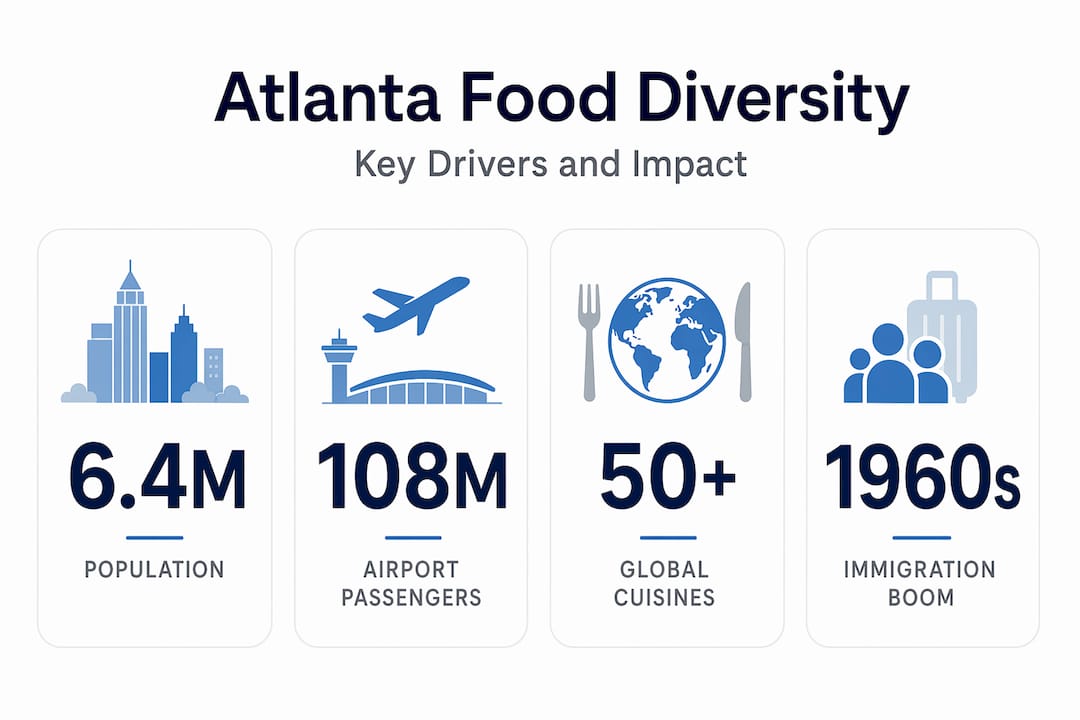
Most cities become culturally diverse over decades. Atlanta had an accelerator that few others have: Hartsfield-Jackson Atlanta International Airport. In 2024, ATL handled 108.1 million passengers, a 3.3% increase over the prior year, making it the busiest airport on the planet.
That volume of human traffic matters more than most people realize. When a city sits at the center of global travel, it attracts international workers, students, diplomats, and business travelers who all bring food preferences, cultural expectations, and culinary knowledge with them. Restaurants near the airport and throughout the metro area adapted to serve those tastes. Over time, those tastes became part of the local fabric.
Here is a breakdown of what ATL’s scale means for Atlanta’s food culture:
| Factor | Impact on food culture |
|---|---|
| 108.1 million annual passengers | Constant influx of international travelers expecting authentic global cuisine |
| Delta Air Lines controls 74% of flights | Major international routes create consistent cultural exchange |
| International terminal expansion | More direct global connections accelerate food trend adoption |
| Trade and logistics hub status | Import access for specialty ingredients supports authentic cooking |
Atlanta’s status as a Beta+ global city with a metro population exceeding 6.4 million also plays a role. Cities at that scale attract international investment, multinational corporations, and a professional class accustomed to eating globally. That demand drives supply. Restaurants open to serve it, and the city’s food identity shifts accordingly. The airport is both the gateway and the engine. Understanding food diversity in Atlanta starts with recognizing that this city processes more human movement than almost anywhere on earth.
Modern culinary trends blending global with Southern
Atlanta’s food culture is not static. It is in constant negotiation between roots and reinvention, and right now that negotiation is producing some of the most interesting cooking in the country. The farm-to-table movement in Atlanta has gone well beyond sourcing local tomatoes. Chefs are pairing Georgia-grown produce with West African spices, Central American techniques, and Korean fermentation traditions to create food that is genuinely new.
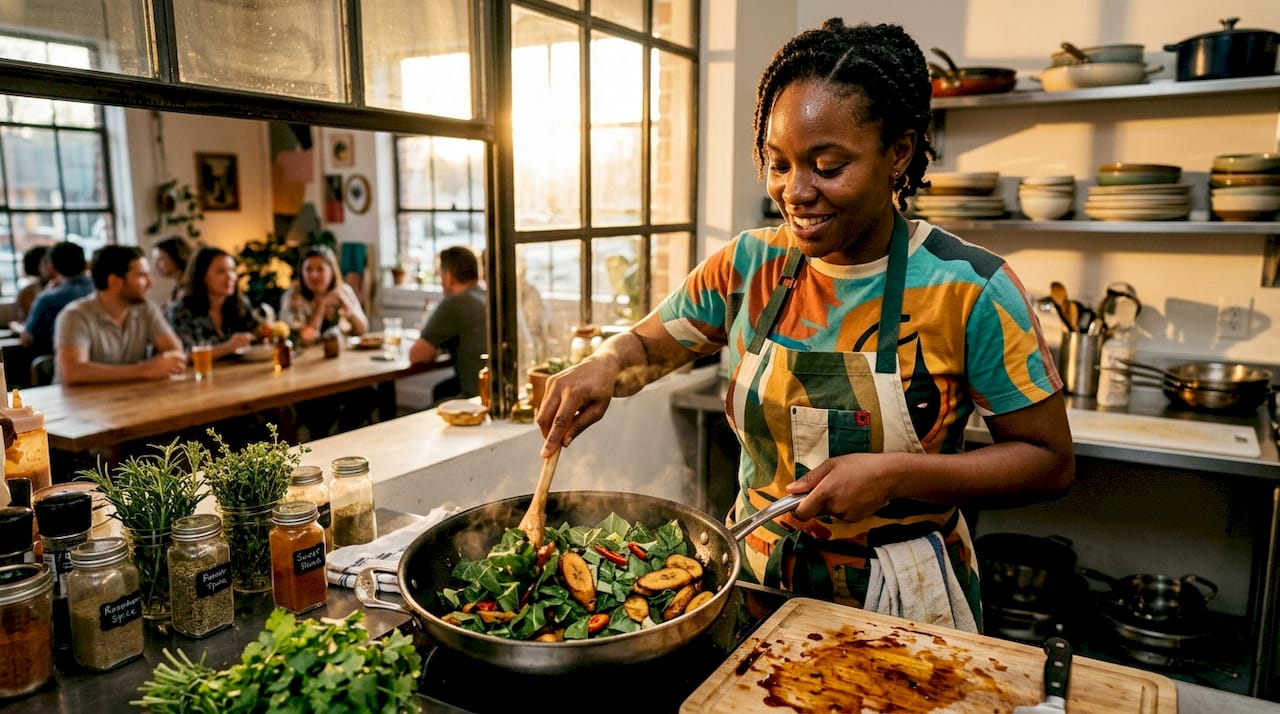
Black chefs have been the most influential force in this evolution. They are incorporating West African sauces and global techniques into soul food without abandoning what makes soul food meaningful. The result is not fusion for fusion’s sake. It is cultural reclamation, using food to reconnect with a diaspora that spans the African continent, the Caribbean, and the American South.
Pop-up culture has given younger chefs a low-risk platform to test these ideas before committing to a full restaurant. The Punk Foodie platform and similar Atlanta pop-ups blend global flavors with Southern roots through experimental menus that change weekly. This model accelerates culinary evolution in ways that traditional restaurant cycles never could.
What is driving these modern trends:
- Farm-to-table sourcing that makes ingredient origin part of the dining story
- Black-owned restaurants reclaiming African and Caribbean culinary traditions
- Pop-up kitchens testing global-Southern fusion before permanent venues commit
- Social media creating demand for photogenic, culturally specific dishes
- Sustainability values aligning with the naturally lower-waste practices of many global cuisines
Pro Tip: Follow Atlanta pop-up schedules on social media rather than relying on restaurant review sites. The most exciting global-Southern fusion dishes often exist for one weekend before the chef moves on to something new. These are the meals worth planning your schedule around.
Community and social impact of global food in Atlanta
Food in Atlanta does more than feed people. For immigrant communities, restaurants and food markets act as social integration hubs that provide employment, community connection, and in many cases, direct social services. Understanding why Atlanta’s food culture accepts and celebrates global cuisine means recognizing that the city has a structural need for these spaces, not just a cultural preference for them.
Clarkston, Georgia, sits just outside Atlanta and has been called one of the most ethnically diverse square miles in America. Refuge Coffee operates there not just as a coffee shop but as a community anchor providing emergency preparedness resources, language support, and employment for refugees. The food venue becomes the community infrastructure, filling gaps that government services do not reach.
Here is how global food venues support immigrant communities in Atlanta:
- Employment pipelines. Restaurant kitchens are often the first stable job for newly arrived immigrants, offering income without requiring formal credentials or fluent English.
- Cultural preservation. Family-run restaurants maintain recipes, language, and traditions that would otherwise erode across generations living far from their home country.
- Social networking. Food spaces become gathering points where immigrants connect with others from their home regions, share resources, and build mutual support systems.
- Economic mobility. Successful restaurant owners in communities like Buford Highway have used food businesses to build generational wealth and fund their children’s education.
- Cultural education for non-immigrants. Every patron who walks into an authentic Ethiopian or Jamaican restaurant and engages genuinely is participating in a form of cultural exchange that no formal program could replicate.
The benefits of global foods in Atlanta extend far beyond what ends up on a plate. They are bound up with how this city handles integration, preserves community identity, and creates economic opportunity for people who arrived with almost nothing.
Southern roots vs. global branches: Atlanta’s food identity
Atlanta has always been called the Black Mecca of the South, and that history is inseparable from the story of why its food culture is so open to global influences. Soul food is not just a cuisine here. It is a cultural statement. And the chefs evolving it today are doing so with a clear awareness of what it has meant historically.
| Traditional Southern cuisine | Multicultural-influenced Atlanta cuisine |
|---|---|
| Collard greens with pork | Collard greens with berbere spice or coconut milk |
| Classic fried chicken | Fried chicken with Korean gochujang glaze |
| Cornbread | Cornbread with jalapeño and Caribbean pepper |
| Peach cobbler | Peach desserts with tamarind or hibiscus |
| Slow-cooked pork | Jerk-seasoned pork with Caribbean dry rub |
Soul food survives because it is tied to community, and Atlanta chefs understand that evolution does not mean abandonment. The authentic experiences found outside downtown in immigrant-run establishments reflect how global culinary traditions slot naturally into Atlanta’s existing cultural framework. The city was already accustomed to food carrying meaning beyond nutrition. Adding Caribbean jerk seasoning to a Southern preparation does not feel foreign here. It feels like a conversation between two communities who share more than they differ.
The Caribbean cuisine’s growing role in Atlanta is a perfect example of this dynamic. Caribbean food shares deep roots with African American Southern cooking through the shared history of the African diaspora. Accepting it does not require Atlanta to stretch its identity. It requires the city to recognize something that was always part of itself.
My take on Atlanta’s food culture
I have watched Atlanta’s food scene shift over the past decade, and the thing that stands out most to me is this: the city does not accept global foods because it is trying to be cosmopolitan. It accepts them because its people have always found identity in food, and those people come from everywhere.
What I find most telling is how little the best global restaurants in Atlanta market themselves to outsiders. The Vietnamese spot on Buford Highway that has been open for 25 years is not trying to attract food tourists. It is feeding its own community. The fact that food tourists now find it anyway is a consequence of the city growing around it, not the cause of its existence.
I also think the pop-up culture and farm-to-table movement deserve more credit than they get for keeping Atlanta’s food scene honest. The farm-to-table transparency trend pushes chefs to think about where ingredients come from, and that habit of thinking leads naturally toward global pantries where the most interesting ingredients originate.
The real challenge Atlanta faces is gentrification pushing up rents along corridors like Buford Highway, which could price out the very restaurants that made it culturally significant. Supporting authentic immigrant-run establishments is not a charity. It is how you protect the city’s most genuine culinary identity before it gets replaced by something that only looks like it.
— ANTONIO
Explore Atlanta’s flavors at Tojexpress
Atlanta’s multicultural food culture is one of the most genuine you will find anywhere in the South, and part of keeping it alive is knowing where to source the flavors that define it. At Tojexpress, we carry American and Caribbean products that reflect exactly the kind of culinary diversity Atlanta has built its food identity around.

Whether you are recreating a Caribbean dish you tried at a local Atlanta spot or stocking up on American pantry staples with a global edge, Tojexpress is your source. We believe in the same thing the restaurants along Buford Highway believe in: authentic flavors served without compromise. Explore our selection of Caribbean and global ingredients and shop diverse cultural flavors that bring Atlanta’s multicultural food story into your own kitchen.
FAQ
Why is Atlanta’s food scene so culturally diverse?
Atlanta’s food diversity comes from decades of immigration, the influence of Hartsfield-Jackson as the world’s busiest airport, and a strong African American culinary tradition that was already open to global influences. Communities from Vietnam, Korea, Ethiopia, Jamaica, and Latin America built enduring food corridors that shaped the entire city’s palate.
What is Buford Highway known for in Atlanta?
Buford Highway is Atlanta’s most celebrated multicultural food corridor, stretching through northeast Atlanta and home to authentic Vietnamese, Korean, Mexican, Chinese, and Ethiopian restaurants. Its growth was driven by affordable rents and immigrant entrepreneurship beginning in the 1960s.
How does Atlanta’s airport influence its food culture?
ATL handled 108.1 million passengers in 2024, making it the world’s busiest airport. That level of international traffic creates constant cultural exchange, attracts global workers and travelers with international food expectations, and supports the import supply chains that make authentic global cooking possible.
What role do Black chefs play in Atlanta’s global food scene?
Black chefs in Atlanta are at the center of the city’s culinary evolution, using West African, Caribbean, and global techniques to modernize soul food while honoring its roots. This work connects Atlanta’s African American heritage directly to the African diaspora and makes the city’s global food acceptance feel organic rather than imported.
How do global food venues support immigrant communities in Atlanta?
Beyond serving food, venues like Refuge Coffee in Clarkston provide employment, language support, and community services for refugees and immigrants. Food businesses along ethnic corridors create economic mobility, cultural preservation, and social networking opportunities that are critical to how immigrant communities build stability in Atlanta.