

The Real Role of Comfort Foods in Your Emotional Health
TOJEXPRESS.COM-Antonio HenryTL;DR:
- Comfort foods activate psychological systems tied to memory, safety, and stress relief, offering genuine emotional comfort.
- Understanding the science behind emotional cravings helps build awareness and develop healthier coping strategies without guilt.
Reaching for mac and cheese after a brutal day at work is not a weakness. The role of comfort foods in your emotional life is far more complex and far more legitimate than the diet culture narrative about “bad food choices” would have you believe. Research now shows these foods activate deeply wired psychological systems tied to memory, safety, and stress relief. Understanding what is actually happening when you open that bag of chips or reheat your grandmother’s soup changes everything about how you relate to food and your own emotions.
Table of Contents
- Key takeaways
- The role of comfort foods in your psychology
- What science says about stress and comfort food
- How your emotions shape what you crave
- Building a balanced emotional toolkit
- My honest take on comfort food and emotional health
- Find comfort food that works for your body and your culture
- FAQ
Key takeaways
| Point | Details |
|---|---|
| Comfort foods serve emotional needs | They activate memory and reward systems that provide genuine, if temporary, stress relief. |
| Nostalgia drives the comfort, not calories | Mood recovery after stress works the same whether you eat comfort food, fresh produce, or nothing at all. |
| Emotions shape what you crave | Sadness pulls you toward soft, rich textures; anger tends to push cravings toward intense, crunchy flavors. |
| Awareness beats restriction | Recognizing emotional eating patterns without judgment is more effective than willpower-based avoidance. |
| Guilt makes it worse | Treating comfort food as a moral failure creates a stress cycle that increases emotional eating. |
The role of comfort foods in your psychology
Comfort food is not defined by its nutrition label. It is defined by what it means to you. A warm bowl of rice and beans can carry the same emotional weight as a slice of birthday cake, depending on your memories and cultural background. The psychological benefits of comfort foods come primarily from their connection to people, places, and moments when you felt safe.
Here is what is happening in your brain when you reach for a familiar food under stress:
- Memory activation: The smell or taste of a familiar dish triggers autobiographical memories, often tied to warmth, family, or care. This is why your mother’s recipes feel different from the restaurant version of the same dish.
- Dopamine release: Brain reward systems are activated when you anticipate or consume a food you associate with pleasure or relief. Dopamine is not only about taste. It fires in response to the expectation of comfort.
- Stress signal reduction: Comfort food consumption acts as a learned stress reflex, where your nervous system links eating that food with the reduction of a perceived internal threat.
- Social connection by proxy: Research on comfort food nostalgia shows that even visualizing a comfort food activates warm feelings of social connection, which means the food is standing in for the people you associate with it.
Pro Tip: If you are far from home or feeling isolated, writing down a vivid memory connected to a comfort food can activate similar nostalgic feelings without the eating. It sounds small but the neurological effect is real.
Understanding why we crave comfort foods comes down to this: your brain is pattern-matching. It remembers that a specific food once coincided with safety or love, and it reaches for that food when it needs those feelings again.
What science says about stress and comfort food
The research is sharper than most people realize. This is not about emotional fragility or poor self-control. Stress biochemically increases your drive toward specific foods, and the relationship between emotional state and eating behavior has been studied rigorously enough to draw clear conclusions.
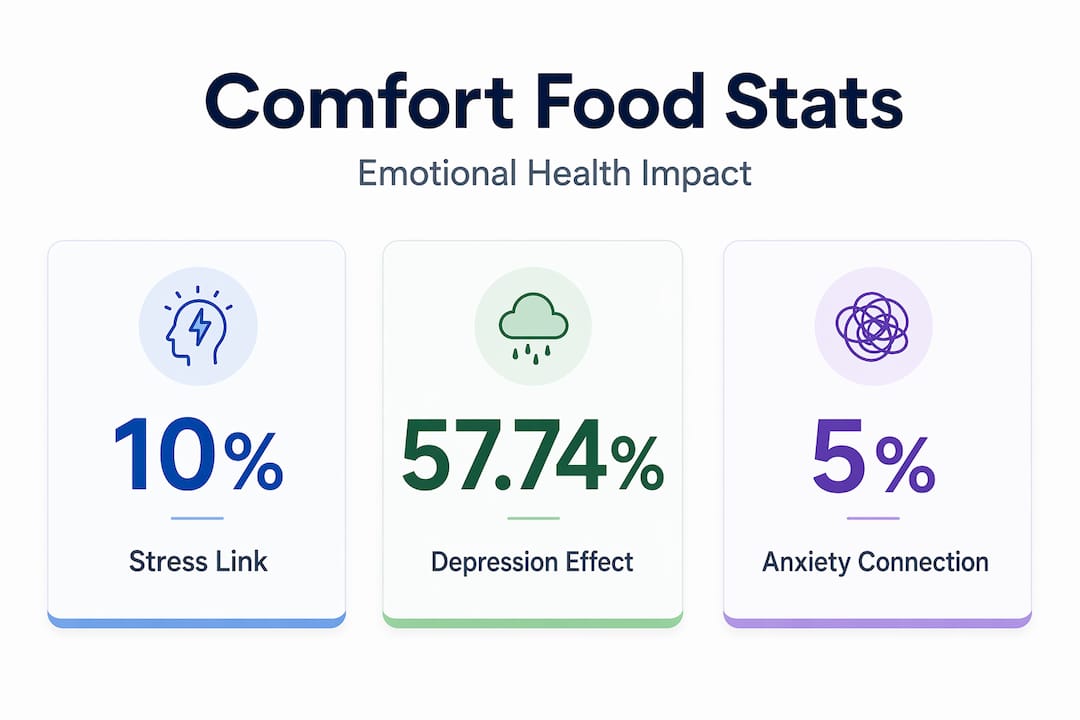
Emotional eating accounts for nearly 10% of the association between stress and anxiety, and nearly 5% of the link between stress and depression. That might sound small, but it represents a measurable, causal pathway. Eating in response to emotion is not random behavior. It is a predictable outcome of psychological distress.
| Emotional state | Comfort food behavior | Research link |
|---|---|---|
| High perceived stress | Increased frequency of comfort food consumption | Nature study, 2025 |
| Depression | Mediates 57.74% of link between adverse childhood experiences and emotional eating | 2,254-patient study |
| Anxiety | Emotional eating accounts for ~10% of anxiety association | Frontiers in Nutrition, 2026 |
| General stress | Ultra-processed food linked to mental distress in 3.4–7.8% of global population | Frontiers in Nutrition, 2026 |
One of the most useful findings challenges the idea that comfort foods work because of their ingredients. Mood returns to baseline after stress at the same rate whether a person eats ultra-processed comfort food, fresh produce, or nothing at all. The food itself is not doing the biochemical heavy lifting. The psychology of memory and expectation is.
“Comfort food serves as emotional regulation, not a failure of willpower. Compassion-based approaches better support behavior change than restriction-based ones.” — Emotional regulation research
That said, the relief is real but temporary. Transitory relief from comfort food can reinforce overeating behaviors because the brain learns that this food reduces distress, regardless of actual hunger. This is where awareness becomes critical. The pattern works. It just can stop working in your favor if it becomes the only coping tool you have.
The cultural significance of comfort foods also shapes who turns to what. Depression mediates 57.74% of the link between adverse childhood experiences and emotional eating. People who grew up in high-stress households often develop food-based coping patterns early, and those patterns show up in adulthood as strong, deeply encoded cravings for specific foods associated with any moment of comfort from that time.
How your emotions shape what you crave
Not all stress produces the same craving. The type of emotion you are experiencing actually shapes the specific sensory experience your body wants from food. This is one of the more fascinating dimensions of the role of food in emotional wellbeing.
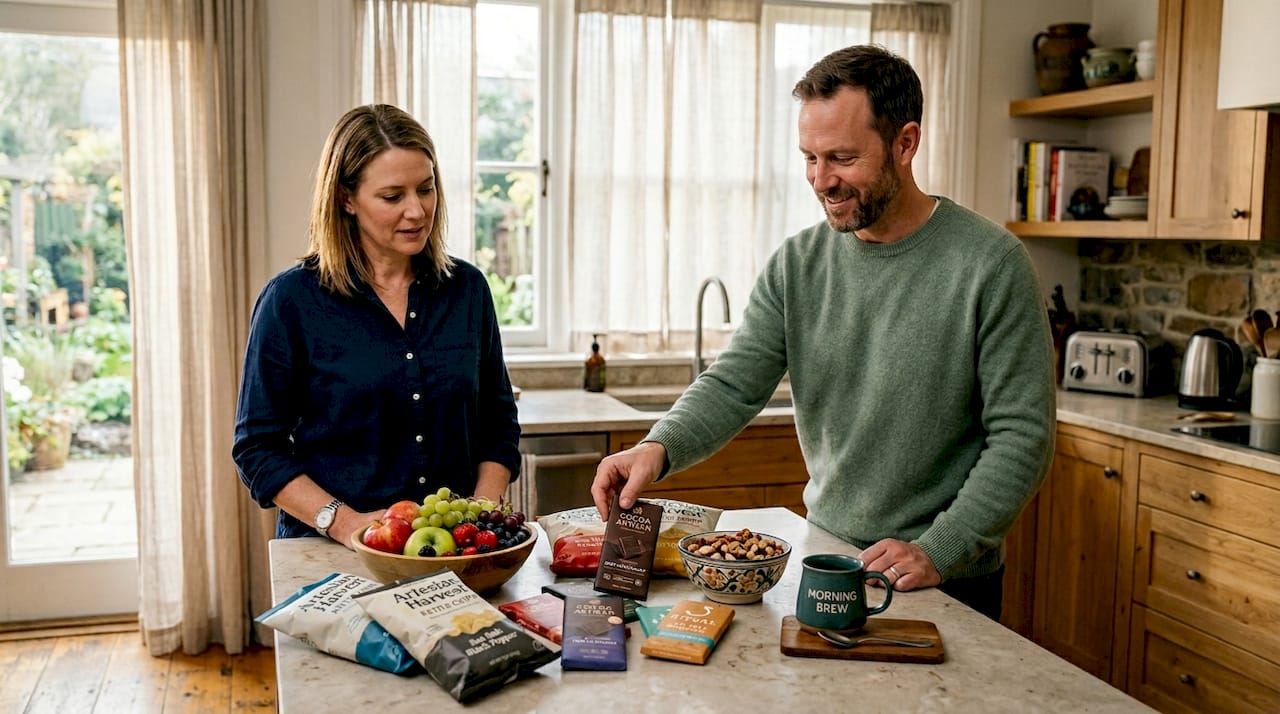
Research on sensory cravings and emotional states finds that different feelings pull people toward distinct food textures and flavors. Anger is associated with intense flavors and the physical act of chewing, which may serve as a physiological release of tension. Sadness pulls toward rich, soft textures. These are not random preferences. They reflect what your nervous system is trying to do.
Several patterns show up consistently in how emotion shapes comfort food choices:
- Emotional eaters (those who eat specifically in response to feelings) tend to reach for sweet, soft, calorie-dense foods because these most closely mirror the sensory profile of foods associated with childhood comfort.
- Restrained eaters (those who normally restrict food intake) often experience more intense cravings during stress because the emotional pressure overrides their usual control strategy.
- External eaters (those who eat in response to environmental cues like smell or sight) become especially vulnerable in emotionally charged environments, such as family gatherings or stressful social settings.
Cultural and personal food heritage also shapes which specific foods carry comfort. For someone raised in the Caribbean, a plate of stewed chicken over rice may trigger the same psychological cascade that a bowl of chicken noodle soup triggers for someone from the American Midwest. Neither food is more or less “legitimate.” The comfort comes from the social connection and food memories encoded in the food, not from its macronutrient profile.
The impact of comfort foods on mood is therefore highly personal and culturally specific. Respecting that specificity matters when you are trying to understand your own patterns.
Building a balanced emotional toolkit
Awareness is the foundation. Many individuals do not realize they are using food as a coping mechanism until they start paying attention to the sequence of events: stress arrives, an urge appears, eating follows. That sequence happens fast, often automatically. Slowing it down is what gives you options.
Here is a practical framework for developing a more balanced relationship with comfort food:
- Name the emotion first. Before reaching for food, pause for 30 seconds and identify what you are actually feeling. Stress? Loneliness? Boredom? Naming the emotion does not eliminate the craving but it creates a moment of conscious choice.
- Build your toolkit with alternatives. Deep breathing and grounding techniques can soothe the nervous system as effectively as comfort food in many situations. Movement, calling someone you trust, or even stepping outside works through the same stress-response pathway that food addresses.
- Shift the internal story. Viewing comfort food as a moral failure amplifies guilt, which increases stress, which triggers more emotional eating. Replacing that narrative with curiosity and self-compassion literally breaks the cycle.
- Choose nourishing versions when possible. You do not have to give up the emotional function of comfort foods. You can shift toward versions that also support your physical health. Healthy Caribbean cooking swaps are a practical example of how cultural comfort foods can be prepared with better ingredients without losing what makes them comforting.
- Let the ritual be part of the comfort. The act of preparing a familiar meal can be just as regulating as eating it. The sights, smells, and steps of cooking a dish with personal history engage the same nostalgia system as consuming it.
Pro Tip: Keep a simple food mood journal for one week. Write down what you ate, what you felt before and after, and what was happening around you. You will likely spot two or three clear emotional triggers that you were not consciously aware of before.
The goal is not to stop reaching for comfort foods. The goal is to expand what you reach for, so that food is one option among several rather than the only one.
My honest take on comfort food and emotional health
I have read a lot of research on this topic and talked with many people who feel deep shame about their food choices. What strikes me most is how often the shame causes more harm than the eating itself.
I think the framing of comfort foods as “bad” is doing real psychological damage. When you treat eating a bowl of macaroni during a hard week as evidence of poor character, you are not just being hard on yourself. You are adding a second stressor on top of the one that triggered the eating in the first place. The neurobiological reward system gets overactivated by that stress loop, and the next craving comes faster and harder.
What I have come to believe is that comfort food for mental health is a legitimate concept, not a rationalization. The research backs it. The psychology backs it. The problem is not that people use food to self-soothe. It is that for many people, food becomes the only tool they have. That is a toolkit problem, not a character problem.
My recommendation is to stop trying to eliminate comfort eating and start trying to understand it. Treat it the way you would treat any other habit: with curiosity, some data, and a willingness to add alternatives rather than simply subtract the behavior that is currently working.
— ANTONIO
Find comfort food that works for your body and your culture
If you are rethinking how comfort foods fit into your life, Tojexpress carries both American staples and Caribbean pantry essentials that connect food to heritage without sacrificing nutrition.

You can explore comfort food recipes that reflect real cultural traditions, from the islands to the American South, with swaps that keep the comfort without the crash. For practical meal planning that fits a busy life, the quick family meal solutions blog covers real options that still bring that emotional warmth to the table. And for a deeper dive into food and cultural identity, this resource on stuffing and tradition is worth a read. Visit Tojexpress and find the ingredients that make your comfort food feel like home.
FAQ
What is the actual role of comfort foods emotionally?
Comfort foods activate memory-linked reward systems in the brain, providing temporary relief from stress and a sense of safety tied to nostalgic associations. The emotional function is real and psychologically grounded, not just an excuse to eat.
Why do we crave comfort foods when stressed?
Stress triggers a learned neurological reflex where the brain associates certain foods with relief from negative feelings, driving cravings regardless of actual hunger. Higher perceived stress is directly linked to increased comfort food consumption.
Do comfort foods actually improve your mood?
Research shows mood returns to baseline at the same rate whether you eat comfort food, fresh produce, or nothing. The perceived mood boost comes from nostalgic expectation, not from the food’s ingredients.
Can comfort food be part of a healthy mental health strategy?
Yes, when used with awareness and as part of a broader coping toolkit. Allowing food to comfort without guilt reduces the emotional reliance cycle and supports more balanced behavior over time.
How do cultural backgrounds affect comfort food choices?
Cultural and personal food heritage determines which specific foods carry emotional weight. Caribbean, Southern American, and other regional food traditions encode comfort differently, but the psychological mechanism of nostalgia and social memory is the same across cultures.