
The Role of Bodegas in Community Life
TOJEXPRESS.COM-Antonio HenryTL;DR:
- Bodegas are vital community institutions that foster social cohesion, preserve cultural identity, and support local economies. They provide essential practical services, serve as cultural anchors, and face threats from crime, gentrification, and aging ownership. Protecting and supporting bodegas through policy and community action is crucial for urban neighborhood vitality.
A bodega is defined as a small, neighborhood-owned convenience store that functions as a social, cultural, and economic anchor for urban communities. Far beyond selling coffee and canned goods, the role of bodegas in community life spans emotional support, cultural preservation, informal logistics, and even literacy programs. New York City alone has over 13,000 bodegas, many operating 24 hours a day, seven days a week. For community members and local leaders, understanding what bodegas actually do, and why losing them matters, is one of the most practical conversations in urban policy today.
How do bodegas shape social connection and community identity?
Bodegas function as third places for social interaction, sitting between home and work as informal gathering spots where neighbors share news, grieve losses, and celebrate milestones. This is a concept sociologists use to describe spaces that build social cohesion outside of formal institutions. Chain convenience stores like 7-Eleven or CVS do not replicate this. Their design optimizes for transaction speed, not conversation.
The bodega social role is visible in the details. Owners post birth announcements, baby pictures, and wedding invitations on community boards inside their stores, turning a retail counter into a neighborhood bulletin board. Regulars know the owner by name. The owner knows which customer takes their coffee light and sweet, which one just lost a job, and which teenager needs a quiet word of encouragement.
“The bodega is where you find out what’s happening on the block before anyone posts it online.” — Community perspective captured by Rolling Stone
This kind of daily, face-to-face interaction builds what researchers call social capital. It is the invisible infrastructure of trust that makes neighborhoods function. When a bodega closes, that infrastructure does not automatically transfer to the next nearest store. It dissolves.
Pro Tip: If you lead a neighborhood organization, partner with your local bodega owner to post community event flyers. You will reach residents who are not on social media and who trust the bodega as a credible source of local information.
- Bodegas serve as informal grief and celebration spaces during life events
- Owners act as trusted community liaisons, not just vendors
- Daily interactions build neighborhood trust that formal institutions cannot manufacture
- Community bulletin boards inside bodegas circulate hyperlocal information faster than digital channels
What economic roles do bodegas play in urban neighborhoods?
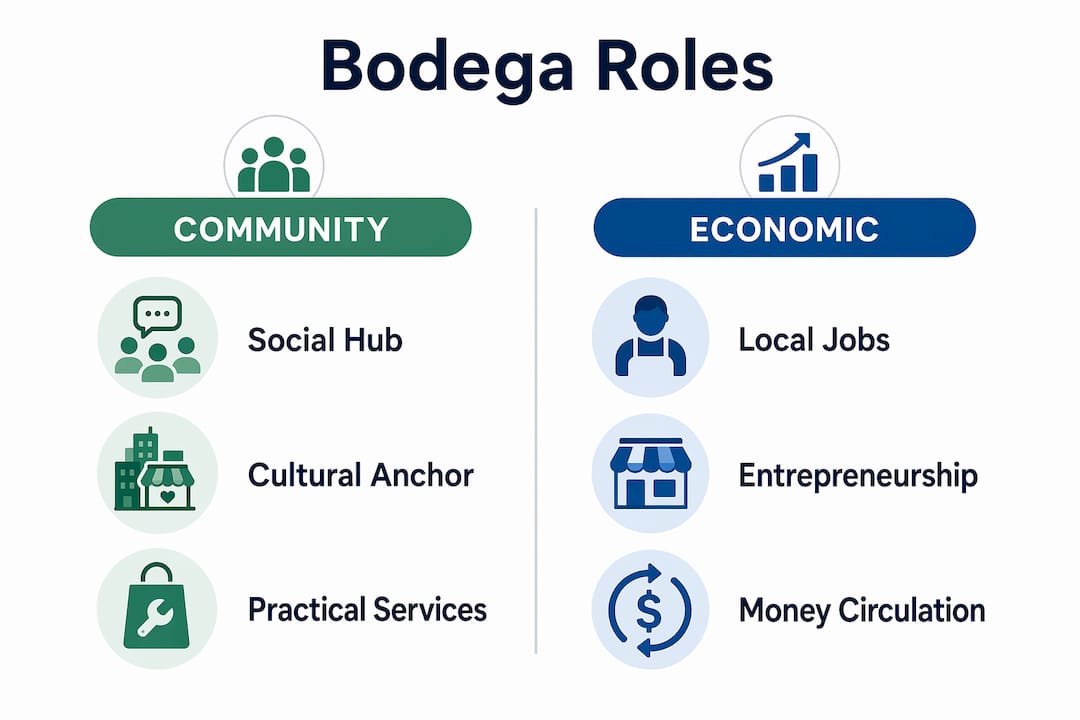
Bodegas are the backbone of immigrant entrepreneurialism in American cities. Most are family-owned, often passed down through generations, and represent the primary income source for households that also send remittances abroad. The economic significance of these stores extends well beyond their square footage.
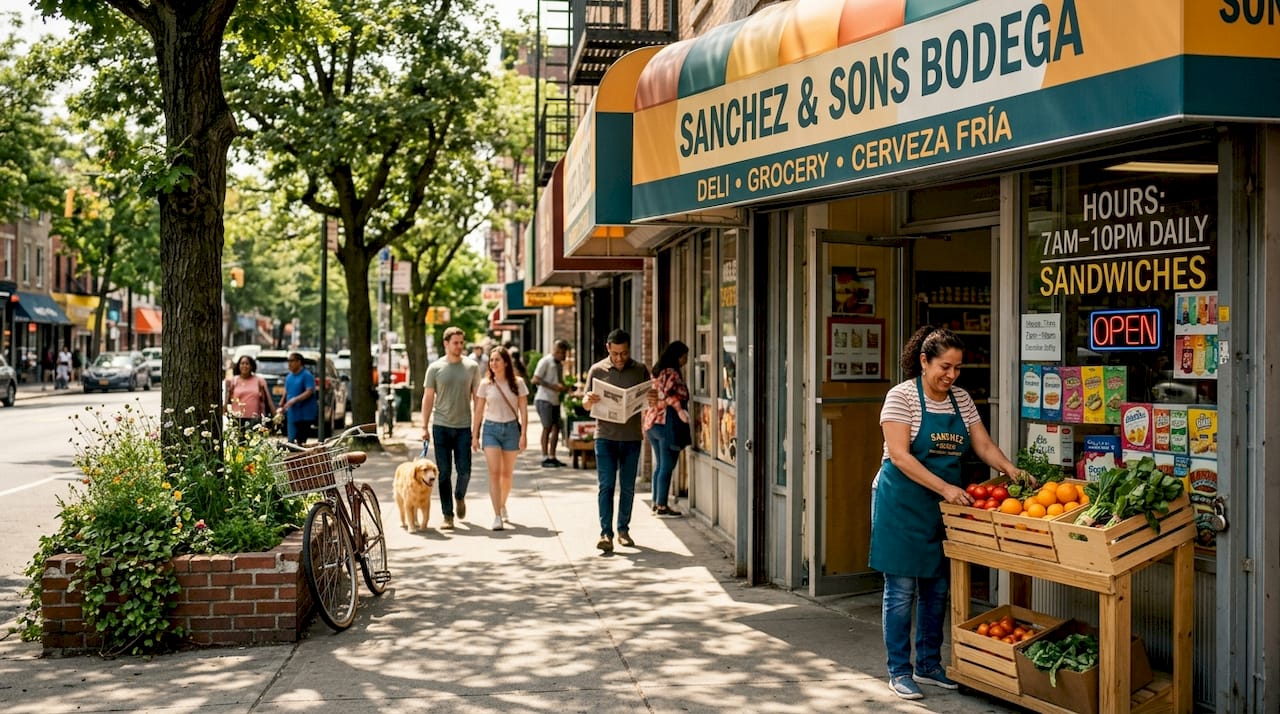
Practical services like package acceptance and key holding make bodegas indispensable in dense urban neighborhoods where residents lack doormen or daytime building access. A bodega owner who holds your spare key or signs for your Amazon delivery is providing a logistics service that no app currently replicates at the neighborhood level. This trust-based model is built over years, not downloaded in minutes.
| Service | Community benefit |
|---|---|
| 24/7 operating hours | Accessible to shift workers, night-shift nurses, and late commuters |
| Package acceptance | Solves last-mile delivery problems in buildings without doormen |
| Key holding | Provides emergency access for neighbors and family members |
| Food access | Fills grocery gaps in neighborhoods underserved by supermarkets |
| Credit and informal tabs | Supports residents during short-term financial hardship |
The economic threats to bodegas are real and documented. Crime against bodega owners has prompted Representative Ritchie Torres to re-introduce the BODEGA Act, which proposes federal funding for security measures including panic buttons and surveillance systems. This legislation recognizes that bodega owners are frontline community workers who absorb significant personal risk to keep their stores open. Losing them to crime or economic pressure does not just hurt one family. It removes a critical node from the neighborhood’s support network.
Pro Tip: Local leaders advocating for small business support should cite the BODEGA Act as a policy model. It frames neighborhood store security as a public safety investment, not just a private business expense. That framing opens different funding conversations.
The family-owned shop model that bodegas represent also keeps money circulating locally. When a resident spends $10 at a bodega, a larger share of that dollar stays in the neighborhood compared to a national chain. That multiplier effect is the economic case for protecting these stores through policy and community loyalty.
How do bodegas contribute to cultural preservation and community heritage?
Bodegas serve as cultural landing pads for immigrant communities, offering a familiar environment where language, food, and tradition are not just tolerated but celebrated. For a newly arrived family from the Dominican Republic, Puerto Rico, or Honduras, walking into a bodega that stocks familiar products and plays familiar music is a form of psychological relief that no government program provides.
The cultural significance of bodegas becomes clearest when you look at specific examples. Toñita’s in Williamsburg, Brooklyn, has operated for nearly 50 years as a social club and sanctuary for migrants, preserving Dominican culture through music, food, and community gatherings. It now attracts a new generation of visitors who see it as a living archive of neighborhood identity. That kind of continuity is rare and fragile.
| Cultural function | Bodega | Typical chain convenience store |
|---|---|---|
| Language accessibility | Often bilingual staff and signage | English-only standard |
| Ethnic food products | Stocked based on community origin | Standardized national inventory |
| Community events and postings | Regular, owner-curated | None |
| Cultural music and atmosphere | Reflects neighborhood heritage | Corporate playlist |
| Immigrant support networks | Informal, trust-based | None |
Gentrification is the primary threat to this cultural function. When familiar community spaces close, the sense of belonging that immigrant communities built over decades erodes quickly. A new coffee shop may serve the same block, but it does not stock plantains, speak Spanish, or know the family that has lived upstairs for 30 years.
- Bodegas stock ethnic foods that reflect the specific heritage of their neighborhood
- Bilingual environments reduce isolation for recent immigrants
- Music, décor, and social norms inside bodegas reinforce cultural identity
- Bodega owners often serve as informal cultural ambassadors between immigrant and non-immigrant neighbors
Stores like Tojexpress, which carry both American and Caribbean products, operate within this same tradition. They recognize that diverse cultural flavors are not a niche market. They are the lived reality of urban neighborhoods across the country. Exploring Honduran street food traditions alongside American staples reflects exactly the kind of multicultural inventory that makes neighborhood stores culturally relevant.
What practical community services do bodegas provide beyond retail?
The practical community services that bodegas deliver go far beyond what their retail license covers. These stores have become informal microservice centers in urban neighborhoods, filling gaps that neither government agencies nor large retailers address.
The Bronx’s BooksxBodegas literacy program places free books inside bodegas to increase community access to reading materials. The program works precisely because bodegas are trusted, accessible, and already embedded in daily routines. A parent picking up milk at 9 p.m. encounters a children’s book. That is a community engagement model that a library branch or school cannot replicate at that hour.
Bodega owners also serve as informal safety anchors. Residents, particularly elderly neighbors and undocumented immigrants, use bodegas as trusted check-in points. An owner who notices a regular customer has not come in for several days may be the first person to raise an alarm. That kind of attentive, relationship-based awareness is a genuine safety net.
Pro Tip: Nonprofit organizations working on literacy, food security, or immigrant services should approach bodega owners as community partners, not just distribution points. Owners have deep neighborhood trust and can amplify program reach in ways that flyers and social media cannot.
- BooksxBodegas in the Bronx uses bodegas as literacy access points during evening hours
- Owners provide informal welfare checks for elderly and isolated residents
- Bodegas serve as trusted information hubs for undocumented immigrants and asylum seekers
- Community organizers use bodega networks to distribute resources and mobilize residents
- Emergency information spreads faster through bodega networks than through official channels
The food access role of neighborhood stores like bodegas is especially significant in areas classified as food deserts, where supermarkets are absent and residents depend on small stores for daily nutrition. Bodegas that stock fresh produce, dairy, and culturally specific ingredients are not just convenient. They are necessary.
How are bodegas adapting to modern urban challenges and opportunities?
Bodegas face a convergence of pressures in 2026: aging ownership, rising rents driven by gentrification, crime risk, and competition from delivery apps. The response from communities and entrepreneurs has been creative and, in some cases, model-setting.
The succession challenge is acute. Many bodega owners are first-generation immigrants who built their stores over decades. Their children, raised with more educational and professional options, are less inclined to continue the business. When an owner retires without a successor, the store often closes or sells to a developer. The neighborhood loses not just a store but an institution.
Philadelphia’s The Papi Store PHL represents one model for adaptation. It combines Caribbean cultural products, community art, and neighborhood events under one roof, treating the bodega format as a platform for cultural entrepreneurship rather than just a retail operation. This approach attracts younger customers and generates community investment in the store’s survival.
- Aging owners without successors represent the single largest structural threat to bodega continuity
- The BODEGA Act’s security funding addresses crime risk, which accelerates owner burnout and closure
- Creative models like The Papi Store PHL blend retail with cultural programming to attract new generations
- Community-led campaigns to “shop local” directly support bodega economic stability
- Real estate pressure in gentrifying neighborhoods requires policy intervention beyond individual owner decisions
The real role of local retail in urban communities is not static. Bodegas that survive and grow are the ones that expand their identity from corner store to community hub, offering services, hosting events, and building the kind of loyalty that delivery apps cannot buy.
Key takeaways
Bodegas are irreplaceable urban institutions that deliver social cohesion, cultural preservation, economic support, and practical community services that no chain store or app replicates.
| Point | Details |
|---|---|
| Social cohesion anchor | Bodegas build neighborhood trust through daily face-to-face interaction that chain stores do not replicate. |
| Economic lifeline | Family-owned bodegas support immigrant entrepreneurialism and keep spending local through a multiplier effect. |
| Cultural preservation | Bodegas stock ethnic products, use bilingual staff, and maintain traditions that protect immigrant identity amid gentrification. |
| Practical microservices | Programs like BooksxBodegas and informal safety checks show bodegas deliver services beyond any retail license. |
| Policy urgency | The BODEGA Act reflects growing recognition that protecting bodegas is a public safety and community wellbeing investment. |
Why bodegas deserve more credit than they get
I have spent years watching community conversations focus on big-ticket urban development while the corner bodega gets treated as background scenery. That is a mistake, and I think it comes from a fundamental misreading of what these stores actually are.
The bodega is not a lesser version of a supermarket. It is a different institution entirely. Its value is relational, not transactional. The owner who knows your name, holds your packages, and posts your grandmother’s obituary on the community board is performing a social function that no amount of retail square footage can replace.
What frustrates me most is the policy gap. We have frameworks for protecting historic buildings and funding arts organizations, but very little infrastructure for protecting the social institutions that immigrant communities build through commerce. The BODEGA Act is a start, but it addresses security, not succession, rent pressure, or cultural continuity.
My honest recommendation to local leaders: treat your neighborhood bodegas the way you treat your public libraries. They are not just stores. They are community infrastructure. Visit them, buy from them, and advocate for policies that keep them viable. The day you notice one has closed and been replaced by a generic chain is the day you realize what you lost.
— ANTONIO
How Tojexpress supports neighborhood stores and communities
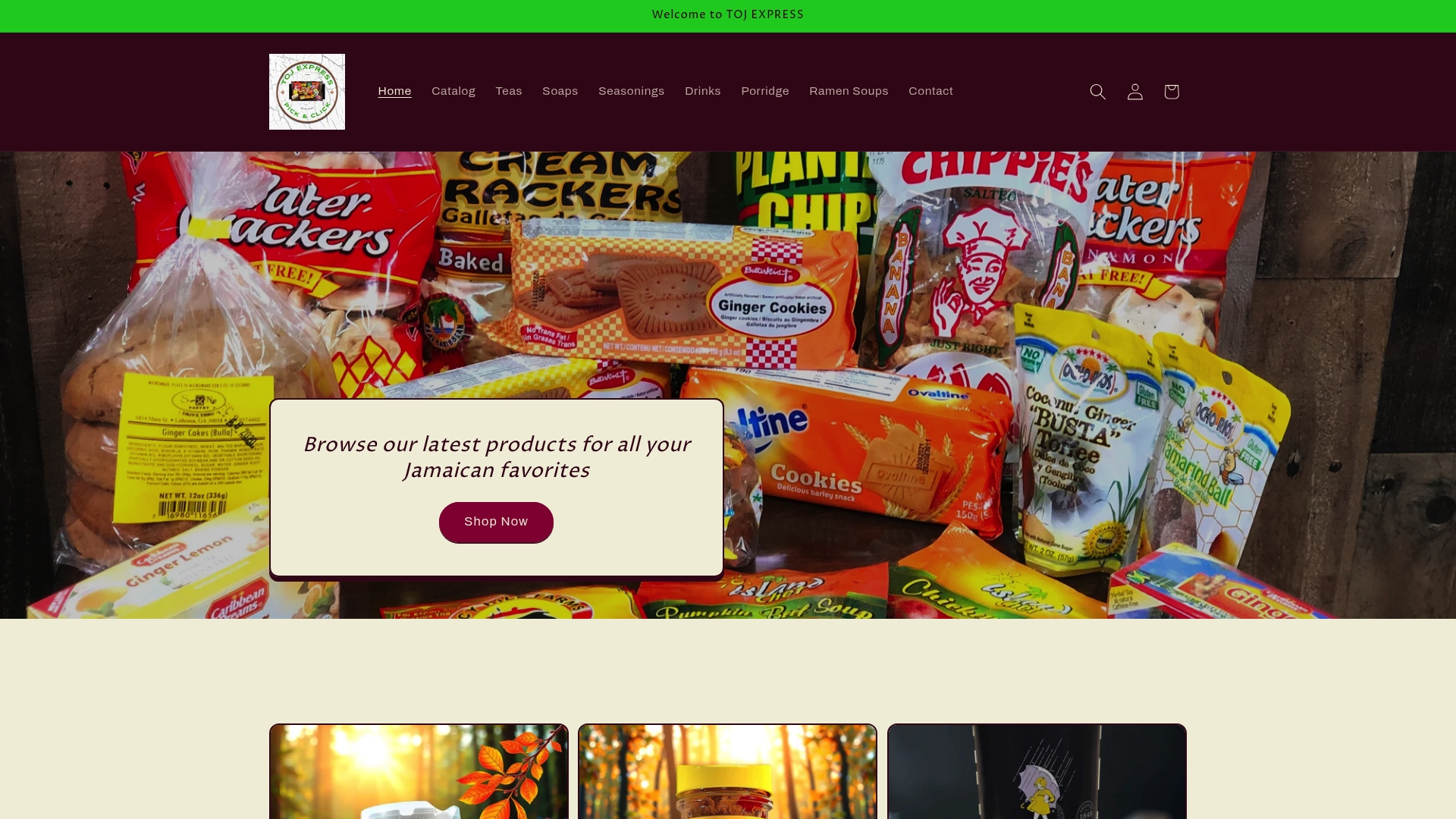
Tojexpress operates as a community-centered convenience store carrying both American and Caribbean products, reflecting the same multicultural mission that defines the best urban bodegas. Whether you are a community member looking for familiar flavors or a local leader seeking a model for neighborhood retail done right, Tojexpress demonstrates how a neighborhood store can serve cultural and practical needs simultaneously. Explore Tojexpress’s full range of American and Caribbean products and see how a neighborhood store can anchor community identity while delivering real everyday value. Supporting stores like Tojexpress is how communities keep their cultural fabric intact.
FAQ
What is the role of bodegas in community life?
Bodegas serve as social, cultural, and economic anchors in urban neighborhoods, providing 24/7 access to goods, informal community services, and cultural spaces that chain stores do not replicate. Their role extends from package holding and key storage to hosting literacy programs and preserving immigrant cultural identity.
Why are bodegas important to immigrant communities?
Bodegas function as cultural landing pads for immigrant communities, stocking ethnic foods, providing bilingual service, and creating familiar social environments that reduce isolation. Spaces like Toñita’s in Williamsburg have operated for nearly 50 years as sanctuaries for migrants navigating new neighborhoods.
How do bodegas support local economies?
Bodegas are family-owned small businesses that keep spending local, support immigrant entrepreneurialism, and provide informal financial flexibility like credit tabs for regular customers. NYC’s 13,000-plus bodegas represent a significant layer of neighborhood economic infrastructure that sustains families and local supply chains.
What threats do bodegas face today?
Bodegas face crime risk, aging ownership without successors, rising rents from gentrification, and competition from delivery apps. The BODEGA Act, re-introduced by Representative Ritchie Torres, proposes federal security funding to address violent crime as one of the most immediate threats to bodega stability.
How can community leaders support local bodegas?
Community leaders can advocate for policies modeled on the BODEGA Act, partner with bodega owners for community programs like literacy initiatives, and actively promote local shopping campaigns. Treating bodegas as community infrastructure rather than private businesses shifts the policy conversation toward preservation and investment.