
The Role of Independent Retail in Your Community
TOJEXPRESS.COM-Antonio HenryTL;DR:
- Independent retail businesses are vital for local economies, generating billions in sales and supporting community identity. They reinvest a higher percentage of revenue locally, foster social connections, and adapt quickly to neighborhood needs, attracting consumers seeking authenticity and personalized service. Supporting these stores through regular shopping, reviews, and social media engagement helps sustain their social and economic impact.
Independent retail is defined as privately owned, locally operated businesses that function outside of corporate chains and franchise systems. The role of independent retail reaches far beyond selling goods. These stores drive local economic growth, shape neighborhood identity, and create the kind of personal connections that no big-box chain can replicate. Independent grocers alone generate over $353 billion in annual U.S. sales, representing more than 38% of the entire food retail sector. That number alone signals how deeply these businesses are woven into the American economy.
What economic impact does independent retail have on local communities?
Independent retailers are a measurable economic force, not just a feel-good alternative to chain stores. The National Grocers Association reports that independent grocers generate $557.5 billion in total annual economic activity, equal to roughly 2% of U.S. GDP. That figure reflects wages paid, vendors supported, and services funded across thousands of local communities.
The mechanism behind this is the multiplier effect. Every dollar spent at an independent grocer does not simply leave the neighborhood. Instead, it circulates locally, funding local suppliers, paying local employees, and supporting nearby service providers. That cycle creates economic sustainability that chain stores simply cannot match.
The numbers make the contrast stark. Local independent businesses reinvest 48 cents of every dollar back into the local economy. Chain stores return less than 14 cents. That gap represents real money that either stays in your neighborhood or flows out to a distant corporate headquarters.
Consumer behavior reinforces this trend. A 2025 national survey found that U.S. consumers allocate 37% of their grocery budget to locally owned independent stores, averaging $2,298 annually per household. That is a deliberate choice, not a default.
“Every dollar spent at a local independent store is a vote for the kind of community you want to live in.” — National Grocers Association Economic Impact Analysis
| Economic Metric | Independent Retailers | Chain Stores |
|---|---|---|
| Local dollar recirculation | 48 cents per dollar | Less than 14 cents per dollar |
| Annual grocery sales (U.S.) | $353 billion+ | Majority of remaining $920B sector |
| Total economic activity | $557.5 billion | Profits largely exit local economy |
| Share of consumer grocery budget | 37% | 63% |
How do independent retailers differ from big chains and franchises?
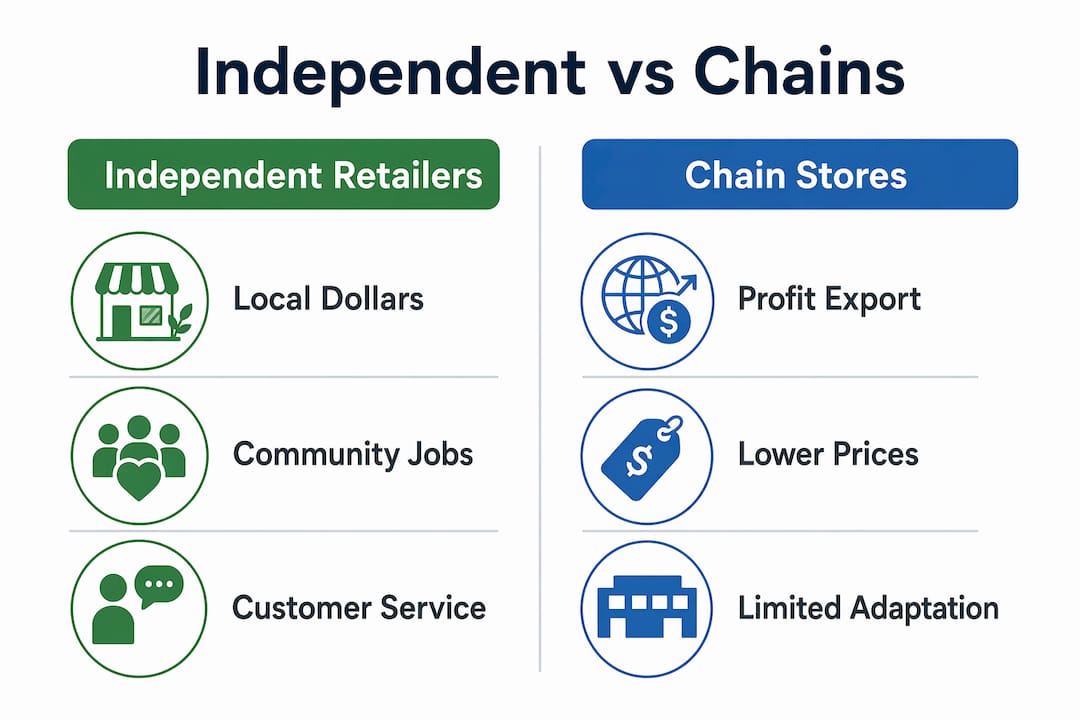
Independent retailers do not compete on price. They compete on experience, expertise, and the ability to adapt faster than any corporate buyer ever could. That is a structural advantage, not a consolation prize.
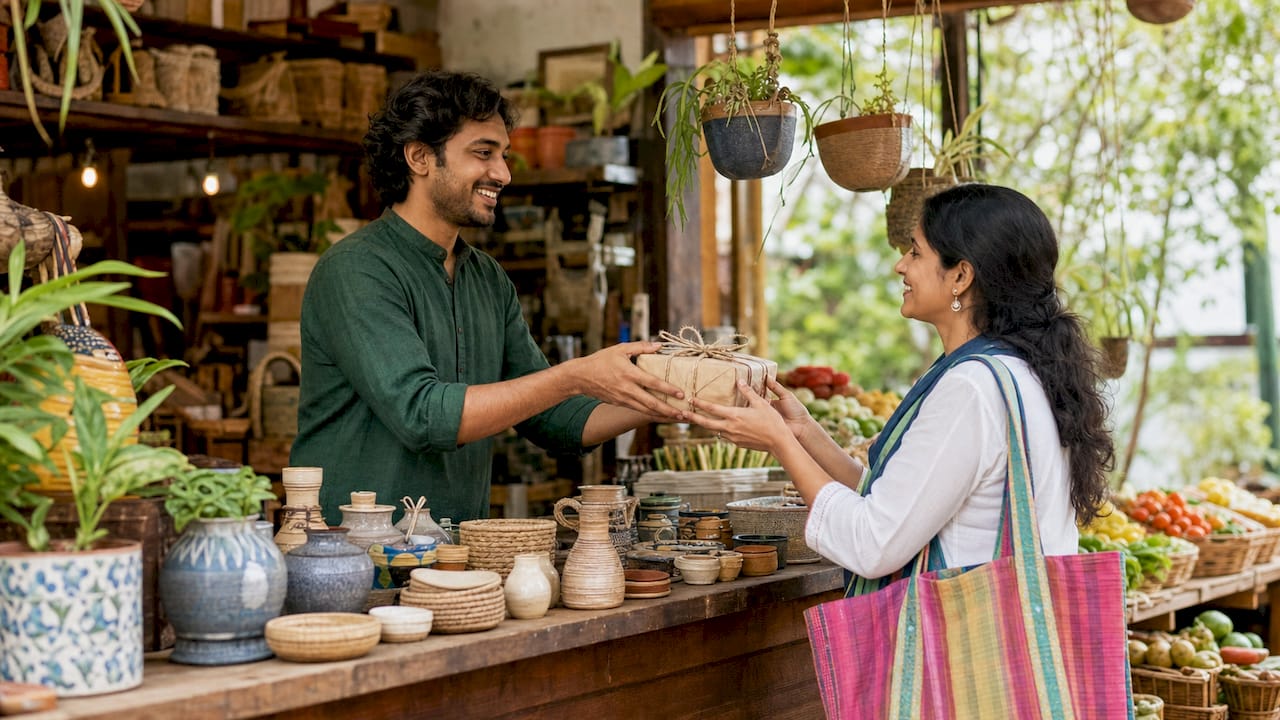
The most visible difference is customer service. An independent store owner knows regulars by name, understands neighborhood preferences, and can answer product questions with genuine knowledge. A chain store associate follows a script. That gap in personal connection is exactly why 60–65% of Gen-Z shoppers prefer buying in-store for the personal experience and expert guidance. Gen-Z is not nostalgic. They simply recognize value when they see it.
Product selection is another area where independents win. A local Caribbean and American specialty store like Tojexpress can stock products that reflect the actual tastes of its neighborhood. National chains stock what sells across 500 locations. Independent stores stock what sells on this block. That specificity creates loyalty that no loyalty points program can manufacture.
Business agility is the third advantage. When a neighborhood trend shifts, an independent owner can adjust the product mix within days. A chain store waits for a regional buyer to approve a change that may take months to reach shelves.
- Curated product selection tailored to local tastes and cultural preferences
- Personal service from owners and staff who know their customers
- Rapid adaptation to neighborhood demand without corporate approval delays
- Community presence through local sponsorships, food drives, and neighborhood events
- Third place function as a gathering spot that builds social connection beyond commerce
Pro Tip: When you visit an independent store, ask the owner about their sourcing. Most independents can tell you exactly where a product comes from, which is a level of transparency no chain store can offer at the register.
Why does supporting small businesses benefit the whole community?
Supporting independent retailers is not charity. It is a direct investment in the social and economic health of your neighborhood. Communities with strong local retail ecosystems report a 72% sense of belonging, compared to 55% in areas dominated by chain stores. That 17-point gap reflects something real: local stores create spaces where people feel connected.
Independent retailers function as essential third places, filling the gap between home and work. A neighborhood grocery store, a Caribbean specialty shop, or a local convenience store becomes a daily touchpoint for community life. These businesses organize food drives, sponsor youth sports teams, and show up when chains have already closed their doors and moved on.
Consumer motivations for shopping independent align closely with community values. The 2025 national survey found that the top reasons shoppers choose independent stores include supporting the local economy (48.2%), accessing unique products (41.9%), and supporting local entrepreneurs (39.3%). These motivations are not abstract. They reflect a real understanding of how spending choices shape neighborhoods.
| Community Factor | Independent Retailers | Chain Stores |
|---|---|---|
| Sense of belonging | 72% in strong local retail areas | 55% in chain-dominated areas |
| Community events and sponsorships | Common, owner-driven | Rare, corporate-approved only |
| Local hiring and wages | Primarily local | Mixed, often regional management |
| Response to neighborhood needs | Immediate and personal | Slow and policy-driven |
What steps can consumers take to support independent retailers?
Choosing to shop at an independent store is the single most direct action a consumer can take. Spending locally keeps dollars circulating in the neighborhood, funds local jobs, and signals to the market that independent retail is worth sustaining. The local retail role in your community is only as strong as the consumer choices that back it up.
Advocacy matters beyond the checkout line. Joining a local chamber of commerce, attending city council meetings about zoning, and sharing independent stores on social media all create real support. Digital presence is now critical for independent retailers. Social media and local search function as the front door for most independent stores, driving foot traffic and building community loyalty before a customer ever walks in.
- Prioritize independent stores for grocery, specialty, and convenience purchases at least once per week
- Leave reviews on Google and Yelp after every visit to boost local search visibility
- Follow and share independent stores on social media to extend their reach
- Attend local markets and events where independent retailers sell directly to the community
- Advocate for local business policies through neighborhood associations and city government channels
Pro Tip: Set a monthly “local spending goal” and track it. Even shifting $50 per month from a chain to an independent store adds up to $600 per year staying in your neighborhood.
How are independent retailers adapting to retail trends in 2026?
Independent retailers are not standing still. The most successful ones treat 2026 as an opportunity, not a threat. Digital tools, shifting consumer preferences, and a renewed focus on local sourcing all favor businesses that can move fast and stay personal.
Digital storefronts and local search optimization are now non-negotiable. Digital presence builds local loyalty and drives repeat business in ways that traditional advertising never could. An independent store with an active Instagram account and a well-maintained Google Business profile competes effectively against chains with million-dollar marketing budgets.
Consumer preferences are also shifting in independents’ favor. The growth in perimeter shopping, discovery-driven food categories, and demand for culturally specific products all play to the strengths of stores like Tojexpress, which specialize in American and Caribbean products that large chains rarely stock in depth. Stores that serve Atlanta’s food heritage and similar community-specific needs are positioned well for this shift.
- Local search and Google Business profiles drive foot traffic from nearby shoppers actively looking for specific products
- Social media content builds community identity and keeps regulars engaged between visits
- Flexible sourcing from local and regional vendors allows rapid response to neighborhood demand
- In-store experience remains a competitive edge as Gen-Z shoppers prefer in-store personal experiences over online convenience
- Community programming such as tastings, cultural events, and local partnerships deepens customer loyalty beyond transactions
The challenges are real. Rising rents, supply chain costs, and competition from large online retailers all pressure independent stores. But the businesses that lean into authenticity, community connection, and product specificity continue to grow.
Key Takeaways
Independent retail drives local economic growth, builds community identity, and delivers consumer experiences that chain stores structurally cannot match.
| Point | Details |
|---|---|
| Economic multiplier effect | Independent stores reinvest 48 cents per dollar locally, versus less than 14 cents for chains. |
| Consumer spending commitment | U.S. households allocate 37% of their grocery budget, averaging $2,298 annually, to independent stores. |
| Community social impact | Areas with strong independent retail report 72% sense of belonging versus 55% in chain-dominated areas. |
| Differentiation through experience | 60–65% of Gen-Z shoppers prefer in-store visits for personal service and expert guidance. |
| Digital presence is now critical | Social media and local search are the front door for independent retailers in 2026. |
Why I believe independent retail is the backbone of real communities
I have spent years watching neighborhoods change, and the pattern is consistent. When independent stores close, something more than commerce disappears. The corner store that knew your order, the specialty shop that stocked the products your family grew up with, the owner who showed up at the school fundraiser. Those things do not get replaced by a chain.
What strikes me most is how little credit independent retailers get for the social infrastructure they provide. The economics are compelling enough on their own. But the social cohesion built by local businesses is the part that rarely makes the headline. A neighborhood with thriving independent stores is a neighborhood where people know each other. That is not a soft benefit. It is a measurable outcome.
The conventional wisdom says independents are at a permanent disadvantage against chains. I think that is wrong. The advantages of independent stores, including speed, authenticity, and community trust, are exactly what consumers are actively seeking in 2026. The stores that understand this and lean into it are not just surviving. They are building something chains cannot buy.
— ANTONIO
Tojexpress and the community stores worth knowing
Tojexpress is a convenience store specializing in American and Caribbean products, built around the same principles that make independent retail worth supporting. The store reflects the tastes, culture, and needs of its community in a way that no national chain can replicate.
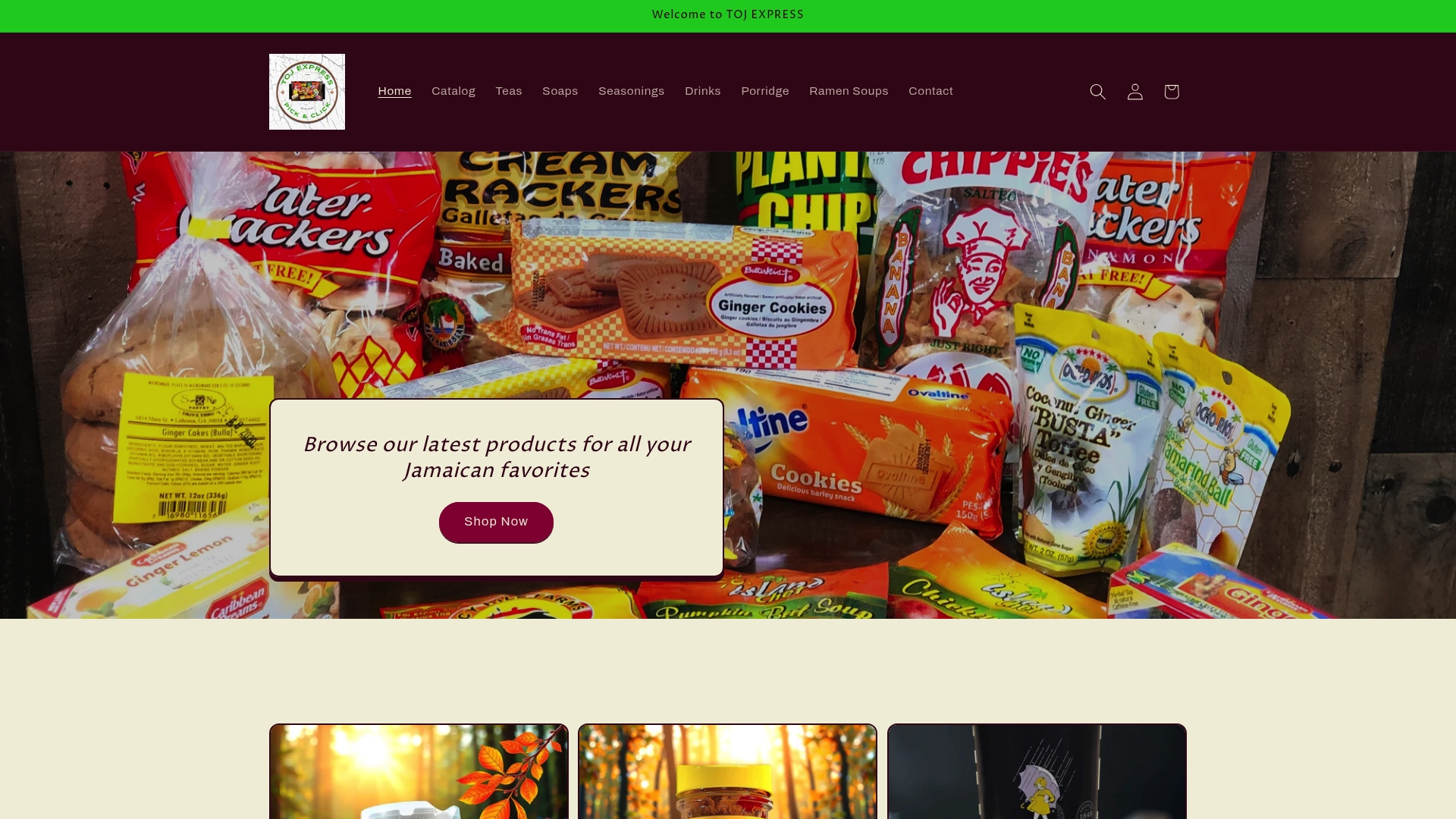
If you care about the role of local businesses in your neighborhood, Tojexpress is a direct example of what that looks like in practice. The store stocks products that matter to real people, supports the local economy, and shows up for the community it serves. Visit Tojexpress to learn more about the store’s offerings and see how neighborhood stores boost food access in Atlanta and beyond.
FAQ
What is the role of independent retail in the economy?
Independent grocers generate over $353 billion in annual U.S. sales and $557.5 billion in total economic activity, equal to roughly 2% of U.S. GDP. Their multiplier effect keeps dollars circulating locally rather than flowing to distant corporate accounts.
How much do consumers spend at independent stores?
A 2025 national survey found U.S. households allocate 37% of their grocery budget to locally owned independent stores, averaging $2,298 per year. The top motivation is supporting the local economy, cited by 48.2% of shoppers.
Why do independent retailers matter for community well-being?
Independent retailers function as community third places, organizing food drives, sponsoring local events, and building social connections. Communities with strong independent retail report a 72% sense of belonging versus 55% in chain-dominated areas.
How do independent stores compete with large chains?
Independent stores compete on curated product selection, personal service, and rapid adaptation to neighborhood needs rather than on price. This approach attracts shoppers who value authenticity and expertise over scale.
What is the best way to support independent retailers?
Shop at independent stores regularly, leave online reviews to boost their local search visibility, and follow them on social media to extend their reach. Even shifting $50 per month from a chain to a local store keeps $600 per year in your community.