

Caribbean Spice Bun: History, Ingredients, and Tradition
TOJEXPRESS.COM-Antonio HenryWhat is a Caribbean spice bun?
A Caribbean spice bun is a dense, dark sweet bread descended from British hot cross buns, rebuilt with Caribbean pantry staples like molasses, stout, and a warming blend of allspice, nutmeg, and cinnamon. It is shaped like a loaf, sliced thickly, and carries a deep mahogany color that no ordinary sweet bread achieves. Think of it less as a pastry and more as a richly spiced, fruit-studded quick bread with real cultural weight behind every slice.
The Jamaican version is the most widely recognized, though similar buns appear across the Caribbean. Its texture is firm and moist, never crumbly, and the flavor hits a balance of earthy sweetness, warm spice, and a faint bitterness from the molasses and stout. You will find it year-round in Caribbean households and Caribbean-American communities across the United States, but Easter is when it truly takes center stage.
Key attributes at a glance:
- Texture: Dense, moist, and sliceable, closer to a pound cake than a dinner roll
- Color: Deep mahogany from molasses, browning sauce, and stout
- Flavor: Sweet, spiced, and slightly bitter with fruity notes from dried raisins and glacé cherries
- Leavening: Baking powder, not yeast, making it a quick bread
- Cultural role: Easter staple and year-round comfort food across the Caribbean and its diaspora
What goes into a Caribbean spice bun?
The flavor of a spice bun comes from a specific combination of ingredients that you will not find in most Western baking. Molasses and stout are the backbone, delivering moisture, color, and an earthy depth that lighter sweeteners simply cannot replicate. Dark brown sugar adds sweetness without wiping out that complexity.
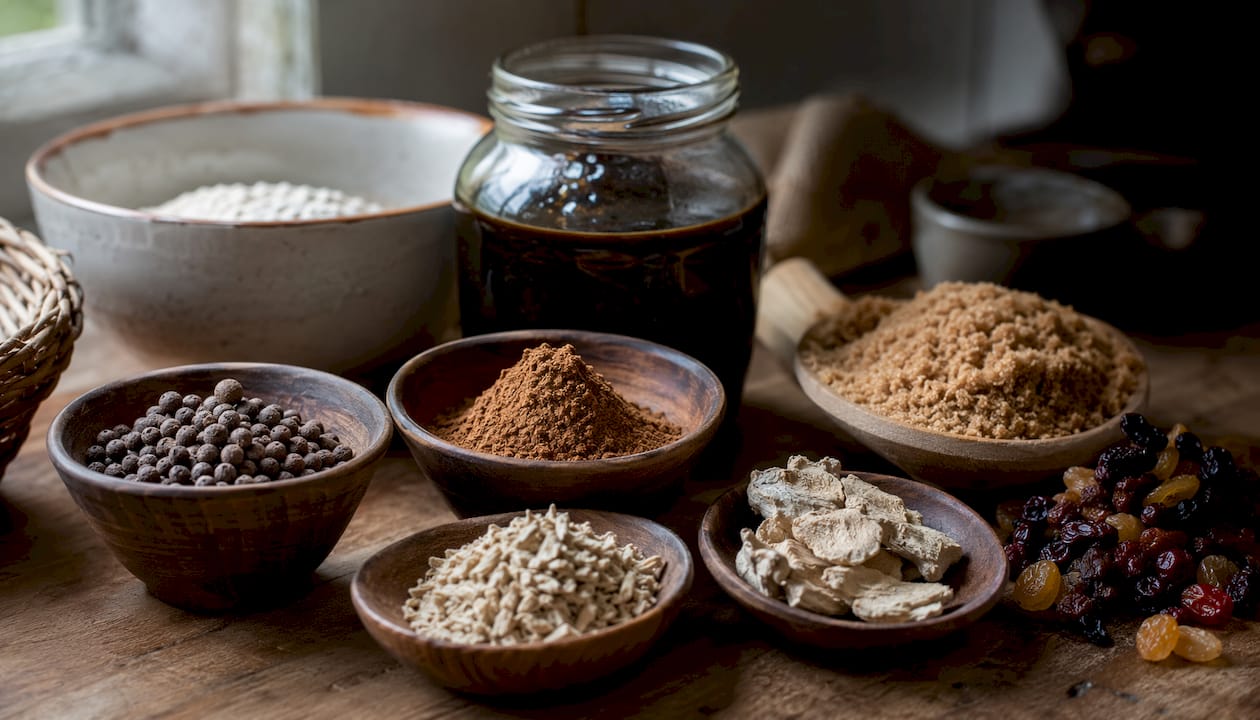
The spice blend is where the bun gets its personality. Allspice, nutmeg, cinnamon, ginger, and cloves work together in a way that feels warm and pungent rather than sweet and mild. Dried fruits, typically raisins and glacé cherries, add bursts of sweetness and a slight chew throughout the loaf. Browning sauce, a burnt-sugar syrup, deepens the color further and contributes a subtle bitter edge that keeps the bun from tasting cloying.
Primary Caribbean bun ingredients and their roles:
- Molasses: Adds dark color, moisture, and a bittersweet earthiness
- Stout (e.g., Guinness): Provides lift, moisture, and a malty depth
- Allspice (pimento): The defining Caribbean spice; warm, clove-like, and slightly peppery
- Nutmeg: Adds a sweet, slightly nutty warmth
- Cinnamon: Brings familiar sweetness and fragrance
- Ginger: Cuts through the sweetness with a mild heat
- Cloves: Intense and aromatic; used sparingly for depth
- Raisins and glacé cherries: Fruity sweetness and texture contrast
- Browning sauce: Burnt-sugar syrup for authentic dark color and flavor balance
How to make a Caribbean spice bun
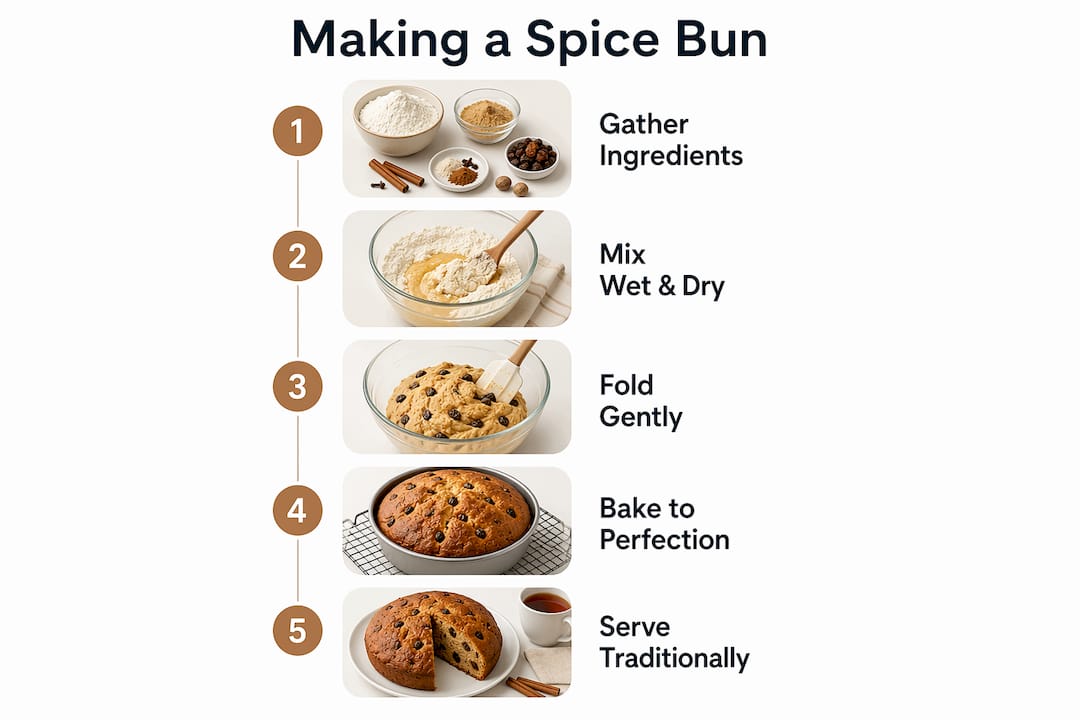
Despite its complex flavor, the preparation process is straightforward. The bun uses baking powder as its leavening agent rather than yeast, which means no proofing time and no waiting around. That also means the batter is more forgiving than a yeast dough, but it does have one firm rule: do not overwork it.
Step-by-step preparation:
- Combine dry ingredients — Whisk together flour, baking powder, allspice, nutmeg, cinnamon, ginger, and cloves in a large bowl.
- Mix wet ingredients — In a separate bowl, stir together molasses, brown sugar, stout, melted butter, eggs, browning sauce, and vanilla extract until fully combined.
- Fold in fruit — Stir raisins and glacé cherries into the wet mixture before combining.
- Combine wet and dry — Pour the wet mixture into the dry ingredients and fold gently until just combined. Stop as soon as no dry flour remains.
- Transfer to pan — Pour the batter into a greased loaf pan and smooth the top.
- Bake — Bake at 325°F for approximately 60–70 minutes, or until a skewer inserted in the center comes out clean.
- Cool completely — Allow the bun to cool in the pan for 10 minutes, then turn out onto a rack. Slicing too early will cause it to crumble.
Pro Tip: The single most common mistake when making spice bun is overmixing. Once the wet and dry ingredients meet, fold gently and stop early. Overworking the batter develops gluten and produces a tough, dense loaf instead of the tender crumb you want.
The gentle mixing method is what separates a bakery-quality bun from a heavy brick. Treat the batter like muffin batter, not bread dough.
The cultural and historical roots of the spice bun
The spice bun’s story starts with British colonization. Hot cross buns, small spiced rolls marked with a flour-paste cross and eaten on Good Friday, arrived in the Caribbean through British settlers in the 17th century. Caribbean cooks kept the spirit of the recipe but replaced ingredients with what was locally abundant and affordable. Honey gave way to molasses. Small individual buns became a single large loaf, better suited to the heat, easier to slice, and longer-lasting on the shelf.
That shift from small buns to a larger loaf was not just practical. It reflected a broader pattern of Caribbean culinary creativity, taking a European tradition and reshaping it into something distinctly local. Laura Adderley, Associate Professor of African Diaspora History at Tulane University, has noted the connection between Jamaicans’ attachment to the dish and the cultural pride that comes from creating something genuinely new from borrowed materials.
The Easter and Lenten connection remains strong. Good Friday is the peak moment for spice bun consumption across Jamaica and the wider Caribbean diaspora, carrying the same seasonal weight that hot cross buns hold in England. But unlike its British predecessor, the spice bun never stayed confined to one day a year.
Why the spice bun matters culturally:
- It represents Caribbean adaptation of European colonial food traditions
- Good Friday consumption links it directly to Lenten and Easter observance
- The loaf format reflects practical ingenuity suited to Caribbean climates
- Its recipe has been passed down through family bakeries for generations
- It serves as a shared cultural touchstone for Caribbean communities worldwide
How is a Caribbean spice bun traditionally served?
The classic pairing is “bun and cheese,” and it is exactly what it sounds like: thick slices of spice bun with a slab of cheese pressed between them. The contrast works because the bun is sweet, dense, and spiced, while the cheese is salty, fatty, and mild. Together they hit a balance that neither achieves alone.
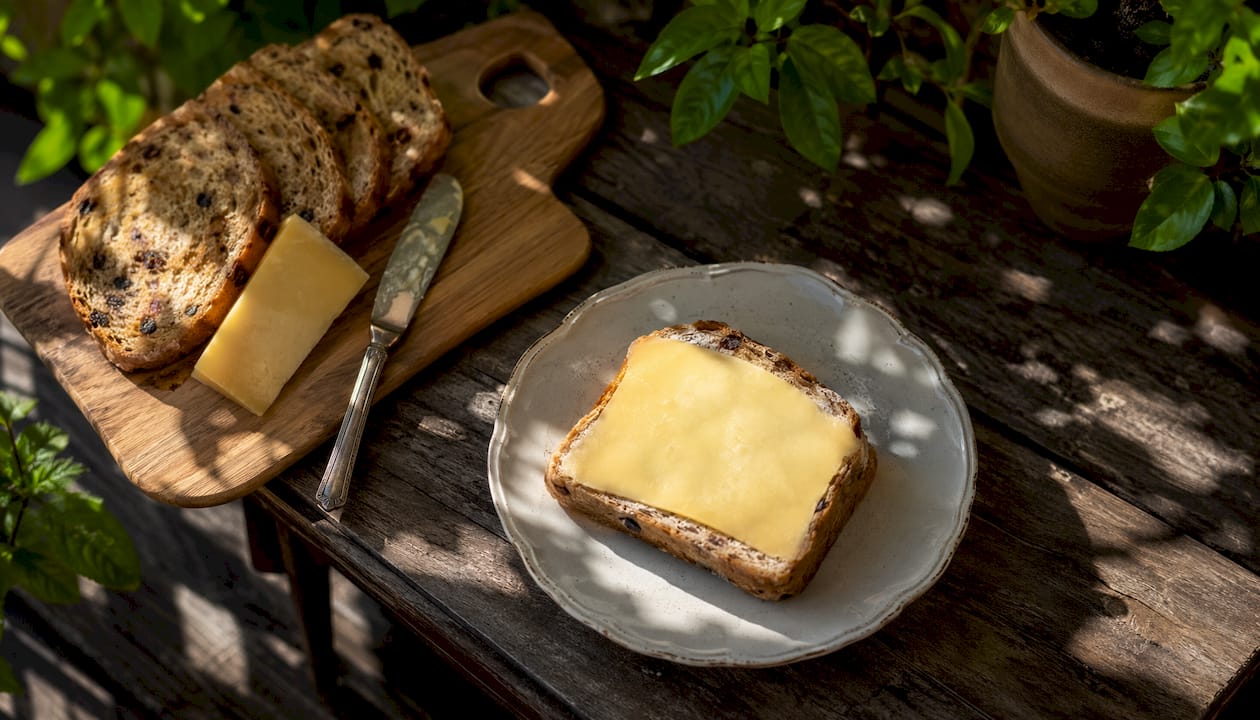
In Jamaica, Tastee Cheese is the traditional choice. It is a processed cheese with a texture that slices like cold butter and a salt-fat balance specifically suited to the sweetness of the bun. In the United States, sharp aged cheddar is the most common substitute, and it holds up well against the bun’s intensity.
Common ways to enjoy spice bun:
- Bun and cheese: The classic pairing, with Tastee Cheese in Jamaica or sharp cheddar in the U.S.
- With butter: A simpler option, especially for breakfast or an afternoon snack
- With tea or coffee: The spices in the bun complement black tea particularly well
- Plain with cold milk: A traditional way children enjoy it in Caribbean households
- Toasted slices: Lightly toasting the bun brings out the spices and adds a slight crunch to the edges
The bun and cheese combination is most prominent at Easter, but you will find it in Caribbean bakeries, markets, and homes throughout the year. In cities with large Caribbean communities, like New York, Miami, and Toronto, spice bun is a staple item in specialty grocery stores and Caribbean restaurants well beyond the holiday season. Tojexpress carries Caribbean baked goods and pantry staples that make it easy to find the right ingredients or a ready-made bun without hunting across multiple stores.
The spices that define the bun’s flavor
Caribbean spice blends are not standardized the way a commercial spice packet might be. The combination used in spice bun draws from the same spice traditions that appear in jerk seasoning, rum cake, and sorrel drink, adapted for sweet baking rather than savory cooking. Allspice, known locally as pimento, is the anchor. It grows natively in Jamaica and carries a flavor that sits somewhere between clove, cinnamon, and black pepper, which is why it earned the name “allspice” in the first place.
Nutmeg and cinnamon add warmth and fragrance. Ginger brings a mild heat that cuts through the sweetness and keeps the bun from tasting flat. Cloves are used sparingly because their intensity can overwhelm everything else if overdone. Together, these spices create a flavor profile that is recognizably Caribbean, linking the bun to a broader culinary heritage that spans savory and sweet dishes alike.
Pro Tip: For the most authentic flavor, use whole spices and grind them fresh. Pre-ground spices lose their volatile oils quickly, and the difference in a bun baked with freshly ground allspice versus a jar that has been sitting in a cabinet for a year is noticeable.
Tojexpress stocks a range of Caribbean spices including allspice, nutmeg, and cinnamon sourced for Caribbean cooking, so you are not left guessing which variety to buy. Understanding how these spices work together is also the key to adapting the recipe, since the proportions shift depending on whether you want a spicier or sweeter bun.
Nutritional considerations for spice bun
A spice bun is a sweet bread, and its nutritional profile reflects that honestly. The combination of molasses, brown sugar, stout, butter, and dried fruit makes it calorie-dense and moderately high in sugar. A standard slice is a satisfying portion, not a light snack.
Molasses does bring some nutritional value that refined sugar lacks. It contains iron, calcium, and potassium in meaningful amounts, which is why it has historically been a more nutritious sweetener than plain white sugar in Caribbean cooking. The dried fruits add small amounts of fiber and antioxidants. That said, spice bun is best understood as an occasional treat or a cultural food rather than a health food.
For readers with dietary restrictions, the traditional recipe contains gluten, eggs, and dairy. Gluten-free versions can be made by substituting a 1:1 gluten-free flour blend, though the texture will be slightly different. Vegan adaptations replace butter with coconut oil and eggs with flax eggs, and they work reasonably well given that the bun’s moisture comes primarily from the stout and molasses rather than the eggs.
When and where is spice bun traditionally eaten?
Easter is the undisputed peak season for spice bun. Good Friday is the day most closely associated with the tradition, echoing the hot cross bun custom it evolved from. In Jamaica and across the Caribbean diaspora, bakeries begin producing spice buns weeks before Easter, and the smell of cinnamon and allspice in a Caribbean neighborhood in late March or early April is a reliable seasonal signal.
Beyond Easter, the bun appears at other significant moments in Caribbean life. It is a common feature at family gatherings, church events, and community celebrations. In the United States, Caribbean communities in cities like New York, Miami, and Atlanta keep the tradition alive year-round, with spice bun available in Caribbean markets and specialty stores throughout the year. The wider role of spice bun in Caribbean holiday food culture extends beyond Jamaica to include similar baked goods across the English-speaking Caribbean, each with slight regional variations in spice blend and sweetness level.
The bun also appears in the Caribbean holiday calendar outside of Easter. Christmas and other major holidays often feature spice bun alongside black cake and sorrel drink as part of the broader tradition of celebratory Caribbean baking.
Key Takeaways
The Caribbean spice bun is a dense, molasses-darkened quick bread rooted in Jamaican Easter tradition, defined by its warm spice blend, dried fruit, and iconic pairing with sharp cheese.
| Point | Details |
|---|---|
| It is a quick bread, not a yeast bun | Baking powder provides the rise; gentle mixing keeps the crumb tender. |
| Molasses and stout are non-negotiable | These two ingredients deliver the bun’s dark color, moisture, and earthy depth. |
| Allspice anchors the flavor | The spice blend mirrors Caribbean culinary heritage, linking the bun to jerk and other island traditions. |
| “Bun and cheese” is the classic pairing | Tastee Cheese in Jamaica or sharp cheddar in the U.S. balances the bun’s sweetness with salt and fat. |
| Easter is peak season, but not the only season | Good Friday is the traditional occasion, though spice bun is enjoyed year-round across the Caribbean diaspora. |