
Why Buy American Brands: Benefits Worth Knowing
TOJEXPRESS.COM-Antonio HenryTL;DR:
- Buying American brands supports domestic jobs, enhances product durability, and upholds strict ethical and environmental standards.
- Consumers who prioritize quality and transparency find that American-made products often cost less over their lifespan despite higher upfront prices.
Buying American brands means investing in domestic jobs, higher-quality products, and ethical manufacturing standards that imported goods rarely match. The case for choosing American-made products goes well beyond patriotism. It connects directly to your wallet, your community, and the kind of supply chains you want to support. Whether you’re shopping for groceries, tools, apparel, or snacks, the decision to buy American products carries measurable consequences for the U.S. economy and your own long-term satisfaction as a consumer.
Why buy American brands: the economic case
The economic impact of buying American is not abstract. Every $1 billion in imports costs the U.S. approximately 9,000 jobs. That figure means every time a consumer chooses a foreign-made product over a domestic one, a fraction of a real job disappears from an American community.
Since 2000, the U.S. has lost 32% of manufacturing jobs to offshoring and import competition. That loss represents entire towns built around factories that no longer exist, and it explains why domestic manufacturing has become a political and economic priority across both parties.
The benefits of American brands extend beyond job numbers:
- Local money circulation. Dollars spent on American-made products tend to stay in U.S. communities, cycling through local suppliers, distributors, and retailers rather than flowing overseas.
- Supply chain resilience. The COVID-19 pandemic exposed how fragile global supply chains can be. Domestic manufacturing reduces dependence on foreign production hubs that can shut down without warning.
- Tax revenue. American manufacturers pay U.S. taxes, which fund schools, roads, and public services in the communities where they operate.
- Community investment. American companies are more likely to sponsor local events, hire locally, and reinvest profits in the regions where they produce.
The real role of local retail in sustaining these economic loops is often underestimated. When you shop American made, you are not just buying a product. You are participating in a system that keeps communities economically healthy.
How does American-made quality compare to imports?
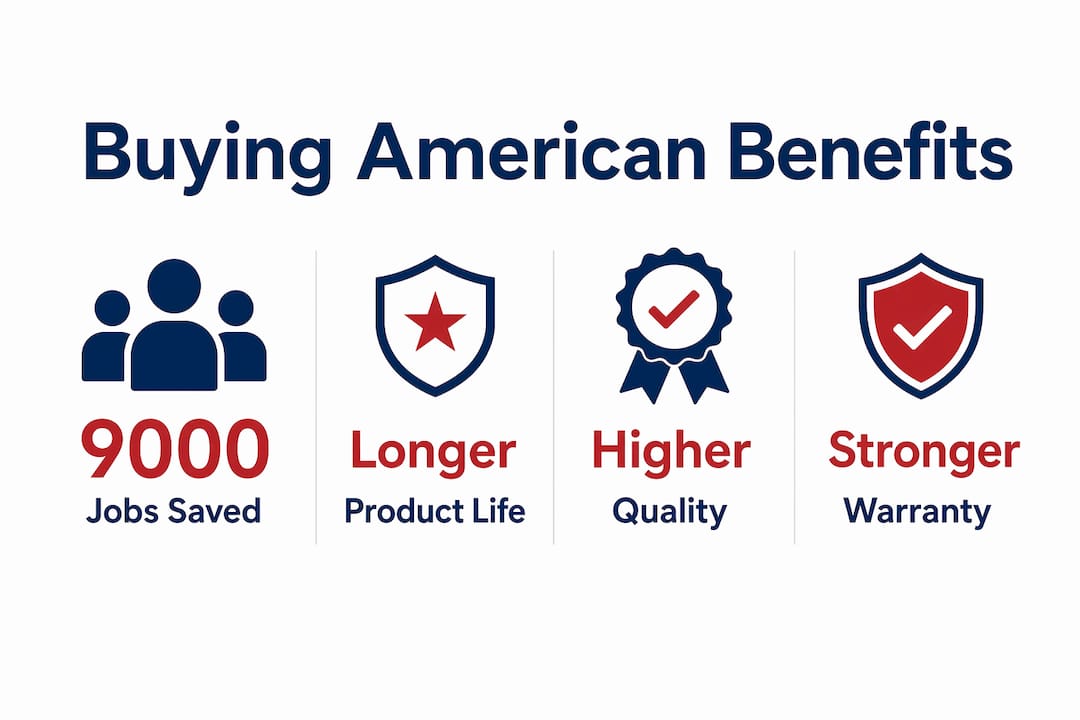
American products are built to last, and the data on lifetime cost of ownership backs that claim. American-made goods often cost less over their full lifespan despite higher upfront prices, because they are made with stronger materials and tighter quality control.
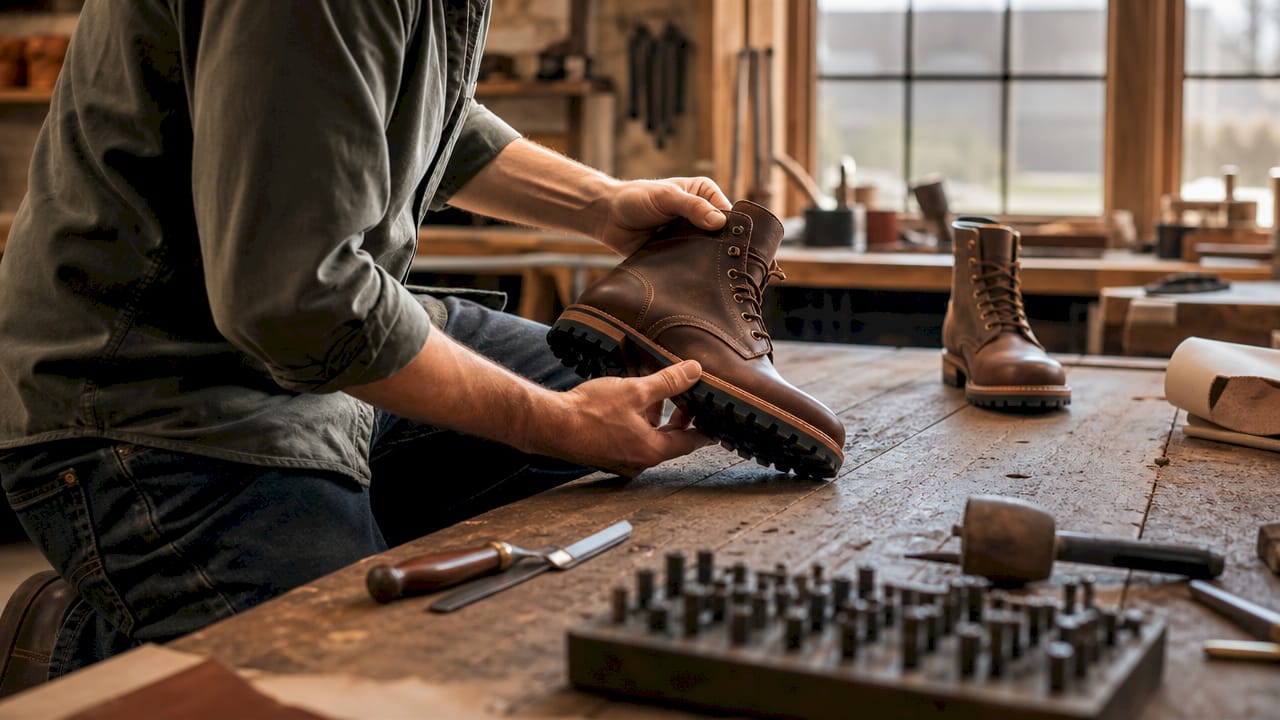
Consider the comparison below across four common product categories:
| Category | American-made advantage | Import trade-off |
|---|---|---|
| Work boots | Full-grain leather, resoleable, 5+ year lifespan | Synthetic materials, non-resoleable, 1-2 year lifespan |
| Cast iron cookware | Brands like Lodge last decades with proper care | Cheaper alternatives warp or chip within 2-3 years |
| Hand tools | Brands like Channellock and Klein Tools carry lifetime warranties | No-name imports often lack warranty coverage |
| Socks and apparel | Brands like Darn Tough offer lifetime replacement guarantees | Fast-fashion imports pill, shrink, and fade quickly |
The pattern is consistent. American manufacturers in tools, cookware, work boots, and apparel invest in materials and craftsmanship because their business model depends on reputation, not volume. Brands like Lodge Cast Iron, Channellock, and Darn Tough have built decades-long customer loyalty precisely because their products outlast the competition.
Warranties are another differentiator. American-made products are far more likely to carry meaningful warranty coverage, which shifts financial risk from the consumer to the manufacturer. That is a quality signal worth paying attention to.
Pro Tip: Before comparing sticker prices, divide the cost of each product by its expected lifespan in years. A $120 American-made work boot that lasts six years costs $20 per year. A $40 import that lasts 18 months costs $32 per year. The math almost always favors domestic.
Product origin matters most to experienced consumers who prioritize quality, trust, and durability over the lowest price. This is not a coincidence. Consumers who have been burned by cheap imports learn quickly that the advantages of American brands show up most clearly over time.
What ethical standards do American manufacturers follow?
American manufacturing operates under a legal framework that most import competitors simply do not face. U.S. labor laws mandate fair wages, safe working conditions, and protections against child labor. Environmental regulations from agencies like the EPA set strict limits on emissions, waste disposal, and chemical use in production.
The contrast with many import alternatives is significant:
- Many countries that supply cheap consumer goods have no enforceable minimum wage or worker safety standards.
- Environmental regulations in major manufacturing exporters are often weaker or inconsistently enforced, leading to pollution that affects global air and water quality.
- Supply chains for imported goods frequently involve multiple subcontractors, making it nearly impossible to verify labor conditions at every stage.
- American manufacturers are legally accountable to U.S. consumers and regulators in ways that foreign producers are not.
Choosing American brands is a direct way to support responsible production. When you buy from a domestic manufacturer, you know the workers who made your product earned at least the federal minimum wage, worked in a regulated environment, and were protected by OSHA standards. That is not a guarantee you get with most imports.
The importance of American manufacturing also extends to environmental sustainability. Shorter supply chains mean lower transportation emissions. Domestic environmental regulations mean cleaner production processes. For consumers who care about where their products come from and what impact they have, buying American is one of the clearest choices available.
Are American brands really worth the higher price?
The most common objection to buying American is cost. American-made products do carry higher upfront prices in most categories. But consumers are willing to pay a 10 to 20% premium for U.S.-made apparel, and up to 30% more when production standards are clearly communicated. That willingness reflects something important: when the quality story is told well, price resistance drops.
Here is a practical framework for evaluating whether an American-made product is worth the premium:
- Calculate lifetime cost. Divide the price by expected years of use. American-made products almost always win this calculation for high-use items like tools, footwear, and cookware.
- Check warranty terms. A lifetime warranty from a brand like Channellock or Darn Tough is a financial asset. Factor it into your comparison.
- Assess usage frequency. The more often you use something, the more durability matters. Cheap imports fail faster under heavy use.
- Look for production transparency. Brands with documented factory processes and clear material sourcing are more trustworthy. Transparency is a quality signal, not just a marketing tactic.
- Separate American-owned from American-made. There is a meaningful difference between a brand headquartered in the U.S. and one that actually manufactures here. The latter has a greater impact on domestic jobs and quality control.
Pro Tip: Look for the FTC’s “Made in USA” standard, which requires that all or virtually all of a product be made in the U.S. This is a stricter claim than “Assembled in USA” or “Designed in USA,” which can be applied to products with mostly foreign components.
The “Made in America” label is a practical decision factor tied to tariff fairness and product value, not just national pride. 33% of U.S. homeowners actively consider product origin when buying home improvement materials and tools. That number reflects a growing consumer segment that has done the math and decided domestic quality justifies the price.
Key takeaways
Buying American brands delivers measurable advantages in economic impact, product durability, ethical standards, and long-term value that imported alternatives consistently fail to match.
| Point | Details |
|---|---|
| Economic job impact | Every $1 billion in imports costs roughly 9,000 U.S. jobs, making domestic purchases a direct economic lever. |
| Lifetime cost advantage | American-made products cost less over time due to durability, stronger materials, and warranty coverage. |
| Ethical manufacturing | U.S. labor and environmental laws guarantee standards that most import competitors do not meet. |
| Price premium is justified | Consumers pay 10 to 30% more for American-made goods when quality and production transparency are clearly communicated. |
| American-made vs. American-owned | Only products manufactured in the U.S. directly support domestic jobs and quality control. |
Why I think the “too expensive” argument misses the point
The price objection to buying American brands is the one I hear most often, and it is also the one that frustrates me most. People compare a $15 imported T-shirt to a $45 American-made one and call the decision obvious. But they are not comparing the same thing. They are comparing one shirt that will fade and shrink after 20 washes to one that will still look good after 200.
I have watched this play out in categories from kitchen tools to work footwear. The consumers who complain loudest about American prices are often the ones replacing cheap imports every 12 to 18 months. The math is not complicated once you run it honestly.
What I find more interesting is the cultural shift happening right now. Supporting local businesses through purchases and positive reviews has become a genuine consumer value, not just a slogan. People are connecting their spending to their beliefs in ways they were not 10 years ago. That shift benefits American manufacturers who have always competed on quality rather than price.
My practical advice: start with one category where you use the product heavily and replace it often. Work boots, cast iron cookware, or a basic hand tool set are good starting points. Buy American once, track how long it lasts, and compare that to your import history. Most people do not go back.
The economic impact of buying local is real, but the personal satisfaction of owning something built to last is what actually changes buying habits long-term.
— ANTONIO
Find American-made products at Tojexpress
Tojexpress is a convenience store stocking American and Caribbean products, making it one of the most direct ways to shop American made without hunting through big-box retailers.
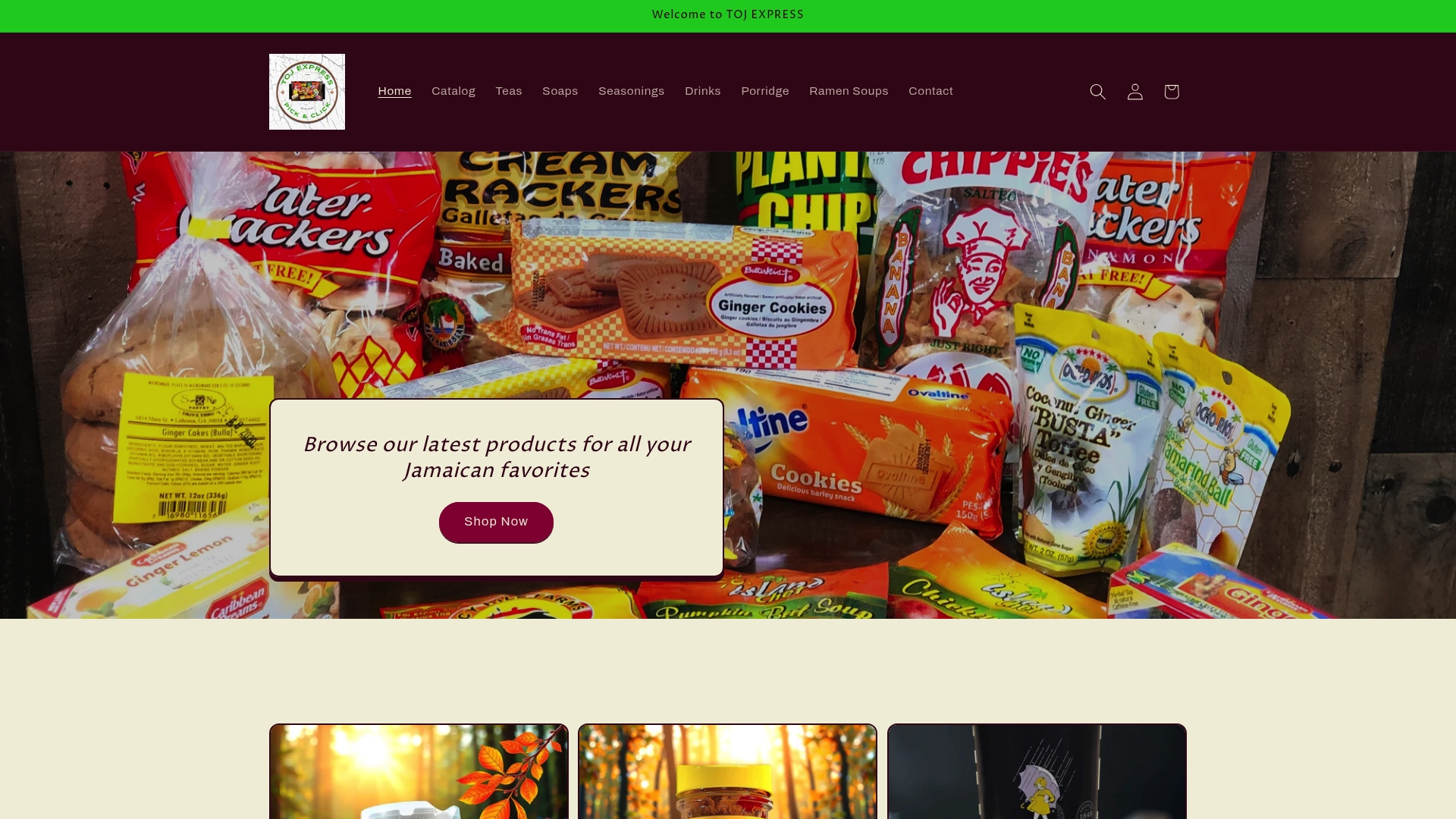
The general grocery selection at Tojexpress includes American-made food products that support domestic producers and keep your dollars circulating in U.S. supply chains. For consumers who want quality American snacks without the guesswork, the American snacks collection offers a curated range of trusted domestic brands. Every purchase at Tojexpress directly supports American jobs and the kind of ethical, transparent production this article has outlined.
FAQ
Why buy American brands instead of cheaper imports?
American brands deliver higher durability, stronger warranty coverage, and ethical labor standards that most imports cannot match. Over a product’s full lifespan, the total cost of ownership typically favors domestic goods.
How does buying American support local jobs?
Every $1 billion in imports costs approximately 9,000 U.S. jobs. Choosing domestic products keeps manufacturing employment and tax revenue inside American communities.
Are American-made products always more expensive?
American-made goods carry higher upfront prices in most categories, but consumers are willing to pay a 10 to 20% premium when quality and production transparency are clearly communicated. Lifetime cost calculations frequently show domestic products are cheaper per year of use.
What is the difference between American-made and American-owned?
American-owned means a company is headquartered in the U.S. American-made means the product is manufactured here. Only American-manufactured products directly create domestic jobs and carry the quality control benefits tied to U.S. production standards.
How can I verify a product is genuinely American-made?
Look for the FTC’s “Made in USA” standard, which requires all or virtually all components and labor to be domestic. Brands with documented factory processes and transparent material sourcing provide the strongest quality assurance.