

Mojo Sauce Explained: Easy Recipes for Home Cooks
TOJEXPRESS.COM-Antonio HenryTL;DR:
- Mojo sauce is a versatile, garlicky condiment originating from the Canary Islands and Cuba, built on olive oil, citrus, and garlic. It features regional styles like mojo rojo, mojo verde, and Cuban mojo criollo, each with distinct ingredients and uses. Proper garlic preparation and citrus substitution are key techniques that enhance its flavor, making it a staple for meats, vegetables, and rice.
Mojo sauce is a bright, garlicky condiment built on three things: olive oil, acid (usually sour orange or citrus), and plenty of garlic. It originated in the Canary Islands) and became a cornerstone of Cuban cooking, where it goes by mojo criollo. Use it as a marinade before grilling, a basting sauce during cooking, a dipping sauce at the table, or a finishing drizzle over rice and roasted vegetables. This article covers the main regional styles, what goes into each, three easy home-cook recipes, and practical techniques so your first batch tastes like you’ve made it a hundred times.
Table of Contents
- What is mojo sauce, and where does it come from?
- What goes into mojo sauce and how each ingredient shapes the flavor
- Three reliable mojo sauce recipes you can make tonight
- Techniques that actually make a difference
- What to eat mojo sauce with
- How long does mojo sauce keep?
- Key Takeaways
- The balance is the whole point
- Stock your mojo pantry at Tojexpress
- Useful sources and further reading
What is mojo sauce, and where does it come from?
Mojo traces back to the Canary Islands, where it developed as a table condiment served alongside papas arrugadas (wrinkled potatoes) and grilled fish. Spanish colonizers carried the tradition to Cuba and the wider Caribbean, where local citrus and spice preferences reshaped it into something distinctly its own.
Three styles dominate home kitchens today:
- Mojo rojo (Canarian red): Built on dried red peppers or paprika, garlic, vinegar, and olive oil. Earthy, slightly smoky, and mildly spicy. Classic with roasted meats and potatoes.
- Mojo verde (Canarian green): Swaps the peppers for fresh cilantro or parsley, keeping the garlic-and-oil base. Bright, herby, and excellent with fish or grilled vegetables.
- Cuban mojo criollo: Citrus-forward, relying on sour orange (naranja agria), garlic, cumin, and oregano. Thinner than the Canarian versions and used primarily as a marinade for pork and chicken.
Other Caribbean islands have their own takes. Puerto Rican ajilimójili adds sweet peppers and vinegar. Dominican versions lean heavier on oregano. The common thread across all of them: garlic, acid, and oil in balance.
What goes into mojo sauce and how each ingredient shapes the flavor
Every mojo, regardless of origin, follows the same structural logic. Break it into three layers and the whole thing makes sense.
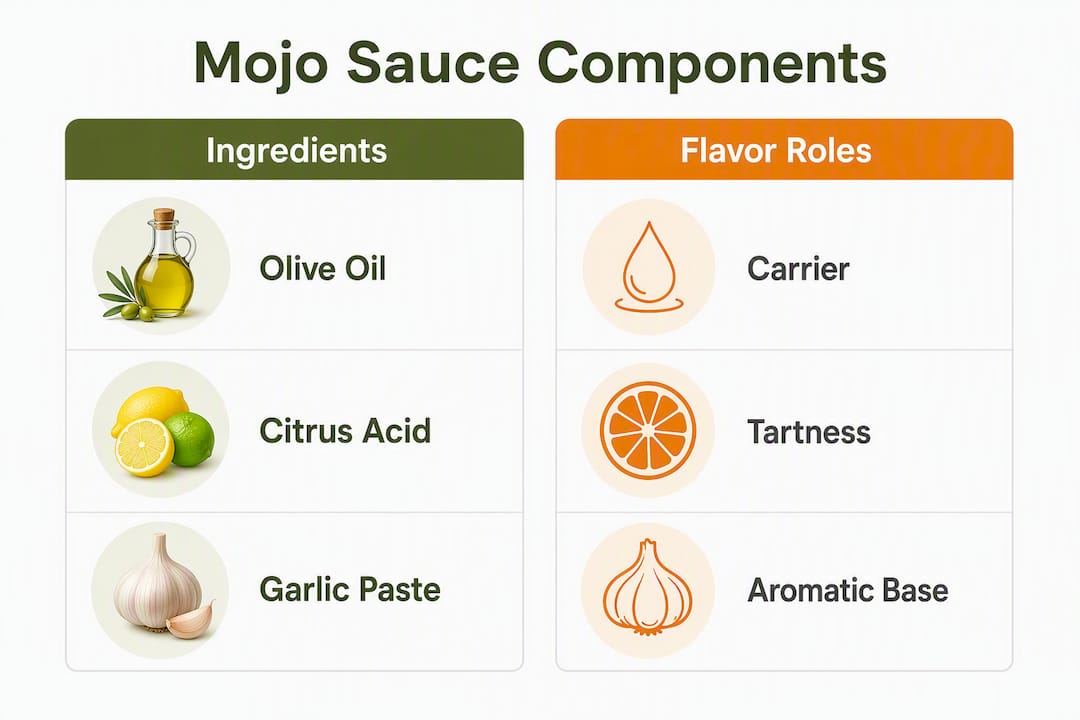
The body: Olive oil carries the sauce and softens the sharper flavors. Use a good-quality extra-virgin olive oil; the flavor shows.
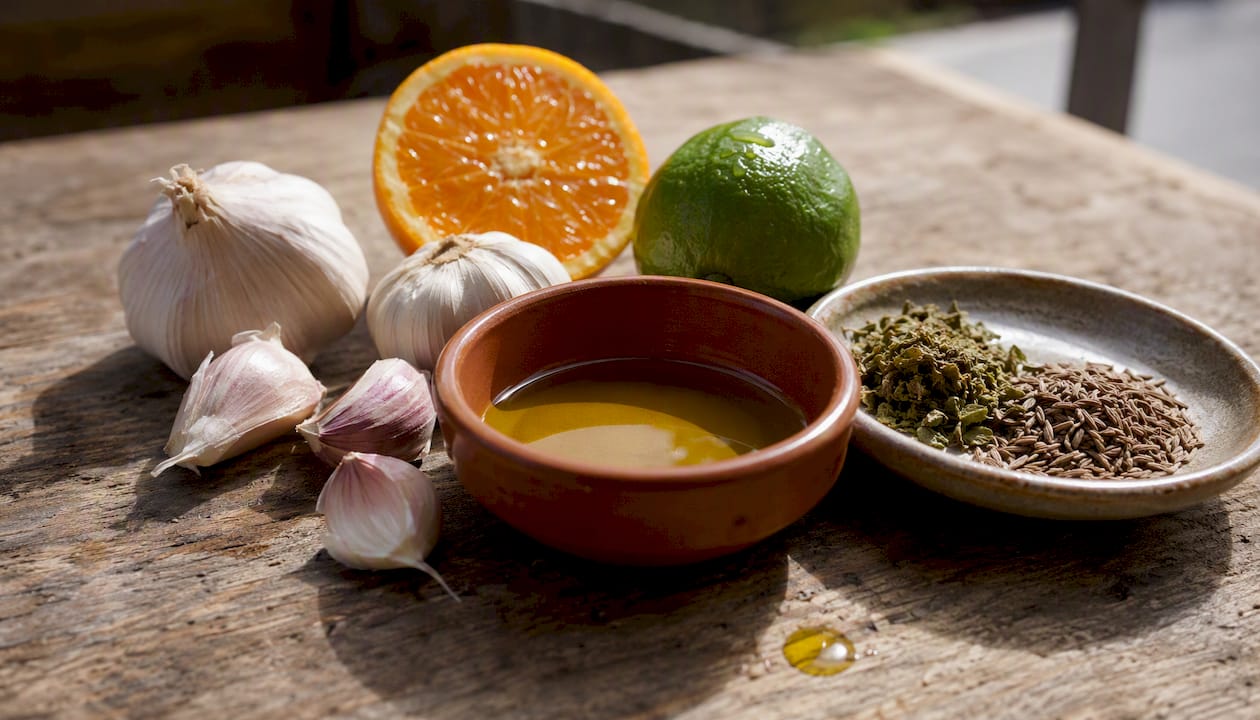
The acid: Sour orange is the traditional choice in Cuban and Canarian cooking. It has a tartness closer to lime than to navel orange, with a floral edge that regular citrus lacks. When sour orange isn’t available, a mix of fresh orange and lime juice is the standard home-cook substitute.
The aromatics: Garlic is non-negotiable. Cumin and dried oregano appear in most Cuban versions; Canarian mojo rojo adds paprika or dried chiles, while mojo verde relies on fresh herbs.
| Component | Mojo Rojo | Mojo Verde | Cuban Mojo Criollo |
|---|---|---|---|
| Star ingredient | Dried red pepper / paprika | Cilantro or parsley | Sour orange |
| Acid | Red wine vinegar | White wine vinegar | Sour orange / citrus mix |
| Spices | Cumin, paprika | Cumin, black pepper | Cumin, oregano |
| Best use | Roasted meats, potatoes | Fish, grilled vegetables | Pork, chicken marinade |
Texture matters too. Garlic pounded into a paste with salt disperses flavor evenly and gives the sauce a smoother, creamier mouthfeel. Roughly chopped garlic leaves pockets of sharpness. The paste approach, done with a mortar and pestle or a knife on a cutting board, is what separates a good mojo from a great one.
Three reliable mojo sauce recipes you can make tonight
Cuban citrus mojo (raw)
This is the version to start with. It prepares quickly and works as a marinade, a dipping sauce, or a finishing drizzle. Makes a modest amount.
Ingredients:
- 8 garlic cloves
- 1 tsp kosher salt
- ½ cup fresh orange juice (about 2 oranges)
- ¼ cup fresh lime juice (about 2 limes)
- ¼ cup extra-virgin olive oil
- 1 tsp ground cumin
- 1 tsp dried oregano
- Black pepper to taste
Steps: Pound the garlic and salt together in a mortar until you have a smooth paste. Whisk in the orange juice, lime juice, cumin, and oregano. Stream in the olive oil while whisking to bring it together. Taste and adjust salt or citrus. Use immediately or refrigerate.
Pro Tip: If you only have a blender, pulse the garlic and salt briefly, then add the liquids and oil. Do not run it on high for more than a few seconds — over-processing releases acrid sulfur compounds that make the garlic taste harsh.
Canarian mojo verde and mojo rojo
Both use the same base; the star ingredient changes everything. Each recipe makes a modest amount.
Mojo verde ingredients:
- 6 garlic cloves, pounded to a paste with ½ tsp salt
- 1 cup fresh cilantro (or flat-leaf parsley), packed
- 3 tbsp white wine vinegar
- ½ cup olive oil
- ½ tsp ground cumin
- Salt and pepper to taste
Mojo rojo ingredients:
- 6 garlic cloves, pounded to a paste with ½ tsp salt
- 2 dried ancho or guajillo chiles, soaked and drained (or 2 tsp smoked paprika)
- 3 tbsp red wine vinegar
- ½ cup olive oil
- ½ tsp cumin
- Salt to taste
Steps for both: Blend or pound the garlic paste with the star ingredient (herbs or chiles) until broken down. Add vinegar and cumin, then stream in the olive oil while blending or whisking. Season to taste. The verde should be bright green and loose; the rojo should be brick-red and slightly thicker. Both keep refrigerated for several days.
Cooked garlic mojo (mojo de ajo)
NYT Cooking’s mojo de ajo is the go-to reference for this style. Cooking the garlic in oil mellows its sharpness into something sweeter and more aromatic, which makes it ideal for basting grilled meats or drizzling over barbecue. Makes a modest amount.
Ingredients:
- 10 garlic cloves, pounded to a paste
- ½ cup olive oil
- ⅓ cup fresh orange juice
- 2 tbsp fresh lime juice
- ½ tsp cumin
- 2 tbsp fresh cilantro, chopped
- Salt to taste
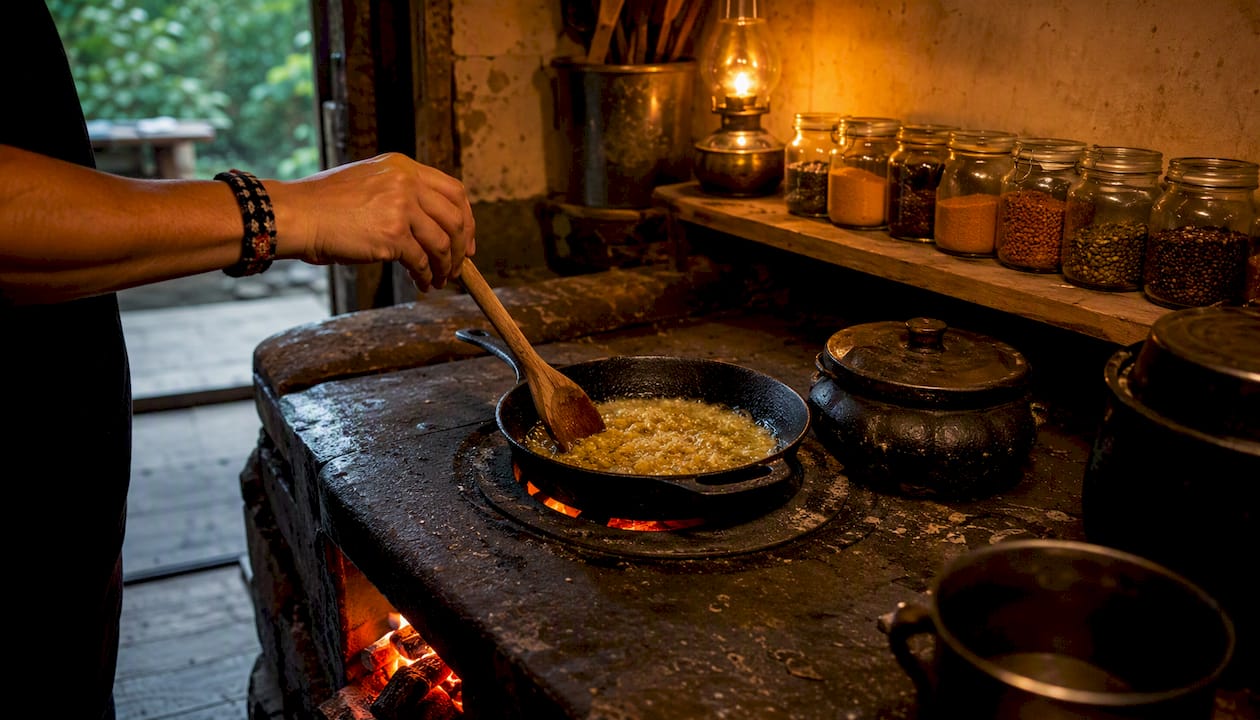
Steps: Warm the olive oil in a small saucepan over medium-low heat. Add the garlic paste and cook, stirring constantly, until it turns pale golden. Pull the pan off the heat immediately. Carryover heat will keep cooking it, so don’t wait for it to brown. Stir in the citrus juices and cumin. Let it cool slightly, then add the cilantro and salt. Serve warm as a baste or at room temperature as a condiment.
Techniques that actually make a difference
The gap between a flat mojo and a genuinely good one usually comes down to three decisions.
Garlic preparation. Serious Eats recommends pounding garlic with kosher salt on a cutting board or in a mortar rather than blending it. Manual crushing releases the essential oils with less oxidation, giving you cleaner, more balanced garlic flavor. High-speed blending can push the sulfur compounds into acrid territory fast.
Sour orange substitution. Fresh sour orange (naranja agria) is worth seeking out when it’s in season, but a 2:1 mix of fresh orange juice to fresh lime juice gets you very close. The orange brings sweetness and body; the lime brings the tart, floral edge. Bottled sour orange juice often contains artificial flavoring that flattens the sauce, so skip it if you can. For a slightly different angle, try balancing citrus flavors the way Caribbean drink makers do: layer the citrus rather than just mixing it.
Raw vs. cooked garlic. Raw mojo is sharp, bright, and zesty. It’s the right call for a quick marinade or a fresh dipping sauce. Cooked mojo (mojo de ajo) is mellower and sweeter, better suited to basting or finishing a slow-roasted dish. The choice isn’t about one being better; it’s about what the dish needs.
- Use raw mojo as a marinade at least 30 minutes before cooking, or up to overnight for pork.
- Use cooked mojo as a baste during the last 10 minutes of grilling to avoid burning the garlic.
- Always taste before serving and adjust acid or salt; flavors shift as the sauce sits.
What to eat mojo sauce with
Mojo works across a wide range of dishes. Here’s how to match the variant to the food:
Starchy sides:
- Papas arrugadas (Canarian wrinkled potatoes): serve mojo rojo and mojo verde side by side
- Steamed white rice: stir in a spoonful of Cuban mojo criollo just before serving
- Fried yuca or tostones: mojo verde or Cuban mojo as a dipping sauce
Proteins:
- Pork shoulder or roast chicken: Cuban mojo criollo as an overnight marinade
- Grilled fish or shrimp: mojo verde, served at room temperature
- Grilled steak or lamb chops: mojo rojo, drizzled right before plating
Finishing uses:
- Grain bowls and roasted vegetables: a spoonful of any mojo as a dressing
- Sandwiches and wraps: mojo verde as a spread
Mojo is almost always served at room temperature, not cold from the fridge. Cold olive oil thickens and mutes the flavor. Pull it out 15 minutes before serving and give it a quick whisk. For more Caribbean food pairing ideas, the Tojexpress blog has practical suggestions organized by dish type.
How long does mojo sauce keep?
Store mojo in an airtight glass jar in the refrigerator. Raw mojo with fresh garlic keeps well for up to 5 days. Cooked mojo de ajo lasts a bit longer, up to 7 days, because the brief cooking reduces the raw garlic’s enzymatic activity.
A quick safety note: raw garlic submerged in oil at room temperature creates conditions that can support bacterial growth. Keep mojo refrigerated at all times, and the acid in the sauce helps, but it doesn’t replace cold storage.
Before serving, take the jar out of the fridge and let it sit for 10–15 minutes, then whisk or shake to re-emulsify the oil and citrus. Signs that mojo has gone off: a sour or fermented smell beyond normal garlic tang, visible mold, or a noticeably off taste. When in doubt, make a fresh batch. It takes 10 minutes.
Mojo freezes reasonably well. Pour it into an ice cube tray, freeze solid, then transfer the cubes to a zip-lock bag. Each cube is roughly 2 tablespoons, a convenient single-use portion for a quick marinade. Frozen mojo keeps for up to 3 months; thaw in the fridge overnight.
Key Takeaways
Mojo sauce is built on three non-negotiable elements: olive oil, acid (sour orange or a citrus mix), and garlic pounded to a paste.
| Point | Details |
|---|---|
| Core flavor formula | Olive oil + citrus acid + garlic paste forms the base of every mojo style. |
| Garlic paste technique | Pound garlic with salt in a mortar or on a cutting board for a smoother, cleaner flavor. |
| Sour orange substitute | Mix fresh orange juice and lime juice (roughly 2:1) to replicate sour orange’s sweet-tart balance. |
| Raw vs. cooked choice | Raw mojo suits fresh dips and marinades; cooked mojo de ajo is better for basting and grilling. |
| Tojexpress for ingredients | Tojexpress stocks Caribbean pantry staples like dried oregano, cumin, and citrus for making mojo at home. |
The balance is the whole point
Most home cooks overthink mojo. They chase an exact recipe when the real skill is understanding the ratio: enough acid to cut through the oil, enough garlic to be unmistakable, and enough restraint to let those two things actually speak.
The Canarian and Cuban traditions arrived at the same architecture from different directions. Canarians built around vinegar and dried peppers; Cubans built around sour orange and cumin. Both work because the balance is right, not because one ingredient is magic.
Where I’d push back on the conventional advice: don’t treat the mortar and pestle as optional. Every recipe says you can use a blender, and technically you can. But the texture difference is real. A blender turns garlic into something almost foamy; a mortar turns it into a paste that holds together in the sauce. That difference shows up on the plate.
Substitutions are fine. Fresh orange and lime for sour orange, smoked paprika for dried chiles, parsley for cilantro. Mojo has survived centuries of improvisation. The one thing worth protecting is the acid-oil-garlic triangle. Get that right and the rest is details.
Stock your mojo pantry at Tojexpress

Making mojo from scratch means having the right pantry staples on hand: good olive oil, dried cumin, dried oregano, citrus, and the occasional specialty item like dried ancho chiles or authentic Caribbean hot sauce. Tojexpress carries a solid selection of Caribbean and American grocery staples, including Caribbean seasonings and spices that cover everything a mojo recipe calls for. The store serves Atlanta and surrounding areas including Stone Mountain, Decatur, Lithonia, Conyers, Tucker, Snellville, and Rockdale, Georgia, with both in-store pickup and online ordering available. You can also browse a curated range of specialty sauces and condiments if you want to explore beyond the basics. Shop online or stop in and grab what you need at tojexpress.com.
Useful sources and further reading
- Mojo (sauce) on Wikipedia): Clear overview of regional variants and ingredient history.
- Mojo Sauce Recipe at Serious Eats: Detailed technique notes on garlic preparation and blender warnings.
- Mojo De Ajo at NYT Cooking: Step-by-step cooked garlic mojo with timing guidance.
- Mojo Sauce at America’s Test Kitchen: Tested formula using vinegar as a sour orange substitute.
- Garlic Mojo Sauce at Epicurious: Practical home-cook version with pairing suggestions.
- Caribbean Sauces Checklist at Tojexpress: Ten Caribbean sauce recipes and sourcing ideas for home cooks.